Planning Bill & Sycamore Gap Trial
The latest news on nature and conservation in Britain.
National news
Law | The government has announced an amendment to its Planning and Infrastructure Bill which conservationists have branded ‘a licence to kill nature’. The amendment would remove statutory consultation requirements from the pre-application process for major infrastructure projects, allowing projects to be delivered ‘at least a year faster’ on average, according to the government. However, environmental organisations have reacted with severe alarm. In a letter to Parliament, a group of leading conservationists, economists and former government advisers wrote that the proposal ‘allows companies to “buy out” of their legal obligations to nature, and in doing so, dismantles key safeguards that have protected nature for decades.’ The safeguards are replaced with a ‘vague’ Nature Levy, which allows developers to pay ‘cash to trash’ wildlife and the environment, they said. The letter calls for the amendment to be removed and put out to proper consultation. In the Guardian, George Monbiot wrote that the bill is ‘the worst assault on England’s ecosystems in living memory’, while the Wildlife Trusts called it a ‘panicked misstep’. Nature minister Mary Creagh defended the bill here. The Guardian, Times and ENDS covered the news.
Megafarms | Two separate investigations have exposed the proliferation of US-style megafarms in the UK. In this investigation, the AGtivist Agency mapped the UK’s 30 largest livestock megafarms using satellite imagery and drone footage. They found that, between them, the farms confine more than 11 million chickens and 145,000 pigs at any one time, and intensively rear at least 25,000 cattle annually. They are part of more than 1200 megafarms across the UK, the number of which has increased by 21% since 2017. The agency said that this ‘trend of intensification’ is transforming the British countryside, in spite of government promises that US-style farming would not be adopted in the UK. Meanwhile, the Bureau of Investigative Journalism has revealed that the UK government contributed at least £14m of public funds to intensive poultry megafarms near the Wye and Severn rivers, despite the industry’s links to water and air pollution in the region. The findings come ahead of a landmark court hearing this week, where campaigners hope to overturn Shropshire Council’s decision to approve planning permission for a new chicken megafarm: find out more in the Guardian and BBC.
Trees | The government is failing to support the natural regeneration of trees in England, according to campaigners. Recent figures obtained by Guy Shrubsole under freedom of information laws reveal that only 5% of Forestry Commission grants for woodland creation have been spent on the natural regeneration of trees, while the remaining 95% has gone toward tree planting. Campaigners suggest that this is potentially due to rules which restrict funding by constricting natural regeneration to land within 75 metres of an existing tree. Shrubsole argued that the incentives are skewed too far in favour of planting, saying: ‘Ministers need to change these ridiculous rules if they want to stand any chance of meeting their own targets for woodland creation.’ Some ecologists – including Shrubsole – argue that naturally regenerated woods are better for biodiversity because they contain a more diverse range of trees, and can adapt better to local soil and climate. The Guardian covered the news.
In other news:
- Environmental charities are calling for people to take part in No Mow May this month to aid pollinators and butterflies by allowing wildflowers to thrive, reports the BBC.
- The Tree Council says the government is considering the Council’s recommendations for better protection for ancient trees following the Enfield oak felling.
- The Wales Future Generations Report calls for faster nature restoration and decarbonisation to protect ‘those yet to be born’, reports the BBC.
- The area of the UK burnt by wildfires this year has already exceeded the total for any year in more than a decade, reports the BBC.
- The countryside charity CPRE has published its response to the government’s consultation on a new Land Use Framework here, stressing the importance of sustainable development.
- The Environment Agency budget has seen a £188m increase, reports ENDS.
- The current spring wave of hot weather could benefit migratory birds and butterflies, reports the BBC.
- The latest Scottish Adder Survey has found that the reported distribution of Britain’s only venomous snake shrank significantly in Scotland between 1994 and 2024.
- Scientists from Glasgow University have confirmed that Scotland is now home to 21 species of mosquito, with the biting insect found as far north as Shetland, reports the BBC.
Across the country
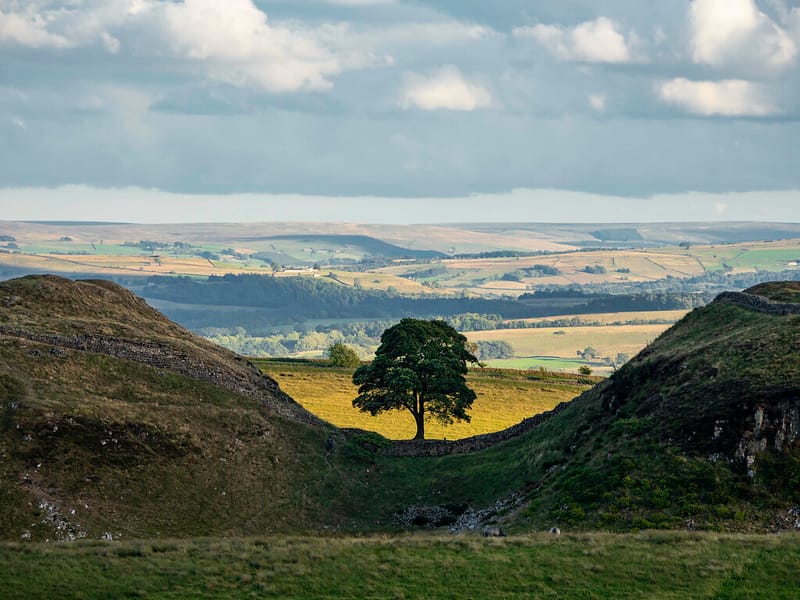
Northumberland | The trial of two men accused of illegally felling the iconic Sycamore Gap tree started on Tuesday. Opening the case, prosecutor Richard Wright said the men embarked on a ‘moronic mission’ to cut down the beloved tree, in what he called an ‘act of deliberate and mindless criminal damage’. On Wednesday, the prosecution showed the jury footage which appears to capture the felling itself: the video, taken on the iPhone of one of the two men accused, shows a shadowy figure wielding a chainsaw cutting into a tree, which then topples. Amy Sutherland, an intelligence analyst for Northumbria police, said that the coordinates of the video metadata match the location of Sycamore Gap. A forensic botanist also said there was ‘very strong evidence’ that a wedge of wood pictured in the boot of one of the men’s Range Rover had come from the sycamore, potentially as a ‘trophy’. Both men have pleaded not guilty. The news has been widely covered, with the BBC following the proceedings live.
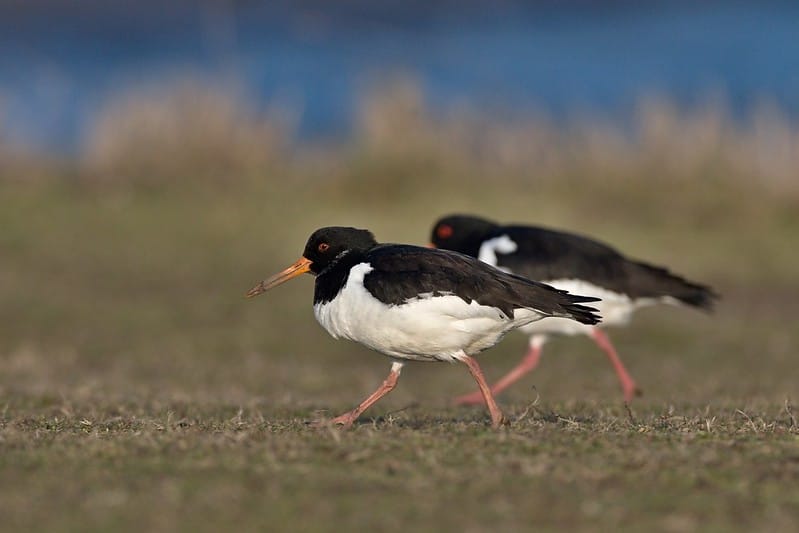
Norfolk | Researchers are celebrating after discovering two record-breaking oystercatchers within one month at England’s east coast wetlands. In February, a team of volunteer bird surveyors recorded the two oldest known oystercatchers in Britain, clocking up at least 41 and 43 years respectively – roughly three times the average life expectancy for the species. Both were found on the mudflats of the Wash in Norfolk, and their extended lifespan highlights the importance of protecting these vast wetland habitats, according to researchers. The Wash is a vital refuge for migrating and over-wintering birds in the UK, supporting up to 400,000 waterbirds each year, including 26,000 oystercatchers. Jacquie Clark from the Wash Wader Research Group said it was likely that the birds had spent every winter at the Wash since they were ringed, as oystercatchers and other waders are very ‘site faithful’. The Guardian, BBC and BirdGuides covered the news.
Oxfordshire | Butterfly Conservation has launched a project using ultraviolet light to hunt for glow-in-the-dark caterpillars. Working with the Berks, Bucks & Oxon Wildlife Trust, the charity is training volunteers to search for caterpillars by shining UV light into the undergrowth, making luminous larvae gleam due to photoluminescence. The idea is that the new technique will make surveying butterflies and caterpillars much easier and faster: during a trial near Bicester, a team of 30 volunteers found a total of 32 endangered black hairstreak caterpillars in just two hours. Conservation manager Steven Lofting said that the same team looking for hairstreak eggs in daylight would be lucky to find one or two in the same time. He added that the technique could be ‘a gamechanger’, with the potential to ‘change our understanding of [butterfly] biology, distribution, abundance and ecology. It's really exciting.’ The BBC covered the story.
Elsewhere:
- Skye’s population of endangered corncrakes have returned for the breeding season after a record year in 2024, reports STV News and the Herald.
- A pair of ospreys in mid-Wales have laid their first egg, which conservationists believe to be the first osprey egg in the Usk Valley for at least 250 years, reports the BBC.
- The RSPB has started work on a project to translocate larvae of the rare white-faced darter dragonfly from a stable donor population to a reserve in Cumbria.
- Fifteen young spotted rays have been released into the Plymouth Sound as part of a project to boost nature and reconnect locals to the marine environment, reports the BBC.
- A research project will study Arctic charr in Windermere to find out why numbers of the rare fish are falling, reports the BBC.
- A wildfire on the Isle of Arran has destroyed ten years’ worth of conservation work to reforest Glen Rosa, reports the BBC and Times. In other news, the island has been awarded global geopark status by UNESCO: find out more in this NatureScot blog.
- Farmers in Hampshire and west Sussex fear that projects to conserve lapwings could be hit by the closure of the government’s SFI scheme, reports the BBC.
- Moors for the Future has concluded a two-year project to restore 62 hectares of moorland in Staffordshire destroyed by a wildfire in 2018.
- A community rewilding project on Skye has created ten ‘seed islands’ to restore native woodlands and support wildlife such as salmon and insects: find out more here.
- Scientists are developing a world-first vaccine to immunise bats after ten of the creatures died from an infection at Jersey Zoo, reports the BBC.
- Five conservation charities, led by the RSPB, are urging ministers to reject plans for a wind farm in the Forth of Firth, which could kill tens of thousands of seabirds, reports the BBC and Scotsman.
- The owners of the remote Ronay Island in the Outer Hebrides have announced plans to rewild it, reports the Herald.
- A county spider recorder has spotted a ‘nationally rare’ lichen running spider at a temperate rainforest site in Cornwall, reports the BBC.
- The Scottish government has awarded £94,000 to a project attempting to completely eradicate invasive mink from the Outer Hebrides, reports the BBC.
Reports
Climate | The UK’s climate watchdog has found that the ‘vast majority’ of the government’s climate adaptation plans have made virtually no progress over the last two years, according to a highly critical report. With a new Labour government in power, the Climate Change Committee says this latest report must act as a turning point in strengthening adaptation measures, including the urgent need to invest in nature-based solutions such as climate-resilient farming. In response to the report, the Wildlife Trusts warned that cuts to the environmental farm scheme budget in the upcoming spending review would scupper any hopes to deliver ‘vital outcomes to tackle climate change’. The WCL stressed that a nature-positive planning system must be part of the solution, while countryside charity CPRE said the report was a ‘clarion call to think differently about land’. The report was widely covered, including an in-depth summary by Carbon Brief.
Bugs | Flying insects in the UK are still declining – but not as quickly as in recent years, according to the annual Bugs Matter citizen science survey. The survey, led by Kent Wildlife Trust in partnership with the charity Buglife, asks volunteers to record the ‘bug splats’ on their vehicle number plates after journeys. The 2024 report shows that bug splats declined by 8% from 2023 to 2024, following sharper drops of 44% in 2023 and 28% in 2022. Dr. Lawrence Ball of the Trust said that, while the overall decrease was ‘really alarming’, this year’s data shows that ‘the rate of decline has slowed and it may even flatten or reverse next year.’ He added that continued support from citizen scientists was vital to revealing overall trends in insect populations. The 2025 survey begins this Saturday, May 1, and runs until September 30: find out how to get involved here. The Guardian and Scotsman covered the news.
Food | The Food Foundation has published a policy pathway designed to boost the uptake of plant-rich diets. The report outlines a series of ‘pragmatic and easily implementable’ policy recommendations for the government to include in the forthcoming Food Strategy. The foundation says that giving people easier access to healthier, plant-rich diets would improve the nation’s health, maintain food security, bolster ‘nutrition security’ (by producing more fruit, veg and legumes), and support farmers. The recommendations are grouped under two headings – growing demand and expanding production – and include measures such as reforming advertising, reviewing VAT rates, investing in farming budgets, and protecting UK trade standards. With a new government in place, and Food Strategy upcoming, the foundation says it is an ‘opportune time’ to deliver a sustainable food system. Meanwhile, a report by the Esmée Fairbairn Foundation explores how agricultural supply chains are limiting progress toward nature-friendly farming.
Science
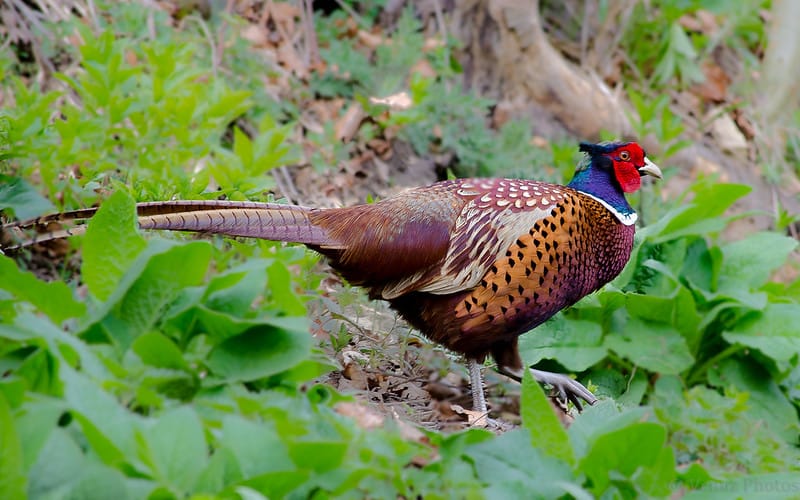
Pheasants | A study from Exeter University has shown that ticks are more likely to carry the bacteria that causes Lyme disease in areas where pheasants are released. Researchers studied ticks in 25 woodland areas in southwest England where pheasants are present, and compared them with 25 nearby control sites. They found that Borrelia spp. – the bacteria that causes Lyme disease – was almost 2.5 times more common in ticks in the pheasant-release areas, due to pheasants acting as ‘competent’ hosts. The authors conclude that this is evidence of ‘spillback’: when non-native species increase the prevalence of native pathogens. Co-author Emile Michels said that more research was needed, ‘but our findings suggest there may be an increased risk of potential exposure to Borrelia-infected ticks for people – such as gamekeepers – who work in woodlands where pheasants are released’. The findings were published in Ecology Letters, and covered by the BBC.
Woodland | Considering the current and historic use of landscapes could boost the biodiversity of woodland creation, according to a study in Nature Ecology and Evolution. Researchers from the University of Stirling analysed data on 373 species – including beetles, birds, plants and small mammals – from 132 woodlands in the UK. They combined this with agricultural census data and historical land use maps to document how the surrounding landscapes had changed. They found that both ‘spatial spillover’ – biodiversity from the surrounding landscape – and legacies – the historical context of the land – affected the biodiversity of the new woodland. For example, historical factors such as intensifying agriculture and loss of nearby woodland influenced which species colonised new woodlands, and the speed at which they arrived. Senior author Kirsty Park said the study could help the UK meet its legal biodiversity targets since ‘maximising the biodiversity benefits of new woodlands brings the greatest return for restoration expenditure’.
Seabed | Many of the fish commonly found in British diets play a key role in shaping the seabed, according to a study in Marine Environmental Research. For the first time, researchers from the University of Exeter assessed the role of fish in bioturbation: the churning and reworking of sediment on the ocean floor. In shallow UK seas, they found that 185 species play a role in bioturbation, with 120 of these targeted by commercial fishing. The study highlighted that species with the highest bioturbation impacts – often the largest and most powerful disturbers – are among the most vulnerable due to threats such as overfishing, including species such as halibut, Atlantic cod and giant skates. Co-author Mara Fischer explained: ‘Bioturbation is very important for how the seabed takes up and stores organic carbon, so the process is vital to our understanding of how the ocean absorbs greenhouse gases’. The BBC, Phys.org and Oceanographic covered the research.
Driftwood
Countryside | A new book by journalist Patrick Galbraith, Uncommon Ground, has stirred up the debate around countryside access. In the book, Galbraith talks with those affected by access ‘from whom we don’t often hear’, in his words: figures such as farmers, conservationists and gamekeepers. He summarises his argument in a Country Life article: he writes that ‘we do not lack access, but we do lack a culture that recognises the importance of the country-side as a place that supports life beyond the human and appreciates farming.’ The Moorlander called the book ‘thought-provoking’, while conservationist Mark Avery likewise gave it a positive review. However, the Right to Roam campaign has taken fierce issue with the book, arguing that it contains ‘factual inaccuracies, misrepresentations, and breaches of privacy and confidence’. The campaign refutes a number of Galbraith’s claims, including the threat of access to vulnerable species, the impact of dogs, and the ‘ideal’ of Scottish access, here.
Mowing | The start of May heralds the beginning of ‘No Mow May’, a campaign started by Plantlife in 2019 to help spring pollinators thrive by reducing grass cutting. In the Financial Times, barrister and writer Sarah Langford discusses why people should bother with No Mow May. After all, there is limited evidence that biodiversity actually benefits much from one month of growth if it is then cut at the beginning of June. However, feeding pollinators during May might not be the only benefit, she writes: ‘the point may not be whether weeds in May save bees, carbon or money; it is about shifting our sense of what looks ‘good’’. Instead of viewing unmown grass as a sign of neglect, normalising No Mow May might help the public ‘see life’, Langford writes, leading to ‘Let It Bloom June’ and ‘Let It Fly July’. Read more about the impacts of reduced council mowing in this Inkcap Journal investigation from 2021.
Recovery | A feature in the Guardian delves into a restoration project at Sharpham estate in Devon, which aims to restore the environment while also helping people to improve their mental health. The estate – which was created by a naval sea captain made wealthy from plundered Spanish treasure – had already been hosting Buddhist-inspired retreats for years for people to seek help with mental resilience and cope with trauma. But when teacher and conservationist Julian Carnell took over as director, he felt a disconnection between the mission and the landscape. Over the past five years, he and his rewilding partner, Jack Skuse, have endeavored to ‘do something a bit more holistic with the land’ by converting it from a prior dairy farm and vineyard into something that prioritises nature recovery. Now, wildlife is reaping the benefits, and Carnell and Skuse view the rewilded landscape as a source of the therapy offered at Sharpham.
Further reading:
- The Guardian has an adapted excerpt of nature writer Robert Macfarlene’s new book, Is a River Alive?, which explores the rights of nature.
- An article in Prospect Magazine argues that restoring peatland – rather than burning it for grouse shooting – would be ‘an ecological and economic boon’.
- A feature in the Guardian examines the negative impact of increasing border barriers on wildlife populations.
- London Zoo is looking for film enthusiasts and history buffs to help identify material from hundreds of mystery film reels discovered in its archive. Find out more on the BBC.
- An article in the Times discusses the impacts of warming temperatures on fruit growing in the UK, including more citruses and less apples, rhubarb and berries.
- A feature in the Guardian investigates how the Wildlife Trusts are incorporating 4,000 sheep into rewilding efforts at Rothbury Estate in Northumberland.
- A satellite developed by British academics and engineers is set to be the first to ‘weigh’ the Earth’s forests from space: read more on the BBC.
- In the Times, read about campaigner Matt Staniek’s ‘lone battle’ to save Lake Windermere from sewage.
- An article in the Conversation makes the case for the underappreciated dandelion, which is helping to bring nature back into concrete cities.
- In the Guardian, musician James Frost describes the experience of travelling through ‘Olde England’ from Norwich to Cornwall, nomadic style, and writing a song about it.
Happy days
Journal | Novelist and nature-writer Melissa Harrison has launched a free guided nature journal in the form of a phone app called Encounter. Backed by research from Professor Miles Richardson on nature connection, the app is full of seasonal prompts and tips tailored to the user’s location, with the aim of helping people tune into the natural environment around them. Writing in Wicked Leeks, Harrison reflects on her childhood spent outdoors, developing a habit of noticing the delights of nature. She says her new app is ‘the purest distillation of my early, childlike energy that I have so far been able to achieve.’ Find out more on this Country Life podcast, or get it yourself from wherever you download your apps.
Subscribe to our newsletter
Members receive our premium weekly digest of nature news from across Britain.
Comments
Sign in or become a Inkcap Journal member to join the conversation.
Just enter your email below to get a log in link.