Protected Marine Areas & London Falcons
The latest news on nature and conservation in Britain.
National news
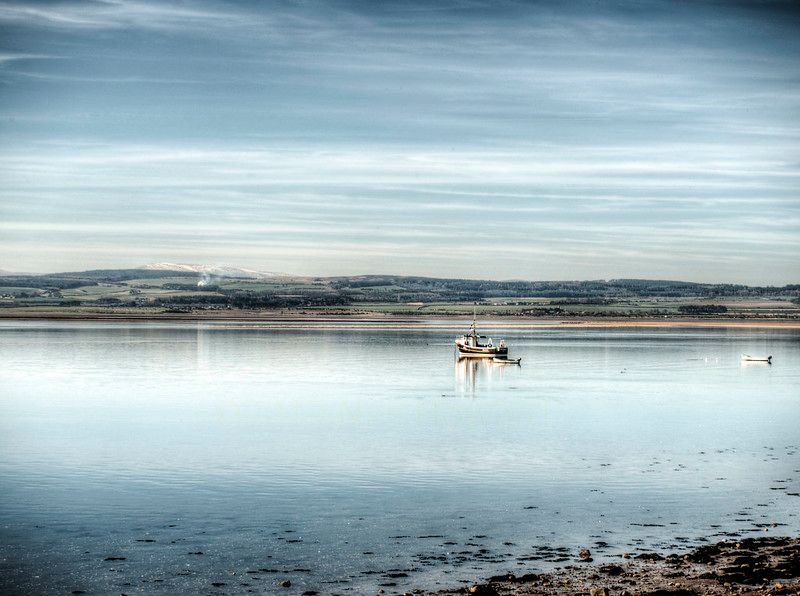
Ocean | The government has announced it will designate three Highly Protected Marine Areas from July – a reduction from its original proposal for five areas. HPMAs allow marine life to recover by removing harmful activities, including fishing, construction and dredging. Lindisfarne in Northumberland and Inner Silver Pit South off the Lincolnshire coast have been dropped due to concerns over socioeconomic impacts, including the effect on fishermen’s livelihoods. Two other sites have been reduced in size. Conservationists have widely welcomed the three designations, but expressed frustration that the original plans have been weakened. The Wildlife Trusts’ head of marine conservation, Dr Lissa Batey, said the diminished ambition was “nonsensical”, and that three areas alone is “nothing like enough”. Meanwhile, Lindisfarne locals are celebrating the news. The Guardian, the BBC and ENDS reported the news.
3 highly protected marine areas established in England today. The 1038km2 of protection is 60x more than we have, but 70x less than we need, which is 30% of the sea highly protected. At the present rate, it will take us 260 years to reach this level. Welcome news but way too slow
— Callum Roberts (@ProfCallum) February 28, 2023
Invasive species | The government has launched its updated Invasive Non-Native Species Strategy, which includes a target to reduce establishments of non-native species by at least 50% compared to 2000 levels by 2030. The last update was published in 2015; the latest version follows an independent review to find areas for improvement. According to the government, non-native species cost the British economy around £1.84 billion per year, with around 10 to 12 new species establishing themselves annually. Specific actions include increasing the capacity for inspections at the border and improvements to rapid response systems. The strategy has been produced in partnership with the Scottish and Welsh governments.
Rivers | The River Ouse (the one in Sussex) could become the first English river to be granted legal rights. Lewes district council has passed a ‘Rights of River’ motion, which takes a step toward granting it similar legal protections to people. A charter will now be developed and presented to the council within two years. This will likely be based on the Universal Declaration of River Rights, and would allow for the wellbeing of the river to be represented by local communities from the Ouse Valley catchment. It is not the first time that something like this has been attempted: efforts to give legal rights to part of the River Frome in Somerset failed in 2020. The Guardian covered the news.
V. interesting development.
— Robert Macfarlane (@RobGMacfarlane) March 2, 2023
Lewes district council has passed a "rights of river" motion & are now developing a charter recognising the Ouse's legal standing & rights.
The rights to flow, to be free from pollution, to feed & be fed by healthy aquifers...https://t.co/8L2ooQL310
In other news:
- The government has announced £4.4m of funding for England’s ten national parks.
- UK health officials are making “Covid-style” contingency plans for the spread of bird flu, reports the BBC.
- Defra has shelved plans for a major structural reform of its arms-length bodies, reports ENDS.
- The International Ornithological Committee has announced it will split the Chaffinch bird into five different species in the next update to its World Bird List, reports BirdGuides.
- NatureScot is partnering in a private finance investment pilot that could mobilise £2bn for restoring Scotland’s woodlands. The Herald reported the news.
Across the country
Kent | Farmers in Kent are being forced to lay waste to their apple orchards due to the rising costs of producing the fruit, reports the BBC. Input prices, which includes picking and energy, have risen by 23% while the amount supermarkets pay growers for their produce has increased by just 0.8%. One farmer, Richard Budd, said he had been forced to remove 50 acres of apple trees, and that the UK could be forced to source more apples from abroad as a result: “When that fruit’s gone, it won’t come back,” he said. The news follows a report from the National Trust last year, which highlighted the dramatic decline in orchards since 1990 and the impact on flora and fauna.
Edinburgh | The Royal Botanic Garden in Edinburgh (RBGE) is on a mission to save ten Scottish trees and plants from extinction. The priority species will be planted in areas where they are most likely to thrive. They include two types of whitebeam trees that are only found on Arran and the alpine blue sow-thistle, which is restricted to the Cairngorms. “Released from constraining factors, the new populations have the potential to expand rapidly,” says Aline Finger, a molecular ecologist at RBGE. The Times covered the story. The project is just one of 31 new initiatives approved as part of the government’s £7.6 million Nature Restoration Fund.
Suffolk | The National Trust plans to reintroduce coppicing – an ancient system of woodland management – at the site of the Sutton Hoo. By cutting the trees and encouraging new shoots, the organisation is hoping to boost nightingale numbers; the technique creates better nesting habitats by allowing more light onto the woodland floor, boosting flowers and brambles. It will be the first time that the woodland here has been coppiced since the majority was felled after the Great Storm in 1987. Nightingales were mentioned in the film The Dig, which focused on the site’s 1939 excavation, but populations have declined since then, with only four singing males recorded last year. The BBC covered the story.
Elsewhere:
- Conservationists are calling for a ban on boats with propellers on the Montgomery canal in Wales to protect rare aquatic plants, reports the Guardian.
- A Canadian company plans to dump hundreds of tonnes of a mineral off the coast at St Ives Bay in Cornwall, in an attempt to increase the ocean’s ability to absorb carbon, reports the Times.
- A survey by the University of Exeter is gathering public opinion on the reintroduction of beavers to Wales, reports the BBC.
- A green space near Wellington in Somerset has been purchased by the local council, granting it 150 years of protection, reports the BBC.
- Labour have pledged to double the money currently spent on Plymouth’s wildflower meadows by the Conservative administration, reports the Plymouth Herald.
- The Exmoor Squirrel Project has proposed culling grey squirrels and serving them at local restaurants to help reintroduction efforts for red squirrels, reports the BBC.
- A “massive” walrus has been spotted off Mull in the Inner Hebrides, reports the BBC and the Times.
- London Wildlife Trust has announced a partnership with GrowN22, an organisation transforming neglected spaces in Haringey into community gardens.
- Lancashire County Council is piloting a scheme using biochar to improve the county’s soils and carbon capture, reports the Lancashire Post.
- Herefordshire Council is set to submit agricultural targets to clean up the River Wye, reports the BBC.
- Plans to plant a wildflower meadow on the Downs in Bristol have been criticised for banning recreation on the land, reports the Bristol Post.
Reports
Rewilding | Plant diversity at Wild Ken Hill in Norfolk has increased thanks to rewilding efforts at the site, according to a new survey. Since a baseline survey in 2019, the number of plants in non-woodland parts of the former arable farm has doubled, largely due to the introduction of a low-intensity grazing regime. Despite the success of this approach so far, however, a blog post noted that the use of livestock may act as a homogenising force in the future, and announced the intention of using “pulsed grazing” going forward – a tactic that better emulates the movement caused by migration and predation in the wild. The BBC covered the story.
Bird flu | A research report by the British Trust for Ornithology and the Joint Nature Conservation Committee sets out their findings on the impacts of avian flu and research priorities going forward. The report is based on a meeting of more than 100 experts, and highlights the importance of monitoring schemes to evaluate impacts on populations. Data has revealed wide-ranging population declines for the species most heavily impacted by bird flu, such as great skua and gannet. With limited resources available for research, the report stresses the importance of prioritising data collection based on the species impacted, their UK and global threat status, and key breeding sites. Looking ahead, the authors recommend that the impact on wild birds needs to be addressed alongside mitigation actions for domestic flocks, to ensure a coordinated approach.
Connections | A report by the John Muir Trust and the University of Glasgow explores how young people connect to nature. Although previous research has identified various factors that influence nature connectedness, there is little understanding of how these factors interact, or which are most important for building lasting relationships. Data collected from various outdoor learning practitioners revealed that key variables were child-led outdoor play, pleasure and fun in nature, a parent or carer’s respect for nature and time in nature with peers. The report forms part of an ongoing project aiming to provide a theoretical framework for future research and interventions, designed to strengthen people’s lasting bond with nature.
Science
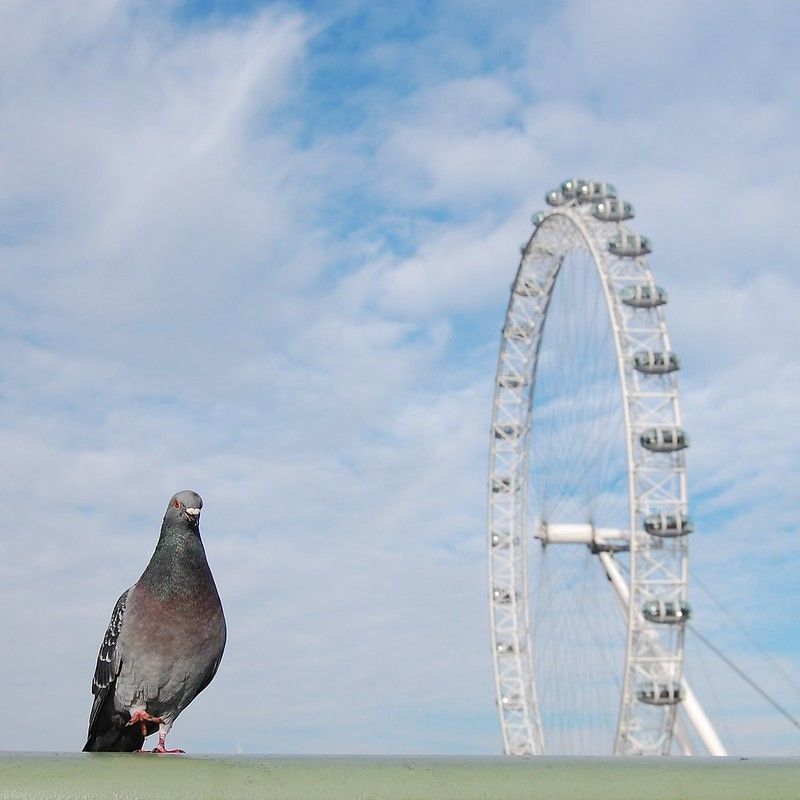
Falcons | During the height of the COVID pandemic, peregrine falcons in London reduced the number of pigeons in their diet, as the drop in discarded food waste and direct feeding meant that fewer of the “pest” species were drawn to the city. The raptors made up the gap by hunting more starlings and parakeets, which were more readily available, according to a study published in People and Nature. The findings show the extent to which the lives of humans and birds have become intertwined; predator populations may be reduced if our changed habits force them to switch prey or forage further from their nests. A blog by the British Ecological Society explains the findings in more depth.
Pheasants | Three years ago, nine major UK shooting organisations made a pledge to voluntarily phase out lead shot for game hunting in five years’ time – but a new study in Conservation Evidence reveals that they are not doing very well. Scientists bought pheasants from a range of shops and dissected them to find the bullets. Lead was the main element in 94% of the recovered pellets, a very minor improvement on previous years, when the toxic metal comprised 99% of shot. “At this rate of change, it would take the industry another 47 years to phase out the use of lead shot,” comments Wild Justice in a blog. Waitrose, which has pledged not to sell game shot with lead, has kept its promise only by not stocking pheasant at all. Discarded lead shot kills tens of thousands of wild birds in the UK every year.
Woodcock | Woodcocks have the whitest plumage of any bird, according to a paper in The Royal Society Interface. Using spectrophotometry, electron microscopy and optical modelling, researchers found that the bright white tail feather tips of the Eurasian woodcock are around 30% brighter than any other previously measured feather. The next closest species were the Caspian tern and rock ptarmigan. Lead author of the paper, Jamie Dunning, explained the findings on Twitter. Meanwhile, a petition by Wild Justice to move the shooting season for woodcock was debated by MPs on Monday, with the result that Defra has asked Natural England to look at the case for changing the shooting season.
Driftwood
Music | Musician Cosmo Sheldrake is releasing an album with a difference: the songs are composed entirely of the sounds of the ocean. The tunes on Wet Wild World feature humpbacks singing, coral reefs spluttering and haddock drumming, among other unusual noises. Some of the recordings were made by Sheldrake himself in the northern gulf islands in British Columbia; others come from the U.S. navy and some were provided by the British Library Sound Archives. The result is immersing and peculiar – and you can already listen to it on Soundcloud.
Boar | Scottish place names referring to wild boar are often taken as an indication of the historical presence of the species in a particular location. However, as the writer and storyteller Roddy Maclean points out in a blog for NatureScot, these are often references to folklore rather than ecology – in particular to the legend of Diarmad, who died when his foot was pierced by a bristle on the back of a boar that he had just killed himself. Ordnance survey maps claim that more than one site saw the demise of Scotland’s last wild boar based upon the strength of the toponymic evidence. “Needless to say, the OS name collectors were not folklorists or historians,” writes Maclean.
Flowers | On BBC Future, a feature explains how gardeners’ selections of beautiful flowers are endangering bees and other pollinators. Popular horticultural species have been specifically grown to please the human eye, but sometimes this has rendered them less appealing to the insects which rely on them. Take the petunia, which originally had five petals, but now due to artificial selection often has ten. Extra petals can hide the nectar from pollinators, or – as with the petunia – prevent its production altogether as the plant invests more energy in petals. Pollinators may also fail to recognise the imported plant species. While demand for native species is growing, there are only a handful of nurseries in the UK focusing on such plants.
Further reading:
- An article in the Times explores how a new apprenticeship is addressing the urgent skills gap in the forestry sector.
- In the Guardian, a feature digs into the causes behind the rise of cetacean strandings in the UK.
- In the Scotsman, postdoctoral researcher, Joshua Ratcliffe, writes about how to improve the process of carbon sequestration in Scottish peatlands.
- A blog by the Natural History Museum explains how its urban pond area provides a biodiversity hotspot in the centre of London.
- A feature in the Guardian discusses how to film British wildlife with the camera wizards behind the BBC’s best nature documentaries.
- Kent Wildlife Trust has published photographs of the UK’s first free-roaming bison calf as she reaches six months old.
- An article in the Times explains how to get an area officially marked as a designated bathing spot, to guarantee clean swimming water.
Happy days
Aurora | The UK was treated to a rare spectacular display of the aurora borealis – or the northern lights – on Sunday and Monday nights. The lights, which are caused by particles from solar storms colliding with earth’s atmosphere, could be seen along the entire length of Britain. The phenomenon is more commonly seen in latitudes further north, and rarely in southern England or Wales. The internet was awash with photographs of the beautiful dancing lights: the Guardian has a selection of the best, while the BBC reported a story of a pilot who circled his plane to ensure passengers got an incredible view.
Subscribe to our newsletter
Members receive our premium weekly digest of nature news from across Britain.
Comments
Sign in or become a Inkcap Journal member to join the conversation.
Just enter your email below to get a log in link.