Rainforest Restoration & River Lugg
The latest news on nature and conservation in Britain.
National news
Rainforest | The Wildlife Trusts have announced that the Isle of Man and North Wales will be the first places to benefit from their project to restore Britain’s rainforest. The Atlantic rainforest recovery programme is backed by a £38m donation from Aviva, and aims to restore and expand the rare ecosystem, which now covers less than 1% of the British Isles. At Creg y Cowin, the Manx site, native tree species will be planted on 70 acres, with another 20 acres left to regenerate naturally. In Wales, more than 100 acres will be planted on the coastal slopes of Bwlch Mawr. Rob Stoneman, director of landscape recovery at the Trusts, said the projects would “provide vital habitat for wildlife in a time of nature crisis, store vast amounts of carbon, and benefit local communities for generations to come.” The BBC and the Times covered the news.
Wales | The Welsh government has announced nearly £11m in funding for conservation projects in the second round of its Nature Networks programme. The money will be allocated between nine large projects and 17 medium ones, spread across the whole of Wales. Among the recipients are Plantlife International, which will receive £1m to restore species-rich grasslands, the Game and Wildlife Conservation Trust, which will get almost £1m to support its curlew conservation work, and the Vale of Glamorgan Council, which is getting over £800,000 for its efforts to improve biodiversity along the River Thaw. The Nature Networks Fund is a partnership between the Welsh Government, the National Lottery Heritage Fund and Natural Resources Wales.
Lynx | The case for reintroducing lynx to Scotland has been discussed in the Scottish parliament for the first time. A proposal for their return was debated at Holyrood, after a motion calling for a managed reintroduction received cross-party support – you can view the full discussion here. This was followed by a reception a few days later organised by rewilding charities and sponsored by Highlands MSP Ariane Burgess. The event was attended by politicians, senior advisers and rural groups, according to a press release from Trees for Life. NFU Scotland hit back at the “brazen and presumptuous claims” that the predator might make a return, raising concerns about the impact on livestock. The BBC covered the news.
In other news:
- Conservationists have warned that an outbreak of avian flu in the Gambia could threaten huge numbers of birds migrating on the East Atlantic Flyway to the UK, reports the Guardian.
- Defra has announced that the government’s target to reduce storm overflows will be enshrined in law. The Times reported the news.
- The RSPB has warned against “political interference” in Natural England’s conservation work, amid a row with Dartmoor MPs and farmers. The Guardian and ENDS covered the news.
- A group of nature organisations have written an open letter to the Scottish government on muirburn, calling for more peat to be protected from burning.
- The Royal Horticultural Society has published a list of the most beneficial biodiversity to welcome into gardens, from lichens and slime moulds to beetles and hoverflies.
- Freedom of information requests have revealed that English reservoirs are waiting up to eight years for repairs under the Environment Agency, reports the Times.
- A website has been launched to help keep track of the movements of tagged Eurasian curlew as part of their recovery project, reports BirdGuides.
Across the country
Herefordshire | A farmer, John Price, has been sentenced to a year in prison for ripping up trees and vegetation alongside a mile-long stretch of the River Lugg in Herefordshire. The river was a site of special scientific interest, and home to otters, salmon, trout and kingfishers. Price was also ordered to pay more than £1.2 million in court and restoration costs. It wasn’t the first time that this particular farmer had shown such disregard for nature; the BBC published a list of his other “uncooperative and sometimes unlawful” acts, including damming a tributary to irrigate his potato crop. Journalist Nicola Cutcher shared a link to the judge’s sentencing remarks, along with some helpful analysis of the case – particularly useful in the context of a popular petition to help Price appeal the ruling. The sentencing was widely covered, including by the Guardian and the Times.
Peak District | The Peak District National Park Authority has ended an agreement between landowners and conservationists that aimed to boost local populations of birds of prey. The initiative was set up in 2011 to tackle the historical trend of gamekeepers killing raptors to protect their grouse for shooting. However, the last decade of the project has failed to return raptor numbers to those seen in the 1990s, and the authority stated it must now look at “alternative ways” of ensuring the birds’ future. Phil Mulligan, chief executive of the authority, said it was “without question that illegal persecution targeted towards some of these species is one factor behind this stuttering progress”. The Guardian and BirdGuides covered the news.
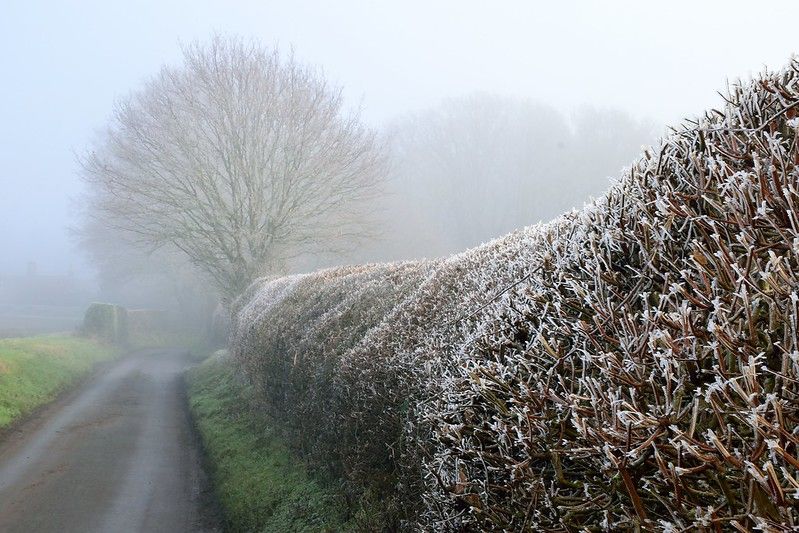
Hampshire | Countryside charity CPRE Hampshire has announced an initiative to link the two National Parks in Hampshire – the South Downs and the New Forest – via a corridor of hedgerows. Britain has lost half its hedgerows since 1945, but the charity is working to buck this trend to boost biodiversity. Hedgerows also play a crucial role in capturing carbon, mitigating flooding and strengthening rural economies, according to the charity. The ‘Hampshire Hedge’ will travel through the heart of Hampshire parishes, connecting fragments of woodland, meadows, nature reserves and SSSIs, and engaging local communities in the ancient art of hedgelaying. The Daily Echo reported the news.
Elsewhere:
- Cornwall Wildlife Trust has announced plans to create the largest ever nature recovery project in Cornwall by rewilding 297 hectares at Helman Tor nature reserve.
- The UK’s first Young People’s Forest in Derbyshire has helped ease the climate anxiety of its young volunteers, reports the BBC.
- The Freshwater Biological Association has recruited dozens of volunteers to help with a mass sampling of the water quality in Lake Windermere, reports the BBC.
- The first of hundreds of cuckoos tagged by the British Trust for Ornithology has arrived back on UK soil near the Welsh town of Llangollen, after travelling from the rainforests of central Africa, reports BirdGuides.
- Natural Resources Wales is carrying out conifer thinning and non-native species control at ancient woodland sites in Gwynedd, Ceredigion and the Wye Valley to benefit biodiversity.
- The Farne Islands will remain closed after three new cases of avian flu were detected, reports the Guardian.
- A group of peacocks – called an “ostentation” – have taken a mysterious liking to a Norfolk market town, reports the BBC.
- Campaigners held a protest at Whitehall against plans to build the Norwich Western link road through ancient habitat in Wensum valley, reports the BBC.
- Firefighters tackled a 200m wildfire in Achmelvich amid warnings over dry conditions and high winds, reports the Herald.
- Gloucestershire Wildlife Trust has created a nature highway along Barton Street in Gloucester to boost wildlife in the urban area, reports the BBC.
- Volunteers led by the Cornwall Wildlife Trust are using scythes to clear scrub from moorland near the River Cober at Burras, reports the BBC.
- Pathological tests have found no clear cause of death for a “healthy” golden eagle discovered dead on an estate in the south of Scotland, reports the BBC and the Scotsman.
- Bartonsham Meadows on the outskirts of Hereford will be transformed into a 40 hectare nature reserve, reports BirdGuides.
- The UK’s largest open-cast coal mine at Ffos-y-Fran, near Merthyr Tydfil, must shut after a requested extension was rejected, reports the BBC.
- Hundreds of locals have signed a petition protesting against plans for a major housing development that would destroy part of a nature and heritage trail in Yorkshire, reports the Yorkshire Post.
Reports
Rivers | Campaign group River Action UK has launched a new Charter for Rivers ahead of local elections in England during May. Signed by organisations including the Wildlife Trusts, the Rivers Trust, the National Trust and others, the charter calls on political leaders to commit to restoring the health of Britain’s rivers by 2030. It outlines ten “ambitious but achievable actions”, ranging from ending sewage and agricultural pollution to reforming the planning and promoting natural solutions. The Wild Trout Trust has backed the charter, although it also outlined areas in which the charter could be more ambitious or specific, including improved funding for environmental regulators and specific milestones up to 2030 to hold the government to account.
Farming | The Food, Farming & Countryside Commission has released a report looking at the role of natural capital markets in encouraging nature-friendly farming. While the new Environmental Land Management scheme is a positive step, it will not fill the gap in the balance sheet left by the Common Agricultural Policy, writes chief executive Sue Pritchard in the introduction to the report. An additional briefing explores the role for governments in shaping and enabling such markets so that help farmers to achieve climate goals and nature recovery. The key findings from the analysis are outlined here.
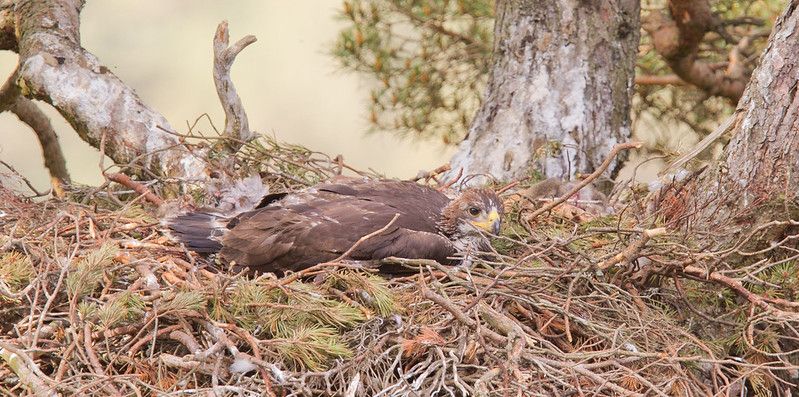
Eagles | A national survey conducted by the Scottish Gamekeepers Association has found a 57% increase in eagle nests in the last seven years on land managed by gamekeepers. The Association asked members across Scotland to report the location of active eagle nests on the grounds they manage. The results revealed 35 new nests from the previous survey carried out in 2015, with a total of 91 compared to 58. The new nests include reintroduced sea eagles for the first time, as well as 11 golden eagle nests in the Cairngorms and ten in the Monadhliath Mountains. The Association said the actual increase in numbers is likely to be higher than the results show, as large parts of the west coast and Sutherland are without the same survey coverage as central and eastern Scotland. Committee member Ronnie Kippen said that although persecution of eagles still exists among a small minority of the game sector, the survey shows statistical proof of genuine conservation action in areas where professional gamekeepers operate. The Times covered the results.
Science
Oceans | A study in Nature Communications looks at how warmer temperatures affected the ocean’s “twilight zone” in the distant past. The twilight zone refers to the expanse of water between 200 and 1,000 metres deep, which gets little light but is home to a wide variety of organisms. But such abundance wasn’t always the case. “We looked at two warm periods in the Earth’s past, about 50 million years ago and 15 million years ago,” said Professor Paul Pearson of Cardiff University, who led the research. “We found that the twilight zone was not always a rich habitat full of life.” The researchers examined three emissions scenarios to understand how the oceans might respond to similar pressures in the decades to come due to climate change.
Green space | Scientists have studied the historic Cruickshank Botanic Garden in Aberdeen to assess how different vegetation types affect what happens to rainfall. This is useful information when designing other urban green spaces, as it helps such places to mitigate the impacts of climate change and urbanisation more efficiently. The study, published in Environmental Monitoring and Assessment, showed that soils below grassland had greater water storage and groundwater recharge capacity, but also experienced more rapid drying, while conifers increased transpiration, helping to cool the air. The authors suggest that future work could test if the results hold true in other habitats and locations.
Biodiversity | There are problems on the horizon for the government’s biodiversity net gain (BNG) policy, according to a new paper, which is yet to be peer-reviewed. Researchers from the universities of Kent and Oxford examined BNG information from all new major developments across six early adopter councils from 2020 to 2022. They found that large developments were more likely to meet their BNG needs within their own footprint, while small developments were more likely to purchase offsets. Some 21% of applications contained conspicuous errors in their calculations, half of which had already been accepted by councils, hinting at the lack of resources available for such assessments. The authors of the paper conclude that these issues must be addressed prior to nationwide rollout to ensure that the policy benefits nature.
Driftwood
Rewiggling | The BBC has an interesting feature on how the rewiggling of Swindale Beck in the Lake District has improved wildlife since the work was carried out in 2016. The river was straightened by the local community around two hundred years ago, with the aim of increasing the amount of farmland along its banks. However, the faster-flowing water led to the decline of salmon and trout, which were no longer able to spawn. After restoring the old curves, however, those fish returned within around three months, with new aquatic habitats springing up within each bend. "It's like a living thing moving through the valley now, while the old, straightened river was just like a sad canal,” says Lee Schofield from the RSPB, who manages the site. Aerial photographs show how the valley looked both before and after its restoration.
River Forth | A Facebook group of more than 10,000 people has helped scientists from Heriot-Watt University to map the marine mammals appearing in the Firth of Forth. Emily Hague, a marine mammal researcher, used sightings posted on the group to create an interactive map tracking the whales, porpoises, dolphins and seals visiting the Firth over a two year period. These included humpback, minke and killer whales, as well as common and bottlenose dolphins and harbour porpoises. Hague said that the project is raising awareness of the Forth’s marine life among locals, but it will also contribute to emerging science and policy to help better conserve and protect the important habitat. The Herald covered the news.
Hiking | The walking group Muslim Hikers marked Ramadan this year with a range of prayer mats with a difference: they are specifically designed for outdoor use. Popular hiking routes in the Peak District also featured signs pointing to Mecca. The gesture might seem small, but it can help people feel welcome, according to Sidra, a member of the group: “It makes me feel like the National Park is welcoming us with open arms.” This is just one of the various initiatives discussed in an article in The Lead on tackling racism and exclusion in the countryside. Separately, Countryfile has an interview with Haroon Mota, founder of Muslim Hikers, in which he talks about the group’s recent Ramadan Retreat. “It felt incredibly enriching and powerful to share breaking the fast and praying together, against the backdrop of the green peaks of Dovedale,” he says.
Further reading:
- A blog by the RSPB looks back at some of the top moments from the Wild Isles series, as discussed on Twitter.
- After a minke whale was washed up in East Lothian last week, this article asks how one goes about disposing of a giant whale from a beach.
- To mark World Curlew Day, Nature Scot’s Ornithology Adviser, Dave Parish, has written a blog about the plight of curlew in Scotland, and what is being done about it.
- This interview by Pelagic Publishing speaks with author Miles Richardson about his new book, Reconnection: Fixing our Broken Relationship with Nature. A blog by Richardson himself includes reviews and reflects on the writing process.
- The Royal Entomological Society has announced the winning shots from the Insect Week photography competition.
- An opinion article in Countryside argues that farmers have a responsibility to maintain footpaths on their land.
- An RSPB blog highlights why sandeels are a vital lifeline for British seabirds and other marine life.
- A NatureScot blog considers the frequency of Scottish locations named in Gaelic for the bellowing of stags during the rut: bùirich.
Happy days
Diaries | The discovery of forgotten diaries, each more than one hundred years old, has revealed how an illiterate baker in Edinburgh would go on to open Scotland’s first herbal apothecary in 1860. Fifteen-year-old Duncan Napier was delivering bread rolls to lawyer John Hope – the grandson of the King’s botanist and founder of the UK’s first botanical garden – when they fell into conversation. Discovering Napier’s budding interest in plants, Hope encouraged him to attend botany classes and join the Edinburgh Botanical Society. This education would flourish into a business when Napier developed a cough syrup from herbs. The BBC covered the story.
Subscribe to our newsletter
Members receive our premium weekly digest of nature news from across Britain.
Comments
Sign in or become a Inkcap Journal member to join the conversation.
Just enter your email below to get a log in link.