Rapid Review & New World Heritage Site
The latest news on nature and conservation in Britain.
National news
Environment | The government has published its annual progress report on the Environmental Improvement Plan, detailing how nature fared under the Conservatives. It does not paint a pretty picture, with wildlife, clean air, pesticides, and resource use among the targeted areas that have experienced deterioration. In response, the new Labour government announced that it would undertake a ‘rapid review’ of the Environmental Improvement Plan, developing a ‘new, statutory plan to protect and restore our natural environment with delivery plans to meet each of our ambitious Environment Act targets.’ It promised that the review would be completed by the end of the year. ‘Working with civil society, business and local government, we will develop an ambitious programme to turn the tide and save nature,’ said environment secretary, Steve Reed. Environmentalists welcomed the news. The Guardian and others covered the story.
Butterflies | Butterfly numbers in the UK are at their lowest in 14 years, according to an annual citizen science count. On average, participants in the Butterfly Conservation’s Big Butterfly Count have spotted just over half the number of butterflies they were seeing at this time last year. This is largely down to the wet spring and early summer weather, according to the charity, as butterflies need warm and dry conditions to mate. The drop takes place within the broader context of long-term declines, with 80% of UK butterfly species having decreased in number since the 1970s due to habitat loss, pesticide use and climate change. The charity said there is still a chance of some butterflies emerging late if there is a prolonged sunny spell. The Guardian, the Times and the Independent reported the news. Meanwhile, the charity Buglife is calling on citizen scientists to participate in their Bugs Matter survey, which charts insect abundance across the UK.
Beaches | The number of plastic bags washed up on UK beaches has fallen by over 80% in the last decade. Volunteers taking part in the Marine Conservation Society’s annual litter survey found an average of one bag on every 100 metres of coastline, compared to five back in 2014. The charity said the drop is undoubtedly due to the introduction of mandatory charges for shoppers who opt for single-use carrier bags at check-outs. Meanwhile, the survey also found that nine out of ten beach litter items were plastic, and drinks-related litter was found on 97% of UK beaches. Lizzie Price, programme manager at MCS, said that while it was ‘brilliant to see’ the reduction of carrier bags, the UK governments must push forward with policies to charge for or reduce more single-use items, and speed up the proposed deposit scheme. The Guardian and the Independent covered the news.
In other news:
- Organisers of the National Whale and Dolphin Watch, which is currently taking place along UK coastlines, say the data collected is crucial for monitoring cetacean trends, reports the Guardian.
- Forestry experts Confor say ‘Wales is going backwards’ after it planted just 12% of its annual target for woodland creation last year, reports the BBC.
- Ed Miliband has promised there will be a ‘nature voice’ in the government’s control centre for achieving clean power, reports ENDS.
- Defra has asked the Office for Environmental Protection for an extension to deliver its full response to the OEP’s report on the regulation of waterways, reports ENDS. Defra said it would provide a ‘detailed response’ in September.
- Campaigners have urged the defence secretary to close a ‘loophole’ that they say allows foxhunting to take place on Ministry of Defence land, reports the Times.
- A species of invasive beetle has been found on Sitka spruce trees, the UK’s most widely planted spruce, for the first time. ENDS reported the news.
Across the country
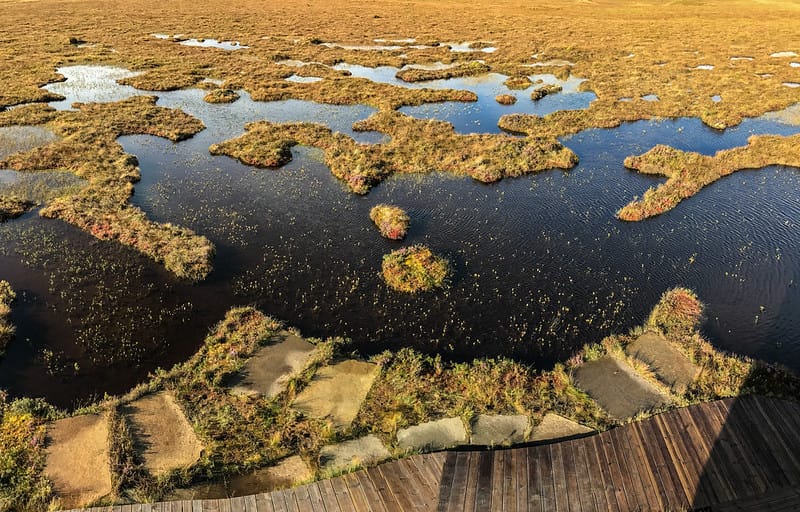
Flow Country | UNESCO has designated the Flow Country, in Caithness and Sutherland, a World Heritage Site – the first peatland in the world to receive such an honour. The inscription recognises the landscape’s diverse and internationally important habitats, as well as the vast amount of carbon stored within its soils. The announcement is the culmination of an almost 40-year campaign. The news was widely celebrated; commentators noted that it would raise the profile of bogs and create local green jobs through landscape restoration and conservation. Even King Charles paid a visit to celebrate the news. ‘The UNESCO inscription recognises how important this inspiring landscape is for nature, but also the important role generations have played in protecting this special place,’ said Anne McCall, director at RSPB Scotland. The Times, the BBC, the Independent and the Herald all covered the news.
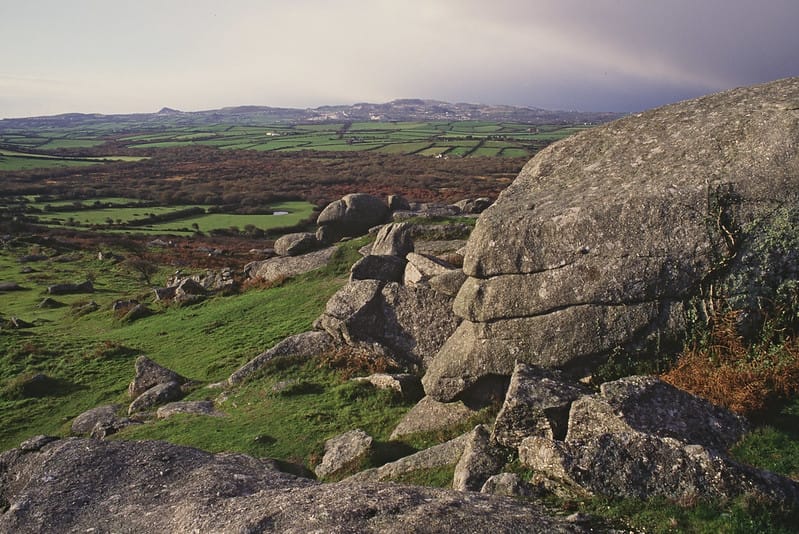
Cornwall | Cornwall Wildlife Trust has announced a major rewilding project stretching from Helman Tor in central Cornwall to St Austell Bay on the coast. Following the River Par to the sea, ‘Tor to Shore’ aims to create a thriving landscape at scale by connecting and restoring key areas of habitat. The project will build on the work carried out by the Trust for the past 18 months, including introducing Tamworth pigs and English longhorn cattle to graze among woodland and heathland. The next stage will include working with farmers along the River Par to tackle agricultural pollution and create wildlife corridors, as well as protecting and restoring the large seagrass and maerl beds in St Austell Bay. The Guardian and the BBC reported the news.
Essex | On a hill overlooking north London is a woodland where Harold Godwinson, the last Anglo-Saxon king, once hunted deer. Harold’s Park is mostly fields home to ponies and Christmas trees now – but that is about to change. The 200-hectare farm has been purchased by Nattergal, a rewilding company which plans to restore the farm to the messy wood pasture which King Harold would have experienced. Despite being ecologically degraded, the land is ‘ripe for rewilding’, according to Ivan de Klee, Nattergal’s head of natural capital. He said it still contains an ancient woodland, several ponds, and unkempt hedges, all of which will help to re-establish natural processes. Most of the farm’s income will now come from biodiversity net gain payments, which developers can purchase to become ‘nature positive’. The Guardian and Business Green reported the news, while a comment piece in the Spectator argues that such projects benefit private investors rather than the public.
Elsewhere:
- A pilot project in East Sussex has enlisted ten pet dogs with backpacks full of woodland flower seeds to rewild a nature reserve, reports the Times and the BBC.
- A team of divers has discovered unknown beds of maerl – a rare and slow-growing pink calcified seaweed – off the south coast of Cornwall, reports the BBC.
- DNA tests have revealed that dog waste and litter – not sewage – were to blame for dangerous levels of E. coli at Portobello beach in Edinburgh, reports the Times.
- Campaigners are demanding action after samples revealed that levels of blue-green algae in Lake Windermere exceed World Health Organisation guidelines for safe swimming, reports the Times. Meanwhile, a citizen science water quality project on the lake will go ahead self-funded after its grants ended, reports the BBC.
- The RSPB has discovered a rare weedy frillwort – a 5mm tall plant – at a quarry in Bedfordshire after work to create wildlife-friendly space, reports the BBC.
- The large tortoiseshell butterfly, thought to have disappeared from England in the 1960s, is making a comeback in Kent with more than 30 spotted this year, reports the BBC.
- Eight shoots have sprouted from the stump of the felled Sycamore Gap tree in Northumberland, giving hope it could achieve significant growth in time. The news was widely covered.
- Bristol Greens have promised to pause work at Yew Tree Farm after bird nests were reportedly destroyed by council contractors, reports the Bristol Post.
- A ‘mystical’ Scottish island off the Trotternish peninsula is up for sale with a price tag of £190,000, reports the Herald.
- Six organisations in Essex are urging Natural England to protect Middlewick Ranges, a former firing range which is now a mosaic of rich grassland habitats, according to Buglife.
- Lincolnshire County Council and the Woodland Trust have announced a joint project to plant 200,000 trees and 20,000 metres of hedgerow by 2026, reports the BBC.
- South Ribble Council in Lancashire has launched a Hedgehog Action Plan to tackle the county’s declining population of prickly mammals, reports the BBC.
- Celebrities have criticised plans to build two large seaweed farms off the north coast of Cornwall, with one branding them ‘nothing short of criminal’, according to Cornwall Live.
- Locals are calling for a halt to the sale of an estate with a ‘thousand-year-old’ forest near the banks of Loch Lomond, reports the Scotsman.
- At least 86% of the trees in Galloway forest park are non-native species, according to the Ferret, prompting calls to diversify the woodland.
- The Fruit and Nut Village charity has created more than 50 community orchards in Birmingham since 2018 to reconnect people with growing their own food, reports the BBC.
- A community organisation has secured over £80,000 of funding from the Scottish Government to launch an ‘ambitious’ restoration project around Ben Nevis, reports the Herald.
- The annual royal census of swans on the River Thames has found a decline in numbers for the second year in a row, reports the BBC.
- Morriston Hospital in Swansea is transforming an unloved grazing pasture into a community space for ecological restoration and wellbeing, reports Nation Cymru.
- Marsden Moor in west Yorkshire stores between 1 and 1.5 million tonnes of carbon, according to research by the University of Leeds. The Independent covered the news.
Reports
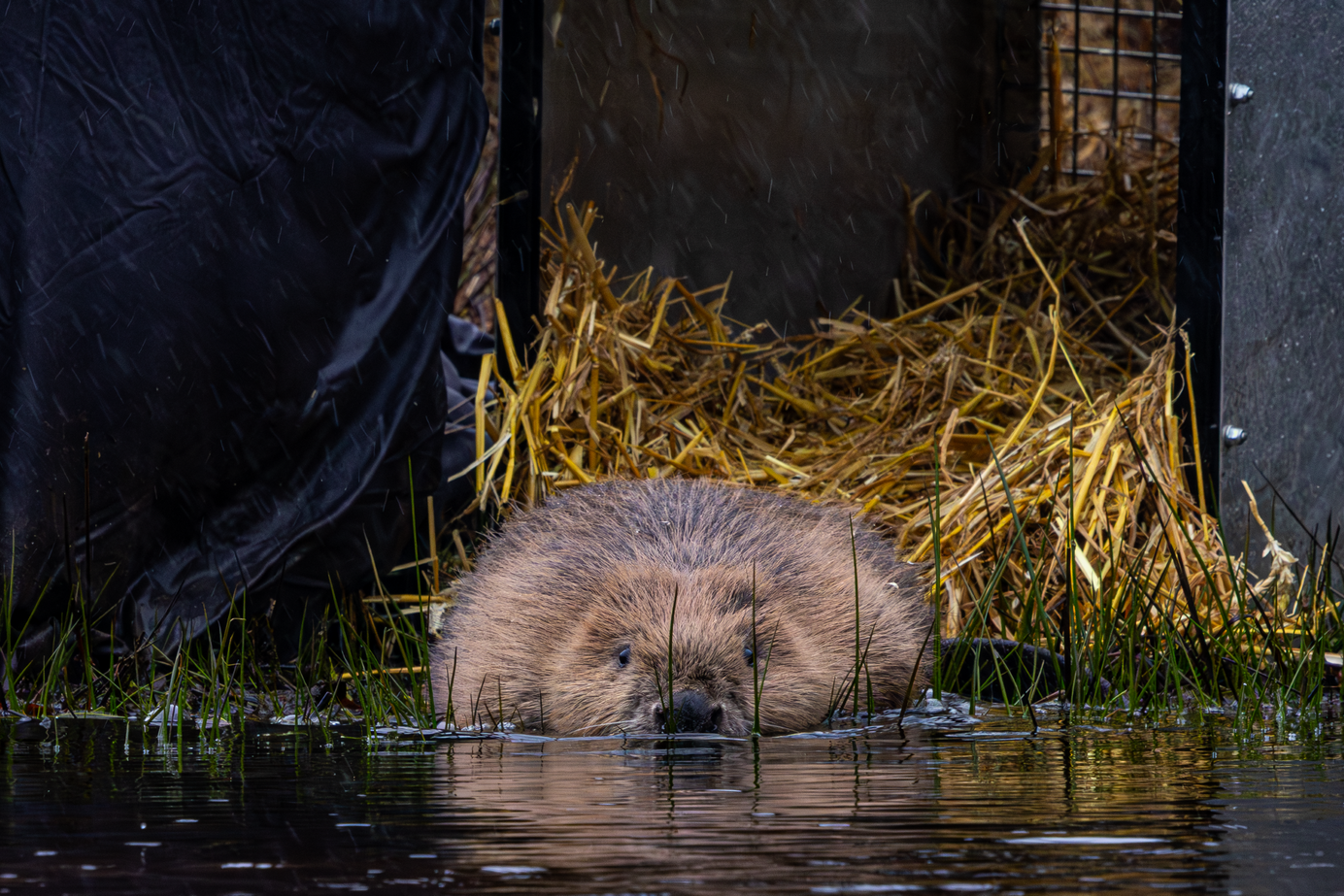
Beavers | In 2023-24, fewer beavers were culled in Tayside, Scotland, than in previous years. While 85 beavers were removed to prevent damage to agriculture during the 16-month period, some 90% of these were trapped and translocated – 40 within Scotland and 36 to enclosures in England – rather than killed. This compares to just 42% in 2022 and 28% in 2021. Only eight were lethally controlled. While the situation is evolving year on year as beaver populations expand across the country, the numbers represent a victory for efforts to bring back the once-extinct species, with the drop in unnecessary deaths down to the increased willingness of landowners to try trapping first. The report was published by NatureScot, and covered by the Herald.
Parks | Currently, the UK’s 15 National Parks are a source of greenhouse gas emissions – but that need not be the case. Small World Consulting used a consumption-based approach to measure the carbon footprint of the parks, considering not only the direct emissions from land use but also the carbon embodied in the goods and services consumed by residents and visitors. The researchers found that the parks currently emit 11.5 million tonnes of greenhouse gases per year, but have the potential instead to store 3.5 million tonnes. Some 63% of this would be achieved through emissions reductions from communities and residents, while the other 37% would come from land use change, such as woodland creation and peatland restoration – actions that would also boost biodiversity, the authors note. The findings have resulted in the UK’s National Parks joining the Race to Zero initiative, committing to becoming significant carbon sinks by 2050.
Manifesto | The Conservative Environment Network has published a manifesto for a ‘greener, more prosperous’ future as the party debates its next direction and leadership. The plan proposes 91 environmental policies which aim to ‘embrace the party’s green record’ and lay out an environmental vision to the electorate. The policies are split into six sections, which include measures to unlock private investment in clean industries and improve resource security. Notably, there are also chapters on restoring iconic British species and landscapes through improved protections for nature, as well reducing pollution and expanding nature access in local communities. Commenting on the report, former leader of the party Michael Howard said: ‘As CEN correctly argues, conservative environmentalism is responsible, economically efficient, and an undoubted political asset for our party.’
Science
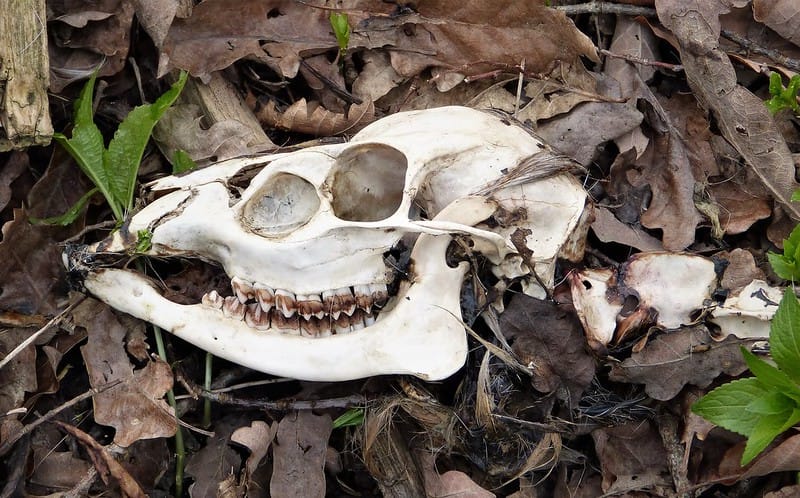
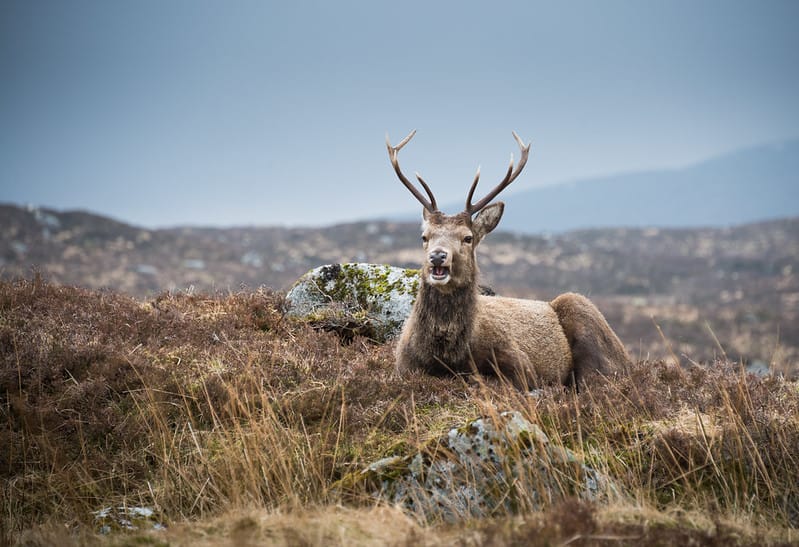
Deer | The practice of removing the carcasses of culled deer is depriving the Scottish landscape of vital nutrients, according to a study published in Ecological Solutions and Evidence. The loss of calcium is particularly damaging, as its scarcity can limit woodland regeneration and reduce shell thickness in birds. The loss of meat, meanwhile, deprives other predators of food, causing them to target ground-nesting birds such as capercaillie. One solution would be for hunters to leave the carcasses where they fall; another would be to reduce culls and reintroduce natural predators in their place. ‘Through predation, both the consumed carcass and what is left behind would ultimately remain in the ecosystem,’ said Kristy Ferraro, the study’s co-author. The findings were covered by the British Ecological Society.
Hares | Certain animals are able to adjust their behaviour to deal with the impacts of climate change. Researchers explored whether this was the case for mountain hares in Scotland. The species is particularly vulnerable to changing weather patterns. Their fur turns from brown to white in winter; late snowfall or early snowmelt means they lose their camouflage and become vulnerable to predators. In theory, they could compensate for this by standing near white stones, for example – but the scientists found that the hares were not adapting in this way, nor in other ways they measured. The results were unexpected, the researchers wrote, and suggest that behavioural adaptation ‘might not be a universal, rapid mechanism facilitating adaptation to climate change’ after all. The study was published in Oikos.
Badgers | The practice of badger culling in England is based on inadequate scientific evidence, according to a study in Scientific Reports. Defra has been culling badgers since 2013 as a means of controlling tuberculosis in cattle herds, with the result that around 230,000 badgers have been killed to date, depleting local populations by up to 95%. The rationale for culling is based on a randomised field trial which took place from 1998 to 2005, which reported a substantial decrease in bTB in herds where culling occurred. The current study, led by veterinary epidemiologist Paul Torgerson, reanalysed data from the trial and concludes that, when using more suitable statistical methods, there is ‘no evidence of an effect of culling’. Campaign organisation Born Free summarised the research, and called on the Labour government to bring the practice to an immediate end.
Driftwood
Prehistory | Early farmers often – but not always – boosted floristic diversity, according to a feature in the Conversation, based upon new research published in Nature Ecology & Evolution. By looking at fossilised pollen data, researchers from the University of York analysed how vegetation changed when humans first began planting crops. They found that biodiversity sometimes increased, particularly in places where the farmers settled in forests, and decreased in places where the landscape was already open and grassy. These patterns are linked to the variety within the ecosystem. ‘Making a forest patchy is easier than making an open grassland patchy, since it’s easier to chop down trees and for open-ground plants to colonise these gaps,’ the authors explain, adding that making an open landscape patchy means planting trees in places ill-suited to their survival. The findings, they write, have implications for how we think about the role of humans in the landscape today.
Moon | Scientists have suggested a new way to save endangered species: send their DNA to the moon. The idea of creating a genetic repository is not new, but those already on earth are becoming increasingly vulnerable to global pressures; the researchers point to the flooding of the Svalbard global seed vault in 2017 due to climate change and the destruction of Ukraine’s seed bank in 2022 due to war. The moon, on the other hand, is immune to such geopolitical events, and is naturally cold enough that the samples would be cryopreserved without need of an energy source. ‘We know how to do this and can do this and will do this, but it may take decades to finally achieve,’ said Dr Mary Hagedorn, the lead author of the proposal. The Guardian covered the story.
Cider | On a hot summer’s day, there’s a surprisingly good reason to reach for a refreshing craft cider: it can benefit the environment. In the Conversation, senior lecturer Ufuk Alpsahin Cullen from Edge Hill University explains that traditional full-juice craft cider – made from the whole juice of pressed apples rather than concentrates – is a product which epitomises a slower, more circular way of production. The apples are usually local, the resulting cider sold close to where it was made, and the primary waste product, called pomace, can be used as fertiliser. Even better, small-scale cideries often help to create social value, too. The Ross-on-Wye Cider and Perry company aims to preserve local traditions and apple varieties, for example, while the Wasted Apple in Cornwall works with bee conservation groups. All in all, it is ‘well worth making [craft cider] your summer tipple’, for both the taste and the impact, Alpsahin Cullen writes.
Further reading:
- The dictionary definition of nature should include humans, not exclude them, according to campaigners. A feature in the Guardian explores the topic.
- The Scotsman takes a look inside a multimedia art exhibition, ‘Fungi Forms’, at Edinburgh’s Botanic Gardens. It includes a Stella McCartney handbag made from mushrooms.
- In the Guardian, Steven Morris describes the first-time charm of seeing the light of glow-worms during a survey in Dorset.
- Also in the Guardian, but on a different note, stand-up comedian Stewart Lee writes a biting opinion piece about the decimation of Britain’s species and climate change.
- A blog by the John Muir Trust investigates the inspiration behind two artists’ work depicting the ‘Faerie Mountain’, or Schiehallion.
- Every year in Eyemouth, a Herring Queen is crowned with much joviality – but the tradition hides the dark reality of the local fishing industry. A Guardian feature investigates the celebration.
- An article in Meteored takes a look at research into why a preference for pretty butterflies is problematic for conservation efforts.
Happy days
Rivers | A feature in Orion Magazine presents the stunning work of artist and cartographer Daniel Coe. Coe uses elevation data, primarily from plane-mounted lasers, to visualise geographic features such as rivers and floodplains. The resulting images, hewn in electric colours, capture the overlapping textures of fluvial channels in beautiful detail. These ‘river maps’ reveal ‘stories hidden in historical sediment and past channels carved by the water, as it twists and turns through both landscape and time,’ according to the blurb.
Subscribe to our newsletter
Members receive our premium weekly digest of nature news from across Britain.
Comments
Sign in or become a Inkcap Journal member to join the conversation.
Just enter your email below to get a log in link.