Scottish Restoration & Cathedral Peregrines
The latest news on nature and conservation in Britain.
Welcome to Inkcap Journal, a newsletter about nature and conservation in Britain. This is the Friday digest, rounding up all the week's news, science, reports, comment and more.
National news
Restoration | NatureScot has published its vision for the next four years, outlining how it plans to combat the twin crises of biodiversity loss and climate change across Scotland. Specifically, the Corporate Plan sets out a route map for halting nature loss by 2030 and delivering nature restoration at scale by 2045. Priority areas for the next four years include protecting 30% of land and sea by 2030; scaling up peatland restoration; delivering the £65m Nature Recovery Fund; and drastically reducing deer numbers. Separately, NatureScot also published a report examining what lessons can be learned from large-scale nature restoration, including rewilding, in Scotland and beyond. The report reviews 25 case studies from Scotland and across Europe to highlight what worked, why, and the barriers that some projects faced. NatureScot said that it envisions large-scale restoration and rewilding as “solutions for our times”, and will be using the report to inform new and developing projects across Scotland.
Food | Do you think about sustainability during your weekly food shop? If so, Scottish crab and lobster shouldn’t be on the list, according to the Marine Conservation Society’s updated guide to sustainable UK seafood. Crab and lobster have been classified as “fish to avoid” in the Good Fish Guide, due to concerns about migrating whales getting entangled in Scottish fishing gear. In total, MCS has added 14 new species which are to be avoided this year, including monkfish from the North Sea. The charity said its latest assessment of UK seafood reveals a need for more rigorous management of British seas. The Guardian and the Telegraph covered the news. If you’re looking for a different animal-based product to buy, however, meat eaters should be consuming more venison to protect the environment, according to a Forestry England executive, as this would help prevent soaring deer populations harming British woodland. The Telegraph covered the story.
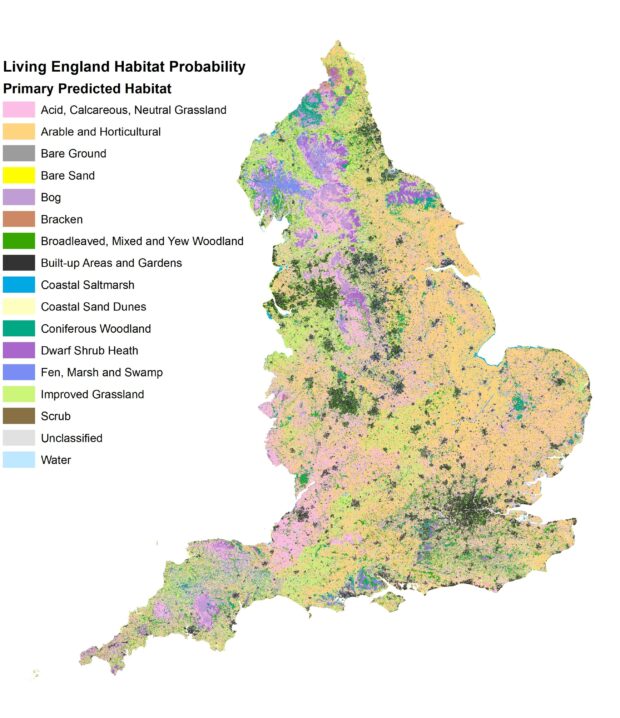
Maps | Natural England has launched a new map that shows the extent and distribution of different habitats across England. It will, according to a blog, provide important data for environmental policy decision-making and guide efforts to support nature’s recovery. However, concerns over its accuracy have already led some to wonder how useful it will be when it comes to granting subsidies, for instance. One ecologist wrote that their species-rich meadows had been classified as “improved grassland”. Separately, Natural Resources Wales has released a new map of Wales’ peatlands, which will track how the habitat recovers through conservation action over the coming years.
In other news:
- A highly toxic rat poison is killing increasing numbers of birds of prey, according to figures reported by the Guardian.
- Swallows are overwintering in Britain rather than migrating back to Africa, reports Discover Wildlife.
- The Wildlife Trusts put out a statement in advance of the government's new Energy Security Strategy.
Across the country
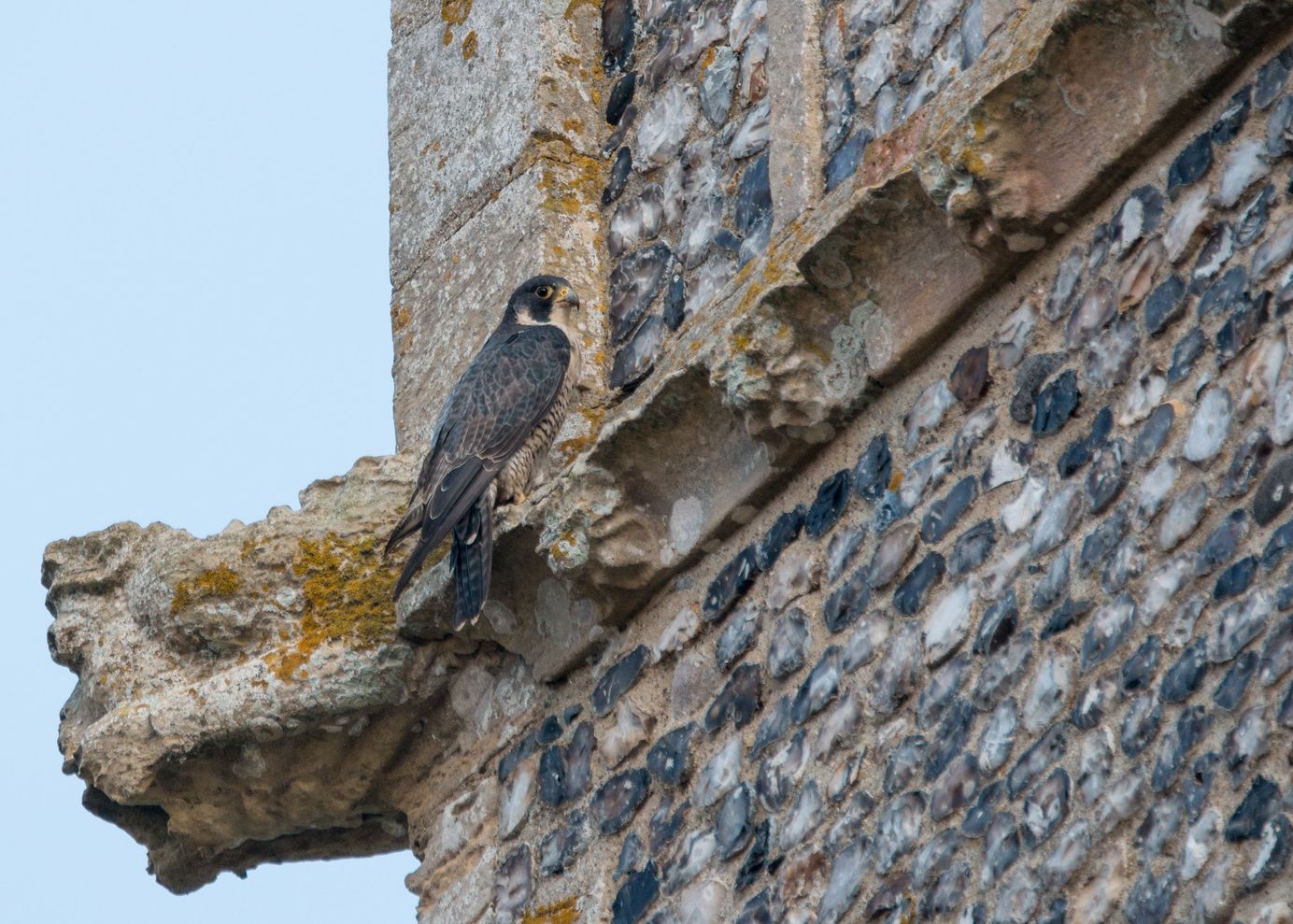
Liverpool | Anti-bird netting has been erected across the favoured nesting site of the Liverpool Cathedral peregrine falcons. The pair have resided at the site for the past few years, but cathedral officials say their guano is damaging the sandstone façade. The cathedral has installed a wooden platform as a replacement nesting site, but local wildlife enthusiasts say it is far more exposed than the traditional site. Cathedral officials have not provided any evidence as to when the netting was installed, leading to suspicion that the disturbance may have happened illegally, at a time when the birds were in early stages of the breeding season. BirdGuides reported the news. Meanwhile, monitors at Ely Cathedral have revealed that a newly built nest site intended for a returning pair has been usurped by two unknown females. The BBC covered the story, which a local resident described as “a bit like a soap opera”.
Oxfordshire | Giant orchids have been found growing in the UK for the first time on a grassy slope near Didcot in Oxfordshire, having become established hundreds of miles north of their native range in the Mediterranean, reports the Guardian. The range of Himantoglossum robertianum is expanding as the climate warms, although it is believed that these plants first arrived when someone scattered their seeds about 15 years ago. Locals say that the plants flowered briefly back then before vanishing again, although they were never officially reported at that time. BirdGuides also reported the news.
County Durham | The leaders of Durham County Council have agreed to declare an ecological emergency, but don’t want to spend much money on tackling it, reports the Northern Echo. Richard Bell, the cabinet member for finance, said that the action plan should deliver “a lot of bang for our buck… without requesting huge amounts of money to go with it.” Separately, Horden Moor, a 300-acre grouse moor, has gone on the market in the Durham Dales, reports the Northern Echo. Neighbouring the Raby and Eggleston Estates, it is small and relatively affordable at just £750,000, according to the agency managing the sale.
Elsewhere:
- A £1.2m grant from Natural England will bolster the restoration of an ancient peat bog near Oldham, Greater Manchester, reports the BBC.
- Botanists are hoping a new project to grow Guernsey’s rare plants will help preserve the species, reports the BBC.
- Protestors have dumped piles of dead and rotting crabs outside Defra’s offices in London to highlight the loss of marine life on northeast beaches, reports the Northern Echo.
- New rules for the River Tees will require local councils to investigate if new developments could pollute the river, reports the BBC.
- Farming company Velcourt Ltd has been fined by the Environment Agency for polluting a Somerset watercourse, killing hundreds of fish.
- Plymouth’s first urban micro-forest has been planted by school children from Mount Wise Primary School, reports the Plymouth Herald.
- St. Blaise town council has said it won’t plant daffodils due to the health and safety risks posed by ingesting the flowers, reports Cornwall Live.
- North Devon has become the first place in the UK to be selected as a World Surfing Reserve, reports the BBC.
- Somerset councillors are calling for rivers to be cleaned up after reports of ‘poo islands’ forming, reports the BBC.
- Plans for a controversial 1.5-million-bird chicken farm near Bridgnorth have been shelved, reports the Shropshire Star.
- A rare population of little terns is thriving on Orkney thanks to the protection of school children, reports the BBC.
- The ageing workforce of Gateshead Council means its tree surgeons are “too old to go up trees”, according to a councillor. The BBC covered the story.
- The Highland Council is planning to cut less grass and expand wildlife corridors to enhance biodiversity, reports the John O’Groat Journal.
- National Highways has secured over £750k to work with Cornwall Wildlife Trust on biodiversity schemes bordering the A30 in mid-Cornwall.
- A new nature reserve in Llanfoist has been proposed to encourage wildlife, reduce water pollution and provide green space for visitors, reports the South Wales Argus.
- London Wildlife Trust has launched a project to protect Southwark’s last ancient woodland, reports the Southwark News.
- The company that runs Plymouth’s vast tungsten mine has begun erecting deer-proof fencing and planting hundreds of trees, reports the Plymouth Herald.
Reports
IPCC | The IPCC has published its latest report on the mitigation of climate change. Nature-based solutions are among the methods that offer the highest potential for mitigation, according to the report. It highlights the importance of protecting existing habitats such as forests and peatland, as well as the potential of sustainable agriculture and plant-based diets. An entire chapter is devoted to ‘Agriculture, Forestry, and Other Land Uses’, taking a deep look at both the emissions caused by these activities and their crucial role in mitigation. Carbon Brief’s Cropped newsletter examines the report’s focus on how land use can tackle climate change. Meanwhile on Twitter, Mark Lloyd, executive chief of the Rivers Trust, highlighted the sizable contribution agriculture and ecosystem restoration can make to mitigation. Hitting a different note, the RSPB’s blog on the report highlights that any technological climate solutions must be designed and implemented with nature in mind to avoid unintended harm, as seen with the threats offshore wind farms pose to seabirds.
How to stop climate change, in one big beautiful chart #IPCC pic.twitter.com/DmGoSRXyRu
— Jonah Busch (@jonahbusch) April 5, 2022
Savernake | Forestry England has published a land management plan for Savernake Forest, the only ancient woodland in Britain still in private hands. The plans, which fall under the agency’s wider project ‘Our Shared Forest’, aim to reshape and redirect Forestry England’s sustainable management of the forest, and exhibit “forward-thinking forestry” for the future. However, the agency’s plans have been met with opposition from the Earl of Cardigan, whose family has owned the forest for nine centuries. The Earl has taken issue with the agency’s proposal to stop cars from entering Savernake so that work can begin to build a café, play area and car park. The proposal also includes plans to restrict visitors to specified trails, rather than wandering freely through the woods. The Times and the Daily Mail covered the news.
Gulls | The RSPB has responded to a report released by Natural England in February last year, which found that three quarters of herring gulls now live in urban areas because of the relatively safe nesting options and reliable source of food. Now, the government is discussing the possibility of councils being able to control numbers in the future, even though the species is currently protected. But Tony Whitehead, country communications manager for the RSPB, says that the inviting aspect of towns is only half the story, and that the gulls "have been growing into our towns while declining in wilder environments because of the damage we’re causing to our seas and their natural home.”
Science
Butterflies | British butterflies have changed size in response to climate change, according to a study published in Methods in Ecology and Evolution. The study used the Natural History Museum’s digitised butterfly collection, comprising over 125,00 specimens, to measure changes in butterflies dating back to the early 1900s. The most common findings suggest that adult butterfly body size increases with temperature during the late larval stages of development. The study is one of the first to show that computer vision – in which computers are programmed to identify and measure information from digital images – can accurately measure characteristics from digital collections, allowing researchers to chart species’ physical changes over decades.
Satellites | In the first study of its kind, researchers have used satellite data to monitor the progress of rewilding efforts from space. Scientists from the Zoological Society of London, Imperial College London and the University of Sussex used satellite images, such as those available from Google Earth, to track changes in vegetation from 2001 to 2020 at Knepp Estate in West Sussex, one of England’s longest running rewilding sites. The results showed significant changes in vegetation cover, with a sixfold increase in shrub cover and a 40% increase in areas with trees. The changes were particularly pronounced in the area of the estate left for an extended period before introducing large herbivores. The research demonstrates the potential for satellite imagery to help deepen understanding of the impacts of rewilding efforts on a landscape scale.
Meat | A study in Food Policy looks at how the environmental and health harms of red and processed meat consumption are framed by the meat industry. Using the websites of six organisations representing the UK meat industry, researchers identified key messages surrounding the debate around the human and planetary health impacts of eating red and processed meat. These messages – such as “keep eating meat to be healthy” and “no need to cut down to be green” – work to minimise the consumer’s perception of harm, while also encouraging continued consumption. The study identified the messaging as a classic framing technique used by other producers of harmful commodities, such as tobacco and fossil fuels, and highlighted how debates about food policy might be influenced by industry framing.
Driftwood
Sap | In a short feature for the Times, Jeremy Watson explores the ancient art of birch tapping – collecting the sap of birch trees – which is being revived in Scotland by Rupert Waites, owner of a wild food and drinks company. Birch sap is rich in essential minerals and has been consumed for centuries in northern Europe and China, but the tradition has largely died out in the western world. The sap is obtained by drilling a hole in the bark and allowing the clear liquid to rush out. “You have to drink it pretty soon after collecting it,” according to Waites. “If you leave it too long it starts to smell rotten.”
Access | The Times interviews “loveable posh rogue” Nick Hayes, one of the leaders of the campaign to expand access to the English countryside. The author of the article, Robert Crampton, is totally on board with Hayes’ cause, and together they take a ramble through the off-limits parts of the Englefield estate, belonging to former Conservative MP Richard Benyon. “I like walking in nature and then rich white men call it trespassing. They draw a line in the mud and I’ve got to cross that line,” says Hayes. He has a new book out, The Trespasser’s Companion, on 14 April.
Education | The New Statesman interviews author Michael Morpurgo and his wife Clare about the role of nature in education. Together, the couple runs the charity Farms for City Children, which has worked with more than 100,000 children since its inception in 1976. They are also backing the Nature Premium initiative, which is calling on the government to provide funding to allow every child in the UK to spend time in nature. Both Michael and Clare agree that “total immersion” in the natural world should be a right; it is, says Michael, “as important as literature”.
Further reading:
- Family farms in Wales are at risk from “greenwashing” offsetting schemes, the Times reports.
- Daniel Shailer, who recently wrote a feature for Inkcap Journal, has looked at the reintroduction of beavers for Sentient Media.
- History Extra magazine explores how the soldiers of World War I found solace in nature.
- The Ukraine war could be the final straw for the family farm, reports the Telegraph.
Happy days
Birdsong | Need to brush up on your birdsong identification skills ahead of the coming dawn chorus cacophony? The RSPB has released a helpful audio guide to the birds of both woodlands and farmlands. The observation that a yellowhammer sounds like it’s saying “little bit of bread and no cheese” definitely rings true.
Subscribe to our newsletter
Members receive our premium weekly digest of nature news from across Britain.
Comments
Sign in or become a Inkcap Journal member to join the conversation.
Just enter your email below to get a log in link.