Rewilding Project & Natural Beekeeping
The latest news on nature and conservation in Britain.
Welcome to Inkcap Journal, a newsletter about nature and conservation in Britain. Not a member? Sign up for a 30-day free trial.
National news
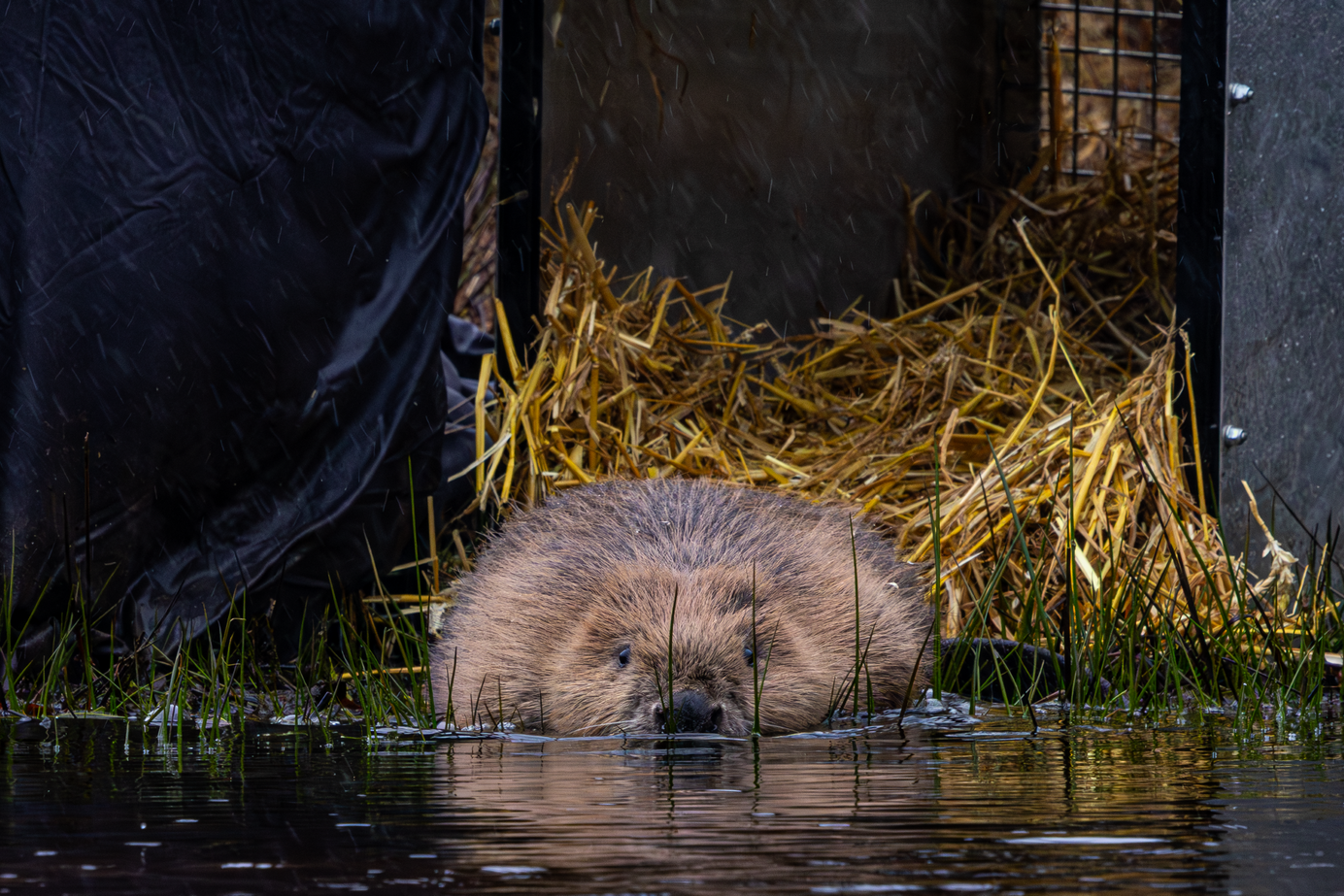
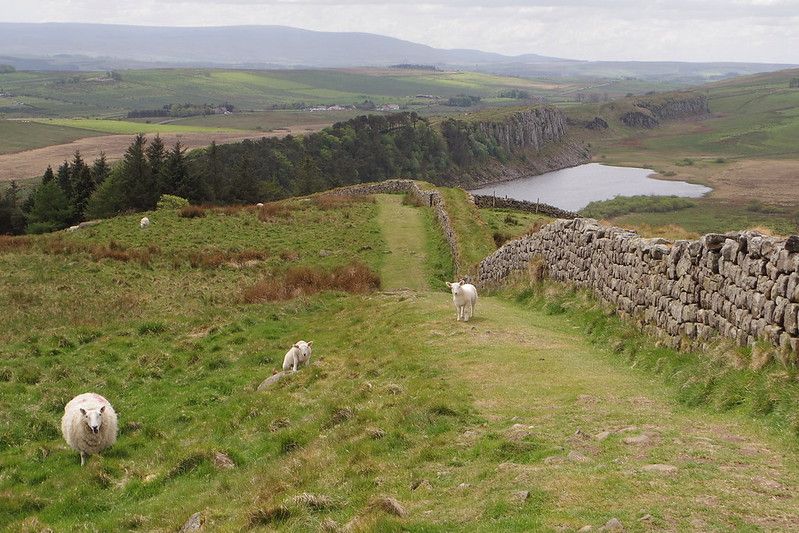
Rewilding | The Wildlife Trusts have announced a new rewilding programme, Transforming Nature’s Recovery, backed by £6 million from the Ecological Restoration Fund. There are three strands to the initiative. The first is keystone species reintroduction – though think less wolves and lynx, and more beavers, ponies and cows. The second is marine conservation, supporting nature’s recovery in 30% of Welsh seas. And the third is landscape rewilding, with projects lined up for the Peak District, Hadrian’s Wall and the River Severn catchment, among other places. You can read more about their thinking behind the project in this presentation, as well as further details on the site-specific projects here. The Evening Standard covered the story.
Drilling | The Liberal Democrats have accused the government of an “environmental crime” over the decision to approve large-scale oil drilling inside the South Downs national park. Drilling previously took place at the Avington site near Winchester, but it was shut down in 2017, and the park authority refused permission to resume work. Now, the government’s Planning Inspectorate has reversed this decision, with UK Oil and Gas stating that they hope to extract “potentially significant” quantities of the estimated 59m barrels. Ed Davey, leader of the Lib Dems, said it was “scandalous” that Conservative ministers had ignored local concerns and environmental impacts to overturn the decision. Meanwhile, policy director of Greenpeace UK, Doug Parr, said the current government is so “hell-bent on fossil fuels” that it is willing to “trash many of the things it is said to hold dear, like our cherished national parks”. The Guardian reported the news.
Rivers | New data released by the Environment Agency shows very little progress on the health of England’s waterways, according to the Wildlife Trusts. In partnership with the Guardian and Watershed Investigations, the Trusts analysed data on the state of 4,000 rivers, lakes, estuaries and coastal sites. Of these sites, only 14.5% achieved good ecological status, which mirrors the national percentage from the last full assessment in 2019. The Guardian also highlighted that what used to be an annual nation-wide health check will now take place only every six years, with a gap from 2019 to the next in 2025. Campaigners have accused the government of trying to hide data rather than fix the issue; activist Feargal Sharkey said the decision is a “cynical act of self preservation”. In response, a Defra spokesperson said it was “completely untrue” that water body data had been delayed, as the reduction in frequency is in line with legal guidelines.
In other news:
- The quantity of new woodland being created in Scotland has fallen to its lowest level in five years, according to analysis by the Ferret. A blog by Forestry Scotland explains how it is trying to boost tree planting.
- Two-thirds of Brits support the creation of a ‘National Nature Service’ to support young people into jobs in nature conservation and restoration, reports Edie.
- Scottish Water has banned the approval of any future grouse shooting licences on its estate, reports ENDS.
- Wild swimmers are investing in snorkels, nose clips and ear protection to ward against sickness caused by pollution, reports the Times.
- The Scottish government is proposing a ban on snare traps, reports the BBC.
- The government has allocated £530,000 to ten projects which will use satellites and AI for environmental monitoring, reports ENDS.
- The Rare Birds Breeding Panel has recently made its last annual report open-access, documenting the status of 101 rare or scarce native birds in Britain.
Across the country
Cumbria | After years of decline, Grass-of-Parnassus – a flower of wetland habitats – is making a comeback across the Lake District. As the county flower, it features on the Cumberland flag and the council’s logo, but thanks to farmland draining, rarely on the fells themselves. However, less intensive grazing has enabled the plant to make a comeback, with sightings on Wildlife Trust land near Penrith and on working farms elsewhere. One fell farmer, Paddy Deady, is hoping to propagate the species more widely as part of his role as project manager for the Upper Duddon Landscape Recovery Project. “I'm pretty sure most Cumbrians don't know it's our county flower,” he said. “I was astounded we've got this emblematic flower and we just don't see it.” The BBC covered the story.
Orkney | The campaign group Open Seas have found evidence of scallop dredging off the island of Papa Westray, inside an Orkney marine protected area (MPA), after following a tip-off from islanders who had watched the vessels at work. Dredging is not illegal within the MPA – rather, the presence of the boats is an indication of how weak ocean protections are in their current form: the area in question was designated for protection eight years ago but there is still no management regime in place. In light of the findings, Open Seas is urging the Scottish government to do more to protect vital ocean habitats. The government responded that it is “currently developing fisheries management measures” for the MPA. The Ferret covered the story, with further details and photographic evidence on an Open Seas blog.
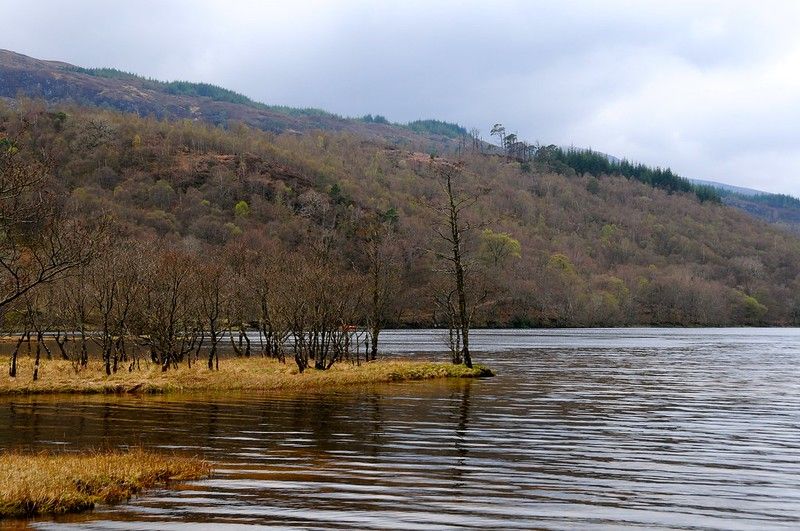
Lochaber | A determined ecologist has identified 946 species of insects from samples taken at Loch Arkaig pine forest in the West Highlands. The study, by dipterist Ian Strachan, is thought to be the most thorough ever conducted in a western pinewood in Scotland’s rainforest zone, and demonstrates the habitat’s incredible biodiversity. The samples were taken five years ago, and Strachan is still counting the preserved insects: it could take years to identify every individual. The total is currently made up of 869 flying insects, plus 77 non-flying ones, with around a third of the species represented on the Red Lists. Strachan said that the project was a “really challenging but satisfying process”, and proved that “there is much more buzzing around at Loch Arkaig than biting midges”. The forest is owned by the Woodland Trust.
Elsewhere:
- Sixty rare tansy beetles have been moved into a new site at the University of York in an effort to boost their numbers, reports the BBC.
- Charities have been awarded £10,000 to restore a barn in West Sussex, where the greater horseshoe bat roosts, reports Portsmouth.co.uk.
- Scientists from Heriot-Watt University are monitoring the impact of boat traffic on marine life off the Isle of Arran, reports the BBC.
- Bumper numbers of honey buzzards have been recorded in the New Forest, reports BirdGuides.
- The scarce yellow sally, a fly thought to have been extinct in Britain, is being bred in captivity after being rediscovered on the River Dee, reports the BBC and the Times.
- Three satellite-tagged hen harriers have disappeared on moors in northern England within days of the start of the shooting season, according to the RSPB. The BBC covered the news.
- Farmers on Dartmoor have called on ministers to intervene after Natural England asked commoners to cut levels of livestock, reports ENDS.
- The National Lottery has awarded £150,000 to Northumberland Wildlife Trust for their five-year project protecting red squirrels, reports the Northern Echo.
- A pair of Western Marsh Harriers have successfully bred in north Cornwall; a rare instance in the southwest of England, reports BirdGuides.
- A rare hybrid of a common and striped dolphin has been spotted off the Cornish coast in what is thought to be a UK first, reports the Guardian.
- Durham Police are looking for information after a protected sparrowhawk and other birds were found shot in Darlington woods, reports the BBC.
- Natural Resources Wales has removed a weir on the River Honddu, near Brecon, to open up 20km of migratory habitat for salmon.
- Leicestershire County Council is planting a “tiny forest” of around 600 native trees as part of an eco-park in Whitwick, reports the BBC.
- Wyre Forest District Council has said the transformation of an abandoned golf course in Worcestershire is benefitting both wildlife and local communities, reports the BBC.
- The Scottish government has approved a wind farm development in Dumfries and Galloway despite opposition from locals and hillwalkers, reports the Times.
- The National Trust has told a car rental company to stop promoting a lake in Snowdonia as a top wild swimming spot due to its fragile and protected ecosystem, reports the Times.
- DNA sampling by eel experts has revealed no evidence of eels in key areas of the Somerset Levels, which once teemed with the endangered fish, reports the Guardian.
- A chalk stream in Lewes, East Sussex, has been ‘rewiggled’ to restore its natural path, reports the Guardian.
- A survey in West Dorset revealed a record number of caterpillar webs from the rare Marsh Fritillary butterfly, according to the Butterfly Conservation.
- A research study taking place in the National Forest will examine how different types of woodland affect wellbeing, reports Positive News.
Reports
Finance | Campaign group Community Land Scotland has published a paper critiquing the perceived ‘green finance gap’ in Scotland. Written by independent forestry consultant Jon Hollingdale, the paper challenges the notion that Scotland must rely on private finance to meet its nature targets. The Green Finance Institute estimated this finance gap to be around £20bn, but Hollingdale argues this number is “greatly exaggerated”, particularly in regards to the cost of reforestation. He also suggests that a focus on private finance would reinforce Scotland’s unequal land ownership, while undermining community wealth-building efforts. NatureScot, which is running a pilot project with private financiers, said that it “welcomed debate” and would work with CLS to shape the emerging market. The Guardian covered the news.
Green | England’s green belt must become greener, wetter, and more diverse, according to a report by the countryside charity CPRE. The report looks at the current state of the national green belt, and argues that it is being overlooked as a key solution to climate change and nature loss: actions such as rewiggling streams, reviving hedgerows and creating pollinator corridors would boost its resilience and ecosystem services. Among their conclusions, the authors recommend that the government should double the amount of green belt farmland covered by the Environmental Land Management schemes, create at least 350,000 hectares of new woodland and wetland close to urban areas, and require developers to use suitable urban brownfield sites before greenfield land.
Landscape | A report by the Berkshire, Buckinghamshire and Oxfordshire Wildlife Trust details its plans for six landscape-scale projects to reconnect vital but fragmented habitats. The region between the urban centres of Oxford, Bicester and Aylesbury is home to rare species including Bechstein’s bats, great crested newts and hairstreak butterflies, but it is under threat from developments such as HS2. The six projects include a farmer-led cluster initiative to connect habitat across agricultural land, a floodplain and meadow restoration to create wetlands in the River Ray valley, and an expansion of ancient woodland in Bernwood Forest. Buckinghamshire Council, which funded the research, said the projects would also “provide residents with greater access to experience the wonders of nature." The BBC reported the news.
Science
Offsetting | The carbon emissions reductions from forest conservation projects are often overestimated, according to a study in Science. Researchers analysed 26 REDD projects (Reduced Emissions from Deforestation and Forest Degradation) in six countries across the globe, and found that most did not substantially reduce deforestation – and the few that did had benefits significantly lower than had been claimed. Eighteen of these projects have generated 62 million carbon-offset credits – currently available on the market – yet the study estimates that this represents three times more carbon than the projects are actually mitigating. The authors conclude that the methodologies for calculating carbon reductions need “urgent revisions” to maintain incentives for both forest conservation and the integrity of global carbon accounting.
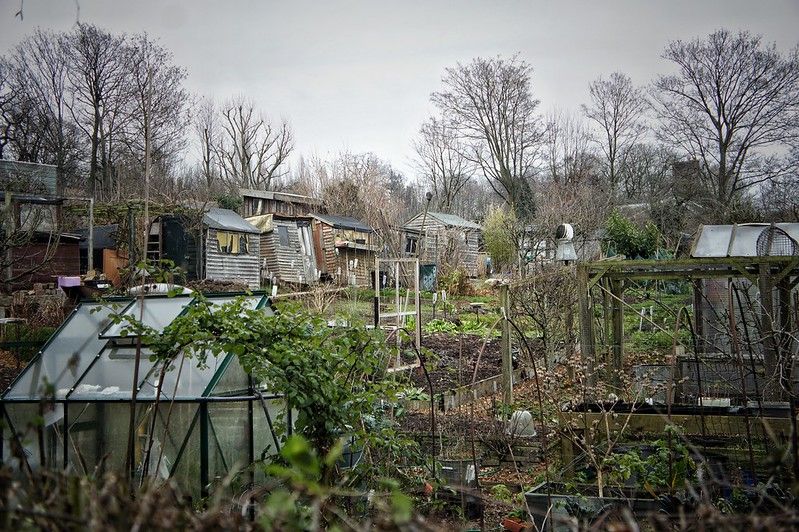
Growing | A study in Plants, People, Planet has found that household fruit and vegetable production could boost healthy diets and food security in Britain. Researchers from the University of Sheffield tracked the production and consumption of 85 individuals in the UK growing their own food in allotments or home gardens. They found that over the course of a year, growers produced more than half of the vegetables and a fifth of the fruit they consume annually. They also ate 70% more of their recommended ‘five a day’ than the average Brit, while only throwing out 0.12 portions of fruit and veg per day: 95% lower than the average household. Co-author of the study, Dr. Zilla Gulyas, said that increasing the amount of space available to households for growing was vital, especially given the steady decline of allotment land nationally. The Independent covered the research.
Invasion | Higher levels of diversity in native tree communities can help limit the spread of non-native invasions, according to a study in Nature. Researchers conducted an analysis of global tree databases to explore how human pressures, the environment, and the diversity of tree communities influence the establishment of non-native species. They found that while anthropogenic factors were key to predicting whether a location was invaded in the first place – for example, its proximity to shipping ports – the severity of an invasion was largely determined by the diversity of native species present, with higher diversity resulting in less severe invasions. The findings highlight the critical role of maintaining diversity in native forests to act as a buffer against the spread of non-native species.
Driftwood
Bees | In the New Yorker, journalist Sam Knight unpicks the surprisingly contentious world of beekeeping – although, as natural beekeeper Gareth John contends, he is not keeping anything. Knight visits John’s alternative collection of hives in Oxfordshire, as part of a wide-ranging exploration of how a collection of bee-loving breakaways are challenging the central tenets of industrial apiculture. Since 1992, the insects have suffered from an ectoparasitic mite called Varroa destructor, killing them in their millions. Natural beekeepers believe that, by keeping bees that imitate their behaviour in the wild, they have the answer to the disease. This lengthy feature explores the history of bee husbandry, the mystical underpinnings to natural beekeeping, and some of the science behind the claims.
Eels | Eels are a part of London’s culinary history – and the species hasn’t faded from the menu just yet. In BBC Future, journalist Mike MacEacheran visits M. Manze, London’s oldest surviving eel and pie house, where jellied eels are still on the menu – although minced beef meat pies are now the more popular option. “We're still catering for hardcore Londoners who love the tradition, but London has gentrified and people are increasingly squeamish – they're wary of trying eel,” says Rick Poole, the shop’s director. But it’s not only a matter of taste: the species is under threat, with the restaurant’s stock being imported from Lough Neagh in Northern Ireland rather than caught in the Thames, where eels are now scarce.
Activism | An in-depth interview in the Guardian speaks with presenter and campaigner Chris Packham, covering everything from his childhood growing up with undiagnosed autism to recent legal struggles in a high-profile libel case. Most people will know Packham as a self-assured, outspoken TV presenter, but in the interview he describes the difficulties of feeling insurmountably disconnected from other people, while intensely connected to non-human beings, including a particularly special kestrel. Reflecting on his work, Packham says he often thinks about whether he could make more impact as a pure activist – but says “I would lose my voice immediately if I went to prison”. Instead, the “best use of Chris Packham” – in his words – might be “coming up with other imaginative ways of keeping the message in the public domain”.
Further reading:
- The Financial Times speaks to the farmers coping with the impacts of extreme weather.
- In BBC Future, Becca Warner explains how she planned her own green funeral.
- It’s time to end the “rewilding menace”, writes Julie Burchill in a paywalled piece for the Spectator.
- A feature in the Guardian describes a mammoth project to build passes on the Severn to allow the rare twaite shad fish to return to its spawning grounds.
- For Countryfile, author Nicola Chester writes about why we should retain hope for farmland birds, even in the face of severe declines.
- In the Guardian, a feature by author Sophie Pavelle explores society’s complicated relationship with seagulls – and why they are here to stay in Britain’s urban areas.
Happy days
App | Nature writer Melissa Harrison has launched a new app to help people connect to Nature, called Encounter. Described as a “guided nature journal that lives on your phone”, it will work as a one-stop shop for all your nature observations, including photos, audio recordings, and AI identification, as well as an option to map where exactly you saw what. The app will also feature prompts from Melissa around what’s going on during the year – “the first bumblebees waking from hibernation, the return of swifts, ripening conkers and meteor showers” – helping users to tune into the seasons. It will be released in summer 2024, but you can sign up for an invitation to become a beta tester here.
Subscribe to our newsletter
Members receive our premium weekly digest of nature news from across Britain.
Comments
Sign in or become a Inkcap Journal member to join the conversation.
Just enter your email below to get a log in link.