Right to Roam & Wild Boar
The latest news on nature and conservation in Britain.
National news
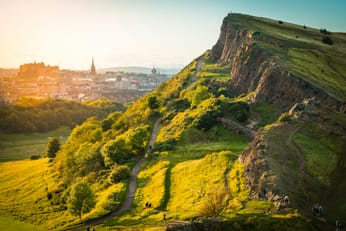
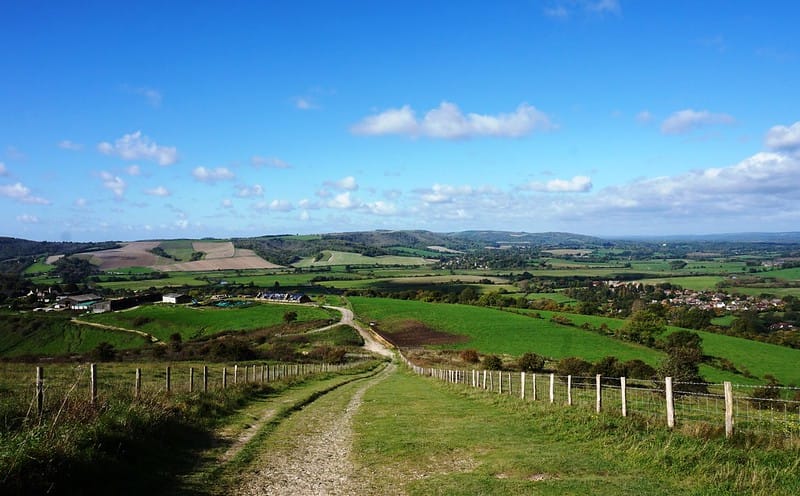
Access | People living in the countryside are equally supportive of a greater ‘right to roam’ in England as their urban counterparts, according to YouGov polling. The poll of 2,000 UK adults found that 68% of rural voters supported extending the right of responsible access – the exact same percentage as urban residents. Previously, opponents to greater access have claimed that Labour’s backing would cost the party votes from rural citizens. Tim Bonner, chief executive of Countryside Alliance, said that improved access was contentious in rural areas because it was ‘at odds with what the public want and what is sensible’ for a country with a dense population and a biodiversity crisis. Reflecting on the poll, however, campaigner Guy Shrubsole said the results showed that people living in the countryside are ‘just as enthusiastic’ about increasing access to nature, and that rural England is often ‘on the front line’ of landowners’ efforts to keep the public out. The Times covered the news.
Food | The Scottish government has published a consultation on its Good Food Nation Plan, setting out proposals to improve access to healthy, sustainable food across the country. The government said the plan will cover everything ‘from farm to fork and beyond’, and outline how it will work with businesses and organisations to connect people to locally produced, high quality food. The consultation outlines six key outcomes, which cover areas including widespread access, benefit to the natural environment, and a global reputation for high-quality produce. Speaking at the launch of the consultation, MSP Richard Lochhead said that the plan would also play ‘a great role’ in raising awareness of Scotland’s food culture and its bounty of natural resources. NFU Scotland president, Martin Kennedy, welcomed the news, saying that Scotland’s farmers and crofters believe the plan can be ‘a force for good’. He added that the intention for easy access to nutritious food means the plan ‘must properly value and support our low carbon, high nature farming systems here in Scotland’. The National and the Herald reported the news.
Brexit | Analysis by the Guardian has revealed that Britain’s environmental legislation is facing ‘death by a thousand cuts’ as it diverges from EU law. Since leaving the EU, scores of legal protections for the environment have been destroyed or diluted in post-Brexit law changes. Although some standards may seem technical, analysis has revealed the extent to which the UK is falling behind on almost every area of environmental regulation: this article summarises the key areas of differences, including chemicals, pesticides, water quality, agricultural emissions, genetic modification and deforestation, to name a few. The analysis is based on data from the Institute for European Environmental Policy (IEEP), which has been tracking the divergences since Brexit. Michael Nicholson of IEEP UK said: ‘We are increasingly seeing a trend towards the EU improving environmental laws and the UK not following suit. In some areas, there is a real danger of us going backwards.’ The environment secretary, Steve Barclay, defended the ‘freedoms’ provided by Brexit, while the shadow environment secretary, Steve Reed, said if Labour won the election, the UK ‘certainly won’t’ fall below EU standards.
In other news:
- A UN expert has condemned the ‘draconian’ crackdown in the UK on environmental protest, reports the Guardian and the Byline Times. An opinion piece in the Guardian argues that such dissent is vital to protect democracy.
- Environment secretary Steve Barclay has promised that water companies in England will no longer be able to self-monitor, although he did not give a timescale, reports the Guardian.
- Storm Jocelyn, which arrived in the UK on Tuesday, is the UK’s tenth named storm in five months, reports the Independent.
- Rising sea levels could cost the British economy more than £100bn by the end of the century, reports the Times.
- The Joint Nature Conservation Committee has launched Biodiversity Pathways, a project which aims to understand future biodiversity change under a range of scenarios.
- The RSPB’s Big Garden Birdwatch will take place this weekend, for its 45th consecutive year, reports BirdGuides.
Across the country
Flintshire | Dŵr Cymru Welsh Water has completed a £2m ‘dambusting’ project to remove redundant reservoirs from the Flintshire AONB, and return the valley to its natural state. The reservoirs were originally constructed in 1896 in the foothills of the Clwydian mountains to supply local drinking water, but this is now sourced from a reservoir in Conwy. Project manager Tudur Ellis said that the restoration process involved removing both dam structures and creating a new channel for the riverbed, modelled by a geomorphologist to mimic its natural course before the reservoirs were built. This would help to restore the ecology of the area, he added, and reinstate the natural fish passage. The Daily Post covered the news.
Kirkcudbright | Red squirrels in the south of Scotland are benefitting from an usual conservation partner: the Ministry of Defence. At the Kirkcudbright Training Centre, home to infantry training with live fire, conservation efforts by the MOD have doubled the number of red squirrel sightings in the area. Work began two years ago when the MOD partnered with the Dumfries and Galloway Pine Marten Group to place den boxes into the training area. Research suggests that an active pine marten population helps to boost red squirrels by reducing the number of greys, and now, a noticeable increase in activity suggests the work is paying off. The scheme is part of wider plans to rejuvenate the ecology of the training centre, which also involves replacing non-native plant species with Scottish wildflowers. The BBC covered the news.
Shropshire | Natural England is inviting Shropshire residents to share their views on plans to create a ‘super’ National Nature Reserve on the England–Wales border. The current plans would see the existing Stiperstones reserve extended by joining up with farmers and landowners to increase the reserve by up to 5,000 hectares. Stiperstones contains a mosaic landscape of uplands, lowlands, and woodlands home to birds including red kite, red grouse, skylark and snipe, as well as invertebrates such as the hairy wood ant and small pearl-bordered fritillary butterfly. Emma Johnson, deputy director for Natural England in the West Midlands, said a joined-up approach would be ‘so beneficial’, for example, in soaking up large amounts of carbon and helping to reduce flooding. The BBC and FarmingUK covered the news.
Elsewhere:
- A nursery company in Dorset and Hampshire has become one of the first education establishments to commit to including wild shot venison on its menus, reports the Times.
- Allotment holders in Bristol are protesting against a price hike and rule changes by the council, reports the Bristol Post.
- The Crofting Commission has approved six woodland crofts for the Isle of Mull, which could support a range of activities including tree nurseries, beekeeping, permaculture, woodturning and the creation of community spaces.
- Kent Wildlife Trust is asking people who lost fences during the recent storms to consider replacing them with hedges to help local wildlife.
- Volunteers for the Wildlife Trust in Buckinghamshire spent four hours searching for the eggs of brown hairstreak butterflies on hedges near Bicester. They found 219: a 200% increase since 2016.
- Property giants have been warned against adding ‘vanity’ beehives to their offices in London as a way to boost their eco-credentials, reports the Telegraph.
- A Norfolk couple are calling for insurers to recognise the impact of climate change after receiving no compensation when the coast crumbled beneath their house, reports the BBC.
- The Wildlife Trust for Cambridgeshire is undertaking work to reprofile woodland rides in ancient woodlands so that they can better deal with increased rainfall.
- A government grant of £25,000 will be used to revitalise a ‘dead’ pond in North Dalton in Yorkshire, once home to kingfishers, frogs and dragonflies, reports the BBC.
- Severn Trent has reopened its Environmental Protection Scheme, with grants of up to £30,000 available to farmers for protecting waterways from agricultural runoff, reports the BBC.
- The National Trust is creating a new garden at Sheffield Park in East Sussex, specifically with climate change adaptation in mind, reports the BBC.
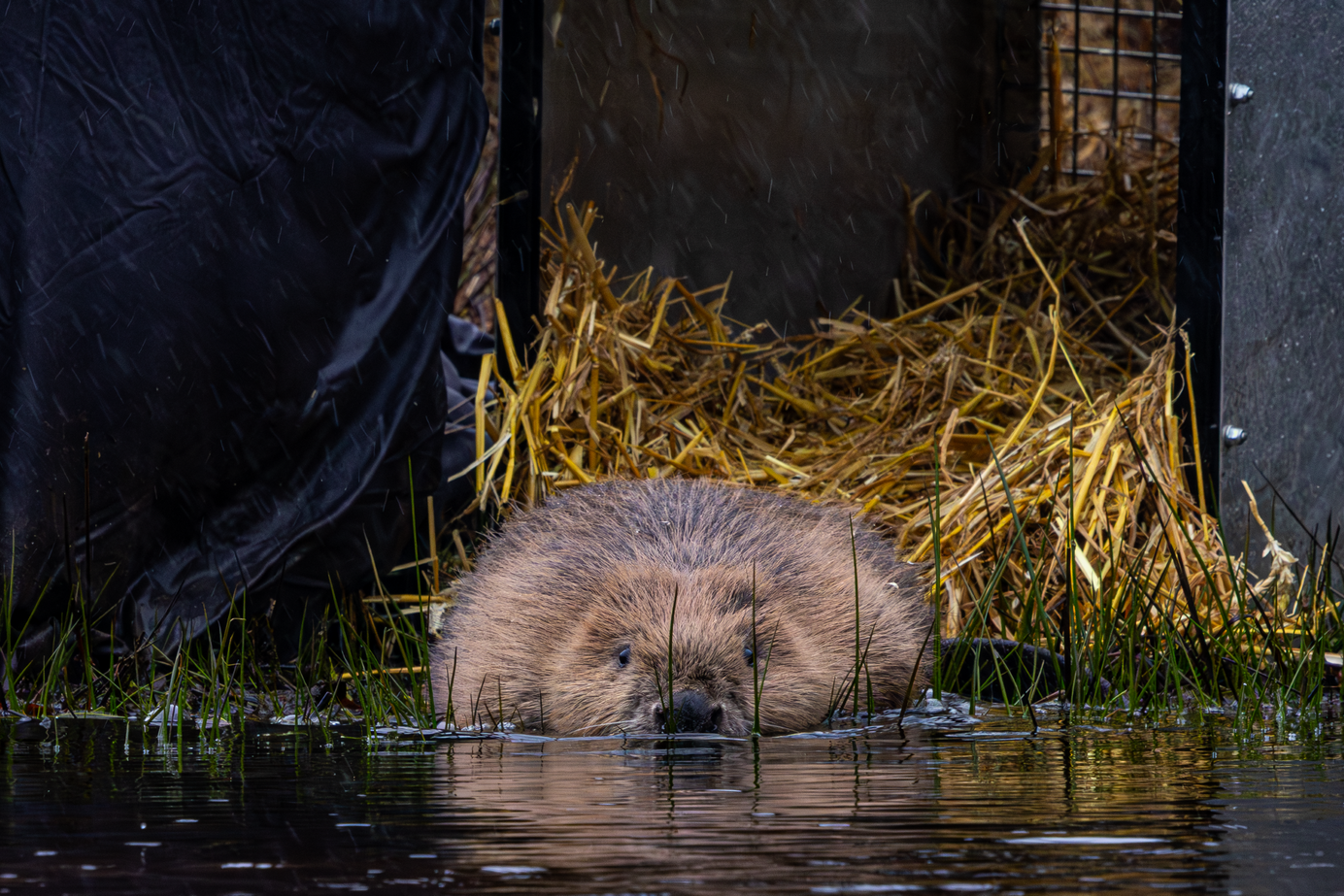
- Farmers in the Cairngorms have branded rewilding efforts, such as the release of beavers, as ‘carbon clearances’, reports the Herald.
- A humpback whale has been spotted breaching close to a busy Welsh port in Pembrokeshire, reports the BBC.
- A vertical farming company based in Edinburgh has raised £22m in backing, reports the Herald.
- Residents of the Isle of Man have raised concerns about the impact of a proposed onshore wind farm on wildlife, including birds of prey, reports the BBC.
- Green spaces in Newcastle will be boosted by more than 1,400 new trees as part of the North East Community Forest project, reports Chronicle Live.
- The number of hours during which Thames Water dumped sewage into the Thames has more than quadrupled in the last year, reports the BBC.
- Brighton & Hove City Council has decided to reintroduce weedkiller five years after banning it, reports the BBC.
- Testing by campaigners has revealed a huge loss of invertebrate life in a stream leading to Windermere, caused by sewage discharges, reports the Guardian.
Reports
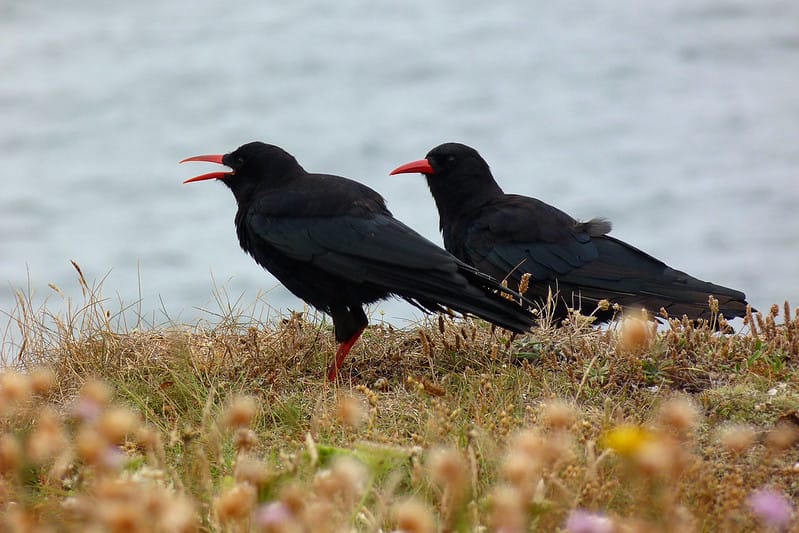
Choughs | Scotland’s population of red-billed choughs may go extinct within decades unless efforts to save the species are ramped up, according to a report commissioned by NatureScot. Only around 50 pairs of choughs remain in Scotland, found exclusively on the islands of Colonsay and Islay. Their decline is due to a combination of factors: a lack of insects due to modern agriculture practices, limited nest sites, an increase in harmful parasites, and – as the population decreased – a loss of genetic diversity. A group of conservationists studying the birds are providing supplementary food on the islands, which has increased the survival rates of juvenile birds and led to a slow but steady increase in numbers. However, ornithologist Dave Parish stresses that this is not a long-term solution, and needs to be backed up with habitat improvements and support for farmers to carry out chough-friendly practices. The Times and the Herald covered the research. Elsewhere, pasture restoration and conservation grazing is helping choughs to flourish in Cornwall once more, reports Cornwall Live.
Flowers | The Botanical Society of Britain and Ireland (BSBI) has published the results from its thirteenth New Year Plant Hunt. This year saw more than 3,000 people – a record number – take part in the hunt, by heading out to their local patch to record what was flowering over New Year. Overall, 629 plant species were in bloom, representing a 30% increase compared to last year and the third highest total in the history of the hunt. Around half the species were flowering later than expected, versus a quarter earlier than expected. In particular, the unusually mild and wet December last year allowed ‘Autumn Stragglers’ – such as yarrow and common ragwort – to continue flowering in the absence of a hard frost. Julia Hanmer, BSBI’s chief executive, said it was ‘inspirational’ to see the participation: ‘There was a fantastic sense of the botanical community coming together to learn about and contribute to our understanding of wild plants.’
Seagrass | Natural England has published a report investigating the water quality of areas of seagrass in the UK. Britain’s seagrass meadows offer a host of benefits for both biodiversity and carbon storage, but eutrophication – caused by heightened nutrients in the water – presents the biggest threat to healthy meadows. As part of the first UK-wide study of nutrient content in seagrass species, researchers collected and analysed samples from eight sites across the east coast of England. The results showed extreme nutrient enrichment compared to global averages, with only one site in line with the average: Jacques Bay in the Stour Estuary. The authors conclude that the remaining sites are likely experiencing algal overgrowth and a breakdown in population structure due to the toxic environment. The research will be used to inform future seagrass restoration projects.
Science
Carbon | A study in Ecological Solutions and Evidence investigates the ability of traditional methods of measuring carbon storage to analyse rewilded landscapes. The paper uses the Knepp Estate as a case study: Knepp has undergone rewilding efforts since 2001, including natural succession and free-roaming herbivores. The study tested the i-Tree Eco model, a carbon storage tool used widely across urban and forestry applications, by comparing the predicted biomass of five scrub species in the rewilded landscape with their actual measurements. The findings reveal that the i-Tree tool’s assumption of below-ground biomass being 26% of above-ground is not always applicable to herbivore-influenced landscapes; instead, on average, scrub at Knepp had more biomass below ground than above, likely due to the adaptation of trees to defend against browsing. In light of the findings, the authors emphasise the need for new approaches which consider species-specific biomass, since accurate carbon accounting in future rewilding projects will be essential for estimating their contribution to both biodiversity improvements and climate change mitigation.
Fossils | Some of Earth’s earliest creatures have been dated from fossils found in Welsh rocks – and they are a whopping 564 million years old. Scientists first found the fossils in Carmarthenshire in the 1970s, but were unable to accurately date them. Decades later, a breakthrough in measuring radioactive decay has allowed researchers to date the fossils, placing them in the Ediacaran period, when the first multicellular organisms existed on Earth. The researchers say that the organisms – ancient disc-shaped invertebrates which probably lived in shallow waters on the coast of volcanic islands – are ‘completely unlike any other forms of life’. The results were published in the Journal of the Geological Society and covered by the BBC. Elsewhere, a study by the University of Bristol has discovered that small, winged reptiles closely related to the ancestors of crocodilians and dinosaurs lived in the Somerset hills 200 million years ago. The BBC reported on the research.
Storms | As a succession of storms batter Britain, a study has found that forests with a greater diversity of tree species are more resilient to damage. Researchers created simulations based on data from more than 90,000 forest plots in Europe to study how they resist and recover during extreme weather. They found that forests containing multiple species were 35% more resilient to storms than forests with only one species, and the type of tree mattered too: plantations made up of fast-growing, tall species like conifers were more vulnerable than slow growing species with high wood density, such as oaks. Lead researcher Dr. Julien Barrere said that in the context of ‘increasing storm losses across the continent’, the study argues for forest management practices that promote diversity and slow-growing species, despite the economic cost. The results were published in Functional Ecology, and covered by the Guardian.
Driftwood
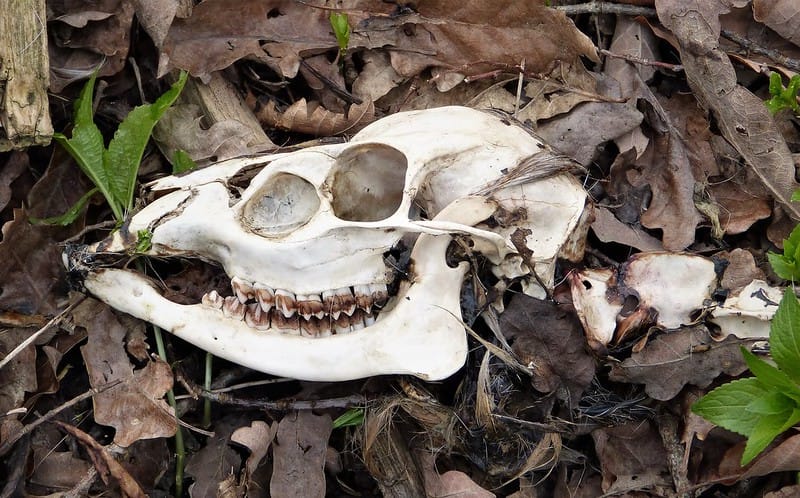
Boar | In the Times, journalist Michael Odell narrates his trip to the Forest of Dean to track down and spot a wild boar. His guide is Chantal Lyons, who has been studying the species for ten years. Boar were native to the UK until around 300 years ago, when they were hunted to extinction, but escapees – or secret releases – from farms have established pockets of wild populations. The Forest of Dean population gradually grew until it peaked at 1,600 in 2018 (a cull by Forestry England later reduced it to 400). Not all locals are delighted by their accidental reintroduction, but Lyons says that everything she has learned about the species has convinced her that boar should stay in Britain. ‘We have extirpated our native dangerous animals and become so scared of nature,’ she says. ‘Yet we raise funds to protect tigers and lions in other countries. It’s hypocrisy. Rewilding isn’t just about reintroducing lynx or beaver or boar, it’s a state of mind.’ Lyons previously wrote about the Dean boar in Inkcap Journal, and her book Groundbreakers: The Return of Britain’s Wild Boar will be published on the 1st of February.
Allotments | A feature in the Telegraph tells the story of a group of resolute residents in Isleworth, west London, who are battling to save their allotments from development by a duke. These are the thriving green gardens of Park Road Allotments: a three-acre space separated by a brick wall from the manicured grounds of Syon Park, the London estate of the Duke of Northumberland. The allotments – which began life in 1917 when the Duke’s ancestors leased the land to the council to provide food for wounded soldiers – provide a green haven for locals living in high-rises. In December, the Planning Inspectorate rejected an appeal by the Duke’s estate to pave over nearly three-quarters of the allotments and replace them with a block of flats. It is the third time that development plans have been proposed and rejected, with locals fighting them by means of petitions and letters. Allotment holder Annie Aloysius explained: ‘It’s not just about growing fruit and vegetables, it’s also about what it does to people.’
Yew | In the Byline Times, writer and publisher John Mitchinson explores the history of why the yew tree is a symbol of both life and death. The enquiry is prompted when, shortly after moving to a new cottage, the family chickens start to perish one by one. Eventually, the cause is found to be the ‘magnificent male yew tree’ in the back garden, almost every part of which – leaf, seed, bark, flower – is extremely toxic. Mitchinson points out that the association of yews with death stretches back ‘at least as far as Ancient Greece’, where they were sacred to Hecate, goddess of magic, witchcraft and death. But yews are also ‘trees of life’, in some cases living for thousands of years and possessing ‘miraculous powers’ of longevity. Mitchinson writes: ‘For me, it’s the double quality of the yew that keeps its symbolic dimension so potent.’
Further reading:
- A feature in Cornwall Live takes a look at the work of Soul Farm, a regenerative small-scale farm outside Flushing which works with local food banks.
- A blog by the Scottish Wildlife Trust explains how a farming network in Fife has been pioneering the use of green hay to transform greenspaces into native wildflower meadows.
- For NatureScot’s blog, Inverness-based writer and broadcaster Roddy Maclean looks at how Gaelic place-names provide evidence for agriculture in uncultivated locations today.
- Amidst headline fellings, was 2023 a particularly bad year for trees? Campaigners say it is hard to tell because nobody is keeping track of what we lose, reports the Telegraph.
- Also in the Telegraph, this opinion piece argues that hunting can teach children resilience and courage, and should be encouraged rather than banned.
- Chair of Natural England, Tony Juniper, has written a blog post taking stock of the past year and looking ahead to the challenges of 2024.
- This BBC article takes a look at The End We Start From, a climate change film about a woman and her baby surviving in a flooded London. You can watch the trailer here.
- Kaleb Cooper, the star of Clarkson’s Farm, has released a rap single called ‘I Can’t Stand Sheep’. All profits from the song are going to an Oxfordshire-based farming charity, reports the BBC.
- A feature in the Herald explores how Scotland can capitalise on the growth potential of seaweed.
- Farmerama, a podcast on the perspectives of regenerative farming, has released a series exploring the thorny issue of meat. You can listen to episodes here.
- A blog by the Berkshire, Buckinghamshire and Oxfordshire Wildlife Trust features a London geography teacher who visited every reserve in a year to demonstrate how easy it is to access nature.
- The Guardian showcases the winning images of the Nature Photography Contest 2023.
- An article in Farmers Weekly explores how ‘mega-cluster’ projects, such as Weald to Waves, can support nature recovery and food production.
- This article in BBC Travel takes a look at the industrial English city with more trees than people.
- A feature in Country Life spotlights a Cumbrian farm prioritising biodiversity and habitat restoration.
Happy days
Fen | This year the National Trust is marking 125 years since the acquisition of its first ever nature reserve: Wicken Fen. The reserve is one of the last pieces of undrained fen in Cambridgeshire, and in the 19th century it became a ‘mecca for local naturalists’ as a rare preserved area of the diverse fenland habitat. Since then, the trust has pioneered conservation methods by implementing a natural process-led management system at the reserve, and has more than doubled its size since 1999. Wicken Fen was registered as the most species-rich area of the UK in 2019, with more than 9,300 animals recorded, including 188 endangered species such as marsh harrier, bittern, great crested newt and the tiny soprano pipistrelle bat. An anniversary programme of events will take place later this year, reports the BBC.
Subscribe to our newsletter
Members receive our premium weekly digest of nature news from across Britain.
Comments
Sign in or become a Inkcap Journal member to join the conversation.
Just enter your email below to get a log in link.