Rights of Nature & Prehistoric Ponds
The latest news on nature and conservation in Britain.
National news
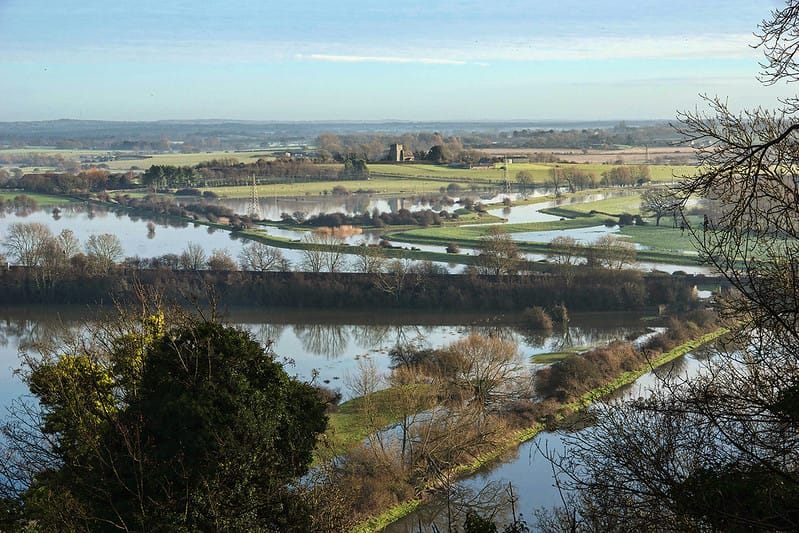
Rights | In a UK first, Lewes District Council has formally decided to recognise the rights of the River Ouse in Sussex. The council will support a Charter of Rights for the Ouse, which, while not yet legally binding, will provide a framework outlining the essential needs of the river for it to be healthy, as well as local communities’ aspirations for it. These include the right to native biodiversity, to be free from damaging pollution, and to appropriate and impartial representation in decisions that directly affect it. The move comes in the context of a rapidly growing Rights of Nature movement across the globe, with successful examples in New Zealand, Canada and Colombia. ‘This is a historic moment for environmental protection in England,’ according to Emma Montlake, co-director of the Environmental Law Foundation. She added that the decision had ‘set a precedent that could transform the way we safeguard our rivers.’ ENDS and the Sussex Express reported the news.
Stone Curlew | A landmark project to save endangered stone curlew is marking its 40th anniversary, during which time numbers of the species have more than doubled. In 1985, there were fewer than 150 breeding pairs of stone curlew across the UK, largely due to the gradual disappearance of its preferred nesting habitat in downland and heathland. In response, the RSPB launched an initiative to restore and create new nesting habitats, particularly amid farmland. In eastern England, breeding pairs have now risen to approximately 226, while Wessex is home to around 120 pairs. Reflecting on the rise, conservation officer Tim Cowan said the success was ‘proof that by working together we can make space for nature if we really want to.’ The BBC covered the story.
Farming | Environment secretary Steve Reed has announced a raft of measures designed to boost agricultural profits as Labour comes under continued pressure from the farming community. In a speech at the NFU conference – which was disrupted by protestors – Reed announced a reform package which includes £110m investment in technology, the promise of a new National Biosecurity Centre, and higher rates for those at the ‘forefront of nature-friendly farming’ through increased Higher Level Stewardship payments. Reed also outlined plans for a 25-year farming roadmap and food strategy, which he said would ensure farming is a sector which ‘recognises restoring nature is not in competition with sustainable food production, but is essential to it’. Meanwhile, the NFU called for a ‘reset’ in the government’s relationship with farmers, and proposed that ‘food impact assessments’ should be made on all planning applications to ensure that agriculture is not being ‘short-changed by the planning system’. The BBC, Farming Life and ENDS reported the news.
In other news:
- The four UK governments have published their National Biodiversity Strategy and Action Plan, four months after the UN deadline. Carbon Brief and ENDS reported the news.
- Data from the Bumblebee Conservation Trust reveals that 2024 was the worst year for bumblebee numbers in the UK since records began, reports the Guardian.
- The RSPB is urging the government not to cut funding for nature-friendly farming ahead of its Comprehensive Spending Review in June.
- Defra has launched a pilot to examine whether painting wind turbines black would reduce bird collisions, reports the Times.
- The charity Plantlife is calling on the government to prioritise grasslands and commit to developing a Grassland Action Plan for England.
Across the country
Norfolk | An array of rare freshwater plants have been revived following a project to restore ancient ponds buried under farmland. The Norfolk Wildlife Trust and partners located and excavated 15 ancient ponds, or ‘pingos’, some of which were shaped by natural glacial processes more than 10,000 years ago. The Trust said that dormant seeds preserved in sediment layers had since germinated, and nine of the ghost pingos now qualify for priority habitat status. More than 90 wetland plant species have emerged from the seeds, including the rare fen pondweed, and the ponds are now home to other wildlife, including 50 species of water beetles. Scientists Helene Burningham and Carl Sayer of University College London said: ‘We think we are seeing one of the world's most successful ecological restoration techniques unfold and reveal its true potential.’ The BBC covered the story.
London | Species are returning to Hackney Marshes in east London, thanks to the efforts of a community-led restoration project. Hundreds of volunteers have been helping to reinstate piles of logs, introduce artificial food caches and coppice trees. Ecologist Ian Phillips said it became clear that action was needed after the disappearance of wood mice caused a domino effect of weasels leaving the habitat, in turn impacting the kestrel population. ‘It's like a classic sort of Jenga – if you pull the wrong piece out of the local ecosystem, everything collapses,’ he said. He added that the exodus had been caused by increased numbers of visitors and dogs during the pandemic, as well as house-boaters taking logs to use for firewood. Now, these species are reappearing, and Hackney Council has given the project a green light to introduce others such as common lizards and slow worms. The BBC and the Standard reported the news.
Borders | A local backlash is growing over plans to cull a large herd of wild goats roaming on Langholm Moor in southern Scotland. The Devon-based environmental investment and rewilding company Oxygen Conservation announced plans to reduce the 140-strong herd by around 80% to limit grazing and restore its land, which covers 11,390 acres of the moor. The company claimed that the size of the herd is destroying trees and having a negative impact on the habitat. However, the team behind the community buyout of the Tarras Valley nature reserve – which includes part of Langholm Moor – said they would not be taking part in the cull, and that the goats’ natural grazing patterns provide a ‘mosaic landscape’ that should be encouraged. Residents say the ‘treasured’ animals hold special meaning for locals, and have started a petition against the cull. The Times, the Scotsman and the National reported the story.
Elsewhere:
- Gwent Wildlife Trust is recruiting ‘an army’ of volunteers to help map where nightjars are present across the whole of Gwent.
- University of Salford ecologist Dr Alice Risely has launched a citizen science project to study the ‘weird and wonderful’ eating habits of gulls, reports the BBC.
- Volunteers and gardeners are set to plant their millionth snowdrop at Wallington Estate in Northumberland, after ten years of planting efforts, reports Chronicle Live.
- A section of the River Sheaf in Sheffield, hidden underground for more than 100 years, has been uncovered as part of a project to create a new public park, reports the BBC.
- Surveys conducted during a major habitat restoration project in the New Forest recorded nearly 40 rare species, reports BirdGuides.
- Nottinghamshire Wildlife Trust is restoring a section of Vicar Water in Clipstone in the hope that species such as trout will return.
- The RSPB is conducting an annual nettle dig on Rathlin Island to support its population of corncrake, reports BirdGuides.
- Cumbria Wildlife Trust has warned that a spill of diesel into the River Kent could affect endangered native crayfish, reports the BBC.
- The Severn Valley Water Management Scheme is inviting Shropshire landowners to explore re-wetting their land to help restore peatlands, reports the Shropshire Star.
- Kuki, an Australian Cattle detection dog, has checked the Isles of Scilly for the presence of rats to safeguard the bird population, reports the BBC.
- Essex Wildlife Trust is working with the RSPB to recycle dredged sediment and repurpose it as buffers against coastal flooding and new wildlife habitat, reports the BBC.
- Sightings of wild boar on Dartmoor have raised suspicions that guerilla rewilders may be releasing them, reports the Guardian.
- Three GP practices in Aberdeen have teamed up with RSPB Scotland to launch nature prescriptions.
- Calderdale Council has introduced a herd of Exmoor ponies to help revive the borough’s natural grasslands.
- The Woodland Trust has begun restoring an ancient woodland near Louth in Lincolnshire, which was recorded in the Domesday Book, reports the BBC.
Reports
North | The north of England is in a unique position to use nature to boost its economy, according to a report by Nature North. Shaped by over 400 contributors, the report sets out a strategic plan for the region to become a ‘nature positive economy’ by scaling up green initiatives and attracting investment. Its natural assets mean that it is ideally placed to do so: the majority of England’s blanket bog and almost half of England’s water courses are located in the north, for example. Ecologist Professor John Lawton said: ‘I have read many environmental strategies but not one inspired by business leaders, senior politicians, and policy makers in the North of England. This document is truly astonishing, potentially transformational, and unequivocal in its aims.’ BusinessGreen, ENDS and Cumbria Crack covered the publication.
Carbon | The Climate Change Committee has published its seventh carbon budget, covering recommended emissions for the UK from 2038 to 2042. In order to achieve net zero targets, the budget recommends significant changes to areas including farming, land use and diets. To curb agricultural emissions, the CCC advises reducing the number of sheep and cattle by 38% by 2050, primarily to free up land for tree planting and growing energy crops. Meanwhile, the amount of land covered by trees will need to increase from 13% to 19% by 2050. Diets will also need to change, with the consumption of meat and dairy reduced by 35% compared to 2019 levels. The Wildlife Trusts welcomed the report, saying there is ‘a lot to applaud’. However, Kathryn Brown of the Trusts said that the ‘nature lever in net zero could be pulled harder’, including more modelling of other types of natural carbon removal such as saltmarsh, marine-based habitats and urban greenspace. The Conversation, Times, Guardian and ENDS covered the news.
Land | A report commissioned by the countryside charity CPRE has revealed that the system used to classify and protect England’s most productive farmland is using old data, including some from the 1940s. The government uses the Agricultural Land Classification (ALC) system to determine the productivity of farmland, but the report found ‘several serious issues’ with it. This included the use of old climate data, including rainfall measured between 1941 and 1970, and temperatures from 1961 to 1980. The report found that using more recent data drastically reduced the predicted amount of highly fertile land, raising questions around food security. CPRE is calling on the government to update the system, and to resurvey lowland peatlands in particular, which are highly productive but particularly vulnerable to degradation.
Science
Forest | During the Last Interglacial – when Europe was still occupied by megafauna – temperate forests were largely open and diverse, rather than dense closed-canopy woodland, according to a study in Earth History and Biodiversity. An international research team used two computer models to reconstruct vegetation patterns across local and regional scales. They found that local landscapes hosted an average of 17% open vegetation, 21% closed forests, and 63% light woodlands. Weak correlation between local and regional composition suggests that the vegetation was not controlled by climatic conditions alone, and that local factors – including megafauna disturbance and water availability – also played a key role. The findings have important implications for rewilding, argue the authors, particularly with regards to the use of large herbivores in shaping modern vegetation through grazing and browsing.
Wildfire | A study in Environmental Research Letters has found that protecting the UK’s peatlands from wildfire would be a cost-effective way to help slow climate change. Researchers found that, between 2001 and 2021, fires on peatlands emitted an estimated 0.8 teragrams of carbon – around 90% of the UK’s total annual fire-driven carbon emissions. Further, they found that a 2°C temperature rise could increase these peatland emissions by more than 60%, solely via increased burn depths. Protecting peatlands and assessing future wildfire risks nearby is therefore ‘essential’, according to the authors, both in the UK and in other temperate areas where climate change is likely to lead to hotter, drier conditions.
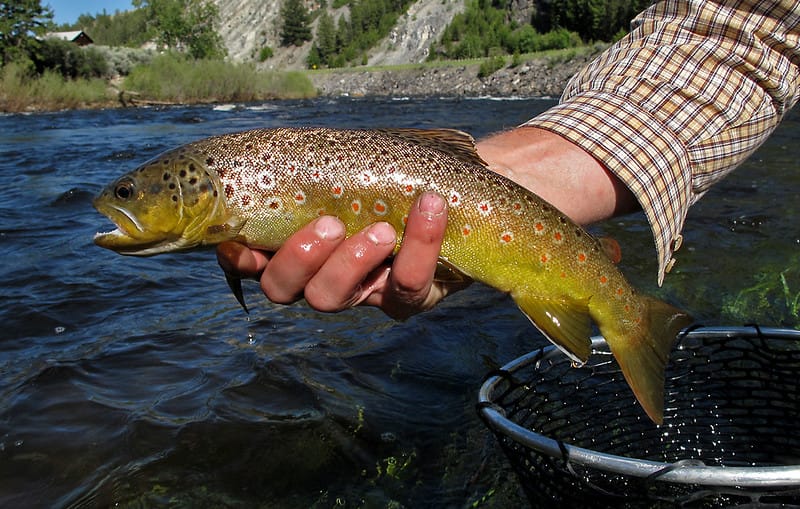
Trout | Brown trout are adept at passing beaver dams – as long as environmental conditions are in their favour, according to a study in Plos One. The biodiversity benefits of reintroducing beavers to British rivers are well documented, but concerns remain about their impact on the movement of fish. The study investigated the impact of a series of four beaver dams during the trout spawning period at Loch Grant in Inverness-shire. By tagging trout with transponders, researchers compared their movements up the dammed stream with another unaltered stream. They found that, given the right environmental and biotic factors, trout were capable of passing the dams, but under certain conditions – such as low water flow – the dams did impede their movements. The authors highlight that this could become a greater challenge in the future if periods of warm and dry weather coincide with peak migratory movements.
Driftwood
Merlin | Myrddin – or Merlin – is best known as a wizard and mentor to King Arthur. New research, however, suggests he was also a poet and prophet with a deep interest in the natural world. Over the last three years, academics from three Welsh universities have translated and edited more than 100 Welsh language poems about Merlin, dating back to the 10th century. Their findings demonstrate his concern for issues ranging from tree-felling to hunting. David Callander, from Cardiff University, said: ‘One could even argue that Merlin’s fixation on nature and how humans affect the world makes him one of the earliest environmentalists.’ The poems, which have been organised from more than 500 medieval manuscripts, are being made available in Welsh and English via the project website. Read more in the Guardian.
Venison | A feature in Positive News looks at a project launched by the Cairngorms National Park Authority called the ‘deer larder’ initiative. Led by the park authority and two farming families, the initiative aims to reduce damage to farmland and fragile habitats caused by high deer densities, while putting the local, wild venison meat to good use. Two farms were awarded grants to buy and manage deer larders, from which deer culled in and around the Park will be butchered. Knockbarry Farm has founded Fair Feast, a social enterprise which promises to match sales with food bank donations, while the Houston family has launched the Glenkilrie Larder Cook School, where they plan to invite school groups to learn about the origins of their food. The authority hopes the initiative will help to foster a carbon-friendly local market for the meat, and inspire other UK land managers to consider similar initiatives.
Heritage | A growing number of British farmers, producers and bakers are championing heritage grains as a more climate-resilient crop than wheat. But can it fit into a modern context? A feature in Wicked Leeks examines what exactly is heritage grain, why it is more adaptable in a changing climate, and its benefits compared to modern wheat. In addition to adding more field diversity – meaning crops are less susceptible to disease – the flour from heritage grains also produces deeper-flavoured, more nutritious bread compared to modern wheat, which has been largely stripped of vitamins and minerals. But the bigger picture, according to advocates, is that reintroducing older varieties of heritage grain goes hand-in-hand with re-localising food systems.
Further reading:
- The Guardian’s science editor Robin McKie writes about how Europe is dealing with the rise of large carnivores, including bears.
- Ahead of the continuation of COP16 in Rome, Carbon Brief and the Guardian have published analysis revealing that more than half of countries have not committed to the ‘30 by 30’ goal in their plans.
- A blog by NatureScot looks at research taking place in the South Arran Marine Protected Area into the rare maerl habitat.
- A feature in the Guardian examines how rising light pollution is taking a toll on nocturnal creatures, from bats to moths.
- This blog by the Scottish Wildlife Trust discusses how effective the recently introduced Natural Environment Bill is.
- In the Times, read about the Guildford-based tech start-up using environmental DNA methods to monitor biodiversity for businesses.
- The Guardian has a selection of ethereal images from the Underwater Photographer of the Year award, including an octopus in British waters.
- An opinion essay in the New York Times outlines how war has grown into a significant force of ecological destruction, from WWI to present day conflict.
- For the Good Law Project, author Robert Macfarlane has written about why Brits shouldn’t have to risk their health every time they go for a dip in nature.
- In the New Statesman, environmentalists Caroline Lucas and Rupert Read argue that it is time for ‘climate populism’ and mass movement against ecological catastrophe.
Happy days
Spring | Signs of spring are around the corner… But how well can you recognise these tell-tale signals that winter is drawing to a close, and a new season unfurling? The Woodland Trust has collaborated with the Guardian on a series about spring’s ‘vital signs’. This includes a photo gallery of the British species soon to be awakening, including peacock butterflies, red-tailed bumblebees, and of course, frogspawn. They have also published an original springtime poem by Amani Saeed which celebrates the joy of renewal, from song thrushes to blossoming trees. Finally, readers can test their knowledge of trees in the big British woodlands quiz, and find out how to help the Woodland Trust survey key species here.
Subscribe to our newsletter
Members receive our premium weekly digest of nature news from across Britain.
Comments
Sign in or become a Inkcap Journal member to join the conversation.
Just enter your email below to get a log in link.