Sandeel Fishing & Worm Charming
The latest news on nature and conservation in Britain.
National news
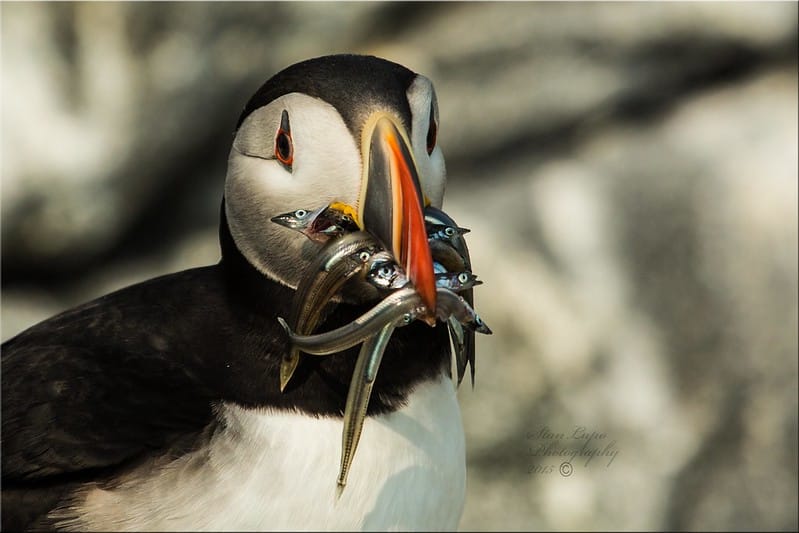
Fishing | A coalition of conservation organisations have announced their ‘strong support’ for the UK government committing to close sandeel fishing in the North Sea. Nineteen organisations from the UK and 16 from the EU issued a statement after the UK’s decision was challenged by the European Commission. The Commission requested a consultation to discuss the legitimacy of the closures, and claimed they were endangering the livelihoods of fishermen. Hugo Tagholm, executive director of Oceana UK, urged the government to ‘stand strong’ against the challenges from the EU, which ‘are clearly driven by aggressive tactics from the industrial fisheries lobby.’ The organisations are calling on the EU to drop their complaints and instead follow suit in protecting at-risk seabirds and marine mammals. The Independent covered the news.
Sport | An alliance of water-based sporting bodies are calling on the government to take urgent action to clean up the nation’s waterways. The newly formed Clean Water Alliance, which includes the Angling Trust, British Rowing, British Triathlon and Swim England, represents a combined total of more than 450,000 athletes and participants. It is calling for regulators to be adequately funded, access to real-time water quality information year-round, and a change from ‘bathing waters’ to ‘recreation waters’ within government policy to recognise the range of activities that depend on clean water. BBC Sport and the Times reported the news.
Mowing | Almost half of British gardeners do not plan to mow their lawn more than once during May, according to a survey by Plantlife as their annual ‘No Mow May’ campaign kicks off. In a survey of more than 2,000 people, the charity found that 46% supported a lower mowing regime to allow wilder lawns and wildflowers to flourish. The campaign has been running since 2019, and for the first time the charity invited local authorities to also show their support, with more than 40 signing up to the movement. Bradford Council, for example, announced that 85 green spaces around the district would be left to grow naturally this month, from roadsides to parks and cemeteries. The Independent and the BBC covered the news.
In other news:
- The Scottish government has been urged to scrap its plans for a new National Park after the collapse of its agreement with the Greens, reports the Herald.
- Environmental charities are concerned that Keir Starmer’s plans for wind and solar power could come at the expense of nature, reports the Times.
- Chris Stark, the outgoing head of the Climate Change Committee, has said that Boris Johnson was the greenest British leader in modern history.
- England experienced an impressive overland passage of Arctic Terns last week, reports BirdGuides.
- A court has rejected an appeal by the Scottish government over a ruling that found ministers acted unlawfully in granting licences for scallop dredging and bottom trawling, reports ENDS.
Across the country
Monmouthshire | Chris Packham has branded the brewing giant Heineken as an ‘environmental vandal’ after it cut down a cider orchard in South Wales. The company decided to uproot the 300-acre Penrhos Orchard, which sits on the Offa’s Dyke path, after it overestimated demand for its Bulmers cider. Packham said the ‘tragically sad story’ demonstrated ‘a sort of abject short-sightedness’, and suggested the company could have sold the land as a community orchard or leisure resource. Around 2,000 acres of British cider apple orchards have been lost over the past few years, according to the National Association of Cider Makers, but Heineken said it acted in accordance with the Wildlife Act. The Times and Bristol Post covered the news. Meanwhile, Thatchers, the Somerset cider-makers, has worked with the Barn Owl Trust to build a ‘five-star hotel’ for wildlife on its land, reports the BBC.
Cornwall | A species of jumping spider new to science has been discovered on the Penryn campus in Cornwall, home to Exeter and Falmouth universities. It is the latest in a growing list of non-native spider species to become established on British shores: Cornwall and Devon are emerging as particular hotspots, thanks to their international ports and mild weather. The nearest known relative of the new arrival, Anasaitis milesae, hails from the Caribbean. Helen Smith, a conservation officer for the British Arachnological Society, said that Britain’s spider fauna is changing ‘more rapidly than ever’, and that as exotic species spread, the ‘chances of them impacting on less common native species increase’. Other new arrivals include the dramatically named false wolf spider, which is thriving in London, and the green-fanged tube web spider, which has spread out from Bristol. The Guardian covered the story.
Sussex | In a recent coastal survey, researchers from the University of Sussex identified 81 different marine species – including a critically endangered European eel and a rare tope shark. The scientists used a baited camera and environmental DNA analysis to record the fauna at 28 survey sites between Shoreham-by-Sea and Selsey. The work will provide a monitoring baseline of marine diversity, and help to understand the impact of a nearshore trawling bylaw which was introduced in 2021. Alice Clark, a PhD candidate, said she thought people would be ‘surprised to learn just how diverse this area of the UK coastline is.’ In addition to the eel and tope shark, the team spotted black seabream, Atlantic mackerel and a cat shark. The results were published in the PeerJ journal. The BBC and the Independent covered the news.
Elsewhere:
- A new wetland reserve in Surrey, created to protect the Hogsmill and Thames rivers from pollution, will open to the public this month, reports BirdGuides.
- The National Trust has started work on a £1.8m peat restoration project at Wicken Fen to mark the acquisition of its first nature reserve 125 years ago, reports the BBC.
- Red squirrels have been spotted near Kirkby Lonsdale in Cumbria after an absence of 20 years, reports the Northern Echo.
- Conservationists at the River Frome are checking a specialist trap every 30 minutes as part of a study tracking migrating salmon, reports the BBC.
- The Environment Agency has been accused of allowing an ancient bluebell woodland in Kent to be buried under fly-tipping, reports the Telegraph and Shropshire Star.
- Welsh Water is hoping that £21m in funding will help to bring more tourists to the Elan Valley, dubbed as Wales’ ‘Lake District’, according to the Daily Post.
- In Cumbria, the RSPB is trailing the use of ‘Nofence’ collars on grazing sheep to create safer nesting environments for threatened birds, reports the BBC.
- Torbay Coast & Countryside Trust has issued a warning after kayakers and people on water scooters were seen disturbing the seabird colony at Berry Head in Devon.
- A ‘stowaway’ beetle found in Guernsey is thought to have travelled thousands of miles from the US in a toy box, reports the BBC.
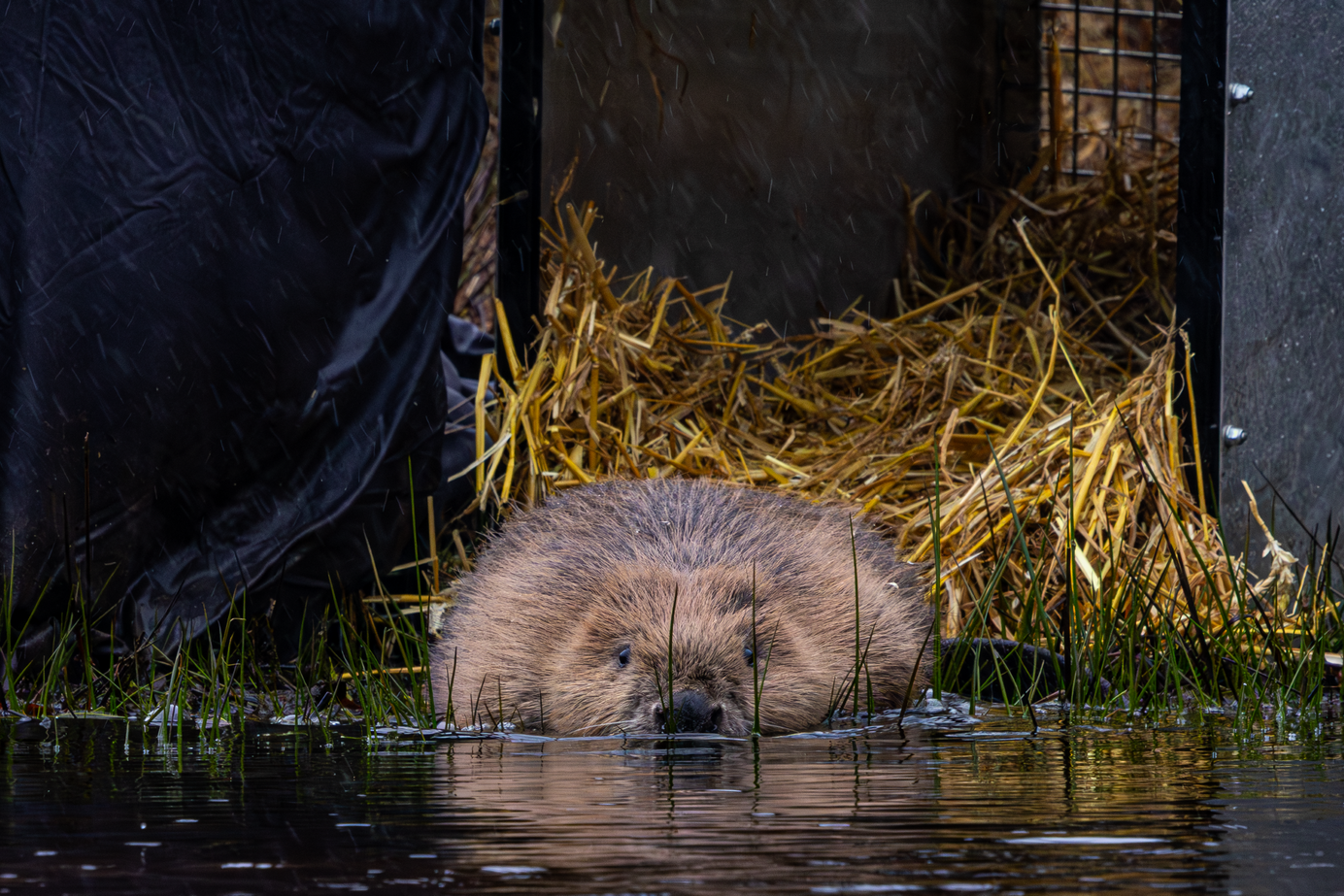
- Beavers have returned to Suffolk after around 400 years, following the recent reintroduction of a family at Little Haugh Hall near Bury St Edmunds, reports the BBC.
- Police believe that the golden eagle known as Merrick, which disappeared in the Borders last autumn, was shot and killed, reports the Scotsman and the BBC.
- The RSPCA has paused releasing rescued seals into the River Nene in Lincolnshire after concerns that the seals are decimating fish stocks, reports the BBC.
- Heavy rain during one of the wettest winters on record has boosted chalk streams in the east of England, according to the RSPB.
Reports
Crops | Analysis by the Energy & Climate Intelligence Unit has revealed the impact of wet winter weather on British crop yields. The report found that production of wheat, barley, oats and oilseed rape could be down in 2024 by four million tonnes compared to 2023: a reduction of 17.5%. This would result in increased prices for products including breed, biscuits and beer. Tom Lancaster, a land analyst at ECIU, said the ‘washout winter’ had played havoc with farmers’ fields, leading to ‘soils so waterlogged’ they could not be planted, or were too wet for tractors to apply fertilisers. The National Farming Union is warning that the increasing frequency of extreme weather as a result of climate change is one of the biggest threats to UK food security. The BBC covered the news.
Food | Reworking the UK’s food system for climate, nature and health is a ‘clear opportunity for the next UK government to show global leadership’, according to a report by the Green Alliance. The think-tank argues that a data-led approach to improving the food system, using the 2021 National Food Strategy (NFS) as a blueprint, could be used as a platform for global environmental influence. It highlights three areas where the NFS identifies a need for action which has not been addressed by the current government food strategy, including reducing emissions through lower meat diets, diversifying land use, and creating industry incentives for healthier food. ‘Politicians are wary of telling people what to eat,’ the report concludes, ‘but, despite their reticence, the issue is not going away.’
Cities | The majority of European citizens live in urban areas, and the ability of cities to adapt to the impacts of climate change will be critical in the coming years. A report by the European Environment Agency takes stock of the current state of urban adaptation in European cities, and highlights what actions need accelerating. Notably, it found that emerging areas of opportunity include promoting urban agriculture and creating more liveable public spaces. Over 90% of local adaptation plans analysed in the report included nature-based solutions, with benefits ranging from water retention to heat reduction, better recreational spaces, and reducing pollution. However, the report also noted that, due to the magnitude of expected climate impacts, it may be necessary to combine nature-based approaches with other measures.
Science
Beavers | The presence of beavers can help to regenerate woodlands, providing a source of food for deer, according to a joint study by the University of Stirling, NatureScot and the James Hutton Institute. Fieldwork in eastern Scotland showed that almost two-thirds of trees felled by beavers produced new shoots, which were more abundant, nutritionally dense, and concentrated closer to the ground than on other trees. While this helps to diversify the woodland structure, it also proves attracting to deer, whose browsing risks simplifying the structure once more. The authors stressed the importance of understanding beaver-deer interactions to inform habitat management strategies. The Herald covered the research.
Moorland | A study by the RSPB, published in Remote Sensing in Ecology and Conservation, maps the extent of moorland burning in the UK from 2017 to 2022. Visual mapping of burns is time consuming, so researchers developed a method of automatically detecting the appearance of burn scars in moorland vegetation using satellite images. This allowed them to measure the quantity of burning in sensitive areas, including carbon-rich soils, steep slopes, and protected areas. They found that burning had taken place in 14% of UK protected areas, and in some years, the percentage of moorland burned inside protected areas in England was higher than outside. However, the results from 2021/22 did show a 73% reduction in burning in England, which the authors suggest is a positive result of regulation introduced to limit the burning of peat soils. The new methods will allow researchers to continue to track the effects of regulations, such as Scotland’s Muirburn Bill.
Grazing | A study in Land Use Policy explores the motivation and challenges for land-users who choose to graze sustainably. Researchers conducted interviews with 74 land-users across eight case study areas in Europe. The results revealed multiple challenges, including rural depopulation, land abandonment, and difficulties linked to the environment of remote areas. The interviews showed that economic aspects were important drivers of behaviour, but significantly, interviewees were often motivated by an interest in nature conservation, intergenerational continuity, and cohesion in rural communities. Based on the results, the authors suggest incentivising the management of larger areas through subsidies, and removing administrative hurdles for extensive and semi-wild grazing. Science Daily covered the results.
Driftwood
Worms | This May, the Soil Association is calling on the British public to embrace the art of ‘worm charming’ – all in the name of science. Worm charming involves a variety of actions, such as dancing on the soil and soaking the earth with water, to use the power of vibrations to attract earthworms to the surface. Citizen scientists will then count them, and the association will use the findings to create a worm map of the UK, showing where the healthiest soil is, and which areas need help to restore worm numbers. Head of Worms, Alex Burton, said: ‘It might sound wacky but dancing on the bare earth can help with science. Worm charming is fun and a little surreal, but scientists and farmers use worm counts to understand soil health.’ Read more about the initiative on Farming News.
Farming | In the Times, a photo article by photographer Sophie Gerrard features two women-led agricultural initiatives producing nature-friendly food in Scotland. The first is Lauriston Farm, a 100-acre site on the outskirts of Edinburgh run by a workers co-operative. It includes community allotments tended by various groups, including people from Ukraine, South Africa and Hong Kong, and also runs a weekly vegetable stall with produce grown in its 20-acre market garden. The second initiative is Grampian Graziers, a project using native cattle to restore carbon-rich pasture in the Cairngorms. Behind it is Nikki Yoxall, a regenerative farmer practising holistic planned grazing and studying a PhD exploring the role of nature’s connections in the decision-making of farmers.
Wye | In the Guardian, author and local resident Oliver Bullough writes about a bizarre catch-22 situation while campaigning for cleaner water in the River Wye. Bullough has swum in the Wye since childhood, and more recently campaigned with Friends of the River Wye to end pollution from manure and sewage. Recently, they applied for ‘bathing water status’ for the Warren, a popular bathing area just upstream of Hay-on-Wye. Last week, they received a baffling reply: the Welsh government has rejected the application, on the grounds of ‘significant concerns regarding the environmental impacts’ of bathing water status. ‘The Labour government in Cardiff is using environmental safeguards it is failing to enforce as an excuse not to protect the river,’ Bullough writes. ‘It is infuriating, but we must use their intransigence as a spur to action.’
Further reading:
- For the Guardian, Emma Beddington writes briefly on why she is happy to see ‘gen Z’ adopting outdoor hobbies, from hiking to birdwatching.
- An article in the Guardian describes a heated row at the British Cactus and Succulent Society over taking specimens from the wild.
- A young beachcomber from Cornwall has found a ‘holy grail’ Lego octopus: a rare item among nearly five million pieces of Lego that fell into the sea off Land’s End in 1997 when a cargo ship encountered a storm.
- Adam McKay’s Yellow Dot Studios, which he set up to mobilise action on the climate crisis, has released a short, satirical film called More Flames. You can watch it here.
- In the Conversation, researcher Bernardino D’Amico explains why substituting timber for hemp could transform low-carbon construction.
- A feature in BBC Future explores how bird flu spread to become a global animal pandemic.
- An article in the Conversation summarises research into whether granting legal ‘personhood’ to elements of nature can help stem biodiversity loss.
Happy days
Harvest Mice | More than 150 harvest mice have been released into the UK’s second oldest nature reserve: Perivale Wood in west London. Harvest mice were last seen in the wood in Ealing 45 years ago, where they disappeared due to a loss of natural habitat. Perivale Wood includes ancient oak woodland and neutral grassland, and now areas of meadow have been set aside to create wildlife corridors. Perivale Wood is the fifth site where the Wildlife Trust has released the species, with more than 1650 harvest mice now released across Ealing, in the hope that the populations will link up and continue to expand. The BBC covered the story.
Subscribe to our newsletter
Members receive our premium weekly digest of nature news from across Britain.
Comments
Sign in or become a Inkcap Journal member to join the conversation.
Just enter your email below to get a log in link.