Scottish Estates & Wild Bird Decline
The latest news on nature and conservation in Britain.
National news
Scotland | Oxygen Conservation, a company based in Devon, has purchased two massive estates in Scotland after securing a £20.55 million loan from Troidos bank. It is thought to be the largest conservation-focused commercial debt package in the UK to date. Some 23,000 acres of land have passed hands in total, divided between the Buccleuch estate near the English border and the Invergeldie estate in Perthshire. The company aims to generate an economic return through generating carbon credits, driven through a diverse range of projects including “species reintroduction, landscape connectivity, regenerative agriculture, woodland creation, renewable energy generation, sustainable housing, and eco-tourism and carbon sequestration through woodland and peatland restoration.” The news was widely covered, with the Herald in particular providing astute analysis of what the story means in the context of Scottish conservation more broadly.
UNESCO | Wetlands along the east coast of England, from Humber in the north stretching down to the Thames, have been added to the UK’s list of potential World Heritage sites. Currently the UK has only two natural UNESCO World Heritage sites: Dorset & East Devon Coast and the Giant’s Causeway coast. The proposal to UNESCO covers an area known as the ‘East Atlantic Flyway’, a network of wetlands across 170,000 hectares that acts as a vital habitat for more than 155 species of migratory birds. The RSPB and other nature organisations have long campaigned for the site to join UNESCO’s list. If the nomination succeeds, it would become the first ever bird route to be recognised by the organisation. The BBC, the Telegraph and the Hull Daily Mail reported the news.
Fishing | Celtic rock band Skipinnish has released a protest song against the Scottish government’s plans to introduce Highly Protected Marine Areas (HPMAs) across 10% of Scottish waters. The lyrics are written by Angus MacPhail, a founding member of the band, while the song is sung by 64-year-old fisherman Donald Francis MacNeil from Vatersay. Named ‘The Clearances Again’, the song likens the plans for HPMAs to the infamous Highland Clearances, when residents of the Scottish Highlands and Islands were forcefully evicted. MacPhail, originally from the Isle of Tiree, said that the proposals endanger rural livelihoods, and “give zero regard to the effective local management of these waters”. The Scottish government said that HMPAs will protect and restore marine ecosystems so they can continue to support the communities that depend on them. The Press and Journal and the National covered the news.
In other news:
- A campaign for developers to include ‘swift bricks’ in new builds will be discussed in Parliament, reports the BBC.
- Defra has announced that four swimming spots in England will be designated as bathing waters. The BBC and the Times covered the news.
- The government has said that poultry will be allowed outside from next week as the risk of avian flu eases, reports the BBC.
- Shark biologists are concerned by the first appearances of smalltooth sand tiger sharks in British waters, reports Birdguides.
- Defra has made £5m available to accelerate investment in domestic tree production.
Across the country
Anglesey | Paths made of wool have been laid across several boggy areas of Anglesey, in an attempt to cut down on plastic and provide a new market for Welsh wool. Around 700 fleeces have been used on two trial areas of the island. The technique has been around since the days of the Roman Empire, when wool was laid down on waterlogged areas beneath new roads. More recently, it has been employed in places like Skye and the Lake District. The initiative is a partnership between Anglesey Council and Menter Môn. North Wales Live reported the story.

Dartmoor | Confused about the controversy that has hit Dartmoor in recent weeks? Tony Whitehead, a naturalist who lives and works in the area, explains why commoners have come to blows with Natural England over stocking rates in the National Park. The feature, published in West Country Voices, covers everything from the history of Higher Level Stewardship agreements to the ecology of Molinia, and how livestock have both helped and hindered the recovery of the landscape. Amid the various lurid headlines and quotes about backdoor rewilding that have emerged in recent weeks, this clear-eyed analysis of the situation is certainly worth a read.
Lammermuir | Burncastle Estate near the Lammermuir Hills in southern Scotland has become the first private estate to build artificial eyries – nesting sites – for golden eagles. The estate, which is owned by the Duke of Northumberland, is one of 17 private estates working in partnership with the South of Scotland Golden Eagle Project to help restore the local population. Expert climbers have erected the huge nests at the tops of trees in secluded locations, close to where three young eagles have been spotted. Ross Ewing of Scottish Land & Estates said: “Northumberland Estates’ choice to build artificial eyries on Burncastle – an active grouse moor – underlines the estate’s desire to help golden eagles establish a thriving population around the region.” The Guardian covered the story.
Elsewhere:
- The so-called “tree against hunger” has flowered for the first time at Kew Gardens, reports the Evening Standard.
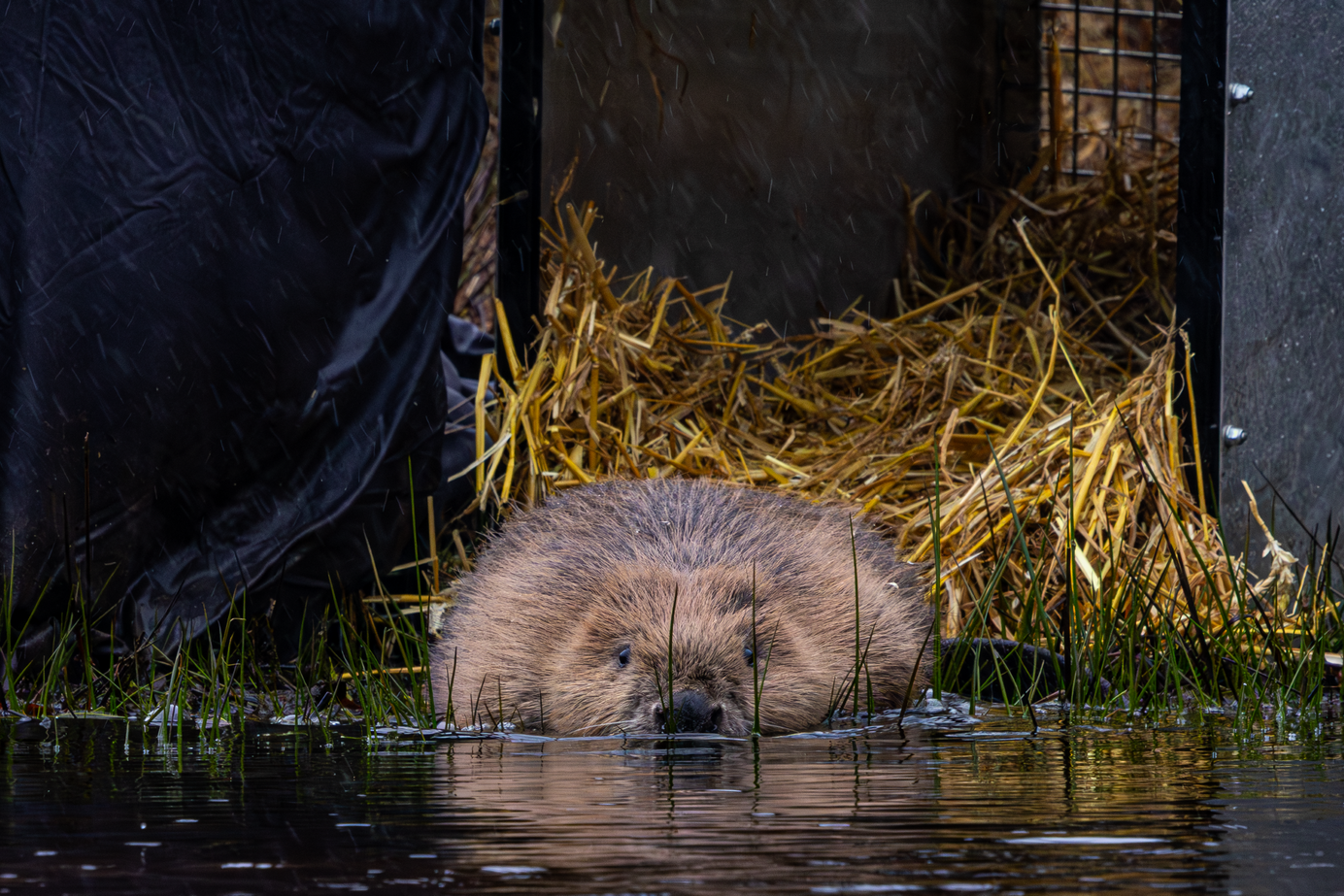
- A video in the Guardian captures the first wild beaver spotted in Wales in years, in a Pembrokeshire couples’ back garden.
- Visitors to the New Forest could be fined up to £1,000 for petting the resident ponies or lighting campfires and barbecues, reports the Guardian and the Daily Echo.
- Conservation efforts have seen numbers of little terns double at a colony in Cumbria, reports the BBC.
- Rangers have moved into a remote lifeboat house in Norfolk to monitor wildlife over the summer months, reports the BBC.
- Broadhurst Park in Moston is set to become Manchester’s tenth nature reserve, reports BirdGuides.
- Cornwall Wildlife Trust has announced plans to appoint its first dedicated Beaver Officer.
- A sperm whale found beached at Cleethorpes on the Lincolnshire coast is feared to have died before being resubmerged by the tide, reports the Guardian.
- Devon Wildlife Trust has opened a tree nursery to help restore the number of wild trees lost to ash dieback disease.
- Anglers taking part in a fishing competition on the River Severn are currently hooking more sanitary products than fish, reports the BBC.
- Lancashire County Council has been given a £48,000 grant from the government to develop a Local Nature Recovery Strategy, reports the Lancashire Post.
- Four Exmoor ponies escaped a Northumberland nature reserve last weekend after visitors left a gate open, reports the Chronicle Live.
- A legal challenge opposing a coal mine in Whitehaven, Cumbria, has been rejected, reports the BBC.
- Local police forces have launched Operation Seabird, a police-led initiative to protect wildlife along Lincolnshire’s coastline, reports BirdGuides.
- A series of sewage spills is threatening the future of oyster farmers in Whitstable, Kent, reports the Times.
Reports
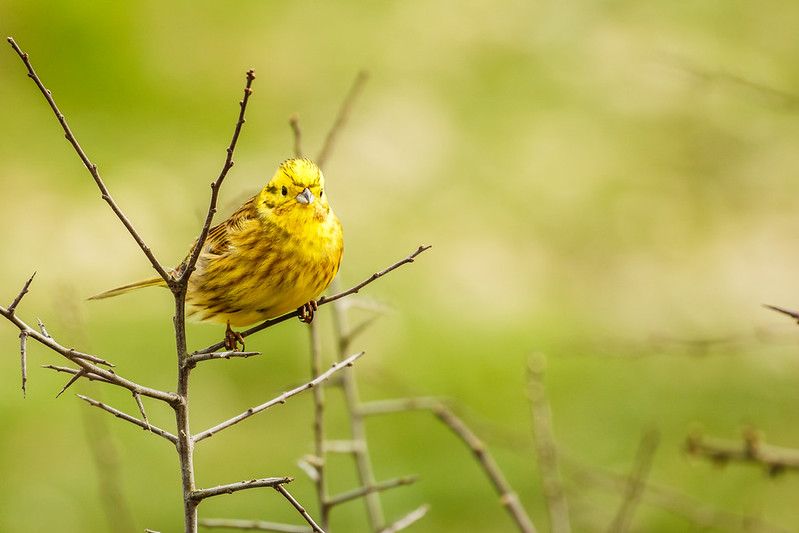
Birds | Almost half of all wild bird populations in the UK declined in number between 2015 and 2020, according to statistics released by the government as part of its biodiversity indicators. Woodland species have fared the worst in the short-term, with a 12% decrease over the five-year period, while farmland birds have plummeted by more than 55% since 1970, and by 5% since 2015. The declines are primarily driven by the intensification of agriculture, from the loss of hedgerows to increased use of farm chemicals. Dr. Richard Gregory, the RSPB’s head of science, said that “everyone should be concerned” by the findings, as bird populations are “a crucial indicator of the condition of our environment”. He added that organisations “cannot keep publishing report after report” charting the decline of British wildlife while the government fails to take action. The Guardian covered the report.
Bird flu | A report by NatureScot investigating last year’s devastating outbreak of avian flu has concluded that long-term conservation efforts will be the most effective tool to combat the disease. The report recommends that conservation measures should focus on bird species which are particularly susceptible, and be combined with enhanced surveillance, monitoring and continued research. Short-term measures, such as carcass removal and reduced human interaction, are unlikely to have much impact. Alastair MacGugan, a NatureScot Wildlife manager, said there was “no silver bullet to solve this complicated dilemma”, but the report would be a “great help” to reduce the impact of the disease. The Scotsman, the Herald, the Times and ENDS covered the report.
Oil | A report by campaign group Uplift and conservation organisation Oceana claims to be the first-ever comprehensive review of how the oil and gas industry is damaging the UK’s seas and marine biodiversity. ‘In Deep Water’ uses satellite imagery and data obtained through Freedom of Information requests to calculate the extent of the damage. Analysis found that between 2017 and 2022, some 22,000 metric tonnes of oil were discharged in UK waters. While some oil spillage during routine production is allowed, the report concludes that 42% of monitored releases breached permits. Hugo Tagholm, director of Oceana, said that regular oil spills threaten the feeding and breeding patterns of many species in Marine Protected Areas, including porpoises, deep sea sponges and slow-growing cold water corals. The central recommendation of the report is to halt the licensing and approval of new offshore extraction in UK waters. The BBC covered the report.
Science
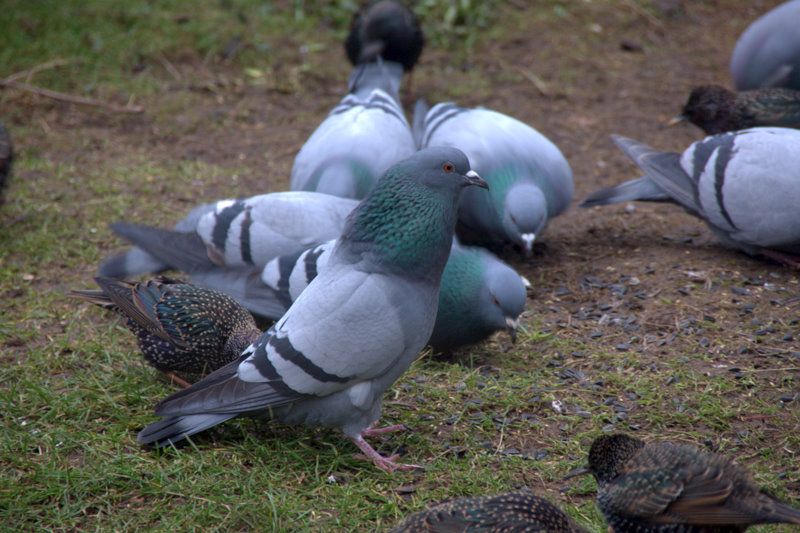
Doves | Wild rock doves are threatened by interbreeding with their similar cousins, feral and domestic pigeons. The two birds are difficult to tell apart from looks alone, but unlike the feral species, the wild birds still retain their natural instincts, nesting in caves and flying for miles every day to feed on open land. To assess how far wild populations have hybridised with feral ones, Will Smith of the University of Oxford assessed the plumage of flocks around the UK, comparing the markings of the feathers to the shapes of the heads. “This will enable us to determine the conservation status of the truly wild Rock Dove, and to track the impact of new feral pigeon invasions,” he wrote, in a blog for the British Ornithologists’ Union, explaining the study. The findings were published in Ibis.
Auditing | Biodiversity auditing can improve conservation outcomes, according to a paper published in Biological Conservation. Auditing is a cheap, desk-based task that involves compiling all the species that live in a certain place, based upon existing records. This allows land managers to tailor actions more precisely to the needs of the area. For example, one recent audit in Eastern England found that existing grazing regimes of coastal marshes were incompatible with the requirements of 42% of priority plant and invertebrate species. The authors call for this strategy to be integrated into policy, particularly the EU’s 2030 Biodiversity Strategy and the UK’s Local Nature Recovery Strategies.
Wind Farms | A study in Scientific Reports analysed the impact of five offshore wind farms in the North Sea on nearby populations of red-throated loons. Using data from ships, aircrafts and digital aerial surveys, researchers found that the number of loons was reduced by 94% within a one-kilometre zone of the turbines, and by over 50% within a ten-kilometre zone. The authors suggest that this “halo effect” will negatively impact the birds’ foraging habits as they become restricted to smaller areas. The paper concludes that the need for renewable energy must be balanced with efforts to minimise the impact of wind farms on less adaptable species. Meanwhile, the Scottish Seabird Centre in North Berwick has objected to plans to build one of the world’s largest offshore wind farms in the North Sea, reports the Herald.
Driftwood
Rewilding | Can rewilders and farmers ever unite in Wales? Rewilding Magazine profiles a new charity, Tir Natur, which is seeking to bring together the traditionally warring factions. The group aims to purchase at least 200 acres by the end of next year, funded through a combination of fundraising and stakeholders. The plan is to reintroduce large grazers – including black cattle, red deer and pigs – to restore degraded areas back to health. At the same time, they want to see the Welsh language expand beyond its stronghold of farming communities, combining culture with nature. “At the moment, there is no land where nature really comes first. It is always tolerated or marginalized,” says the group’s co-founder, Stephen Jenkins.
Sewage | Environment secretary Thérèse Coffey comes out all guns blazing in her latest piece for Conservative Home, in which she claims that cleaning up water pollution is her “personal mission”. She writes that Conservatives are dealing with the problem, compared to Labour and the Liberal Democrats who “did not deal with the proverbial” while they were in government. She accuses Labour of peddling “non-existent legislation”, and even takes aim at Feargal Sharkey – who, incidentally, was the subject of an in-depth profile in the Observer this week. The singer turned campaigner used to get stopped in the streets to talk about his song Teenage Kicks; now, he says, “it’s always about shite in rivers”.
Extraordinary piece from Thérèse Coffey who (remarkably) attacks Labour and the Lib Dems - but doesn't even contemplate that we might just force water companies to bear their own costs of stopping their sewage dumping! https://t.co/mvOaXJXCzk
— Jo Maugham (@JolyonMaugham) April 12, 2023
Plants | In the Lead, a feature by writer and campaigner Jon Moses digs into the phenomenon of ‘plant blindness’. Plant knowledge in the UK is in steep decline, according to Moses. A study of A-level biology students found that only 14% could identify more than three native plant species – and their teachers could do no better. It is perhaps unsurprising, then, that the number of students enrolled in plant science programmes between 2007 and 2019 accounted for only 0.05% of total biology graduates. Leif Bersweden, a young botanist, suggests the school curriculum should leave out the technical details of xylems and phloems, and focus instead on the “really exciting things about botany”, from the rotting smell of Lords and Ladies to the electrical signals of sundew leaves.
Further reading:
- Wildlife filmmakers are routinely overlooking invertebrates, writes Sofia Quaglia in the Guardian.
- The BBC reports on the development of robotic worms, which could be used in mining, agricultural sensing and planetary excavation.
- A blog from the Natural History Museum looks at how biodiversity loss impacts human health.
- The final online-only episode of Wild Isles doesn’t go far enough, writes Dave Goulson in the Guardian.
- A feature in the Guardian explores the work of spider hunters searching Britain’s heaths for rare arachnids.
- In the Conversation, an article explains why grey seal populations are still fragile, despite rising numbers in UK waters.
- A feature in Countryfile walks in the footsteps of Yorkshire’s nomadic Wold Rangers.
- Grey squirrels can cause havoc, but does it justify killing and eating them? A Guardian article dissects the issue.
- A feature in the Atlantic questions why conservation largely ignores the most common type of life: bacteria.
- In Caught by the River, writer Rebecca Tamás argues that the monarchy had no right to appropriate the Green Man for the coronation invitations.
- An article in Spiked explores the “green war” of anti-sheep rhetoric.
- A feature in Bella Caledonia looks at crofting, landlordism, rewilding and depopulation in the Scottish Highlands.
Happy days
Writing | If you have a spare half hour, tune into the latest show from the BBC’s Costing the Earth podcast. Featuring Helen Macdonald, Paul Evans and Kerri Andrews, it looks at whether nature writing can help us to win the battle against wildlife decline and climate change. “Rare to hear nature writing discussed so well,” tweeted Wintering author, Stephen Rutt.
Subscribe to our newsletter
Members receive our premium weekly digest of nature news from across Britain.
Comments
Sign in or become a Inkcap Journal member to join the conversation.
Just enter your email below to get a log in link.