Scottish Government & Regenerative Wool
The latest news on nature and conservation in Britain.
National news
Politics | On Tuesday, Scotland’s first minister, Humza Yousaf, set out his vision for the next three years of government leadership. A key mission in his “fresh start” is to build a “fair, green and growing” economy, he said in a speech to parliament. The John Muir Trust welcomed the government’s “strengthened commitment” to tackle the environmental and climate crises, noting in particular the commitment from Mairi Gougeon – cabinet secretary for rural affairs – to deliver bold land reform legislation. However, Yousaf also faced criticism for failing to mention any matters concerning Scotland’s rural community in his speech, including farming and fishing. Rachael Hamilton, MSP for the Scottish Borders, tweeted that the government “remains completely out of touch with rural Scotland”. The criticism comes hot on the heels of the controversial consultation for Highly Protected Marine Areas, which came to a close on Monday. The Scotsman reported the news.
Sparrows | House sparrows have topped the RSPB’s Big Garden Birdwatch for the 20th year running, despite drastic declines in their populations since the survey started. Data from the citizen science survey – during which half a million people counted nine million birds over a January weekend – reveals that the number of sparrows in the UK has dropped by nearly 60% since 1966, losing 22 million birds from British skies. Other garden species are also struggling, including greenfinches and chaffinches, which have declined by 34% and 65% respectively over the last decade, largely due to a disease known as Trichomonosis. Beccy Speight, the RSPB’s chief executive, said that “the numbers speak for themselves”, but she is hopeful that as spring bursts into life, “more and more people will feel empowered” to give nature a helping hand. The Guardian, Countryfile and the Herald covered the news.
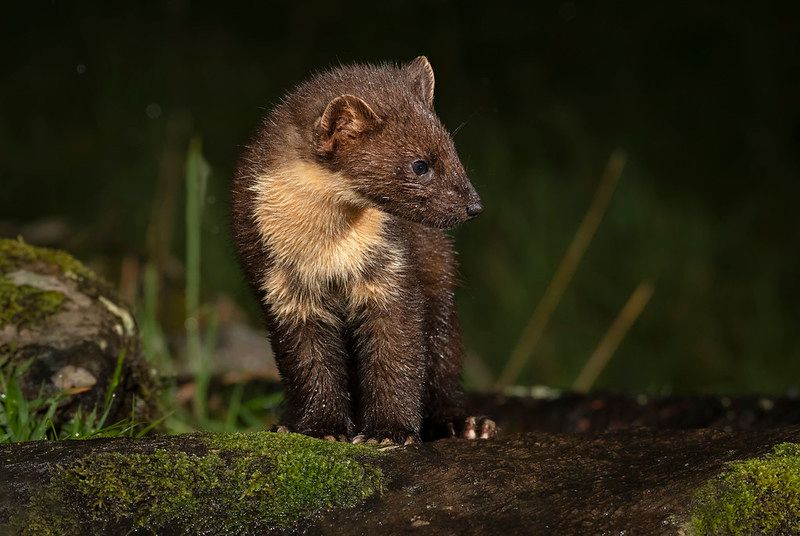
Scotland | The Game and Wildlife Conservation Trust has suggested baiting pine martens with contraceptives in parts of Scotland to help conserve endangered capercaillie. The distinctive birds are among the UK’s rarest species, and pine marten predation on their eggs is one of the key factors contributing to their decline. The trust has applied for funding for a study into the effectiveness of using contraceptives to manage pine marten numbers, as a preferable alternative to culling. Director of the trust, Rory Kennedy, said similar methods have been used to control non-native grey squirrels and feral goats in Wales. The BBC reported the news. Last year, an article by Inkcap Journal questioned how conservationists can save capercaillie without killing its predators.
In other news:
- Conservationists are concerned that last year’s drought has devastated England’s frog and toad populations, reports the Guardian.
- Greenhouse farmers in the east of England are calling for government support to help with energy costs and becoming more sustainable, reports the BBC.
- The RSPCA has issued a plea for wildlife-friendly gardening techniques as endangered bats emerge from hibernation, reports the Evening Standard.
- The Environment Agency has warned it has been a “very difficult year” to achieve its habitat restoration target due to reduced funding, reports ENDS.
- The RSPB has warned that wild birds are still at risk from avian flu, even as measures to protect domestic birds end, reports the BBC.
- The charity Buglife is asking the public to record any sightings of the short-necked oil beetle, which is only found in a handful of locations in Scotland.
Across the country
Yorkshire | Work to create England’s largest native woodland is set to begin at Snaizeholme in the Yorkshire Dales. The Woodland Trust is aiming to plant 291 hectares with native broadleaf saplings, without the use of herbicides or plastic tree guards. The planting will work in tandem with restoration projects focusing on existing areas of peatland and limestone pavement to create a mosaic of rich habitats. Al Nash, head of the project, said it was “a rare opportunity to create a sizable wildlife haven for the north of England”. The Times, the Hull Daily Mail and the Yorkshire Post covered the news.
Norfolk | Proposals to build a dual carriageway near Norwich could “wreck” a super-colony of endangered barbastelle bats. A planning application is expected to be submitted this summer for the Western Link Road, which will cross the Wensum, a chalk river designated as a special area of conservation. Scientists have discovered 94 individual roost trees for barbastelles in the area, two-thirds of which are within the 2.5km “impact zone” of the planned road, with one colony directly in its path. Dr. Charlotte Packman, from the Norfolk Wildlife Trust, said the site is “by far the biggest and most important area we know of for barbastelle in the UK”, and added the species needs an extensive area of intact habitat to forage successfully. The Guardian covered the story, and a previous feature in Inkcap Journal examined how the road proposal threatens the ancient habitats of Wensum Valley.
Brecon | The Brecon Beacons National Park has opted to drop its English language name in favour of the original Welsh, Bannau Brycheiniog, which translates into English as the ‘Peaks of Brychan’s Kingdom’. The park authority has also chosen to scrap the logo of a fiery beacon, arguing that the greenhouse gas-emitting icon is not in line with its mission to tackle the climate and biodiversity crises. The decision has been met with mixed reactions: the Welsh Liberal Democrat leader, Jane Dodds, said that the indigenous language can be used to protect history and culture, as well as market the country to visitors. However, others have criticised the move as a waste of resources, maintaining that park leaders should be focusing on tangible action rather than a rebranding exercise. The BBC, the Guardian, the Telegraph, the Independent and Countryfile all covered the debate.
Elsewhere:
- Britain’s first black-winged kite has been discovered in Powys, reports BirdGuides.
- In London, a new project is afoot to recover water vole populations, reports the BBC.
- The discovery of five pond mud snails within the Pentland Hills marks a major milestone in the attempt to reintroduce the rare species, according to Buglife.
- The rare Spring Plasterer Bee has been recorded in Warwickshire for the first time, reports the BBC.
- A large-scale conifer forest in Argyll is on sale with offers just short of £30m, reports the Scotsman.
- The world’s first rewilding centre has opened its doors near Loch Ness, reports the Herald.
- A landowner is being charged for using diggers to rip up trees and vegetation from the banks of the River Lugg, one of the UK’s best salmon rivers, reports the BBC.
- Work by Natural Resources Wales is helping purple gromwell, an endangered woodland plant, thrive in a Denbighshire quarry.
- The government has ruled in favour of Brislington Meadows, where 260 homes will be built on a wildlife-rich meadow in south Bristol, reports the Bristol Post.
- Campaigners have expressed dismay after Defra figures reveal that almost 3,000 badgers were culled in Shropshire last year, reports the Shropshire Star.
- Bradford Council in Yorkshire has defended its plans to fell around 4,000 trees infected with Larch Tree disease, reports the Yorkshire Post.
- A conservation charity in Porthmadog, Gwynedd, has given up hope that one of the UK’s most successful breeding ospreys will return for her 20th year, reports the BBC.
- Cornwall Council has backed the Climate & Ecology Bill, two years after voting against it, reports Cornwall Live.
- Buglife Scotland has kicked off a partnership project to restore 40 hectares of wildlife-rich habitat along the River Tweed.
- Volunteers for Berkshire Wildlife Trust helped carry out the annual flower count on the banks of the Thames in Oxford, tallying up 43,349 snake’s-head fritillaries.
- Norfolk Wildlife Trust said it is hopeful ospreys will breed in the county this summer for the first time in 250 years, reports BirdGuides and the BBC.
- Suffolk Wildlife Trust is set to rewild a formerly arable farm by the River Deben near Ipswich into a nature reserve, reports the BBC.
- A Wiltshire-based artist has created a mural in London’s Paddington Station to celebrate the diversity of wildlife found along railways, reports the BBC.
- A 20ft minke whale has washed up on a beach in North Berwick, reports the BBC and the Scotsman.
- Black-crowned night herons, usually found in the Mediterranean, have been spotted on the remote archipelago of St Kilda, reports the BBC.
- North Yorkshire County Council has been criticised for spending £30,000 to remove the nests of endangered kittiwakes from Scarborough Spa Bridge, reports the BBC.
- Eryri National Park is launching a project to make Wales’ highest mountain entirely plastic-free, reports the BBC.
- Bluebells in the ancient Astonbury Wood near Stevenage have been destroyed by motorcyclists, reports the BBC.
Reports
Seagrass | A report by Cornwall Wildlife Trust and Natural England has revealed the discovery of one of the UK’s largest seagrass beds, in St Austell Bay. The discovery was made during the Blue Carbon Mapping Project, which used boats with echosounder techniques to identify areas of marine habitat acting as effective carbon stores. The bed stretches for 359 hectares along the coastline, and divers recorded 56 species living in the seagrass, including seahorse, pipefish, cuttlefish and scallops. The Trust said it was a hugely positive find, as Britain has lost around 92% of its seagrass meadows in the last century. However, the report highlights that work is needed to protect the area, and suggests making the bed more visible to sea users through marker buoys. The BBC, the Guardian and the Times covered the news.
Triumph | The RSPB outlines its biggest success stories from last year in its new Saving Nature report. Highlights include the exclusion of sandeel fishing from the Dogger Bank Special Area of Conservation in the North Sea, the purchase of Glencripesdale nature reserve on the west coast of Scotland, and working with landowners to improve breeding habitats for turtle doves across southern and eastern England. The report also provides an overview of how the RSPB decides what species to focus on – including whether the organisation has the potential to make a big difference and whether it might be a flagship for other species and habitats – and the variety of actions they take to help the species they have chosen.
Dartmoor | The Dartmoor National Park Authority has weighed in on the controversy over the management of the commons (explained in this excellent piece in West Country Voices, and in our last two newsletters, if this has passed you by). In a brief report outlining its position on the debate, the body stresses that it has no formal role when it comes to the administration of agri-environment agreements, which are the responsibility of Natural England. But it states that there is more flexibility regarding livestock grazing than has been communicated, and proposes a twelve-month extension to agreements that have just ended to allow time for commoners to prepare for the new arrangements. But this is a sticking point, according to Tony Whitehouse. “Why should the taxpayer fund a year's worth of further deterioration in site condition while an independent review is carried out?” he tweeted.
Lots more detail on the current SSSI/HLS issues on Dartmoor in this new report from @dartmoornpa @MilesKing10 @guyshrubsole @LisaSchneidau https://t.co/4YppuXVrIH
— Tony Whitehead (@TonyDartmoor) April 12, 2023
Science
Biodiversity | Global biodiversity targets are already slipping out of reach, according to a study published in Proceedings of the Royal Society B. Scientists looked at how the time lagged impacts of past climate and land use change will affect future vertebrate populations. While current models suggest that 2050 goals are achievable on the back of ambitious action, they fail to take into account the losses that are already locked in due to historic trends. Incorporate these delayed impacts and the outlook starts to look more bleak: abundance trends may already be set in stone for the next thirty years. “This work shows that time is even shorter than had been thought,” the authors conclude. The BBC covered the research.
COVID | Researchers at Cardiff University’s Road Lab have used data collected during the UK-wide COVID lockdowns to assess the impacts of vehicle collisions on wildlife. As car journeys dropped dramatically, they found that roadkill fell by 80% across all vertebrate species, although the reprieve for some species was greater than for others. In particular, reports of roadkill among nocturnal mammals, urban visitors, mammals with greater brain mass and birds with a longer flight initiation distance dropped dramatically, showing that the risk of collision is trait-based. “Species that have several of these traits – such as badgers, foxes and pheasants – are more likely to be hit by cars and have the highest mortality rate in normal traffic levels,” said lead author, Sarah Raymond. “These species therefore appear to have benefited from the lockdowns the most, and so suffer most during ‘normal’ times.” The study was published in the Journal of Animal Ecology.
Rivers | Water quality in rivers across England and Wales has improved since 1991, according to a study published in Science of the Total Environment. Scientists studied data on macroinvertebrate communities, finding that there had been an increase in species richness and a shift towards pollution-sensitive taxa over the past three decades. However, improvements have slowed in recent years. The study shows the impacts of industrial decline, improved regulation and wastewater treatment over the past thirty years, but also reflects the rising threats from sewer overflows, agriculture, climate change and other new forms of pollution. The Times covered the findings.
Driftwood
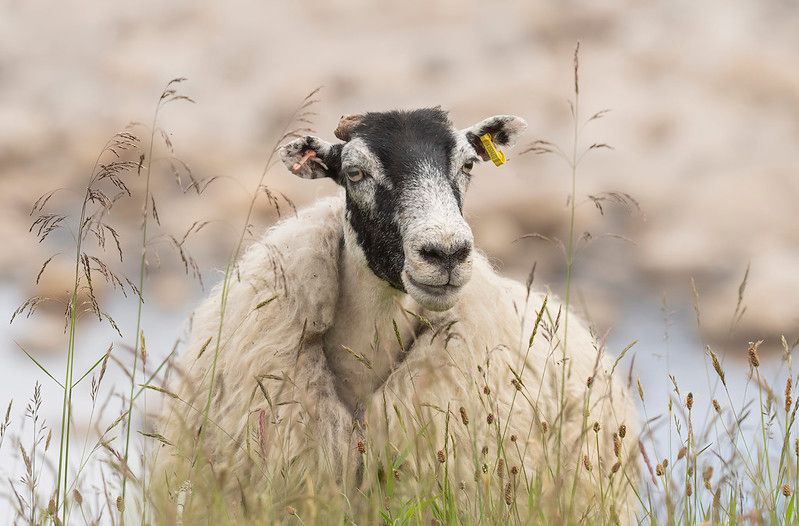
Fashion | Can wearing wool ever be fully sustainable? An article in BBC Future explores how some environmentally-minded fashion brands are turning back to an ancient material – but sourced and treated in a pioneering way. ‘Regenerative wool’, as it is known, seeks to champion recyclable natural fibres, renewable energy and responsible production, according to sustainable fashion consultant Lucianne Tonti. London-based company Sheep Inc claims to be the world’s first carbon-negative fashion brand, and uses production methods including solar-powered knitting machines, a plastic-free supply chain, and wool sourced from free-grazing flocks. However, a reduced footprint comes at a price: with a hoodie from Sheep Inc costing £180, it remains to be seen if the mass market would ever adopt regenerative wool.
Wetlands | An editorial in the Guardian celebrates the nomination of England’s eastern wetlands as a possible UNESCO world heritage site, following campaigning from the RSPB and other charities. “Neglected and undermined for centuries, some of the most beautiful places in Britain are getting the recognition they deserve,” according to the piece, referencing the long history of drainage that has destroyed so many of England’s wetlands over the past few centuries. As well as protecting birds, the article highlights the role of such places in fighting climate change, acting as a carbon sink and a “sponge-like shock absorber” for increased water flows.
Gardens | The Royal Horticultural Society and Wildlife Trusts are currently campaigning for longer lawns during spring – but would more people get onboard with wildlife-friendly gardens if it came with a financial incentive? Scientists from the University of Sheffield have recommended that eco-friendly gardeners should be given reduced council taxes or discounted water bills to help boost biodiversity in urban areas. Cities have lost as much as half of their green spaces in the last two decades, exacerbated by a rising trend for plastic grass and paving over gardens. Although garden management has traditionally been left to the discretion of the homeowner, Professor Ross Cameron, author of the study, said a more radical approach is needed to tackle biodiversity loss at a city level. The research featured in the Guardian.
Further reading:
- A feature for BBC Future takes a look at the history of eccentric pioneer scientists who experimented on vegetable electricity.
- In the Guardian, Helen Sullivan questions why we lose our childhood love of earthworms.
- Campaign group Wild Justice have examined lead levels of supermarket-sold game meat. They found that Lidl’s pheasant breasts are contaminated with levels 85 times higher than the legal limit.
- A blog in the Applied Ecologist outlines research investigating how solar energy can work for the environment as well as the climate.
- A Guardian opinion piece by author and naturalist Mark Cocker explains why we should be very concerned by the dwindling numbers of British birds.
- Also in the Guardian, a feature on poet and painter Frieda Hughes – daughter of Ted Hughes and Sylvia Plath – explores her close relationship with rescued birds.
- A blog by Natural Resources Wales outlines the efforts to save curlew as a breeding species in Wales.
Happy days
Toads | A whopping 6,150 toads have been saved from being flattened on roads this spring in the small town of Ellesmere, Shropshire, by the Ellesmere Toad Patrol. The voluntary group works throughout the nights of March and April to help the creatures cross roads safely, after they wake from hibernation and begin migrating to their breeding ponds. The Shropshire Star reported the impressive feat.
Subscribe to our newsletter
Members receive our premium weekly digest of nature news from across Britain.
Comments
Sign in or become a Inkcap Journal member to join the conversation.
Just enter your email below to get a log in link.