Scottish Seabirds & River Oath
The latest news on nature and conservation in Britain.
National news
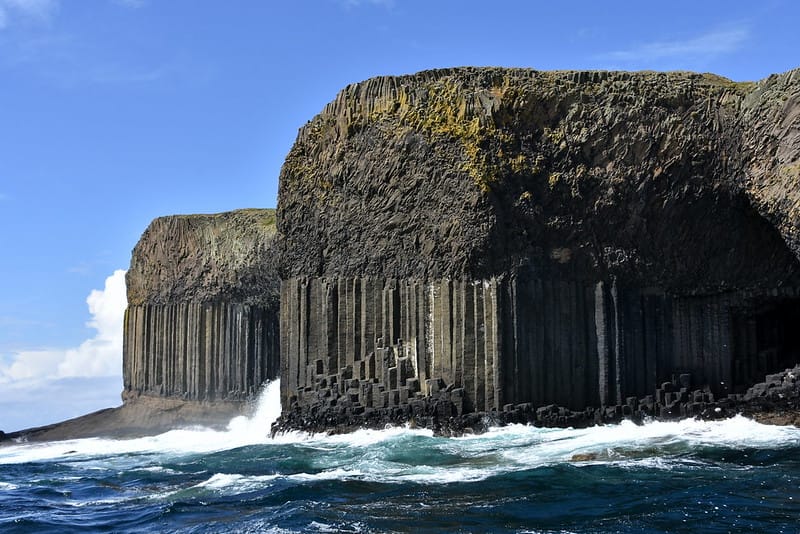
Seabirds | Scottish seabird colonies are having a slow start to the breeding season, according to ecologists from the National Trust for Scotland. The experts expressed concern after analysing data gathered by the Trust’s annual monitoring surveys, which recorded a drop in nesting activity. In particular, shags are experiencing steep declines: on Staffa, the species’ nests have plummeted from 52 last year to just 14 this year, while at St Abbs they have reduced from 126 to 37. Scientists say that some declines can be attributed to the knock-on effects of avian flu, but that other factors – such as poor winter weather and a lack of food – may also be impacting nesting activity. The picture is not entirely doom and gloom, however: some species are seeing upticks, including kittiwakes, whose numbers have increased at most nesting locations to buck a 30-year trend of decline. The Independent and the Herald reported the news.
Seagrass | The UK’s largest underwater habitat restoration project is currently taking place off the coast of north Wales. Over the last week, teams of staff and volunteers have collected more than 1.5 million seagrass seeds from the shallow waters around the Llyn Peninsula. Those seeds will now be taken to a laboratory in Bridgend for processing, then planted to create new meadows near Pwllheli and off the coast of Anglesey. The plant is renowned for its ability to capture carbon as well as provide a rich habitat for a huge variety of sea creatures, but the UK has lost over 90% of its meadows over the past century due to a combination of water pollution, coastal development and damage from moorings. Dr. Richard Unsworth from Project Seagrass said that ‘projects like this are proving it’s possible to bring it back, but to make a difference to the climate, we need to do it at a larger scale.’ The BBC covered the news.
Wasps | National monitoring schemes are ringing alarm bells over the declining number of bees and butterflies – but what about wasps? A leading expert on the insect has said that the UK is not doing enough to track wasp populations. Dr Gavin Broad, the principal curator of wasps at the Natural History Museum, pointed out that no large-scale monitoring scheme exists for wasps, resulting in a lack of knowledge about their long-term population trends. Anecdotally, however, gardeners, pest controllers and researchers are reporting a sharp decline, believed to be the result of cold and wet weather. Board added that ‘wasps sit at the top of the insect food chain so the health of their populations could tell us a lot about the general state of insect populations.’ The Guardian reported the news. Meanwhile, researchers at the University of Gloucestershire are calling on citizen scientists to help monitor wasps over fears they may be threatened by invasive Asian hornets, reports the BBC.
In other news:
- NatureScot has announced nine projects which will receive a share of £800,000 in the latest round of its Nature Restoration Fund.
- Natural Resources Wales is trying to reduce its staff budget by £13m, putting 265 jobs at risk, reports the BBC.
- Analysis by the Energy and Climate Intelligence Unit warns that British food security is being hit by climate impacts both at home and abroad, reports the Independent.
- A former Conservative minister at Defra tried to pressure the Environment Agency to withhold data showing a steep rise in sewage spills, according to Unearthed.
- A project by Natural Resources Wales is testing whether drones can help with efforts to find and save curlew nests, reports the BBC.
Across the country
River Roding | When the lawyer and activist Paul Powlesland was called up for jury duty, he decided he would not swear an oath upon the Bible but upon a river – specifically, the River Roding in London, where he lives upon a houseboat, and which he helps to maintain through tree-planting and litter picking. He brought a vial of its water into the courtroom, and explained to the bemused judge that he held the river to be sacred. ‘I believe it’s the first time that anyone’s given a legal oath, a juror’s oath, on a river, and I hope that many others follow suit and animism is soon found more regularly in our courts,’ he said. Powlesland explained his decision at more length in the Telegraph. The news was covered by the BBC and the Guardian.
Norwich | An ancient woodland has been ‘discovered’ along the route of the proposed Western Link Road in Norwich, dealing another blow to the controversial project. According to the English definition, a woodland is considered ancient if it has been continuously present since at least 1600 AD. The local woodland enthusiast John Allaway managed to establish the age of North Wood through extensive ground surveys and by scouring historical maps, as well as consulting with Dr Sarah Spooner, a professor of landscape history at the University of East Anglia. He submitted his evidence to Natural England, which has now added it to its ancient woodland inventory. Norfolk Wildlife Trust and the BBC covered the story. Inkcap Journal covered the opposition to the road here.
Ceredigion | Campaigners are opposing a new adventure sports hub along the Pembrokeshire coast, on the grounds that coasteering is disturbing the seabirds nesting on the cliffs. The proposal, put forward by Adventure Beyond, would offer a place where customers can park and get changed before walking about a mile to Ceibwr Bay for coasteering, kayaking and field studies. Instructor Cynyr Ifan said that the groups are mindful of where the birds nest, and that their work was beneficial for young people, including those from deprived areas, but campaigners are concerned about the impacts on breeding. Natural Resources Wales is currently compiling a report on the potential harm to a colony of auks, and campaigner Gill Lewis has written about the topic in more detail for Mark Avery’s blog. The BBC covered the news.
Elsewhere:
- Choughs have bred again in Kent for the first time in 200 years, reports the Guardian, but the resulting chick is missing, according to the BBC.
- Two dolphins have been found dead on the banks of the Thames in London, reports the Guardian and the BBC.
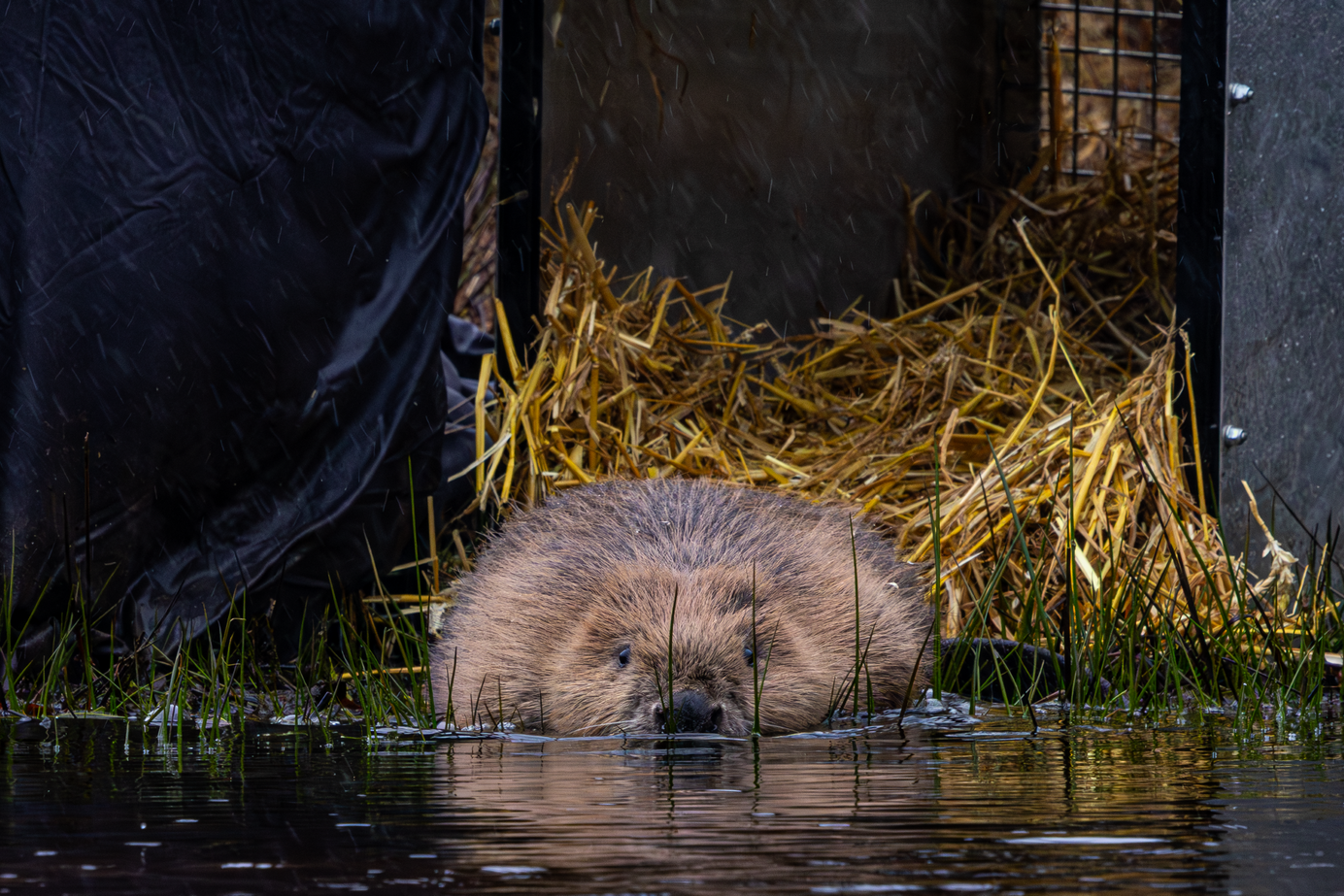
- The Cairngorms has its first wild-born beaver kits since the species died out in Scotland more than 400 years ago, reports the BBC and the Evening Standard.
- A Purple Emperor butterfly has been spotted in Derbyshire for the first time, reports BirdGuides. Elsewhere, a wildlife surveyor recorded a rare ringed border moth in West Sussex for the first time.
- Two white-tailed eagles have fledged successfully in southern England, marking only the second time the species has bred in England in 240 years, reports the Independent.
- Bury Council has become the first authority in Greater Manchester to adopt the ‘swift brick’ policy for housing developments, reports BirdGuides.
- Natural England has found two rare wetland species – great crested newts and lesser silver diving beetles – after funding restoration work on Shapwick Moor in Somerset.
- Derbyshire Council has doubled down on its grass-cutting and rewilding policy after local criticism, reports the Derby Telegraph. Elsewhere, locals in Erewash are calling on the council to reverse its ‘nightmare’ rewilding scheme, reports the Telegraph.
- Anglian Water has pledged to invest £1.5bn into its infrastructure in east England to tackle the challenges of climate change, reports the BBC.
- The Environment Agency has completed a £2.1m natural flood management project in Upper Weardale, complete with 25 landscape features.
- Parents have said that ocean therapy sessions run by a charity in Jersey are ‘making a difference’ for their neurodiverse children, reports the BBC.
- Staffordshire Wildlife Trust has teamed up with a construction company to use surplus bricks to create reef-like habitats for endangered crayfish.
- The RSPB and Natural England are installing wire nest cages along Cumbrian beaches to help protect ringed plovers, reports the BBC.
- England’s first official hedgehog crossings have been installed in Kingston in an effort to curb the decline of the species, reports the Telegraph.
- A pair of Common Crane has bred successfully at Ham Wall reserve in Somerset for the first time, reports BirdGuides.
- Nature is ‘bouncing back’ at the Neston marshland on the Wirral Peninsula after it was destroyed by fire two years ago, according to the RSPB. The BBC covered the news.
- Two shire horses have been working hard on King’s College meadow in Cambridge as part of the annual wildflower meadow harvest, reports Cambridge News.
- South Hams District Council has purchased 65 acres of land in south Devon to plant 25,000 trees in a community woodland, reports the BBC.
- A partnership between charity Moor Trees and a utility company will see 90,000 trees planted in Dartmoor over the next three years, reports the Kingsbridge & Salcombe Gazette.
- Cumbria Wildlife Trust is planning to restore 14 acres of peatland near Kendal, which was historically burned to help heat homes, reports the BBC.
Reports
Wind | Offshore wind farms in Scotland are expected to play a key role in producing clean energy, but their large-scale impact on marine biodiversity is relatively unknown. Now, a collaboration between wind farm developers and Scottish regulators has published guidance for designing wind farms to coexist with nature. The primary recommendation of the report is to conduct further investigation and trials of the most promising nature-inclusive measures, and also for developers to consider them at the early design stages of projects. The measures include ‘fish hotels’, reef-type structures, rock protection measures, and ‘water replenishment holes’ to enable water flow through monopiles. The report also highlights the best examples of current mitigation measures, which include adjusting turbine layouts in response to the observed behaviours of seabird colonies. STV News covered the research.
Marine | The annual State of the South-West’s Seas report details an ‘astounding year’ of marine life in southwest England in 2023. The document includes 14 chapters on topics ranging from oceanography and fisheries management through to seals, cetaceans and plankton. Cornwall Wildlife Trust has a summary of the highlights, including the most turtles recorded in the southwest for nine years, as well as increased sightings of whales and dolphins. Last year also saw a boost in the number of burrow-nesting seabirds and auks, which are both benefiting from rat eradication efforts on Scilly and Lundy islands, as well as a flood of thousands of southern-breeding shearwaters in late summer. Less positive observations include the impact of litter and human disturbance on seals, and a reduction in the abundance of seabed marine life including colourful anemones and hydroids. Elsewhere, a report by the Scottish government details the declining status of wild Atlantic salmon stocks.
Mining | The ‘epic mismanagement’ of the Ffos-y-Fran mine in Merthyr Tydfil must not happen again to any Welsh community, according to a report by the Senedd Committee for Climate Change, Environment and Infrastructure. Ffos-y-Fran – which was the UK’s largest open-cast coal mine – was closed down in November 2023 after it continued to dig coal for over a year beyond its planning permission. It is now working on a cheaper-than-promised restoration plan after running out of sufficient funds. In the report, the Committee condemned the company for failing to deliver full restoration after taking profits, but also levelled criticism at the local council and the Welsh government for overseeing the project. The government said it would consider the report’s recommendations, which include tougher enforcement action when planning rules are breached, and more involvement from residents in decisions around mining sites. The BBC covered the news.
Science
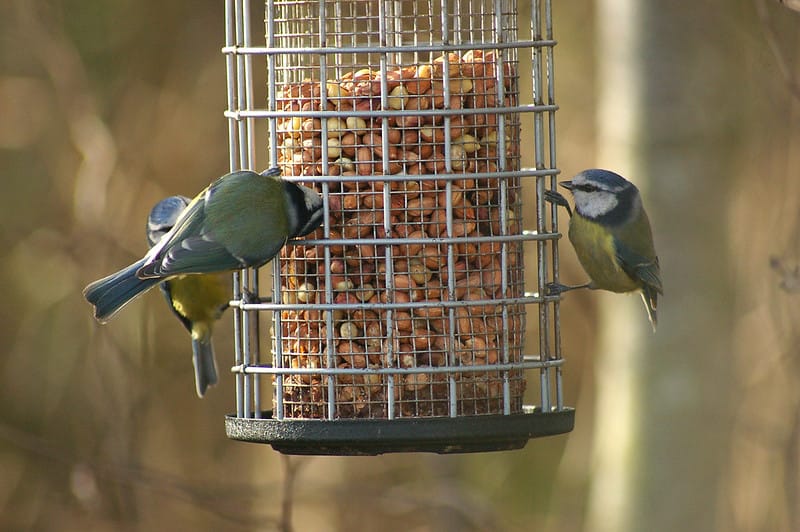
Birds | A paper published in Frontiers in Ecology and the Environment provides yet more evidence that feeding the birds is harming the environment. Not only is your feeder possibly contributing to the spread of the disease, it may also be harming the wider ecosystem through the spread of phosphorus (P). In the UK, the volume of this nutrient fed to garden birds alone is equal to that applied through garden fertilisers; much of it is originally derived from rock depositions in places like Morocco, the US and South Africa. This influx has a negative impact on nature, providing a competitive advantage to certain species and causing eutrophication. ‘Consequently, where excessive, P inputs from supplementary bird feed could reduce overall plant biodiversity and contribute to the loss of endangered species,’ the authors write.
Ticks | The prevalence of ticks in Scotland will increase by at least a quarter in the next 50 years. This is according to researchers at the University of Stirling, who used a mathematical model to predict how climate change will affect the density and spread of tick populations. They found that, if global temperature rise is limited to 1°C by 2080, the prevalence of ticks will increase by 26% – but under a 4°C rise, ticks would almost double. In particular, the study predicted that woodland habitats would support the largest number of ticks, but montane habitats would see the biggest proportional increase as previously tick-free mountain slopes become warmer. The authors therefore warn that the risk of Lyme disease – as well as other viral and bacterial infections carried by ticks – will increase with climate warming. The findings were summarised by Phys.org, and the BBC covered the research.
Badgers | Last week, a paper found that the practice of badger culling is based on inadequate scientific evidence – and this week, a small-scale study has shown that vaccinating badgers against tuberculosis is far more effective than culling. Over four years, researchers vaccinated 265 badgers across 12 farms in Cornwall. They found that the percentage of badgers testing positive for bTB fell from 16% at the start of vaccination to zero in the final year. Professor Rosie Woodroffe from the Zoological Society of London said the findings were ‘the best result you could get from a small study’, and the next step would be replicating the results over a larger area. Unusually, the project was initiated and partly funded by local farmers, who cited controversies around culling and a desire to collaborate with their neighbours as their primary motivation. The Guardian reported the news. Meanwhile, the Badger Trust and Wild Justice have commenced legal action after Natural England approved 26 supplementary badger cull licences, reports FarmingUK.
Driftwood
Rewilding | A mountain biking business in Wales has come up with an innovative business model: it is paying the government to rewild the forestry plantation through which its trails run. Normally, it is the government that pays landowners to restore their land, in the form of subsidies. But Bike Park Wales realised that operating within rows of pine and spruce represented a threat to its future: not only were the trees destined for clear-cutting for timber, they were also vulnerable to disease and fire. Now, the company has agreed a contract with Natural Resources Wales (NRW) to pay, through ticket sales, for the restoration of the site to its pre-plantation state. Though NRW was initially hesitant about the novel plan, it has now embraced the idea. WIRED has an in-depth feature on the surprising arrangement.
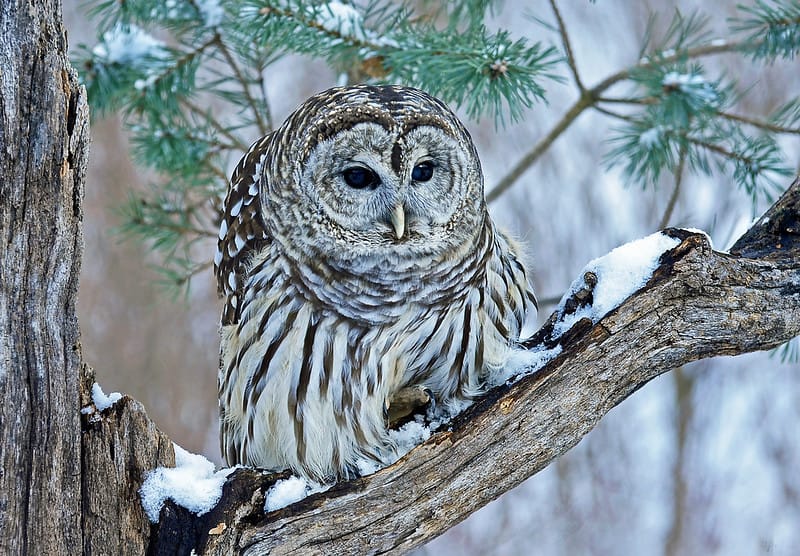
Owls | In the New York Times, a trio of environmental philosophers look at the recent decision by the US federal government to allow the killing of nearly half a million barred owls in the Pacific Northwest, on the grounds that the ‘invasive’ species is harming the native northern spotted owl. Putting aside questions over whether the barred owl is a true incomer, the essay explores one of the central questions of nature conservation: what are we trying to preserve? It points out that such conflicts will occur more often as more animals move into novel habitats due to climate change and other pressures. ‘Constant killing to keep ecosystems from changing in an already volatile world is a dystopian, rear-guard conservation strategy,’ they write. Instead, they argue, we should be preserving ecosystems based upon their current ecological realities, including the impacts wrought by humans.
Peat | Natural England is due to release the England Peat Map in 2025, and a new blog explains how the organisation is going about it. The task, write the authors, is not easy: ‘How do you make a map of something that’s largely underground, changes in volume depending whether it’s rained recently, and tries to swallow you up every time you set foot in it?’ A large part of the job has been collaborating with other organisations, who already have information and data. The final map, however, will be based on models and AI, providing a best prediction of where the peat might be, rather than a perfect outline of its exact locations. Among other things, the map will help to calculate how much carbon these soils are storing and releasing – vital information in the effort to tackle climate change.
Further reading:
- A feature in the Guardian investigates the threats faced by an ecologist who is taking on the MoD to protect skylarks on a former firing range.
- The Bat Conservation Trust has responded to an article in the Spectator which warned readers to ‘beware the bat police’ who halt development projects.
- An article in the Herald asks what the sale of Far Ralia – a stretch of the Cairngorms bought by an investment company three years ago – says about ‘natural capital’.
- Read in the BBC about research into why blue tits are often found nesting in cigarette bins.
- In the Guardian, zoologist and author Jules Howard writes about how he regained his faith in gardening for wildlife after the disappearance of frogs.
- Also in the Guardian, retired physiotherapist Jo Bateman explains why she is suing the water company that has deprived her of the mental health benefits of sea swimming.
- A feature on Travel Tomorrow describes a visit to Borth beach on the mid-Wales coast, where a 4,000-year-old forest emerges from the sand and waves.
- An analysis piece in the Guardian argues that the state of river pollution reflects the failings of the Environment Agency and Ofwat, as well as water companies.
- How can studying honey help reveal clues into the health of local biodiversity and the wider ecosystem? Read more in the New Scientist.
Happy days
Pub | The Norfolk Wildlife Trust has made an unusual purchase: the local pub. The charity has bought and restored the Pleasure Boat Inn, on the edge of Hickling Broad, becoming the first wildlife trust to own a pub in the process. The idea is to bring in a new kind of visitor to its reserves: ‘It’s our chance to get people who know nothing about us at all,’ said longtime warden John Blackburn. The beer garden features local native plants, with bug hotels and wildlife-inspired beers from local breweries coming soon. The Guardian covered the news.
Subscribe to our newsletter
Members receive our premium weekly digest of nature news from across Britain.
Comments
Sign in or become a Inkcap Journal member to join the conversation.
Just enter your email below to get a log in link.