Scottish Wildcats & Eating Seaweed
The latest news on nature and conservation in Britain.
As a trial, this newsletter will be free to read between 9am and 12pm on Friday. Subscribe now to receive it in your inbox and for permanent online access.
National news
Wildcats | Wildcats released this summer in the Scottish Highlands are thriving, according to conservationists. In a first for the UK, the Saving Wildcats project released nineteen individuals at an undisclosed location in the Cairngorms National Park. Although one has died from an infection, the rest are hunting and fending for themselves, according to Dr Helen Senn, who is leading the project. She emphasised that the release was a “success so far”, but winter would be a challenge, and many more years of conservation action would be needed to save the future of the species in Scotland. Another 13 kittens have already been bred at the Highland Wildlife Park, and will be released next summer. The BBC, the Guardian and the Scotsman reported the news.
Restoration | NatureScot has announced £4m in funding for 27 projects across Scotland enacting practical nature restoration. The subjects range from saving threatened species and restoring rare habitat to enhancing natural flood management. In the Borders, Merlindale Nature is restoring flower-rich meadow habitat across 19 sites, helping to halt the decline of local pollinators by increasing food sources and connection. Meanwhile, the Royal Zoological Society Scotland is focusing on the ‘feisty five’: restoring populations of five highly threatened invertebrates, including the pine hoverfly, the pond mud snail and the small scabious mining bee. Another project will reconnect the River Earn with a floodplain, creating a mosaic of open water and wetland habitats.
Bracken | Farmers in Scotland have warned that the spread of bracken could threaten biodiversity after a manufacturer announced it will cease production of the only herbicide used to control it. The use of Asulox is prohibited in Europe, but it has been approved on an emergency basis in Scotland for the last ten years. The Scottish government announced in June that use would not be approved for 2023, and now the manufacturer has said it is halting research into reducing the harmful effects of the herbicide. Peter Douglas, chair of NFU Scotland, said that farmers are facing an “uphill battle” to prevent the invasive spread of bracken, which poses a particular threat in hilly upland areas where non-chemical methods of control are less viable. The Times reported the news.
In other news:
- Labour’s shadow farming minister has promised to end the badger cull in England if the party is elected, according to the Guardian.
- A BBC investigation has revealed that Welsh Water has been illegally spilling untreated sewage into a protected area near dolphin habitat for at least a decade.
- An increasing number of leading UK chefs are ditching farmed salmon from their menus, reports the Guardian.
- Chair of Natural England, Tony Juniper, has hit back at accusations that he is ‘anti-housebuilding’ after he highlighted the value of scrubland habitat.
- A partnership led by the Wildlife Trusts and funded by the National Lottery Heritage Fund is encouraging communities to plant fruit trees this autumn.
Across the country
Hull | Councillors in Hull have passed a motion backing a “right to grow” on council-owned land. This means that community groups, charities and groups of neighbours will be able to plant unused land with fruit and vegetables, or with wildlife-friendly projects. Under the motion, the council will be responsible for providing a map of suitable land, as well as helping locals with practical obstacles such as insurance and watering. Gill Kennett, a local councillor, said the motion would benefit Hull in many ways, including boosting mental health and providing cheap, fresh food in deprived areas. Hull is the first city in the UK to pass such a motion, which will go before the council scrutiny committee before a formal launch. The Guardian and the Yorkshire Post covered the news.
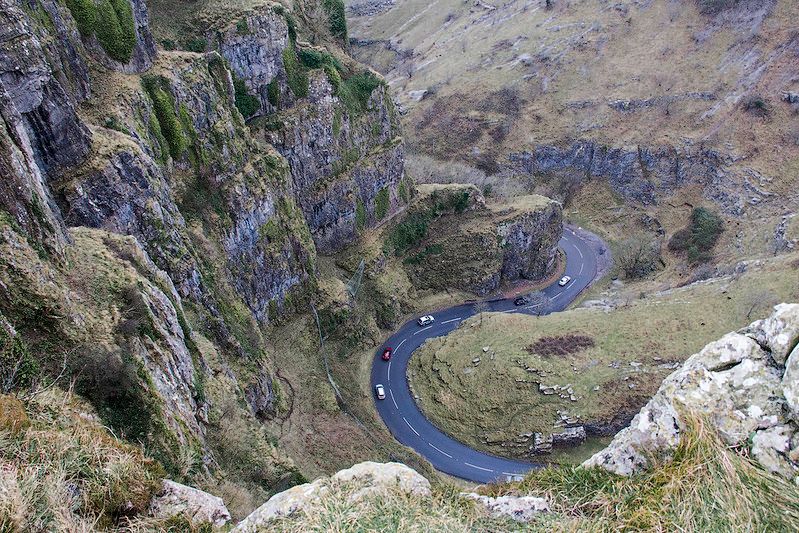
Somerset | National England has declared a new “super nature reserve”, spanning the Mendip Hills and Cheddar Gorge, combining 31 existing nature reserves with more than 400 hectares of new land. This area will now be managed primarily for nature, with efforts to conserve and restore the reserve’s limestone slopes, traditional wildflower grasslands and ancient wooded combes, among other habitats. It is the second in the new King’s Series of National Nature Reserves – an initiative that will see the creation of five major reserves every year for the next five years. The Times and the Somerset County Gazette covered the news. Separately, farmers in the Mendips have raised concerns with the police over “extensive damage” to their land caused by illegal poachers and hare coursers, reports the BBC.
Plymouth | With new regulations on biodiversity net gain set to come into force in January, Plymouth Council has established a new financial venture designed to ensure that the new habitats created in lieu of developments are maintained over time while also benefiting local residents. The council has set up its own Habitat Bank – a new company, called Ocean City Nature, backed by a loan from the authority – that will immediately start work to enhance biodiversity at various sites across the city. Developers can purchase offsets from this company to meet their net gain obligations, rather than attempting their own efforts at restoration and habitat creation.
Elsewhere:
- A golf course in the South Downs has become a haven for butterflies, with 34 species found after it changed its mowing regime, reports the BBC.
- The Lake District National Park has produced a five-year plan to protect the biodiversity of Bassenthwaite Lake. It includes a permit scheme and a programme to tackle invasive plants, reports the BBC.
- Energy company EDF has released details of the nature reserves it is creating to offset damage caused by the construction of Sizewell C, reports BirdGuides.
- A large bluefin tuna has washed up on the Dorset coast, suggesting the species is returning to British waters, reports the BBC.
- Guernsey’s Asian hornet team has destroyed a giant nest in Sark which contained more than 750 potential new queens.
- Wild swimmers on the River Dart are pushing for designated bathing sites to improve the river quality.
- Community interest company Societree is planning to plant 96 micro-forests at schools across Plymouth, reports the Plymouth Herald.
- A £1m fund to support the creation of a 11km nature trail through Newcastle and North Tyneside has been launched, reports the BBC.
- Thirty soldiers are set to use their engineering expertise to help re-wet a Lake District peat bog, reports the BBC and the Cumberland News.
- King Charles has honoured his mother’s memory by planting hundreds of trees at Balmoral Castle, reports the Scottish Daily Express.
- A group of friends have built five nesting platforms along Pembrokeshire’s Cleddau estuary in the hope of bringing back breeding ospreys to south Wales, reports Wales Online.
- Lancashire county council has received a £2.4m investment toward restoring its peatlands.
- The Norfolk Rivers Trust is trialling a scheme to use man-made wetlands to filter sewage pollutants from a rare chalk stream, reports the Times.
- Sheffield City Council has issued a statement encouraging landowners to introduce a non-burning policy on moorland and leave carbon “in the ground”.
Reports
Lake District | It is becoming increasingly common to assign a financial value to landscapes, based upon their “natural capital”, to aid their conservation – but the actual value of a landscape is greater than its ecological features. This is the concept underlying an innovative report from the Friends of the Lake District. The group commissioned an assessment of Little Asby Common based upon “multiple capitals”, including the site’s human, social, cultural and financial values. Taking into account features such as archaeological remains and haymaking skills added millions of pounds to the Common’s overall worth. The report includes eight recommendations, all aimed at promoting widespread acceptance of this novel approach, with a webinar on the subject held earlier this week.
Markets | Four of the UK’s major nature charities have combined to publish Nature Markets Principles, a set of principles to tackle corporate greenwashing and encourage responsible investment in nature recovery. The Wildlife Trusts, RSPB, Woodland Trust and National Trust worked with leaders in responsible investment management to develop the voluntary principles, which they hope will address a current lack of regulation in emerging nature markets. The principles cover carbon credits, biodiversity units, nutrient credits and natural flood management payments, and will be used to guide the government-backed UK Nature Fund when it launches. The Independent and ENDS covered the news.
Green space | Local green space designations are increasing in deprived areas, but a strong correlation still exists between deprivation and lack of green space. A report by the countryside charity CPRE analyses national data for local green space (LGS) designations, which were introduced in 2012 to give Green Belt-like protection to smaller areas of land. LGS designations have increased by 771 since 2022, but the designation process varies across the country: the report highlights that these disparities could make it more difficult to protect green spaces in areas where neighbourhood planning may not be a priority. The charity is pushing for a standardised process to empower communities to engage in protecting their local spaces.
Science
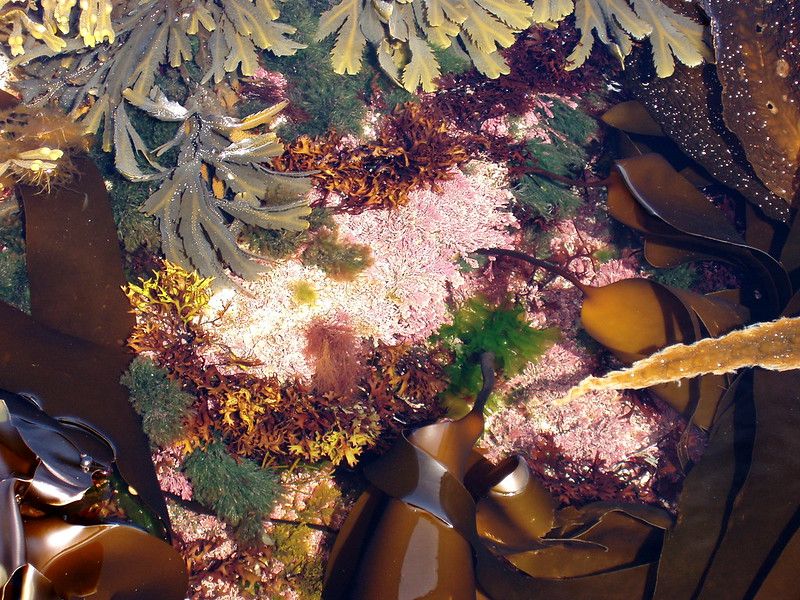
Seaweed | It may be unusual to find seaweed in European diets today, but it only fell off the menu in recent history, according to research. A team analysed samples of dental tartar from 28 archaeological sites stretching from southern Spain to Orkney, and ranging from 6400 BC to the 12th century AD. They found that 26 out of 37 samples contained chemicals pointing to the consumption of aquatic plants such as seaweed and pondweed. This contradicts the belief that marine resources were largely abandoned during the Neolithic period, when farming was developed for the first time. Karen Hardy, a professor of prehistoric archaeology at the University of Glasgow, said she hopes the research could change modern perceptions of seaweed. The results were published in Nature Communications and covered by the Guardian.
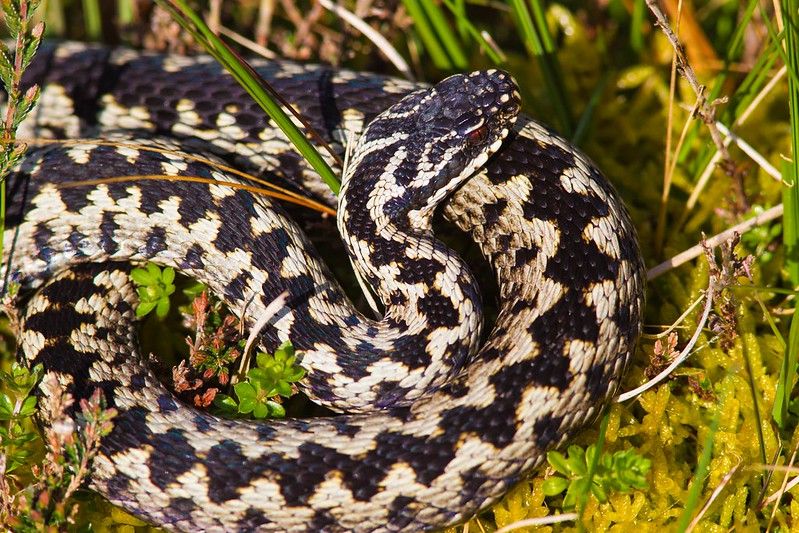
Adders | Conservation bodies should not shy away from promoting “unpopular” species, like snakes, according to a paper in People and Nature. In fact, an experiment undertaken by the authors suggests that children may learn to love adders surprisingly quickly, given the chance. The primary school children, who were based in Pembrokeshire, took part in a workshop called Adders are Amazing!. A questionnaire following the event suggested that they felt more connected to nature and showed more concern for conservation, even without having any direct contact with the snakes. Targeting children while their attitudes to nature are still malleable may positively influence conservation in the future, the authors suggest.
Wilderness | The expansion of agriculture is a major threat to the world’s remaining areas of wilderness, particularly at higher latitudes in the northern hemisphere, according to a study in Current Biology. Food production is expected to double by 2050, while climate change means that agriculturally suitable areas are shifting towards the poles. The authors model the present and future suitability of land for 1,708 crop varieties. They find that, over the next 40 years, 2.7 million square kilometres of land within current wilderness areas will become newly suitable for cultivation – amounting to 7% of the world’s wilderness areas outside Antarctica. “Without protection, the vital integrity of these valuable areas could be irreversibly lost,” the researchers conclude.
Driftwood
Cowpats | In the Guardian, Phoebe Weston makes a brave case for why we should all dig into cowpats. She is joined by Professor Ed Turner, curator of insects at Cambridge University, on Coe Fen in Cambridge to explore the “delights of faeces and the little ecosystems inside of them”. Cow poo contains no less than 24 minerals – as well as a diversity of bacteria and fungi – providing a smorgasbord for creatures from dung beetle larva to mites, spiders and earthworms. Turner wants people to investigate “ordinary” wildlife on their doorstep, starting with poo: “things like that can help protect rare things as well,” he says, “because when people get engaged in wildlife, it’s addictive.”
Shooting | A feature in the Financial Times’ How To Spend It supplement gives a colourful peek into the wealthy world of grouse shooting – including a wince-worthy description of a dog being fed a slice of smoked salmon. The piece is a good introduction to a hobby with which most will have little direct experience, the author having joined a walked-up shooting day hosted by the Abercairny Estate. In The Critic, writer Patrick Galbraith covers the same topic from a different angle, looking at how old-style gamekeepers have turned to jobs in conservation now that their traditional roles are disappearing. He focuses on Richard Gould, a man who “no longer does what he set out to do in life but he uses his knowledge and expertise to make the countryside a better, more biodiverse place.”
Sheep | “There is no getting around it, the sheep have got to go,” writes environmentalist and financier, Ben Goldsmith, in an essay for Reaction. He blames the animal not only for the decimation of nature within Britain’s national parks, but also for economic and social decline, as the industry becomes less financially viable. Rather than forcing farmers off their land, however, he suggests that a switch to cattle farming might be the answer, pointing to the “mesmerising” landscape of Geltsdale, where sheep were recently swapped for Longhorns. This approach, he concludes, “really is the best way to secure the future of farming while reviving nature in our wildest landscapes.”
Further reading:
- Two Telegraph writers debate the value of weeds “in civilised society” in a short feature.
- We need to stop obsessing over heirloom seeds and instead start to “radically reimagine what seeds can be,” writes Chris Smith of the Utopian Seed Project in the Guardian.
- A feature in the Guardian looks at how market gardens can help solve the food security issues that plague discussions around rewilding.
- An artist has made ink – a dark golden yellow – from the bark of one of Newton’s many apple trees, reports the BBC.
- BBC Travel writes about the world’s first rewilding centre, which has recently opened on the Dundreggan Estate in the Highlands.
- In the Guardian, writer Adam Weymouth recounts his stay at the Broughton Estate in Yorkshire, home to one of the country’s most “rapidly transformational” rewilding projects.
- With the Rothbury Estate up for sale, Northumberland locals are concerned about who might take over, reports the BBC.
Happy days
Tree | A 480-year old sweet chestnut in Wrexham has been crowned Tree of the Year by the Woodland Trust, having received 17% of the vote – more than any of the other twelve trees in the running. The tree stands in Acton Park and is famous among locals as the centrepiece of picnics and tree parties, reports the Daily Post. It will now go on to compete for the European title – and hopefully last a bit longer than the Sycamore Gap tree, which won the same accolade in 2016.
Subscribe to our newsletter
Members receive our premium weekly digest of nature news from across Britain.
Comments
Sign in or become a Inkcap Journal member to join the conversation.
Just enter your email below to get a log in link.