Scottish Wilderness & Vegans Who Hunt
The latest news on nature and conservation in Britain.
Welcome to Inkcap Journal, a newsletter about nature and conservation in Britain. This is the Friday digest, rounding up all the week's news, science, reports, comment and more. Sign up to receive a free one-month trial.
National news
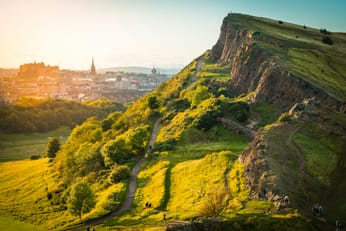
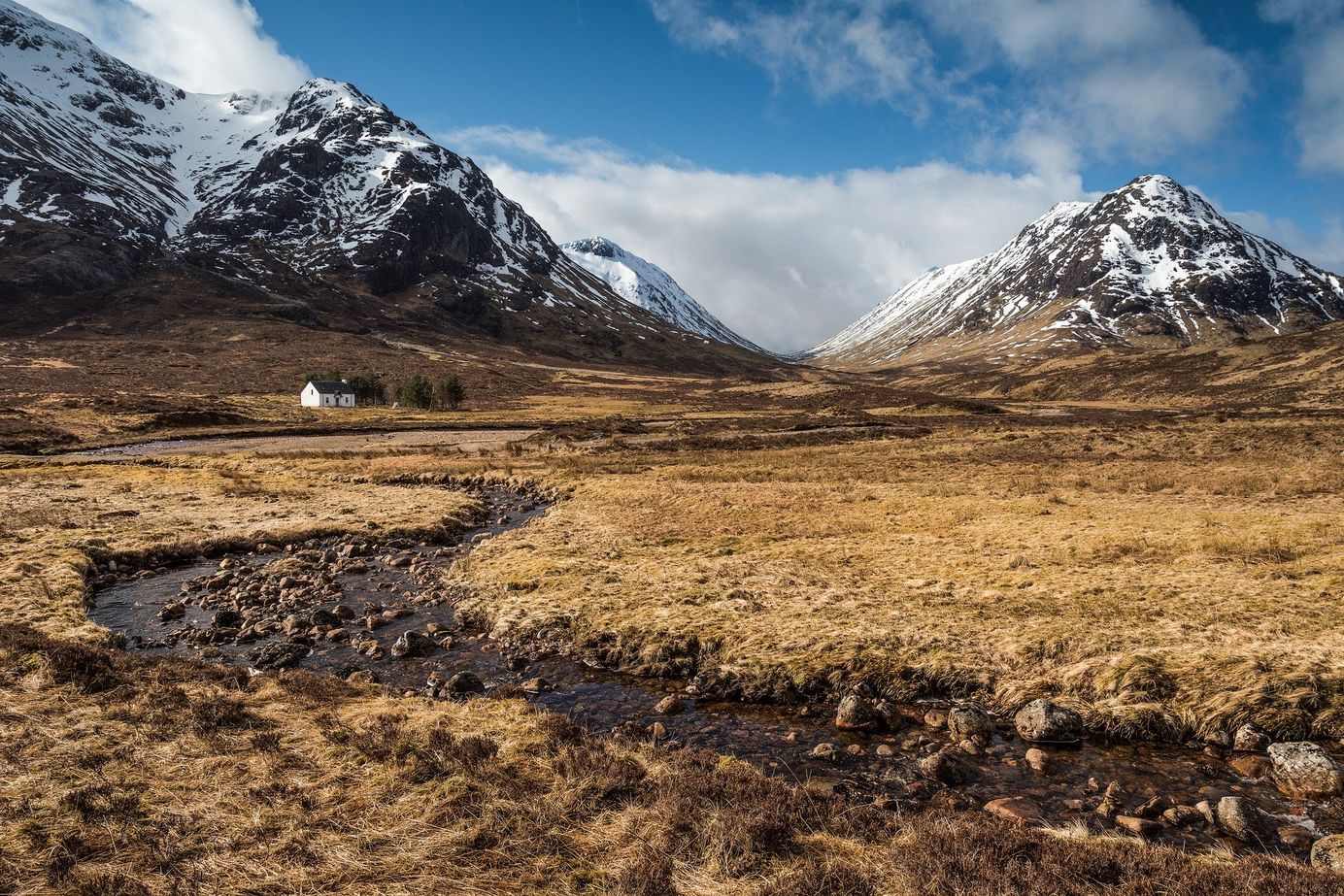
Wilderness | Scotland’s wild land will be the subject of a new study, reports the BBC. Over six months, the charity Scottish Wild Land Group will gather data on whether the country’s wildness is being lost and, if so, how fast. Scotland has 42 Wild Land Areas – a label that informs Scottish planning policy – which encompass mountains, moorlands and peat bogs. However, depending on your definition, these places might not be as wild as they might seem. “Much of these wild land areas are artificial landscapes created over the last 250 years from the eviction and clearance of the human population which had lived in these areas for thousands of years,” tweeted the Scottish researcher Magnus Davidson in response to the news.
Trees | Wales’ deputy climate change minister, Lee Waters, has urged families with gardens to get planting to help the country reach its target of 86 million more trees by the end of the decade. “All of us have a responsibility,” he said. The BBC covered the story. However, the country’s relationship with afforestation is complicated. Nation.Cymru continues to cover the impacts of such projects on farmland, highlighting recent comments by Farmers Union Wales president, Glyn Roberts. “It would be counterintuitive and a potential disaster if we sold off the carbon we store and sequester in Wales to businesses in other countries, and in so doing force our own businesses to buy carbon credits from other countries in future at inflated costs,” he said. Separately, the Telegraph reports that tree felling has surged in England in anticipation of tougher regulations and unlimited fines that will be introduced with the new Environment Bill.
Raptors | Hen harriers have recorded their best breeding season since the 1960s, with 84 chicks fledging from nests across uplands in County Durham, Cumbria, Lancashire, Northumberland and Yorkshire, according to Natural England. Behind the good news, however, is a contentious backstory, centering on the long-running and fractious debate over how to protect these raptors from illegal persecution on grouse moors. Natural England pointed to its brood management programme – where chicks are raised in captivity and then released back into the wild – as one reason for the successful year. However, the RSPB remains opposed to such methods. “That’s not a conservation measure in our view. More effort should be spent on preventing the illegal killing of these birds,” the RSPB’s head of investigations Mark Thomas told i news. Tim Bonner of the Countryside Alliance accused the RSPB of “allowing prejudice against shooting”. Inspector Matt Hagen of North Yorkshire Police commented that the real mark of victory would be whether the fledged birds “survive and successfully breed themselves”.
In other news:
- In the Scottish Highlands, work has started on building the world’s first rewilding centre, reports the Scotsman.
- Natural Resources Wales has launched a consultation on tackling environmental crime.
- Pine hoverflies have had a record-breaking breeding season at the Highland Wildlife Park, boosting efforts to save the rare insect from extinction, reports the Herald.
Across the country
Lake District | Ecologists have warned that the Lake District is being damaged by an influx of walkers, who have arrived at the beauty spot in droves since the start of the pandemic. According to Joanne Backshall, who leads the National Trust’s programme Fix the Fells, the flora along the park’s most celebrated peaks is being rapidly destroyed. But the more obscure spots are suffering, too. “Our lakes became beaches. Random waterfalls went viral on Instagram and everyone turned up,” according to Tony Watson, head of visitor services at the Lake District National Park. The Guardian and the Times cover the story. Fragile landscapes in Pembrokeshire have also faced increased footfall since they were recently linked to Stonehenge, reports the BBC, causing damage to both archaeological and natural sites.
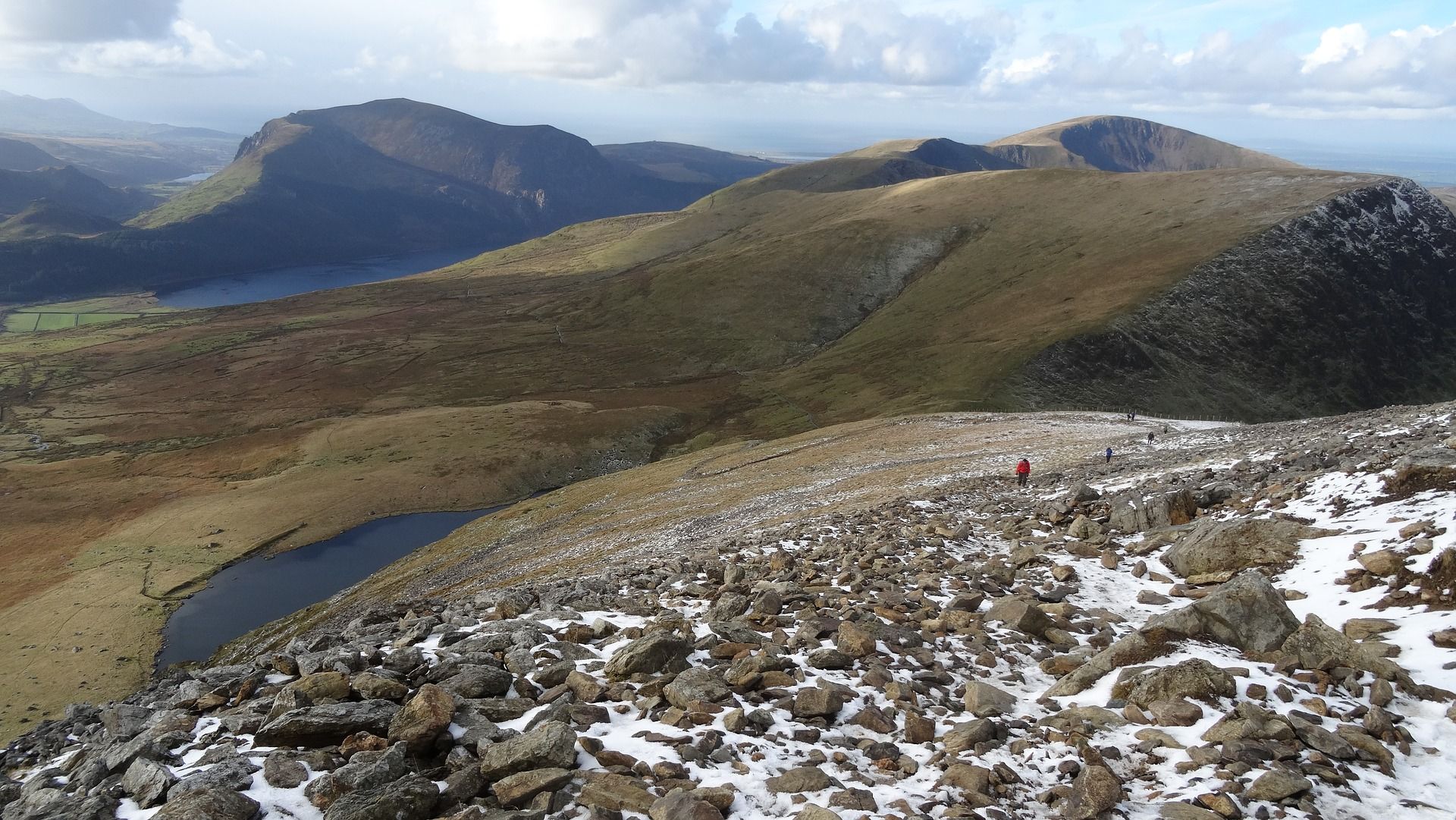
Snowdonia | Coed Cadw (the Welsh Woodland Trust) and the Snowdonia National Park Authority have joined forces to increase the number of trees and hedgerows within a designated area of the park. One of the aims is to supplement the trees that are expected to be lost to ash dieback disease, reports Wales 247. “As well as the clear benefits to the environment and biodiversity, this scheme will also bring agricultural benefits through the creation of solid and reliable field boundaries as well as essential shelter for livestock,” said Rhys Owen of the National Park Authority. Separately, the rare Snowdonia Hawkweed is making a comeback, with the number of specimens doubling from three to six since 2002, reports the Daily Post – though botanist Robbie Blackhall-Miles refutes claims from a recent Sherlock Holmes based drama that the plant has the ability to raise the dead.
Norfolk | The National Trust is leading a project to restore one of the chalk streams that feeds into the Norfolk Broads to its former glory. The River Bure has been subject to pollution and water abstraction for decades – but before that, it was a source of fascination to writers like John Betjeman and Arthur Ransome. The £1.6m project will target eight miles of the river and its floodplain, creating ponds and ditches, planting trees, and returning the river to its once-meandering pattern. The Times, the BBC and the Telegraph all cover the story. Separately, the Eastern Daily Press interviews another farmer about his plans to re-flood a separate and “forgotten” part of the Broads.
Elsewhere:
- Seed collected in the Malverns is being used to restore hay meadows in Herefordshire and Worcestershire, reports the Malvern Gazette.
- Campaigners are fighting to save a family farm in the Vale of Glamorgan after the landowners received planning permission to build a business park, reports the BBC.
- Activists have accused Southern Water of destroying Chichester Harbour by discharging raw sewage, reports the Guardian.
- Leaders in the Black Country are concerned that the green belt will be sacrificed to make way for housing developments, reports the Express and Star.
- Nature-based solutions are being used to reduce flood risk in the North East, as part of a £2.1 million government-funded project.
- The Herts and Middlesex Wildlife Trust has returned water voles to the River Ver near St. Albans.
- An ancient hedge in Seaham has been honoured with its own art exhibition by the East Durham Artists’ Network after it was recently ripped up, reports the Chronicle.
- Over half a million seagrass seeds have been collected for planting across the Solent, reports the Daily Echo.
- Five dolphins have died in a stranding event in the Cromarty Firth, reports the BBC.
- Golden eagle chicks – the first to hatch in Orkney in almost 40 years – have perished in the cold and wet weather, reports the BBC. On the bright side, the Essex Wildlife Trust reports that spoonbills have successfully raised chicks in the county for the first time.
- Plans for a solar farm in Telford have been criticised due to the loss of green space, reports the Shropshire Star.
- Sheffield’s city leaders have signed a pledge designed to avoid a repeat of its recent tree-felling saga, reports the Yorkshire Post.
- Scientists are carrying out a study of Scotland’s ‘Sponge Belt’ west of the Shetland Islands, reports the BBC.
Reports
Oceans | The fishing industry is both vulnerable to climate change and a contributor to the problem, according to a report produced by WWF, RSPB and the Marine Conservation Society. Trawling and dredging disturbs seabed and coastal ecosystems, including seagrass meadows, salt marshes and seaweeds, releasing carbon into the atmosphere that would otherwise remain stored in the environment. The report was covered by the Guardian and the BBC.
Amphibians | Almost a third of Britain’s amphibian and reptile species are threatened with extinction, according to a report by Amphibian and Reptile Conservation. This equates to four threatened species, as Britain actually only has 13 species of amphibian and reptiles. The northern pool frog is faring the worst, while the natterjack toad, sand lizard and smooth snake are also in danger. However, all of these species are deemed of ‘Least Concern’ at the European or global level.
Science
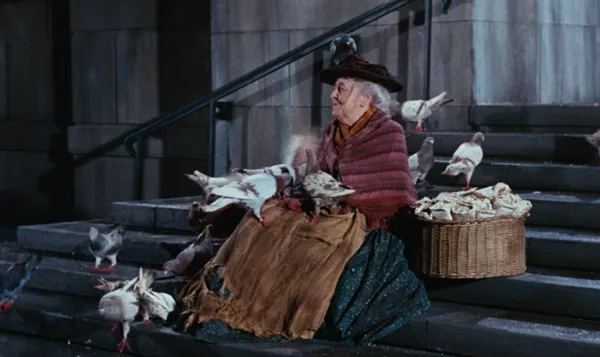
Birds | Feeding the birds is regarded as so unequivocally kind that even Mary Poppins sang about how great it was. But was she misled? A study suggests that supplementary feeding risks harming biodiversity by helping out common and adaptable birds, giving them an advantage over subordinate species. The dense gatherings of birds at feeders could also lead to increased transmission of disease. Co-author Alex Lees has written a detailed thread explaining the potential problems.
NHS | In the Scottish Highlands, the NHS has a new research project to understand whether riding an e-bike through natural environments might improve the recovery, health and wellbeing of people affected by cancer. The study is taking place in the Cairngorms National Park, and is currently seeking volunteers who are either going through or recovering from cancer treatment; it involves taking around 10 bike rides in about as many weeks.
Farming | Farmyard manure is often stored and aged before being spread on fields as fertiliser. However, the manure is sometimes contaminated with the antiparasitic drugs used to treat livestock. Scientists tested the impact of these toxic residues on biodiversity when spread across fields. Their study found that the manure was harmful to both terrestrial and freshwater invertebrates even after four months of storage, and could also reduce pasture productivity.
Driftwood
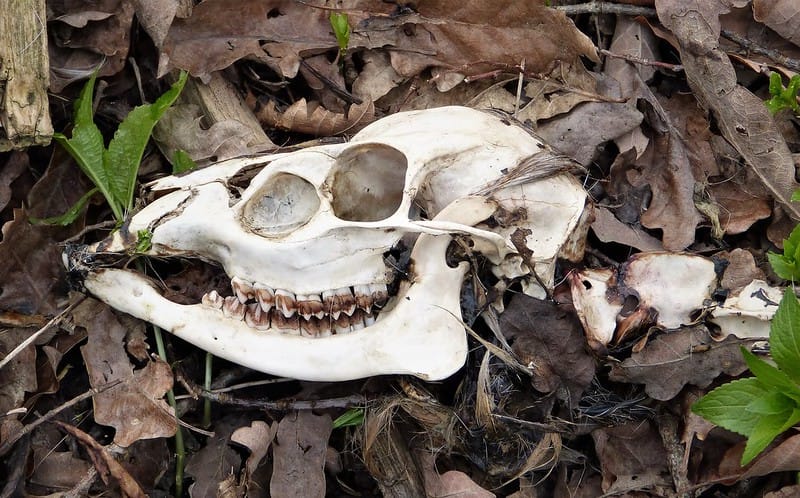
Vegans | Henry Mance, the chief features writer at the Financial Times, recently published a book on what it means to love animals. Mance is a vegan, but in this extract he has decided to go hunting. It is a fascinating, funny and wisely written piece that brings this particular conservation debate to life. “I didn’t believe the deer’s existence should marginalize so many other species. Maybe someone had to kill the deer,” he writes. “What did it matter to Bambi if the person pulling the trigger took pleasure in it? What did it matter to the animals if the person pulling the trigger was…me?”
Wellbeing | The Wellcome Collection has published a series of essays this week, curated by writer and founder of the Willowherb Review, Jessica J. Lee. She has brought together a fine array of writers to examine the connection between nature and wellbeing. Lee herself writes about depression and cold water swimming, while the poet Nina Mingya Powles writes about plants and homesickness. Powles has recently released a new book, Small Bodies of Water, which has been excellently reviewed.
Herbicides | The campaign group Wild Justice has been investigating how local authorities are using glyphosate-based herbicides, and has written to 43 councils to enquire about their policies. Their blog sets out some of their findings so far, and highlights some of the good actors; the group is still corresponding with the bad ones. Inkcap Journal recently conducted its own investigation on how councils were managing their road verges; you can read our findings here.
Further reading:
- Journalist Sam Knight writes about the dark history of Britain’s country houses for the New Yorker.
- Nature writer Horatio Clare discusses his canoe trip – and being accused of trespass – in a piece for the Financial Times.
- Dumfriesshire farmer Jamie Blackett writes in Country Life about his visit to another farm, Holkham, to check out their approach to nature conservation.
- The Guardian profiles wildlife cameraman James Aldred, who has just released a book about goshawks in the New Forest.
- The Christian Science Monitor, a U.S. newspaper, has an in-depth feature on efforts to save Britain’s hedgehogs.
- The Telegraph looks at a growing trend of people buying their own woodlands, motivated by both wellbeing and conservation.
- There are some nice photos of otters in the Times.
- The Guardian has a feature on ‘sky tables’ of raw meat, installed by conservationists Derek Gow and Ben Goldsmith on their land to feed birds of prey. It also has a feature on lynx reintroduction – also featuring Gow.
- More animal lovers should recognise that spiders are terrific, according to a Guardian editorial.
Happy days
Poetry | Scotland has a new Makar – a national poet – and it’s the poet and essayist Kathleen Jamie, who is known for her nature writing. On Twitter, she described how she was on Orkney when she was asked to take a call from the First Minister, and so she made her way to the Ring of Brodgar, where her phone received the best signal. “The post confirms a weel-kent truth: that poetry abides at the heart of Scottish culture, in all our languages, old and new,” she added in a statement.
Subscribe to our newsletter
Members receive our premium weekly digest of nature news from across Britain.
Comments
Sign in or become a Inkcap Journal member to join the conversation.
Just enter your email below to get a log in link.