'Shambolic' Reforms & Floodplain Meadows
The latest news on nature and conservation in Britain.
National news
Planning | Ministers have tabled a package of last-minute changes to the planning bill, prompting fierce backlash. The 67 amendments are designed to accelerate development – or, as Chancellor Rachel Reeves put it, to show that the government is ‘backing the builders not the blockers’. They include new powers for ministers to overrule local planning decisions – including those made on environmental grounds – and axing a requirement for Natural England to respond to every nature-related query from local authorities. Charities, including Wildlife Trusts, CPRE and WCL condemned the move, with Dr James Robinson of the RSPB calling it a ‘cynical attempt to game a better forecast from the OBR’ in Reeves’ forthcoming budget. The news was widely covered. In the Guardian, George Monbiot attacked ministers for sounding ‘ever more like Donald Trump’ – but also charities for failing to challenge the government. An editorial suggests that Labour’s current direction will not build more houses but rather ‘bulldoze public trust and the countryside’.
The Government has tabled 67 last-minute amendments to the Planning & Infrastructure Bill.‼️
— RSPB (@Natures_Voice) October 14, 2025
Rushed through with little scrutiny, it’s a shambolic way to reform the planning system.
It creates confusion, sidelines science and leaves nature dangerously exposed.
(1/3) pic.twitter.com/t1kRLaBjzO
Muirburn | The Scottish government has delayed its muirburn licensing scheme for a second time, to the dismay of conservationists. The scheme would make it an offence to conduct moorland burning without a licence, with the aim of protecting habitats and reducing uncontrolled wildfires. Originally due to start in September, the plan was first postponed to January and is now set for autumn 2026. The government cited recent large wildfires as the reason for delay, saying it needed more time to consider changes to mitigate risks. However, Scottish Green MSP Ariane Burgess accused ministers of putting ‘the interests of wealthy landowners ahead of environmental protection’. The RSPB called the delay a ‘huge disappointment’ and questioned why the system could not be adapted over time instead of delayed outright. The Farmers Guardian, Farmers Weekly and Herald reported the news.
Fire | The UK has experienced its first ‘mega fire’, defined as a blaze bigger than 10,000 hectares, according to researchers at the European Centre for Medium-Range Weather Forecasts. The fire in question was the Carrbridge and Dava Moor wildfire, which burned through the peatlands and forests of the Cairngorms National Park in June, likely killing thousands of animals including curlew chicks and hares. The event was made possible by a ‘very dry spring’, which meant even living vegetation was dry enough to burn. This year has been record breaking for the UK in other ways, too, with the biggest area burnt – almost 50,000 hectares in total – and the greatest number of fires since modern records began. Read about it in the Times.
In other news:
- The government has announced a one-year extension to thousands of existing Countryside Stewardship agreements – although the Wildlife Trusts warned that it would ‘only buy time’.
- The National Trust is urging the public to resist the urge to remain indoors and embrace nature this autumn.
- The UK’s statutory scientific advisors on nature and climate – JNCC and CCC – have signed a memorandum of understanding.
- The government has announced new funding for overseas conservation, including projects to protect Bolivian rainforests and eagles in the Philippines.
- The IUCN has launched a new set of guidelines for rewilding at its World Conservation Congress. Another resolution recognised the role of wild animals in tackling climate change.
- The government has responded to the OEP’s review of Local Nature Strategies.
Across the country
Humber | A Yorkshire reserve is celebrating a record breeding season for little terns, one of the UK’s rarest seabirds. The species has declined by almost 40% in the UK over the last 50 years due to loss of breeding habitat, disturbance and predation, but long-term conservation efforts are showing promising results. This summer, the RSPB recorded 105 breeding pairs at Beacon Lagoons on the banks of the Humber: the highest number in half a century. Since the 1980s, wardens and volunteers at the reserve have worked to protect the declining birds by erecting fencing, running 24-hour watches, and using thermal cameras to detect predators. The team is hopeful that this year’s increase means little terns will soon recolonise other beaches around the Humber where they haven’t nested for decades. The Hull Daily Mail and BBC reported the story.
Chester | Chester Zoo has teamed up with Dublin Zoo and Toronto Zoo to launch a partnership on wildlife cryobanking. Cryopreservation involves storing living cells – such as eggs, sperm, embryos and tissues – at ultra-low temperatures so they remain viable for decades. The live cells can be used to assist reproduction in the future, including through artificial insemination and in vitro fertilisation, helping to safeguard genetic diversity. This is particularly critical for species at risk of inbreeding. The initiative will focus on preserving material from both native and globally threatened species, as well as improving techniques and sharing best practice. The Chester Standard and Deeside.com covered the story.
Lincolnshire | The Independent has a feature on Boothby Wildland in Lincolnshire, one of the first projects to be funded and implemented under the government's Landscape Recovery scheme. The 600-hectare estate is owned by Nattergal, which is using both public and private finance, including biodiversity and carbon credits, to rewild the former farmland. Heritage breeds of cattle, pigs and ponies will be brought in for meat and grazing, while beavers are expected to arrive in December. Eventually, the landscape should transform into a mosaic of grassland, scrub, wood pasture and wetland habitats. ‘We’re really keen for this to be an exemplar, nationally and internationally, in how we can use private finance to secure nature restoration,’ said Lorienne Whittle, rewilding landscapes manager for Nattergal.
Elsewhere:
- Ecological surveys of restored dew ponds in the South Downs National Park have revealed a wealth of biodiversity, reports the BBC.
- Buglife is appealing to Plymouth City Council to secure the future of Radford Quarry, one of only four sites globally where horrid ground-weaver spiders are found.
- This summer has been a ‘bumper’ breeding season for dormice in Hampshire, reports the BBC.
- Also in Hampshire, the local Wildlife Trust has recorded three rare species of ladybird in the New Forest, which are benefiting from habitat restoration.
- Plymouth City Council is finalising a ‘nature plan’ for the city, which will include more trees and better accessibility to green spaces, reports the Plymouth Herald.
- The shrill carder bumblebee is making a comeback in Kent thanks to habitat creation by the Bumblebee Conservation Trust, reports the BBC.
- The pannage season for pigs in the New Forest has been extended until the New Year due to the high volume of acorns, reports the Daily Echo.
- Dorset Council has produced a strategy to invest in council-owned farms after accusations of years of neglect, reports the BBC.
- Almost £1m will be spent on nature recovery across Neath Port Talbot over the next two years, reports Herald.Wales.
- A seagrass meadow, twice the size of Wembley’s football ground, has been discovered off the coast of Swanage, reports the Dorset Echo.
- Herts and Middlesex Wildlife Trust has completed a project to return a stretch of the River Ash to its original course, reports the BBC.
- Wet weather has allowed a population of tadpole shrimps to hatch at an RSPB reserve in Dumfries and Galloway for the first time since 1948, reports the BBC.
- One of the largest artificial reefs in the world has been installed at a wind farm off the coast of Sussex, reports the BBC.
- Restaurant owners in East Kilbride have apologised after cutting down around 80 trees without permission. The news was widely covered.
- Around 75,000 farmed salmon escaped from a pen in the Highlands during Storm Amy, which experts are concerned will cause lasting damage to wild populations. Read more in the BBC and the Conversation.
Reports
Red List | The latest update to the IUCN Red List has revealed escalating threats to European pollinators. Released at the IUCN’s summit in Abu Dhabi, the assessment re-evaluated many European pollinator groups for the first time since the 2010s. It found that the number of threatened wild bee species has more than doubled since 2014, rising from 77 to 172. The number of threatened butterfly species has increased by 76% over the last decade. The main reasons for rapid declines – primarily habitat destruction, fertilisers and pesticides – are being compounded by climate change. The assessment also warned that more than half of bird species globally are in decline, and the slender-billed curlew has been declared officially extinct. The Guardian, Independent and the Conversation reported the news.
Food | The UK food sector needs radical transformation on a scale not seen since the Second World War, according to a report by the AFN Network, a group comprising more than 3,000 researchers and stakeholders across the UK agri-food industry. The report lays out a roadmap to 2050, which would reduce food system emissions in line with climate targets, whilst also attaining food security and protecting the environment. It relies on three core transformations: more resilient farming, smarter land use, and healthier diets. The government should place food security on par with energy security, the authors write, and reform agricultural subsidies to prioritise carbon sequestration and biodiversity. Co-lead Tim Benton said that every year of delay makes the transformation ‘harder and more costly’. The Conversation explains the research.
Trees | As part of its climate commitments, the UK government has committed to planting 40,000 hectares of trees every year by 2030. These trees must come from somewhere – and there are multiple benefits to sourcing them from British tree nurseries, according to a report by Woodland Trust, Horticultural Trades Association, National Trust and Royal Horticultural Society. In 2023, Britain imported £280m-worth of trees from abroad, risking the arrival of harmful pests like oak processionary moth. The report outlines recommendations, aimed at Defra and the Welsh and Scottish governments, to support domestic tree production. These include the establishment of a GB Tree Procurement Unit and the creation of a logo for British-grown trees. The North Wales Chronicle covered the news.
Science
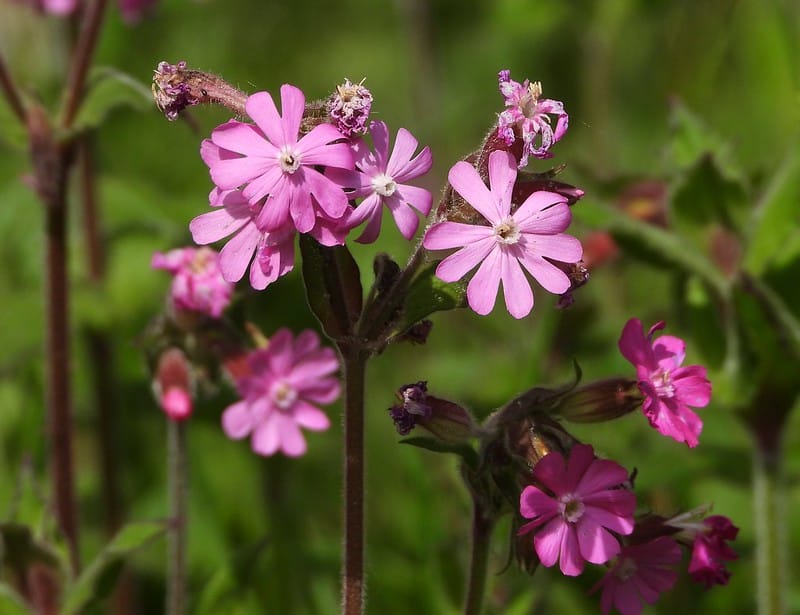
Wildflowers | Sprinkling wildflower seeds from packets may feel good and produce beautiful results, but it may be harming wild populations, according to a study in Plant Ecology & Diversity. The authors specifically looked at red campion: a species commonly found in seed mixes. They discovered that commercial varieties were genetically distinct to their wild counterparts. Their introduction risks diluting or erasing the special qualities associated with local populations – such as tolerance to particular conditions – that have emerged over centuries of adaptation, increasing vulnerability to threats like pests, disease and climate change. These commercial mixes should therefore be avoided at sites where there is a risk of cross-pollination, the authors conclude.
Solar | Well-managed solar farms can support struggling bumblebee populations, according to a study in Global Change Biology. Researchers from Lancaster University and UKCEH analysed 1042 British solar farms, using a high-resolution model to simulate bumblebee foraging and population dynamics under different environmental scenarios. They found that site management was key, with more than twice as many bees in farms planted with wildflowers compared to turf grass. However, this ‘bee-boosting’ effect was largely confined to the farms themselves, with numbers in surrounding foraging areas influenced more by external landscape changes. The authors conclude that, while a single solar farm ‘in isolation’ cannot offset widespread land-use changes, strategically sited and well-managed farms could increase habitat connectivity and act as key refuges. Euro News covered the research.
Rewilding | A literature review, combined with expert interviews, lays out the strengths and weaknesses of ‘agricultural rewilding’ – a relatively new concept, where livestock is used in place of wild herbivores, that lies between agroecology and rewilding. The authors examined 25 sites across Europe, 14 of which were in England and Scotland. They found that there were many benefits, including the production of high-quality meat and the maintenance of traditional practices. But there were also some drawbacks, including the risk of overgrazing, greenwashing and the erosion of the concept of rewilding itself. The findings were published in Ecological Solutions and Evidence.
Driftwood
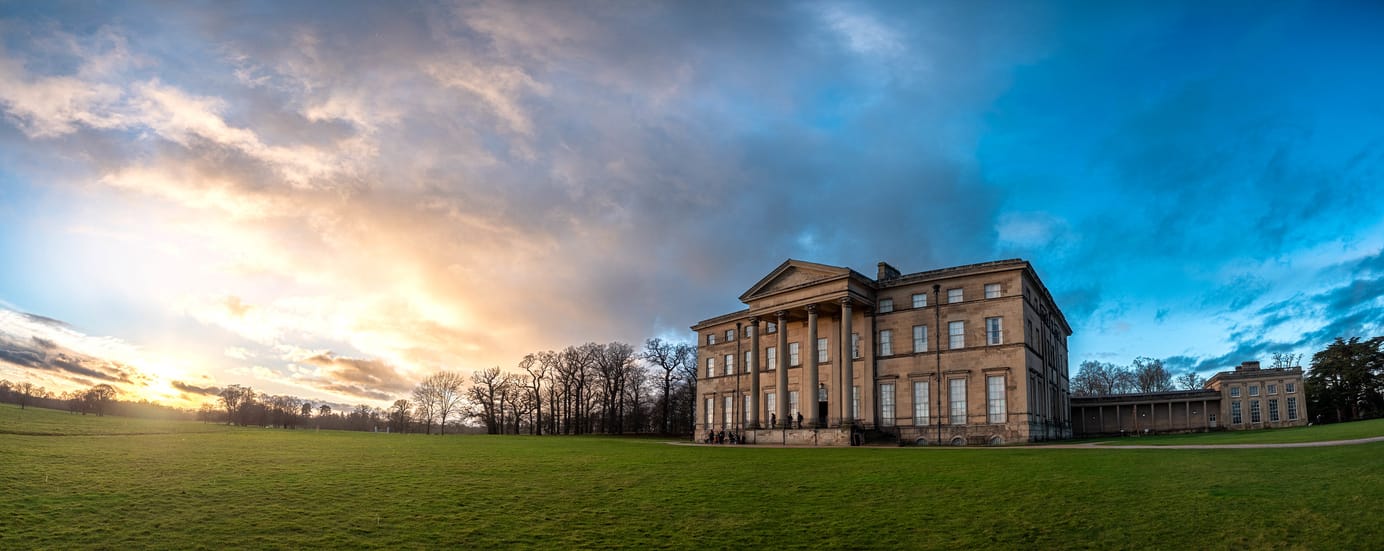
Meadows | The National Trust’s art and cultural collections could be used to inform the restoration of its land, and in particular its floodplain meadows, writes the art historian Samuel Shaw in the Conversation. A recent visit to the Attingham Estate in Shropshire revealed the relative paucity of its meadowland; the collections within the house itself suggested that it had once been far richer. Evidence of a wilder past includes the paintings of cattle hanging on the walls, to the grasses on an early 20th-century fan, to the plans for the estate drawn up by the landscape gardener Humphry Repton. ‘Historic objects, such as those I explored at Attingham, do not stand apart from nature restoration, but can stimulate and shape it,’ writes Shaw.
Folklore | In a feature for the Conversation, a historian and a conservationist explore the medieval ‘omens’ once associated with Britain’s now-endangered wildlife. During the early modern period, for example, people believed that witches transformed into hedgehogs to steal milk from cows’ udders. Finding an adder on your doorstep was considered a death omen; hares were thought to be shapeshifters; and nightjars were said to snatch up lost souls wandering between worlds with their eerie calls. The researchers write: ‘In the stories of these creatures, we glimpse both our fear of the wild past and our responsibility for the future.’ Now is the time, they argue, to revisit the folklore of these iconic animals and reflect on what their plight today reveals about our shared environment.
Iceland | In 1963, something remarkable happened off the coast of Iceland: a new island formed. Since then, scientists have studied Surtsey – as it became known – to understand how nature develops in the absence of humans. The first plants arrived quickly, washed over on waves from the mainland. More seeds arrived in the faeces of gulls that came to nest on the island. The arrival of seals brought further changes to the landscape: nitrogen in their faeces, urine and placentas helped life to spread even further. The spread of nature shows that renewal is possible even on the harshest environments, says Pawel Wasowicz, who studies the island, providing hope for ecosystems damaged by war, pollution and exploitation. Read the story in the Guardian.
Further reading:
- A feature in the Times looks at the neglect and deliberate obstructions blocking England’s footpaths.
- The Natural History Museum has announced the winners of the Wildlife Photographer of the Year award. See the gallery here.
- Or, if you prefer your nature in miniature, check out the winners of the Nikon Small World photomicrography competition in the Guardian.
- Read about (and listen to) the new Welsh-language album Natur, by Eve Goodman and SERA, in Nation.Cymru.
- In the Spectator, Matt Ridley decries Labour’s ‘class war on moorland’.
- Country Life’s Lotte Brundle writes about a project to restore temperate rainforest on the Isle of Man. Another article in the same magazine profiles efforts to save lobsters.
- The BBC revisits the story of the acorns planted by Yoko Ono in Coventry Cathedral 20 years ago.
- The RSPB looks at how nature fared at the political party conferences this year.
- Gen Z are ‘unboxing’ conkers on TikTok, apparently. Read more in the Guardian.
Happy days
Podcast | In one of the more unusual concepts for a podcast that we have seen lately, Iggy Pop adopts the role of a grumpy Mother Nature in Sweet Little Human. Producers Orkan Media describe it as an ‘unhinged look at some of the biggest issues facing our species’ and that ‘nobody is safe from scrutiny – not beekeepers, not climate activists, not even the well-intentioned Leonardo Dicaprio.’ Episodes deal with subjects including the return of wolves, the extinction of the Great Auk, and humanity’s relationship with fire. Read a brief review in the Guardian.
Subscribe to our newsletter
Members receive our premium weekly digest of nature news from across Britain.
Comments
Sign in or become a Inkcap Journal member to join the conversation.
Just enter your email below to get a log in link.