Welsh Farming & Slime Mold
The latest news on nature and conservation in Britain.
National news
Agriculture | The Welsh government has proposed amendments to its Agriculture Bill, with the aim of ensuring that Welsh farms remain economically viable; the changes include strengthening links between agricultural businesses and communities, and promoting the Welsh language. The Bill, which will establish a framework for sustainable land management in Wales, came under fire in September for giving priority to environmental and cultural issues over economic resilience. Although the Farmers’ Union of Wales said the amendment was a “welcome move”, it also pointed out that the term “economic” was still absent. Leader of the Welsh Green Party, Anthony Slaughter, said the Bill is a “historic opportunity” for Wales, but “we need to take the agricultural sector along with us.” Meanwhile, environmental organisations, including the Welsh Environment Link, have called on the government to strengthen the Bill by highlighting the importance of nature and setting robust standards. Farmers Weekly and Nation Cymru covered the news.
Television | The BBC has announced its decision to cancel Autumnwatch, citing financial pressures. The show, which is hosted by Chris Packham, Michaela Strachan, Gillian Burke and Iolo Williams, has been an annual fixture for the last 17 years. The BBC has reassured watchers that it will invest more in the sister programmes, Springwatch and Winterwatch, which are reportedly more popular with audiences. Thousands of viewers are unhappy with the decision, arguing that the programme provides a much-needed connection with wildlife. A petition on Change.org calling for the BBC to reconsider has reached over 100,000 signatures. Rebecca Speight, chief executive of the RSPB, said the Watches are “a fantastic way of engaging and growing knowledge about the natural world – just when we need it most.” BirdGuides, the Telegraph and Country Living reported the news.
Biodiversity | Developers have warned that the biodiversity net-gain mandate coming into force in November could result in “market paralysis” for housing. The rule, introduced by the Environment Act in 2021, requires housebuilders to leave nature in a better condition than before, either by creating new habitats or buying biodiversity credits through an offsetting scheme. However, details of the scheme and how much it will cost are yet to be published. In response to a government consultation, Bellway, one of the UK’s largest homebuilders, warned that the new requirement could freeze the market, and called for net-gain to be made optional. Savills has estimated that developers could wind up paying up to 2.2% more to buy land under the rule, which in turn could result in less affordable housing. The Times reported the news.
In other news:
- Defra has announced £14m of funding across two community-focused tree-planting initiatives.
- The government has announced it will hold a major international finance event in support of the pledges made at the COP15 biodiversity summit.
- Hundreds of Scottish puffins that washed up on the Spanish coast over the last few weeks died from starvation, reports the Herald.
- Ornithologists have warned that a devastating new outbreak of bird flu is headed for the UK in spring, reports the Guardian.
- Europe has lost half its wetlands in the last 300 years, while the UK has lost more than 75%, according to a study in Nature. The Guardian covered the research.
Across the country
Glasgow | Derelict docks in Glasgow are set for a green transformation, thanks to £2.4m in funding from the Scottish government. Govan Graving docks were once used to paint and repair vessels on the River Clyde, but they have been sitting in disrepair for more than four decades. Now, funding from the Vacant and Derelict Land Investment Programme will be used to turn the docks into a public green space in the heart of Glasgow, co-designed by the local community. The space will include a riverside walkway, plants to boost urban biodiversity and a footbridge to connect the site with nearby visitor attractions. The Times covered the story.
Ramsey | Seabird colonies on Welsh islands have a new four-legged protector. Jinx, a three-year-old cocker spaniel, has been trained by the RSPB to be the UK’s first conservation detection dog. The spaniel has undergone two years of training on Ramsey, an island off Pembrokeshire, to learn how to sniff out rats and pinpoint their locations. Welsh islands are host to globally important populations of seabirds, such as Manx shearwater, but invasive populations of rats can decimate colonies. Jinx will also turn his nose to Skokholm, Grassholm and Bardsey, islands home to razorbills, guillemots and gannets. The BBC and the Guardian covered the news.
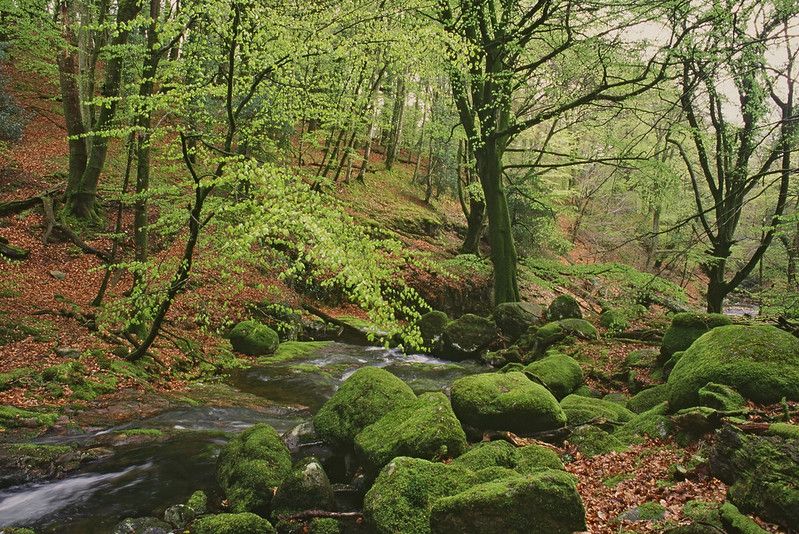
Dartmoor | Not-for-profit company Wild Justice has sent an open letter to Natural England, highlighting the release of pheasants on Alexander Darwall’s Blachford Estate on land adjacent to a Site of Special Scientific Interest. Darwall has featured heavily in the media recently after winning the legal right to remove wild campers from his land on Dartmoor. However, an investigation by Wild Justice using imagery from Google Earth has revealed that pheasants are being released on his estate in close proximity to Dendles Wood National Nature Reserve, an area of temperate rainforest that abounds in mosses and lichens. The organisation explains how pheasants can affect wildlife through predation, browsing and grazing of flora, and nutrient deposition. In its letter, Wild Justice questions Natural England on the steps it is taking to regulate gamebird releases and address threats to the biodiversity of the site.
Elsewhere:
- Warwick District Council has launched an initiative to plant 6,000 trees across 12 farms, reports the BBC.
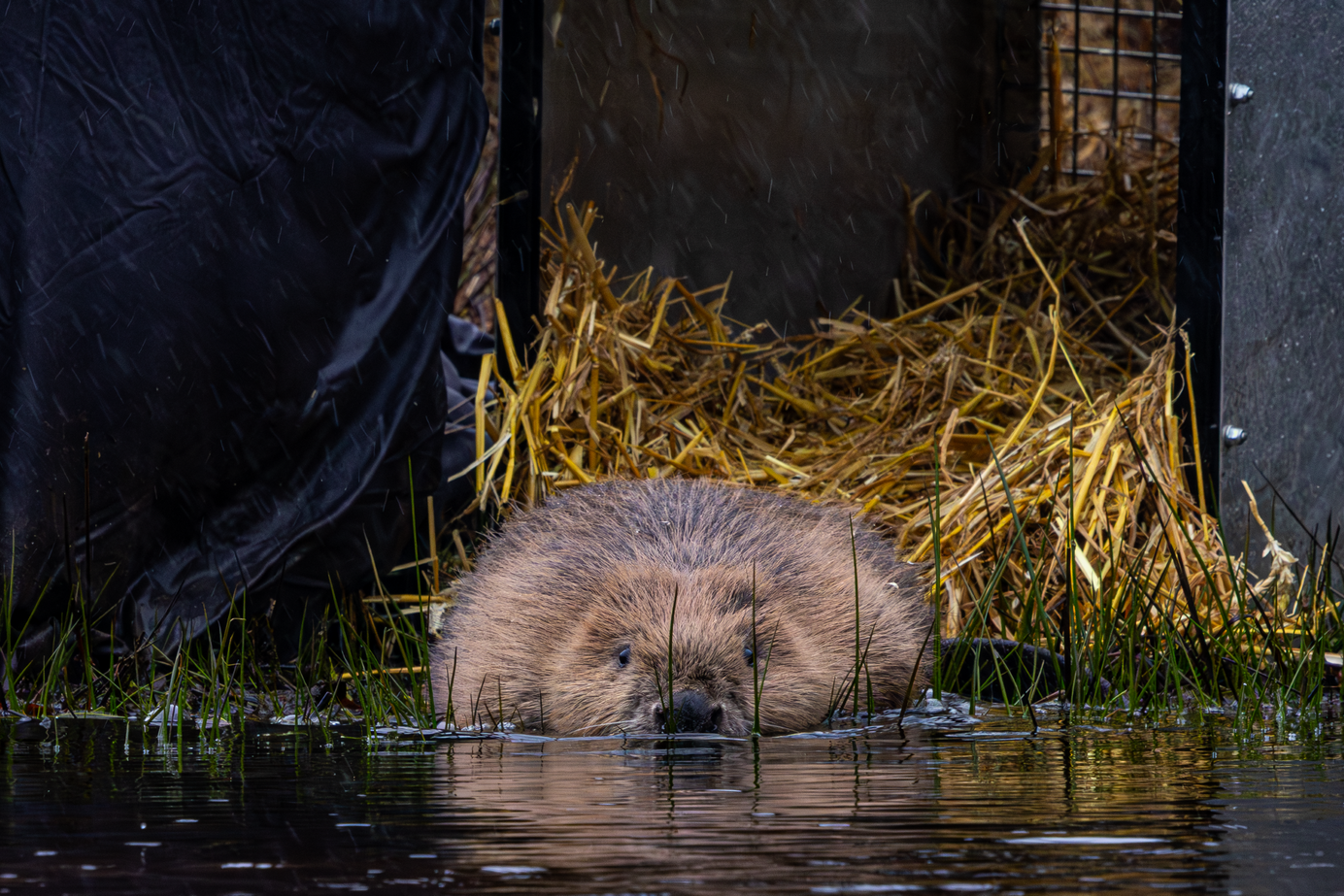
- Natural England has approved a licence for a beaver reintroduction project in Ealing. The Telegraph, iNews, MyLondon and ENDS reported the news.
- The Wilton Wetlands project is preparing to plant 20,000 native plants on former farmland which has been transformed into wetland, reports the BBC.
- An sighting of the rare Black Oil Beetle in south Staffordshire could be its earliest ever sighting in the UK, according to the Staffordshire Wildlife Trust.
- Black Mountains College in Talgarth, Powys, has launched a Bachelors in sustainable futures, to train the “climate disruptors” of tomorrow, reports the BBC.
- Developers with plans to build a salmon farm in Loch Long have said they will appeal the national park’s decision to block the build. The Scotsman and the Herald reported the news.
- The ambitious Biomes project by Edinburgh’s Botanic Gardens is facing cuts and delays after going “significantly” over-budget, reports the Herald.
- Farmers near Yorkshire are being pressured to make way for solar panels, according to an article in the Times.
- Plymouth City Council has approved plans to build a £33.5m “eco-friendly” neighbourhood, reports the Plymouth Herald.
- The Vincent Wildlife Trust is restoring a derelict building in west Sussex for a breeding colony of the rare greater horseshoe bats, reports the BBC.
- Wandlebury Country Park, near Cambridge, has acquired eight Belted Galloway cows from Scotland to act as lawnmowers, reports the BBC.
- Police in Essex are appealing for information after finding a young buzzard that survived three shot wounds, reports BirdGuides.
- A wild beaver has been spotted in Ashford for the first time. Kent Wildlife Trust posted a video of the discovery.
- A sea eagle reared by conservationists on the Isle of Wight has returned after two years in western Europe, reports the Times.
- A ptarmigan has been recorded on Orkney for the first time since 1831, reports BirdGuides.
- Surrey Wildlife Trust has teamed up with Shepperton Studios to transform a grazing pasture in Byfleet into a thriving meadow habitat.
Reports
HS2 | The company behind HS2 has significantly underestimated the environmental damage it is causing, according to a report by the Wildlife Trusts. It outlines how the company, HS2 Ltd, has both undervalued the existing habitats and overvalued the impact of its compensation measures, ultimately finding that there has been almost eight times more biodiversity loss in Phase 1 than calculated by HS2, and at least 3.6 times more loss than calculated across Phase 2a. This is partly due to the metric used, which the Trusts said is “untested, out of date and fundamentally flawed”. The report calls on the government to pause construction and require the company to remap existing habitats and recalculate its total impacts to nature using proven methodology. In response, HS2 Ltd said the Trusts’ report was “incorrect and based on unreliable data”. The BBC and ENDS covered the news.
BREAKING! 🚨
— The Wildlife Trusts (@WildlifeTrusts) February 8, 2023
Our natural world is being threatened…again! Buckle up for a thread as we take you through the catalogue of errors in @HS2ltd’s nature sums https://t.co/atXTEquuUr 🧵 (1/5) pic.twitter.com/4PhAHaCMeZ
Butterflies | Eighty percent of butterflies in Britain have declined in either abundance or distribution since the 1970s, according to a report from Butterfly Conservation. It is the latest assessment of the UK’s 59 species of breeding butterflies, using millions of citizen science observations to chart changes across the country. The report found that England’s butterflies are faring the worst, particularly species which are reliant on specific habitats such as flower-rich grassland, heathland and woodland clearings. However, some species – including the Heath Fritillary and the Duke of Burgundy – have shown notable improvements due to targeted conservation. Scotland is the only UK nation to show long-term increases, with a 37% overall increase in abundance. However, the report emphasises that the numbers are a clear indication of climate change, and notes that habitat specialists in Scotland are still in significant decline. With half of all British species now listed as at risk of extinction, the scientists behind the report say there needs to be a “massive step-change” to reverse disastrous declines. The Guardian, the Times and ENDS covered the research.
Science
Songbirds | Gardeners who use pesticides should expect to see fewer songbirds, according to a study in Science of the Total Environment. Researchers from the University of Sussex collaborated with the British Trust for Ornithology to conduct a survey during the citizen science project, Garden BirdWatch. The survey found that, out of 615 gardens in Britain, 32% of respondents used pesticides on their garden regularly, with glyphosate-based herbicides making up 53% of those applications. Combined with data on bird sightings, the study found that gardens using glyphosate pesticides saw 25% fewer house sparrows, while that number dropped to 40% fewer in gardens using slug pellets containing metaldehyde. Professor Dave Goulson, co-author of the study, suggested that the UK should follow the example set by France by banning pesticides in urban areas. The Guardian and the Herald covered the research.
Freshwater | With freshwater biodiversity declining both globally and in Britain, conserving freshwater species is vital – but what is the best way to monitor them? Most conventional survey methods are labour-intensive and invasive. In his PhD thesis, Jack Greenhalgh, of the University of Bristol, explores two non-invasive methods for surveying freshwater ecosystems. He uses eDNA – genomic DNA released into the environment – to detect the invasion fronts of signal crayfish in Yorkshire and to map the distributions of endangered crayfish in Norfolk. The paper also sets out the first standardised survey protocol for collecting acoustic data from ponds. According to Greenhalgh, field recordings can be a powerful tool for public engagement and science communication, as well as providing a way to monitor aquatic environments remotely, non-invasively, and over long periods of time. A feature in Inkcap Journal explores how Greenhalgh’s recordings reveal the secret life of ponds.
Hatching | The rate of bird eggs failing to hatch is increasing as bird species decline, according to a study in Biological Reviews. Researchers looked at the eggs of 241 bird species across 231 previous studies. They found that the hatching failure rate of wild, non-threatened species was around 12.4%, but that rose to almost 17% across all populations. Significantly, this rate was even higher among endangered species, with 43% of eggs from threatened species bred in captivity proving unsuccessful. This could present a major barrier to species recovery, according to the authors. The researchers say it currently is unclear whether population declines are being driven by increased hatching failure rates, or alternatively if reduced hatching is a consequence of population decline. Earth.com covered the research.
Citizen Science | Participating in citizen science projects can boost volunteer wellbeing, according to a study in People and Nature. The study involved 500 participants from across the UK, who were asked to spend ten minutes getting close to nature, five times a week. This was either through a science survey such as counting pollinators, or through a “nature noticing” activity, during which volunteers were asked to note down three “good” things about the natural world. The study found that volunteers participating in these activities felt happier, more connected to nature and more satisfied with life. Those who noted down three good things also felt more inclined to participate in wildlife-friendly conservation behaviours. The Times covered the research.
Driftwood
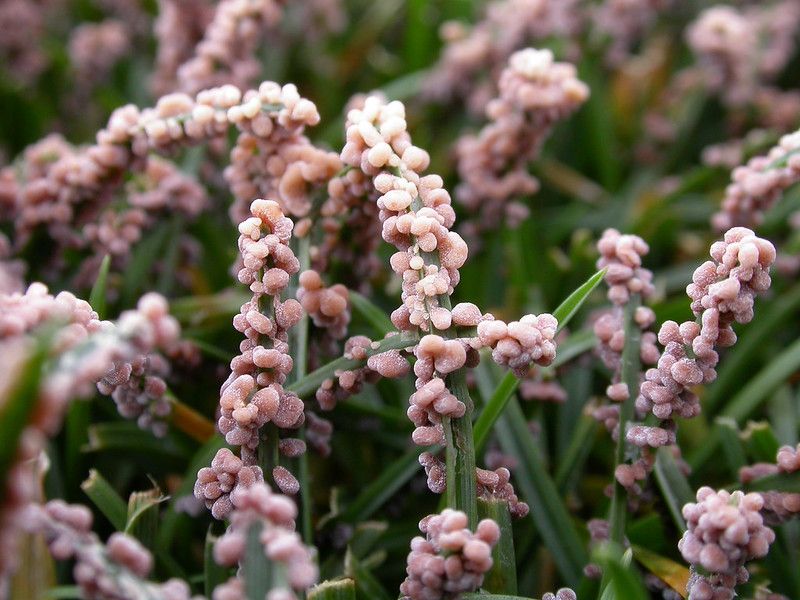
Slime Mold | In a gorgeous essay for Emergence Magazine, author Lucy Jones turns the magnifying glass on the strange and multifaceted world of slime molds. More animal than fungus, these structures are having a cultural moment – and they may help us to rethink the nature of our own existence. "How might a kinship with slime smother our inadequate but still-dominant ideas about the world?" she writes. The feature is accompanied by photographs by Barry Webb, whom Jones accompanies into the woodland in search of these tiny gelatinous organisms.
Lindisfarne | An article in the Times and a photo essay in the Guardian explore tensions between Defra and the local fishing community on Lindisfarne. Fishing has been a central pillar of life on Lindisfarne for centuries, but Defra’s proposal for a highly protected marine area (HPMA) off the northeast coast – meaning a ban on fishing – is threatening the livelihoods of island families. But locals say that stocks of lobster and brown and velvet crab – the only species caught offshore by island fishers – are higher than they have been for decades. Lindisfarne fisherman David Hughes said that a decision to ban fishing would “take the backbone out of the island” and leave it a ghost town. A consultation on the proposed HPMA has finished and a decision is due this month.
Superhighway | A blog by the RSPB argues that the “bird superhighway” along the UK’s east coast should be a World Heritage site. There are around 170,000 hectares of world-class wetland habitat stretching up the east of Britain from the Thames to the Humber. These connected wetlands form a key part of the East Atlantic Flyway, one of eight superhighways used by migratory birds. More than 155 species use the UK stretch to travel, and it also acts as a breeding ground in spring and summer. As a rare and irreplaceable habitat, the RSPB argues that World Heritage status would increase public awareness of the highway’s importance, and help to develop protection and adaptation strategies to threats such as sea-level rise and climate change.
Further reading:
- A feature in the Times explores fears that wind farms will industrialise the unique landscape of the Upper Deveron Valley in Aberdeenshire.
- In an interview with ENDS, George Monbiot argues that the “old legacy industry” of farming will be over before the use of fossil fuels.
- A blog by the Wildlife Trusts explains their “new approach” to climate action, which they claim turns the traditional offsetting model on its head.
- In an opinion piece for the Guardian, environmental historian Troy Vettese argues that to truly have sympathy for animals, society must stop owning pets.
- An article in Countryfile narrates a day out at the London Wetland Centre, which it describes as “the embodiment of what you can achieve through urban rewilding”.
- In the BBC, a long read explains how beavers are able to revive wetlands.
- A BBC article showcases a few images from the shortlist for the Young Nature Photographer of the Year award.
- A feature in the Derby Telegraph introduces the ‘Old Man of Calke’, an ancient oak tree in the grounds of Calke Abbey near Ticknall.
Happy days
Kestrels | In the Hull Daily Mail, an article tells the story of “single dad” Mr Kes: a male kestrel in the Yorkshire Wolds who has raised his brood of six chicks alone. His mate disappeared after a fight with a tawny owl when the chicks were only a week old, leaving wildlife experts concerned for their survival. Feeding kestrel chicks is usually a job reserved for the mother, but in this case the father learned to feed his offspring, and all six chicks have now successfully fledged. Wildlife artist and filmmaker Robert Fuller documented the story on camera near his home in the Wolds.
Subscribe to our newsletter
Members receive our premium weekly digest of nature news from across Britain.
Comments
Sign in or become a Inkcap Journal member to join the conversation.
Just enter your email below to get a log in link.