

Welcome to Continental Drift – a monthly newsletter exploring the most interesting ecological research from Europe.
This month’s edition is a reminder that ecosystems are never reducible to a single storyline. Population trends are not always what they seem, and conservationists must be cautious about attributing declines – in this case, of goshawks – to the most obvious cause. Nor can nature’s deterioration be neatly captured by simple metrics, as three studies of clearcutting in Scandinavia’s boreal forests remind us.
In a Bulgarian village, meanwhile, we find a striking example of the interconnectedness of the avian world – all thanks to a car crash. In Spain, researchers explore how climate change is reshaping the behaviour of bears. And in Poland, scientists warn about the ecological consequences of wolf-dog hybrids.
Join us on this month's tour of the continent.

Predator vs. predator
In the forests of western Europe, the Northern Goshawk has long ruled the roost. But now there’s a new bird on the block.
Populations of Eagle Owl are recovering, and ornithologists are uncertain how – or whether – the two raptors will coexist. Eagle Owls are the fiercer bird: there are questions over whether goshawks can compete for prey and breed successfully in their presence, while avoiding becoming lunch for the owls themselves.
Figures emerging from one forest on the Dutch-German border hinted at trouble. Following the arrival of owls in 2019, the number of goshawk pairs dropped steeply, from 40 to 23. A team of ornithologists decided to investigate the cause.

For the scientists, the forest was already familiar territory. Its raptors had been studied continuously since 1968. The locations of the goshawks were well known, but finding the owls meant searching for pellets, feathers and nests.
From this evidence, the researchers pieced together a picture of goshawk-owl relations.
No, the owls were not regularly feasting on goshawks. The scientists found just one instance of an owl taking a goshawk fledgling, compared with four goshawks eaten by goshawks themselves – ‘a striking example of cannibalism’.
No, the Eagle Owls were not consuming all the prey. There was some dietary overlap – both species favour pigeons – but the nocturnal owls supplemented these with night-active prey including rats, rabbits and hares, alongside larger animals such as hedgehogs. Diurnal goshawks, meanwhile, took woodpeckers, which sleep safely in tree cavities at night.
No, goshawks did not abandon their territories or stop breeding when owls arrived. Goshawks nesting closer to Eagle Owls did raise fewer chicks, but this was likely because the further nests were nearer urban areas, where large prey animals are more abundant, boosting brood size.
In other words, the Eagle Owl is not a threat to the Northern Goshawk – yet. The authors warn, however, that owl numbers continue to rise, and their impacts on goshawks could grow as their dominance increases.
Meanwhile, goshawks are clearly struggling, even if the owls are not to blame. Their recent decline instead appears to reflect accumulating pressures: the recolonisation of Pine Marten; outbreaks of avian influenza; and the clearcutting of old spruce stands following drought and bark beetle outbreaks.
As owls recolonise the forest, the goshawks may find fewer places left to hide.
Read more in Journal of Ornithology.
In more competition-related news:
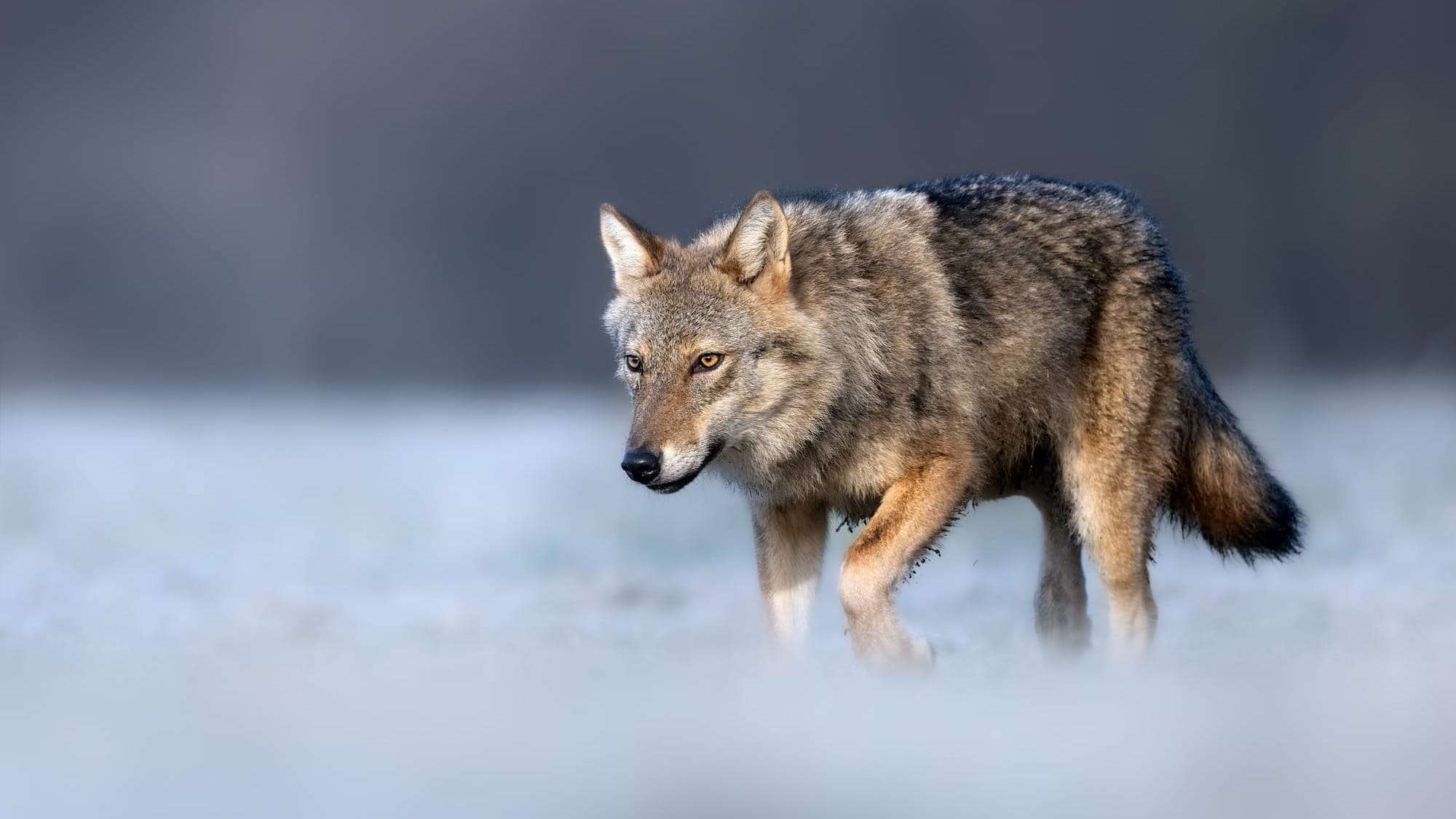
A study in Global Ecology and Conservation examines the impact of wolf-dog hybrids on pure wolf packs in central Poland.
The researchers found that the hybrids ate a similar diet to wolves – perhaps because they are typically raised by wolf mothers, who pass on their hunting strategies – meaning that the two are competing for the same resources.
The authors warn that preventing hybridisation is crucial to preserving the ecological role of wolves in the wild. That will require limiting Poland’s free-ranging dog population and keeping them out of natural habitats.

Beneath the paywall: A surprise in a stork's nest. What happens to forest ecosystems when the forest disappears. The cost of bottom trawling. The impacts on climate change on bears. Warfare and black-headed gulls. Contaminated boar. Subterranean biodiversity. Wild horses. Subscribe now to read it all.