Tory Backtracking & Countryside Inequality
The latest news on nature and conservation in Britain.
Welcome to Inkcap Journal, a newsletter about nature and conservation in Britain. Not a member? Sign up for a 30-day free trial.
National news
Leadership | It has been a busy week for Rishi Sunak. On Friday, more than 50 environmental organisations wrote to the Prime Minister to warn him they would “not stand by while politicians use the environment as a political football”. The open letter referred to “baffling” reports that the government was considering watering down its green commitments, at the very moment that millions were suffering from the effects of extreme weather. The letter calls instead for “courage and leadership”, and requests an urgent meeting to discuss the government’s response. The BBC, the Times and the Guardian covered the news. Subsequently, on Monday, Sunak announced that the government would approve 100 new North Sea oil and gas licences, a decision he insists is “entirely consistent” with net zero targets. He also confirmed support for a multi-million-pound carbon capture project in Aberdeenshire to help offset emissions. Unsurprisingly, the announcements have been met with a fierce backlash, from opposition parties, environmental campaigners, and even the prime minister’s own daughters. More than 600 scientists and academics have written to Sunak to urge him to rethink the licences for the sake of global climate change efforts.
Spills | Untreated sewage was released into protected areas across England and Wales for more than 300,000 hours in 2022, according to an investigation by Unearthed, the journalism arm of Greenpeace UK. Researchers mapped data from the Environment Agency on storm overflows, and found almost 1,200 overflows discharged in or close to formal conservation regimes, including SSSIs and SACs. Areas worst hit included some of the UK’s most prized natural sites: the Lake District, the Solent and Dorset coastlines, and the Brecon Beacons. The research also revealed that over 38,000 hours of sewage was released into or within 50m of chalk streams, which are a fragile and globally important habitat. A spokesperson for the Environment Agency said the data was “unacceptable”, and although there had been a “culture shift” from the water industry in recent months, it needed to “lead to a prolonged change in how they operate”. The Times covered the research, and Defra responded here.
Admiral | The UK population of red admiral butterflies has rocketed by 400% since last year, according to data from the Butterfly Conservation’s Big Butterfly Count. Volunteers taking part in the citizen science survey have already clocked up more than 170,000 sightings of the striking red and black insect. The increase in numbers is “no doubt” due to climate change, according to the charity, with warmer winter temperatures in the UK allowing the species to overwinter here, rather than return to north Africa and continental Europe. Dr Zoë Randle, a surveys officer at the Conservation, said the results show “just how vital” such projects are to understanding the effects of climate change on biodiversity. The count is due to finish on Sunday, with over one million butterflies already counted so far. The Guardian and the Times covered the news.
In other news:
- The RSPB has warned that seabird colonies across the UK are “on the brink” as the avian flu outbreak continues for a third year. The BBC and BirdGuides reported the news.
- Farmers who choose to use their land to restore nature could be subject to a sharp rise in inheritance taxes, reports the Telegraph and Farmers Weekly.
- Defra has announced an additional £9m in funding for local councils to hire ecologists to deliver biodiversity net gain. ENDS reported the news.
- Almost a quarter of swimmers are refusing to swim at British beaches due to sewage discharge, according to a poll commissioned by the Liberal Democrats. The Times covered the news.
- Campaigners have criticised NatureScot for granting a licence to test an acoustic technology which could disturb cetaceans, reports the Ferret.
- The Environmental Audit Committee has launched an inquiry into the role that private finance can play in the green economy and supporting nature recovery.
Across the country
Dartmoor | Wild camping is once again allowed on Dartmoor, after judges ruled in favour of an appeal brought by the National Park Authority. The decision overturned the original High Court ruling from January, which sided with multi-millionaire landowner, Alexander Darwall, who sought to ban wild camping in the only place it remained legal in England. The case hinged on the definition of “open-air recreation”, which is allowed on Dartmoor under the Commons Act of 1985. In the summary judgement from Monday, Lord Justice Underhill said that wild camping “plainly fell” within the definition of open-air recreation, as many people “took pleasure in the experience of sleeping in a tent in open country”. Campaigners have hailed the decision as a victory for access to nature, and a potential stepping stone towards a greater public right to roam. The news was widely covered, with detailed reporting and an editorial from the Guardian.
Rum | Nasa scientists have visited the Isle of Rum to collect samples of its ancient rocks, which are a close match for the rocks on Mars. The island on the west coast of Scotland is the only UK site to be chosen for sampling: the igneous rock of Rum, collected from NatureScot’s National Nature Reserve, has a very similar mineral and chemical content to those found in the Jezero crater on the red planet. The team will use Rum’s rocks to inform their testing methods before the Perseverance Rover returns Martian samples to Earth circa 2033. Lesley Watt, the reserve manager, said that Rum’s extinct volcanoes and dramatic mountains make it one of the best places to discover Scotland's world-class geology, but this is the first time it has had “interplanetary significance” as well. The BBC covered the news.

Llŷn | One million seeds are due to be collected over the next week from seagrass meadows at Porthdinllaen, on the Llŷn coast in northwest Wales. It is part of the largest seagrass restoration project in the UK, Seagrass Ocean Rescue, which aims to plant ten hectares of the vital habitat by the end of 2026. The seeds collected this week will be planted at sites off Anglesey and Pen Llŷn next year. Dr Richard Unsworth, Chief Scientific Officer at Project Seagrass, said that the programme was “hugely significant” as it would “set an example for future seagrass restoration across the UK and globally”. The North Wales Chronicle and Cambrian News reported the story.
Elsewhere:
- The rare small blue butterfly is flourishing at a military training site in Angus after conservation efforts by the MOD, reports the Times.
- Conservation charities have written to Michael Gove, calling on him to remove a planning designation that could allow a theme park to be built on the Swanscombe Peninsula in Kent, reports the BBC.
- Seagrass planting trials in the Fal Estuary are returning positive results one year after planting, according to the Cornwall Wildlife Trust.
- Rare goldeneye ducks, which are mostly found in the Scottish Highlands, have had a bumper breeding season at NatureScot’s Muir of Dinnet reserve.
- Boris Johnson’s plans to build a swimming pool at his Oxfordshire home have been disrupted by the presence of great crested newts – a species he railed against as Prime Minister, report the BBC and the Guardian.
- Campaigners have criticised Bristol City Council for ignoring the conservation status of areas now allocated for development, reports the BBC.
- A breeding programme at the Yorkshire Arboretum has welcomed four baby red squirrels, reports the Northern Echo.
- The National Bee Unit found and destroyed an Asian hornet nest in Plymouth, and is encouraging locals to report sightings of the invasive species, reports the Plymouth Herald.
- Watford Borough Council is leading a wetland restoration project at Cassiobury Park to transform the former watercress beds, reports BirdGuides.
- Nottingham City Council will soon embark on work to create a ‘green heart’ in the redevelopment of the Broadmarsh area, according to the local Wildlife Trust.
- A man in Stirling has discovered 8,000-year-old dolphin bones while digging in his back garden, reports the BBC.
- Portsmouth Water is working with the Pig Shed Trust to rewild 80 hectares of farmland as part of the Havant Thicket Reservoir project, reports the Plymouth News.
- The Environment Agency has allowed an amendment to the permit for Hinkley Point C power plant in Somerset, which allows the development firm to remove the planned acoustic fish deterrent system, reports ENDS.
- Natural Resources Wales is looking into the impact of angling bait collection in Marine Protected Areas, such as the Gann in Pembrokeshire.
- A record-breaking 112 chough chicks have fledged in Cornwall this year, reports BirdGuides.
- The ‘Forest for Cornwall’ project has planted more than 600,000 trees, reports the BBC.
- Councillors in Lydney, Gloucestershire, and Torridge, Devon, are complaining about the “mess” caused by rewilding.
- RSPB wardens on Coquet Island are calling for further research into bird flu after observing some seabirds with greater immunity, reports the BBC.
- More than 800 people have signed a petition to protest the felling of trees in Ripon Cathedral’s expansion plans, reports the Darlington and Stockton Times.
Reports
Economy | The economic benefits of protecting 30% of the world’s land and seas outweigh the costs by a ratio of five to one, according to a report co-authored by more than 100 economists and scientists. The report – which is the most comprehensive economic analysis of the topic – considers the financial benefits of expanding protected areas across the land and sea used by a variety of sectors, including agriculture, fisheries and conservation. It found that protecting a third of terrestrial and marine ecosystems would provide a higher overall economic output of between $64bn and $454bn per year by 2030. This is largely through the mitigation of the economic risks of climate change and biodiversity loss, as well as growth in sectors such as nature tourism. Prominent ecologist Thomas Lovejoy, co-author of the report, said the findings proved that “protecting the goose does indeed produce golden eggs”. Phys.org covered the research.
Food | The House of Commons’ Environment, Food and Rural Affairs (EFRA) Committee has published a report outlining its concerns around UK food security. The Committee reflects that the government’s Food Security Report, published in December 2021, is already out of date, and instead suggests it should be updated annually. Among current issues, the Committee urges the government to do more to ensure that low-income households are not reliant on food banks, also to better support healthy eating choices, with obesity levels forecast to hit 40% by 2035. Finally, it calls for “policy coherence”, pointing out that the decisions shaping food policy are spread across government, leading to inconsistencies. The findings are summarised in a video on Twitter.
Protection | Natural England has published a suite of reports addressing various aspects of protected areas in England. These two think-pieces explore the question of creating a ‘Ecologically Connected Network’ (ECN) of protected sites across England. Formed of core areas, corridors and stepping stones, the network would be designed to respond dynamically to environmental changes. Each report outlines the current opportunities and ‘next steps’ to realising a nation-wide ECN. Separately, this report considers the current framework for designating and monitoring SSSIs, and suggests that the network should shift away from site-specific monitoring and focus on regional populations.
Science
Cultivation | A paper in The Holocene is the first study to directly compare archaeological evidence of agriculture with biodiversity patterns. Researchers analysed 1194 archaeobotanical samples from southern England, spanning the prehistoric and Roman periods, to determine changes in land use. They also used records of fossil pollen to estimate plant and landscape diversity patterns. They found that the onset of farming after the Mesolithic period had a positive effect on landscape diversity, marking what they call a “honeymoon period” between agriculture and biodiversity. The Roman period, however, marked a tipping point, with agriculture continuing to expand and biodiversity beginning to decline.
Birds | Public interest in feeding wild birds surged during Covid lockdowns, according to a global study published in Plos One. Scientists analysed the weekly frequency of search terms such as “bird feeder” and “bird food” on Google Trends, from January 2019 to May 2020. They found an upsurge in searches from the second week of lockdowns, in data spanning 115 countries and six continents. Notably, the researchers also found that interest in bird feeding was positively associated with areas containing more species of birds, implying that people may have a sense of greater biodiversity. The authors note that bird feeding can impact on both human and bird wellbeing: while it can allow people to connect with nature, it also has the potential to impact migration patterns and the shaping of ecological communities. The Guardian covered the research.
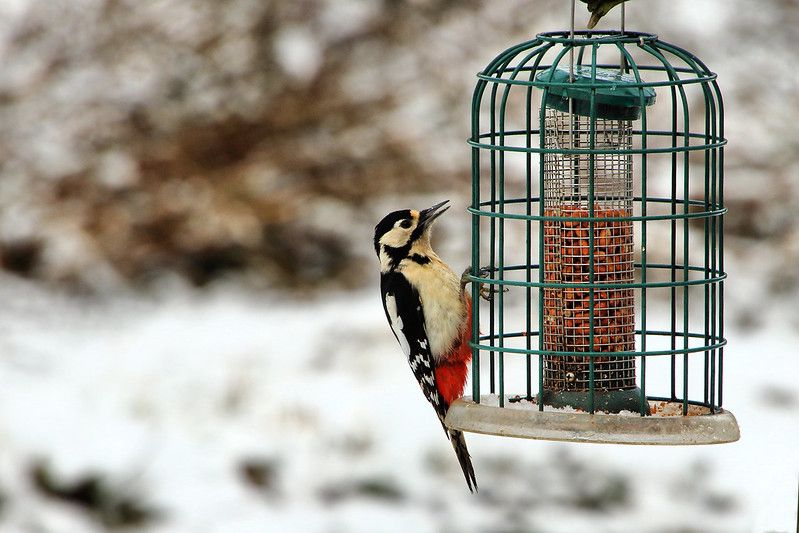
Climate | A paper in Nature uses tree-ring records to demonstrate that the climate of northern Europe is “substantially warmer” today than it was during the Medieval period. This is contrary to prior research, which often suggests that temperatures during the Medieval Climate Anomaly (950-1250 CE) were similar to, or exceeded, current weather. Researchers used 1,170 years of tree-ring records exclusively from Scots pine to reconcile the inconsistencies between reconstructions and model simulations. Their conclusions highlight “the dominant role” of anthropogenic factors in climate warming, even at a regional scale, and the authors call for the construction of more such millennia-long records to further reduce uncertainties around climate change.
Driftwood
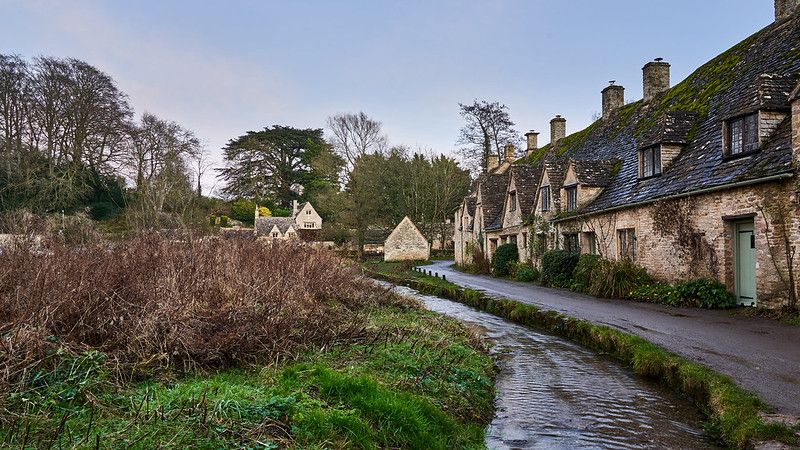
Countryside | The English countryside is characterised as much by its inequality as its picturesque landscapes, according to Rebecca Smith in the New York Times. Smith grew up on three different private country estates, but not as part of the landowning class: her father was a forester, and the job came with “tied housing”. Over the course of her lifetime, Smith has seen thriving rural villages suppressed as houses were transformed into holiday accommodation and second homes. She writes: “For the landless who work and belong to the British countryside but do not own a piece of it, it’s a place of profound inequality. Damp, cold and underresourced but beautiful.” The essay is adapted from her new book, Rural: the Lives of the Working Class Countryside.
Dereliction | This BBC article and accompanying video allows you to digitally explore Stack Rock Fort, a deserted Victorian island off the Pembrokeshire coast. The fort was originally built in the 1850s to protect against an invasion by sea, but it was abandoned and disarmed in 1929 – although the cannons still remain. Now, striking photographs and drone footage show how nature has reclaimed the space, with creeping vegetation and nesting seabirds infiltrating all three floors of the structure. New owners of the island, a community interest company, hope to preserve the fort as a “living ruin”, and protect its “amazing combination of nature and architecture”.
Botany | A book review in Nature reflects on the life work of Anna Atkins, a pioneering 19th century botanist. Atkins was among the first to adopt a photographic technique called the cyanotype, which was invented by astronomer John Herschel in 1842. It involves coating a sheet of paper in chemicals which are sensitive only to blue light wavelengths: when exposed to sunlight, covered areas of the paper remain white. Atkins used this technique to capture delicate impressions of hundreds of specimens with complex formations, such as algae and ferns. In Anna Atkins: Cyanotypes, the literary historian, author and curator Peter Walther has brought together more than 500 of Atkins’ prints. The “ghostly images” exhibit “the shadowy beauty in all that remains of specimens long gone”, according to the review.
Further reading:
- In the Environmental Politics journal, PhD student Heather Urquhart writes about colonial undertones to the rewilding movement in the Scottish Highlands.
- An article in the Times argues there must be “responsibilities as well as rights” if England and Wales are to enjoy a right to roam.
- A feature in the Guardian describes the experiences of volunteers who fought to save the pilot whales recently stranded on Lewis.
- Book reviews in both ECOS and Countryfile describe Ben Goldsmith’s God is an Octopus, about a process of reciprocal healing in nature after his daughter’s tragic death.
- Two articles in the Times preview explorer Levison Wood’s Channel 4 series on walking in wild places. In this interview he encourages environmentalists to fly, while in this one he describes Attenborough documentaries as ‘sugar-coated’.
- A BBC feature explains how Welsh wineries are expanding as summer temperatures rise.
- In the Guardian, author and marine scientist Hannah Rudd argues that it's time for a “rebrand on sharks” as they become more common in European waters.
- An article in the Times discusses the increasing prevalence of wildfires, and the best ways to combat them.
- A BBC feature describes how a couple on Unst in Shetland bought land intended for ecotourism, but ended up building a spaceport.
- A National Geographic article suggests six of the best places for sleeping “in the wild” in England and Wales.
- On BBC iPlayer, you can listen to journalist Stephen Sackur quiz Isabella Tree on the gritty details of rewilding on the ‘HARDtalk’ programme. Tree also features in the latest episode of Ben Goldsmith’s rewilding podcast, alongside Director of Rewilding Britain, Alistair Driver.
- In this blog, Natural England’s regional director Dave Slater discusses the intricacies of balancing farming interests with habitat restoration on Dartmoor.
- A feature in the Guardian investigates the environmental toll of AI.
- The Telegraph reviews Anna Worsley’s Windswept, about life in the northwest Highlands, which it claims is an “instant new classic” of British nature-writing.
- This BBC article delves into how a combination of poor weather and rising prices is making life difficult for young farmers in the UK.
Happy days
Moths | It has been a good week for rare moths. On the Isle of Wight, the Reddish buff moth was re-discovered at its last remaining UK stronghold, after an absence of four years. The moth has specific habitat requirements and a single food plant, so staff at the Wildlife Trust were delighted to find two individuals. Elsewhere, a light crimson underwing was spotted using a light trap in the Chesterton area of Cambridge. The rare moth has not been seen in Cambridgeshire since the 19th century, and is usually only found in areas of mature oak woods like the New Forest, reports the BBC.
Subscribe to our newsletter
Members receive our premium weekly digest of nature news from across Britain.
Comments
Sign in or become a Inkcap Journal member to join the conversation.
Just enter your email below to get a log in link.