Tree Planting Rebellion & Protected Areas
The latest news on nature and conservation in Britain.
Welcome to Inkcap Journal, a newsletter about nature and conservation in Britain. Not a member? Sign up for a 30-day free trial.
National news
Tree planting | Leaders of the major farming union in Wales have said they will not support the government’s new subsidy scheme over tree-planting rules. NFU Cymru said the proposals in the Sustainable Farming Scheme – set to replace the EU’s Basic Payment Scheme – did not make “business sense”, and would present a barrier to many farmers. In particular, deputy president Abi Reader said she was concerned that payment rates would not reflect the reduction in land values associated with tree planting. First Minister Mark Drakeford hit back at the criticism, arguing that tree-planting is an “inescapable” part of tackling climate change, and that it would be “a puzzle to many people, the idea that farmers can’t grow trees”. To qualify for the scheme, farmers would be required to ensure that 10% of their land is planted with trees. A third and final consultation on the proposals is set to be launched later this year, with details of the final scheme published in 2024. The BBC, Wales Online and Farmers Weekly reported the news.
Climate | The Conservatives appear to be rowing back on their commitment to tackling climate change, having won a slim victory at the Uxbridge by-election after campaigning against the expansion of London’s clean air zone. Prime minister Rishi Sunak told the BBC that any new measures to achieve net-zero by 2050 would be “proportionate and pragmatic”, while Jacob Rees-Mogg suggested that getting rid of green policies “is a real opportunity for us”. New polling, however, suggests that this attitude may be misguided. The Times reports that, of voters planning to switch from Tory to Labour next year, 57% felt that the prime minister had not gone far enough on tackling climate change. Meanwhile, in the Guardian, political editor Pippa Crerar points out that the perception that red wall voters do not care about the climate is “not backed up by the evidence”.
Lapwings | A project to reverse the decline of lapwings in Scotland has shown significant early success, reports the Herald. The Clyde Valley Wader Group has been leading a nesting management trial, funded by NatureScot, establishing specific nesting areas on farmland to encourage hatching, and monitoring the birds to understand patterns and identify the most suitable areas. Around 75% of the nests within the designated areas hatched across five field trials, compared to around 20% on less grazed pastures. “Using trail cameras and tiny devices that record nest temperatures, we’ve massively improved our understanding of where and why nests did well, and where they don’t,” said Dan Brown, senior conservation advisor at RSPB Scotland. Separately, the Marine Conservation Society has said Scotland is en route to a “bumper year” of jellyfish sightings, reports the BBC.
In other news:
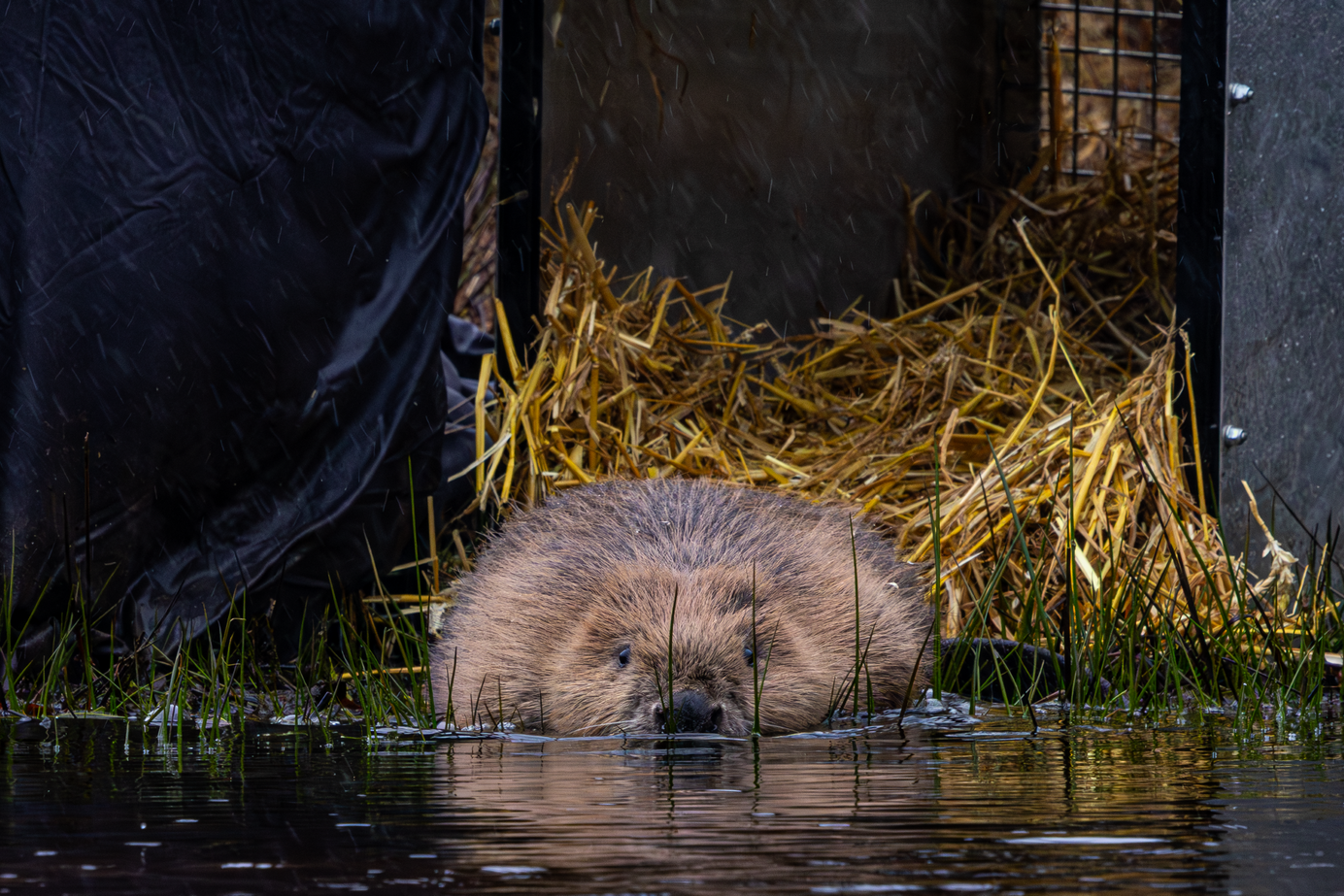
- The Beaver Trust has issued a response to EFRA’s Species Reintroduction Report, expressing concern with the recommendation that the protected status of beavers should be reviewed.
- Following Natural England’s announcement of six landscape-scale recovery projects, there is coverage here of the Seaford to Eastbourne project, and in the Northern Echo about the Tees Estuary project.
- The government has published its long-term plan for housing. The countryside charity CPRE responded by asking it to rethink large scale development plans in Cambridge, which would sound a “death knell” for rivers and streams.
- The RSPB has welcomed the Scottish government’s consultation to end sandeel fishing as a “momentous day for our struggling seabird populations”.
- NatureScot killed 57 barnacle geese for bird flu testing after confusion over the laws governing live animal testing, reports the Ferret. Meanwhile, an outbreak of bird flu has been confirmed in Wales, with hundreds of birds washing ashore, reports Wales Online.
- Backbenchers and farming groups have called for a ‘review’ of Natural England’s remit, reports ENDS.
Across the country
Moorland | Water company United Utilities has announced that it will not renew leases allowing grouse shooting on its moorlands, effectively phasing out the practice by 2027. Alex Thomson, of Channel 4 News, first broke the story, writing that the decision amounted to a “major shift in direction which opens up these spaces for nature recovery”. The move was celebrated by conservationists. Tim Bonner, chief executive of the Countryside Alliance, was unsurprisingly less enthused, suggesting that the ban was an attempt to divert attention from the company’s own failures on water pollution (although Thomson pointed out that there was no attempt to publicise the ban). “It would be a stupid move for any landowner and utility provider to pick a fight with the countryside, let alone one which relies so heavily on access to other people’s land,” he said, in comments covered by the Telegraph. There was further response in Shooting Times.
Outer Hebrides | The Scottish government has approved plans for a spaceport to be built on North Uist – close to protected bird sanctuaries – despite local opposition, reports the Guardian. The spaceport will host up to ten launches a year, firing small suborbital rockets over the Atlantic, either side of St Kilda. Nearby fishing grounds will be closed during these events, expected to coincide with the main summer fishing season, drawing objections from local fishers. The project was approved after no government agencies – including NatureScot – tabled any objections. The RSPB asked for launches to be banned during the bird breeding season but the council said that the request was “unreasonable”.
Yr Wyddfa | National Park officials in Eryri are taking an unusual approach to tackling the issue of organic waste on Yr Wyddfa mountain, or Snowdon. They have set up a “banana-cam”: a solar-powered webcam recording how long it takes for a discarded banana peel to rot. Organic litter such as fruit peel and cores are a huge problem on the mountain, according to officials, largely because visitors do not realise they can take years to disintegrate. Additionally, the waste can alter the acidity of the soil, creating problems for biodiversity and wildlife. Officials hope the webcam – which will stream images of a specially caged banana peel near the summit – will encourage visitors to take their waste home with them. The BBC, the Telegraph and the Daily Post reported the news. Separately, Monopoly has announced that Snowdonia will be the location for its latest board game, reports the Express & Star and Daily Post.
Elsewhere:
- The Environment Agency is launching Fens 2100+, a climate adaptation scheme to protect the low-lying fens in east England, reports the BBC.
- Rewilding Britain has awarded £100,000 to Kent Wildlife Trust for their project to rewild 8,300 hectares and connect fragmented woodlands, reports the BBC.
- A number of dark bordered beauty, a moth on the brink of extinction in Britain, have hatched at a site in the Cairngorms where caterpillars were released, reports the Guardian.
- In the Forest of Dean, pine marten kits have been born for the third consecutive year since their reintroduction by the Gloucestershire Wildlife Trust, reports the BBC. Separately, researchers in Dumfries and Galloway are using thermal imaging cameras to remotely monitor pine marten populations, reports the Herald.
- Five Glasgow ponds are being sampled as part of an international study to understand the scale of greenhouse gas emissions from small bodies of water, reports the Herald.
- An abandoned allotment in Coventry is being used by researchers for a pilot project to preserve heritage apple trees, reports the Coventry Telegraph.
- Researchers at Heriot-Watt University in Edinburgh are running trials on barley grown with green fertilisers for potential use in future whisky production, reports the Evening Standard.
- Devon Wildlife Trust is planting a hectare of wildflower seeds on the former golf course in Northbrook Park, Exeter.
- The Environment Agency has transformed a weir on the River Thames to allow eels to swim upstream.
- Bristol city council have unveiled plans to transform the city centre, including a tree planting operation to “green the grey”, reports the Bristol Post.
- Local police have said that three red kites were found shot and killed on North York Moors in June, reports BirdGuides.
- Essex Wildlife Trust is planning to restore a rare chalk grassland in Thurrock to boost its population of orchids and other chalkland plants.
- Doncaster Council has approved plans to build a 25-hectare “habitat bank”, which will be used as a green site to restore biodiversity loss from house building, reports the BBC.
- The population of gannets on Bass Rock off the Lothian coast is showing signs of recovery after the impact of bird flu last year, reports BirdGuides.
- The Saving Wildcats conservation breeding programme based outside Aviemore has welcomed 11 kittens, reports the Times and the BBC.
- A small population of breeding glow worms have been discovered at Sherwood Heath in Nottinghamshire, reports the BBC.
- A campaign has been launched to plant trees in deprived areas of Sheffield in response to the city’s tree-felling scandal, reports the Yorkshire Post.
- The Woodland Trust is calling for a halt to quarry plans in Kent that would destroy more ancient woodland than HS2 and the Lower Thames Crossing combined.
- Scotland’s richest man has posted a yearly loss of £4m for the rewilding company Wildland, based in Aviemore, reports the Strathspey Herald.
Reports
SSSIs | England’s Sites of Special Scientific Interest (SSSIs) could be in worse condition than current data shows, according to a report from Wild Justice. The organisation analysed Natural England’s online data, and found that 66% of sites have not been assessed in over a decade – meaning the current condition of many protected places is unknown. Concerningly, the data also revealed that, out of the sites assessed recently, a greater percentage are in worse condition: in units assessed before 2011, only 1% were classed as ‘unfavourable – declining’, but that jumped to 31% for units assessed since 2020. In light of the findings, Wild Justice is calling on Defra and Natural England to conduct a “rapid catch-up” so that 80% of sites have been assessed in the last five years, and to publish annual updates on the condition of SSSIs. ENDS reported the news, and Wild Justice summarised the report neatly on Twitter.
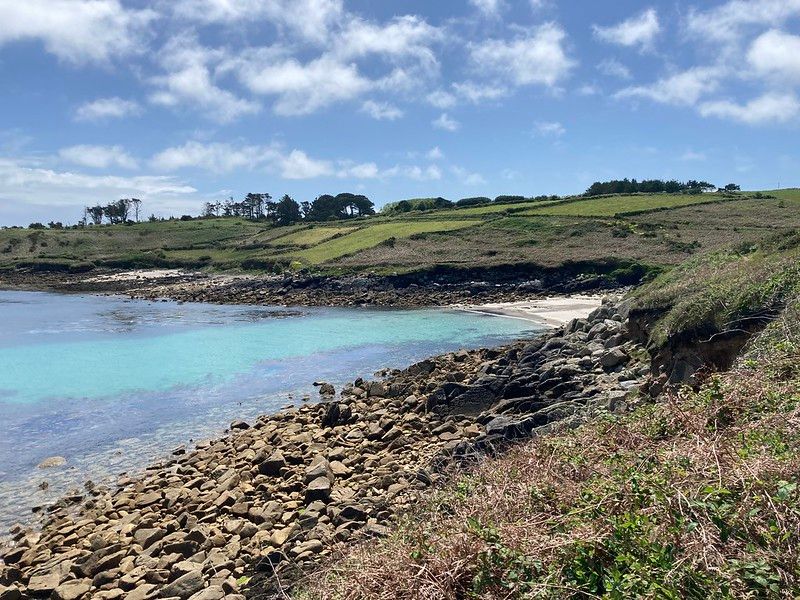
Protection | Only 6.5% of England is effectively protected for nature, according to a report from the House of Lords’ environment and climate change committee. That is bad news for the government’s target of protecting 30% of land and sea for nature by 2030. Currently, England’s protected areas on land are insufficient in extent, mostly in a poor condition, and infrequently monitored. The Lords called for a clear action plan on how the 30 by 30 target will be achieved, alongside a map outlining which areas will count towards the target. “Today’s report confirms that the goal of protecting 30% of England for nature remains a distant dot on the horizon,” said Richard Benwell of Wildlife and Countryside Link, responding to the report. “An extraordinary challenge like this requires extraordinary leadership, but the Government has no credible plan for delivering its promise.” The Independent covered the news.
Weather | 2022 was the UK’s hottest year on record, the Met Office has confirmed in their annual State of the Climate report. It was the first time that anywhere in Britain reached 40C, and all months except December were warmer than average. The report warns that last year’s records are a “sign of things to come”, with future projections forecasting hotter, drier summers. The report also found that sea levels have risen in the UK by 18.5cm since the 1900s, while a new section on phenology looks at the impact of the changing climate on cyclical and seasonal natural events. For 2022, these included early indicators of spring – such as hazel flowering – and later “bare tree dates”. The report was widely covered by national papers.
Science
Meat | A study by Oxford University is the first to pinpoint the different environmental impacts of high- and low-meat diets, according to researchers. The paper in Nature Food analysed dietary data from over 55,000 respondents in the UK, with food-level data covering greenhouse gas emissions, land use, water use and biodiversity loss. They found that the dietary impact of vegans was just one quarter of high meat-eaters for both emissions and land use, and 34% for biodiversity loss. Notably, there were at least 30% reductions in most impact indicators for low- versus high-meat eaters. Lead author, Professor Peter Scarborough, said the results highlighted that “you don’t need to completely eradicate meat from your diet” to make a “really big difference”. The BBC covered the research, and provides helpful infographics.
Happiness | “Imagine that scientists have developed a new vitamin called Vitamin H, which can potentially enhance mood and increase life satisfaction. Before recommending that people take Vitamin H every day, we would want to see rigorous, large-scale experiments confirming the benefits of this new vitamin,” write two psychologists in a paper published in Nature Human Behaviour. That vitamin doesn’t exist – exposure to nature, on the other hand, is often recommended as a means to boost happiness. Except, according to a systematic review of the studies behind this claim, there is little good-quality evidence to back it up. Also unsupported as a fast-track to happiness were exercise and meditation. Practising gratitude and pursuing social interaction, on the other hand, were better backed by evidence. Science News interviews co-author Elizabeth Dunn about the surprising results.
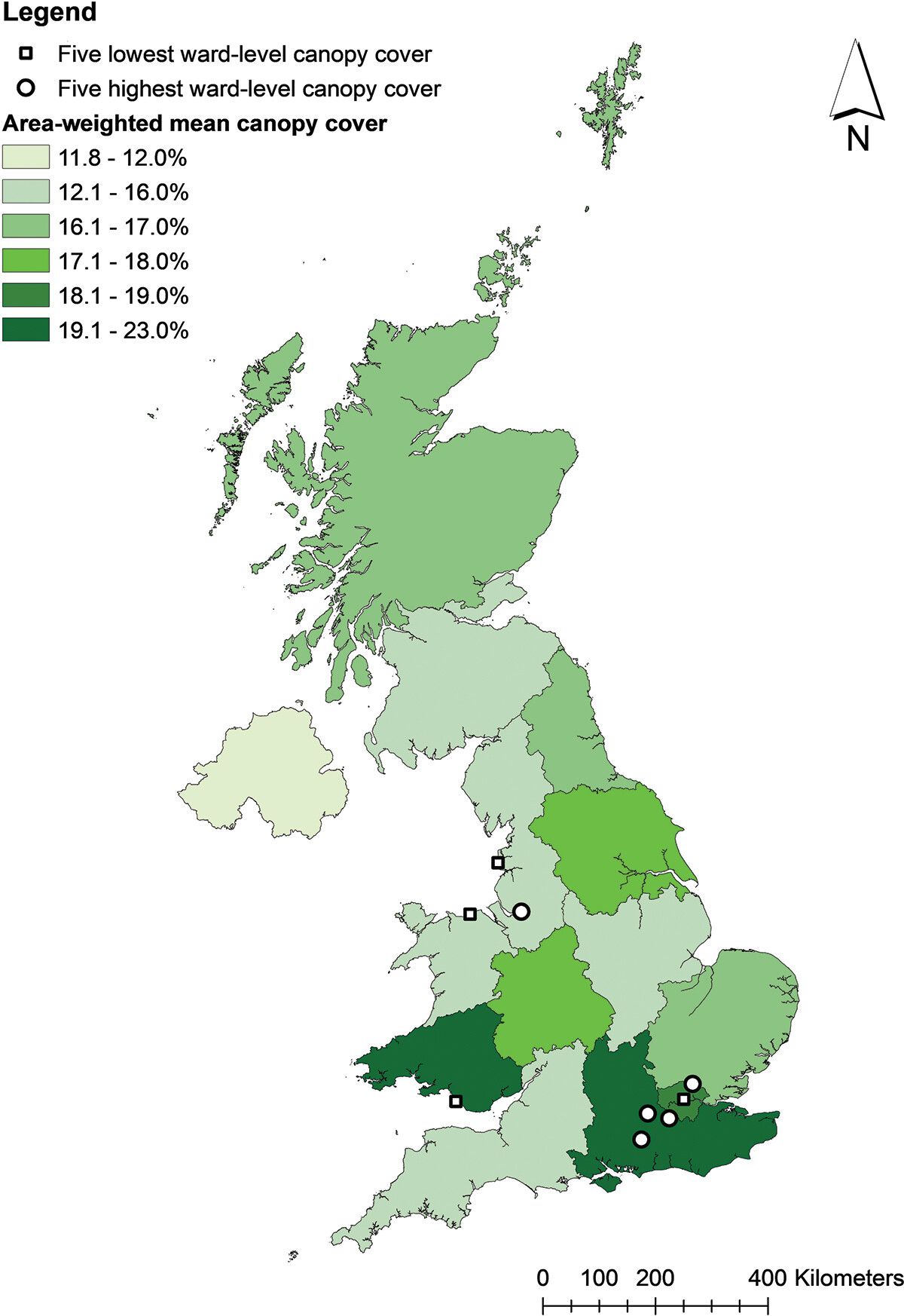
Trees | The mean tree canopy cover of UK towns and cities is 17%, according to a study published in Arboricultural Journal. The high resolution data was collected for each of the UK’s urban electoral wards. The paper is filled with interesting and useful findings. For instance, the overall average for the UK masks significant variation within each country: Northern Ireland had the lowest coverage, at 12%, and Wales the highest, at 18%. Coastal towns, meanwhile, had fewer trees than inland ones, and more deprived wards were likely to be less green than wealthier ones.
Driftwood
Trespass | It’s always a treat to see British nature issues given the longread treatment in American magazines. This week, the New York Times covers the right to roam campaign, with all the wonder and whimsy that you’d expect from an American writing about the English countryside – I particularly liked the reference to a protester eating a “Cheddar-and-Branston-Pickle sandwich”. The feature, accompanied by stunning photographs, is a serious and in-depth treatment of the history of land access, as well as a who’s who of those currently and historically involved in breaking down barriers to the land. The piece concludes with a discussion of the legal fight to wild camp – “what we would call backpacking” – in Dartmoor.
Seawilding | A long read in the BBC’s Future Planet investigates the work of Seawilding, a marine charity restoring the waters of Loch Craignish on the west coast of Scotland. Led by locals from the small rural community of Ardfern, the charity aims to reverse the damage of overfishing and dredging by restoring two key marine habitats in the sea loch. Since 2019, they have been on a mission to reintroduce one million native oysters and plant dozens of hectares of seagrass. Marine biologist Joanne Preston describes the species as “natural bedfellows”, ecologically speaking: while oysters clean the waters through filtration, seagrass provides a habitat for a range of biodiversity, as well as acting as a blue carbon sink.
Land | A discussion paper from the Jimmy Reid Foundation calls on Scottish ministers to enact “a more radical and integrated approach to land reform” in Scotland. According to Calum MacLeod, the author of the paper, the government has failed to confront the unequal land ownership system in Scotland, despite identifying it as a public policy issue since devolution. He points to the fact that the Scottish Land Fund has supported the community purchase of just 0.1% of rural land since 2016 – around 12,000 hectares – yet in 2022 alone, 139,000 hectares changed hands. He said that urgent policy change was needed “to make land work for the common good, not the private interests of a privileged few.” The Guardian covered the news.
Further reading:
- An article in the Times questions what Britain’s climate will look like by 2050, and whether international tourists might come flocking to escape the heat.
- A blog by Natural England outlines how it is working to achieve the government’s nature targets, and hits out at “misleading – and in some places inaccurate – media coverage”. Meanwhile, Defra published a blog listing 40 actions taken by the government to deliver its environmental objectives.
- Check out the ten ‘Living Landscape’ prize-winning images from the latest Scottish Landscape Photographer of the Year competition, on the John Muir Trust website.
- A blog by Natural England explores the values of coastal mudflats and sandflats for both humans and ecosystems.
- A post by Sussex Wildlife Trust discusses ‘nature babies’, and the value of developing an awareness of nature in young children.
- An article in the Herald discusses the potential to develop peatland restoration as a “new rural industry”.
- In the Guardian, Isabella Tree of Knepp Estate writes about why celebrity gardeners should not be afraid of rewilding.
- The Times has a list of 25 ‘wild and wonderful’ getaway stays in the UK, most of which are on the luxurious side.
- For Caught by the River, writer and climber Anna Fleming narrates the annual ‘Willow Walk’ in the Cairngorms, to plant willow seedlings in the remote Loch A’an basin.
- In the Guardian, a feature explores the sustainable farming partnership following in the footsteps of pioneering naturalist Gilbert White.
Happy days
Murmuration | A photo article in the Guardian exhibits the arresting images of Kathryn Cooper, who uses time-lapse montages to capture starling murmurations across Yorkshire and Derbyshire. By combining high-resolution frames, Cooper is able to record the fluid motion of starlings in what is likened to a modern version of chronophotography, used in early studies of motion in the Victorian era. The article adds that the Danish term for a murmuration, ‘sort sol’, translates as ‘black sun’, evoking the optical strangeness of the natural phenomenon.
Subscribe to our newsletter
Members receive our premium weekly digest of nature news from across Britain.
Comments
Sign in or become a Inkcap Journal member to join the conversation.
Just enter your email below to get a log in link.