Biosecurity Strategy & Corn Bunting Conservation
The latest news on nature and conservation in Britain.
National news
Biosecurity | Defra has published a five-year biosecurity strategy, aimed at protecting Britain’s plants from pests and diseases. The Plant Biosecurity Strategy, which is delivered in partnership with the Forestry Commission and the Scottish and Welsh governments, sets out how Defra plans to protect native species and safeguard food security while still driving economic growth. One action involves expanding the monitoring of online content for the trade of high-risk plant products. The strategy also includes a project by 30 organisations, including the Royal Horticultural Society, National Farmers Union and the Woodland Trust, to kickstart a national conversation around biosecurity through a public engagement programme. While the action plan has been widely welcomed, some campaigners are concerned that it does not go far enough to prevent the import of serious pests and diseases, reports ENDS. The Times and the Independent covered the news.
Plastics | Environment secretary Thérèse Coffey has announced that single-use plastic cutlery and plates will be banned in England to protect the environment for future generations. The government has yet to confirm a start date for the ban, but it follows similar moves from Scotland and Wales. Government statistics suggest that 1.1 billion single-use plates and more than four billion pieces of plastic cutlery are used in England every year, yet only around 10% are recycled. Campaigners have welcomed the news, but are calling for a more stringent ban covering a wider range of plastics including those in supermarkets and shops. Megan Randles, a political campaigner for Greenpeace, said: "We're dealing with a plastic flood, and this is like reaching for a mop instead of turning off the tap." In the Guardian, journalist John Vidal argues that the seemingly positive move is undermined by the government’s commitment to “let big industry do what it likes”. The BBC, Sky News and Euronews also covered the news.
Drainage | Defra has recommended that sustainable drainage systems (SuDS) should be mandatory for all new developments in England, following a government review. The new approach to drainage reduces the risk of flooding and pollution, and alleviates stress on traditional systems, which are under pressure from the effects of climate change and urbanisation. SuDS use features such as soakaways, rain gardens, ponds and wetlands to reduce the impact of rainfall. The Wildfowl and Wetlands Trust welcomed the decision, writing that the legislation will not only provide £3bn in reduced flood damages, but also a natural resource for mental wellbeing by creating blue and green space in urban areas. The legislation is expected to come into effect in 2024. The Courier and the Shropshire Star covered the news. In other news, campaigners have criticised Thames Water for failing to invest enough in sewage treatment works, reports the Guardian.
In other news:
- Environment Agency employees will go on strike over pay later this month for the first time in the organisation’s history, report ENDS and Edie.
- Farming minister Mark Spencer said that gene-edited food is simply “speeding up the process of natural breeding”, and therefore should not be labelled, reports the Times.
- Labour MPs have formed a lobby group to push for stronger environmental policies by their party, report the Guardian and ENDS.
- Europe and the polar regions were worst affected by global warming in 2022, according to data from the EU’s climate monitoring service. The BBC reported the news. The world’s oceans also reached their hottest temperatures in 2022, reports the Guardian.
- The Wildlife Trusts has published a list of ten environmental issues they are calling on the government to fix in 2023.
- A local government survey has revealed that 26 councils have ageing landfill sites, which are spilling waste onto English beaches and into the sea, reports the Guardian.
- The Welsh government’s Nature Networks Fund has announced almost £4m in funding for seventeen projects aiding nature recovery across Wales. ENDS and the Rhyl Journal reported the news.
Across the country
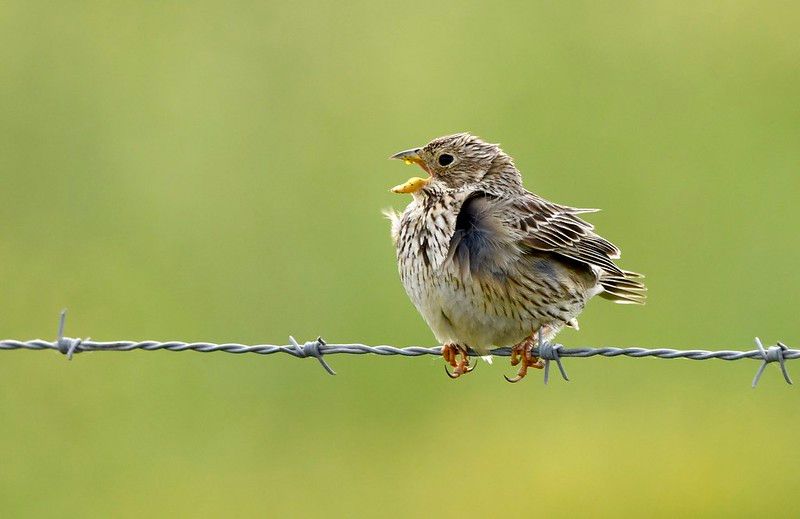
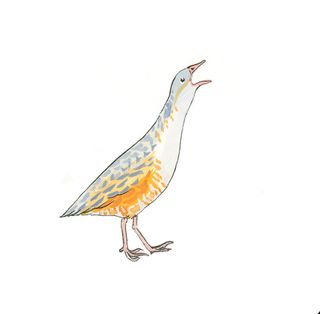
Fife | A collaboration of more than 100 farmers in Fife has helped to boost corn bunting numbers, reports BirdGuides. The farmers worked closely with the Links Trust and the Crail Golfing Society to manage their land for the species, providing safe nesting and foraging areas, as well as a supply of winter food. Corn buntings are particularly vulnerable in modern agricultural settings due to their preference for nesting in growing crops later than most birds, and their reliance on large insects to feed their young. The population in eastern Scotland crashed by over 80% between 1989 and 2007. However, local efforts have seen the Fife population increase by 70% between 2014 and 2019, with the number of territories trebling since 2001. Yvonne Stephan, conservation advisor for the RSPB, said: "It’s heart-warming to see just how much effort has gone into bringing this little bird back from the brink, and how successful the management on participating farms has been."
Assynt | An out-of-season deer cull by the John Muir Trust on its property at Quinag has angered locals who claim it is futile and “gratuitous”. The Assynt Crofters’ Trust say that the cull will have a “direct, long-lasting and detrimental effect” on the community – including employment in deer stalking – and that the woodland the Trust is supposedly protecting consists of only 12 to 15 trees. The cull licence was granted by NatureScot, but the Scottish Gamekeepers Association is backing the calls for a suspension of the licence. The Trust says that the trees it cares for across Quinag are “among the last remaining fragments of Scotland’s Atlantic rainforest”, and therefore deer numbers need to be reduced to allow for regeneration. The Times, the National and the Northern Times reported the news.
Cumbria | Howgill Beck, a stream in Geltsdale, has been “rewiggled” to return to its natural course and create a more attractive habitat for a range of species. The stream was straightened into a canal in the 18th century, but now work to restore its natural bends means it will be able to spill onto the floodplain during heavy rainfalls. Experts believe the rewiggled stream will create an ideal habitat for birds such as snipe, curlew, black grouse, redshank and lapwing – as well as the supporting plant and animal communities. The beck flows through part of the North Pennines Area of Outstanding Beauty, as well as Geltsdale, which is a designated conservation and protected area. The BBC reported the story.
Elsewhere:
- Dorset Council has bought 13 acres of land near Blandford to create a new nature reserve, which will protect the rare greater horseshoe bat, reports the BBC.
- The discovery of a dead sunfish on a Norfolk beach is “incredibly important” for scientists studying links between the fish and climate change, reports the BBC.
- Buglife is set to restore 57 hectares of land in Shropshire this year by creating wildflower-rich areas for pollinators, reports BirdGuides.
- Suffolk Police have seized a large collection of wild bird eggs, including rare bird of prey species, reports the BBC.
- Last year’s summer drought had a significant impact on National Trust reserves in Suffolk, but wet weather later in the year helped with some recovery, reports BirdGuides.
- Gloucestershire Wildlife Trust are seeking volunteers to help track pine marten movements, as the species spreads out from the Forest of Dean and the Wye Valley. The BBC reported the story.
- RHS Garden Harlow Carr in North Yorkshire has become the first public garden in England to be certified as “Plant Healthy”, acknowledging its work to stop the spread of plant diseases and invasive species, reports the Yorkshire Post.
- A community in Littleover, Derby, has come together to create a bee corridor stretching across 46 homes, reports the Derby Telegraph.
- A British firm has revealed the world’s first manure-powered tractor, reports the Telegraph.
- Bottlenose dolphins are now permanent residents of Yorkshire’s coastline all year round, reports the Telegraph.
- Kent’s reintroduced bison have been moved to a larger, 50-hectare reserve in West Blean Woods, reports BirdGuides.
- Natural England announced that a farmer from Devon has received a suspended prison sentence and a fine of almost £74,000 for grazing cattle on a Site of Special Scientific Interest.
- Natural Resources Wales is creating a digital map of potential bat hibernation and roosting areas in Gwydyr Forest, north Wales, to inform the conservation of lesser horseshoe bats.
- Great skua living on the Isle of Noss in Shetland experienced a disastrous nesting season in 2022, reports BirdGuides.
- Conservationists from the Otter Trust are attempting to secure the long-term survival of one of Britain’s rarest trees, the black poplar, using two specimens in Norfolk, reports the Eastern Daily Press.
Reports
Growing | A report by farming alliance Sustain investigates the benefits of community food gardens during the Covid-19 pandemic, focusing on the surge of urban gardens in London and Reading. The project equipped participants with digital storytelling tools to explore their experience of community food growing: their videos can be viewed here. The report and videos highlight how community gardens acted as a space for people to remake interpersonal relationships as well as connect with nature. The authors write: “Beyond simply creating or enjoying green spaces, community food growing constructs a sense of community by cooperatively organising tasks.” They conclude that such activities also play a part in building future resilience to social, environmental and economic crises.
Future | What will the world look like in 20 years’ time? A report by Springwise, a platform focused on global innovation, tries to predict the future. ‘Future 2023’ asks 20 questions, split into categories such as food, cities, energy and travel, to touch on the possible solutions and innovations in store. These include everything from growing meat alternatives and eating insects to adapting cities to work with, rather than against, the environment. In the foreword, climate journalist and broadcaster Lucy Siegel writes that our current scientific knowledge “gives us an unprecedented degree of understanding of the true cost to the biosphere of our take, make, and waste attitudes”.
Science
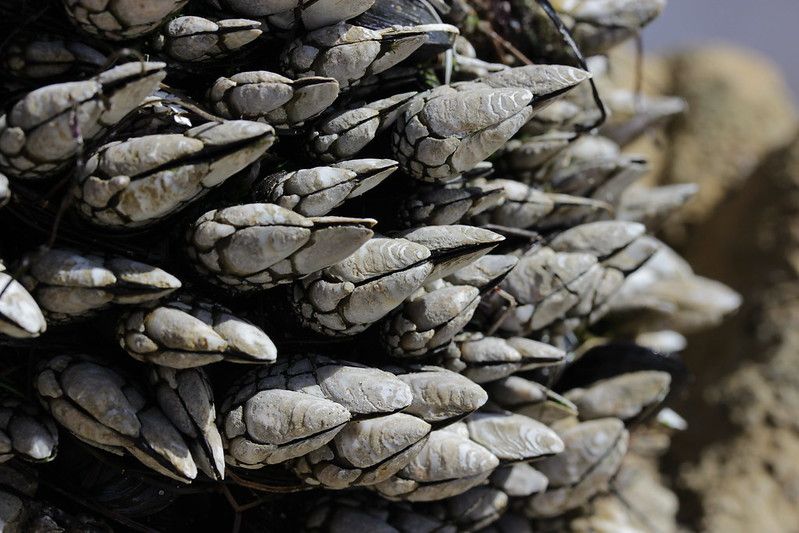
Debris | Invasive species are one of the largest threats to marine biodiversity, yet the origins of many non-native species on UK shores are unknown. Research led by Cefas repurposed a simulation model originally designed to track oil spills, and used it to “back-track” pieces of marine debris washed up on British shores. This first study in the series was able to determine the origins of species, including goose barnacles, which had hitchhiked to the southwest aboard a large piece of plastic debris. In some cases, species are known to have travelled from as far as the east coast of America. Dr. Peter Barry, lead author of the paper, said: “Although not all non-native species entering the UK will become established, those that do can be incredibly harmful for the environment. With the increase in marine litter in our seas, it’s important for us to understand how these species are being transported.” Defra is funding the research.
Insects | The diversity of invertebrate species is higher in protected land areas in Britain than outside them, according to a paper in Biological Conversation. Using more than one million observational records from 1990 and 2018, researchers studied the quantities of over 1,200 species including ants, bees, wasps, spiders, hoverflies and ladybirds. They found that protected areas have, on average, 15% more species than unprotected areas. However, species are declining in both types of area, with roughly three species lost per decade in each square kilometre of protected land. The declines were most severe for pollinators such as bees and hoverflies. The authors conclude by calling for more effective protected areas – through both appropriate management and regular monitoring – as well as wider action to bend the curve of biodiversity loss.
Conservation | Priority species for biodiversity conservation should be selected using both global and national criteria, according to a paper in Biological Conservation. Using Britain as an example, researchers compiled lists of 187 globally threatened species present in the UK, and 661 species endemic to the UK, and compared these with a list of UK national priority species. They found that over 55% of globally threatened species, and up to 87.5% of the UK’s endemic species, are not found on UK priority lists. Furthermore, only 31 globally threatened and 17 endemic species are considered notification features for SSSIs in the UK. “These findings indicate that much of the focus of UK conservation is on nationally important populations of species, but globally important species are comparatively neglected,” the authors conclude.
Driftwood
Vegan | A group of vegans are taking a different approach to activism: instead of protesting on the streets, they have turned to agricultural auction houses. The Vegan Land Movement is a community interest company with the aim of outbidding farmers for land under sale. Once bought – and they have already procured four plots – the group stops any plans for industrial farming on the land, and replaces them with tree-planting and rewilding actions to boost biodiversity. All four sites are currently in Somerset – the group hopes to help offset pollution from the density of dairy farms in the area. Tom Bradshaw, deputy president of the National Farmers Union, is not impressed by the concept. He says that rewilding large tracts of British land will simply reduce domestic food production: “We may end up living in a green oasis here, but we have offshored our production and any environmental impacts that go with it.” The Times covered the story.
Trees | Countries and companies have pledged to plant more trees than the world has space for, according to an article by the Times. Data studied by the analytics company Trove Research has revealed that tree-planting pledges by 6,500 businesses would require about 380 million hectares of land – yet research suggests there is only around 350m hectares in the world that is available for new forest growth. The problem stems from companies relying heavily on carbon credits to offset their emissions. Most companies choose not to publicise the details of offset programmes to avoid opening themselves up to criticism, but a few groups are pushing for a more transparent system.
Teesside | The government has been told to “get serious” about a row surrounding the environmental disaster off the northeast coast, where thousands of crustaceans have washed up dead. An initial Defra investigation determined the cause of death to be poisonous algal blooms, but independent research subsequently revealed high levels of chemicals which could be related to the industrial dredging of the River Tees. Thérèse Coffey convened a panel to look into the disparity of results, but any findings are yet to emerge. In the Times, journalist Jenni Russell wrote this week about how the crustacean die-off disaster has revealed a “broken system” at government level. In response, Conservative MP Simon Clarke replied that “crude” political opposition was behind the accusations of a government cover-up. The BBC covered the story.
Further reading:
- In the Guardian, presenter and naturalist Stephen Moss writes about why he is seeing less and less of Britain’s wintering birds.
- Would lab-grown meat taste like “real” meat? The Sunday Times reviews a £50 artificially created “pork” meatball.
- Although the British public were delighted by the appearance of Thor the walrus, an article in the Guardian and an RSPB blog explain why his trip was not such a positive sign for the climate.
- Also in the Guardian, neurologist and diver Kate Ahmad writes an opinion piece about why befriending a wild animal could make you a better human.
- An article in BirdGuides argues that bird flu is the new “Silent Spring” for British birds, while the Guardian addresses concerns that the outbreak could spread among people.
- The Telegraph reports that the trend for “wildflower turf” could be doing more environmental harm than good.
- In the Telegraph, author Patrick Galbraith writes about why environmentalists should accept that shooting is a core part of conservation.
- A long read in the Guardian by author Rebecca Solnit explains why she thinks society needs new stories on climate.
Happy days
Legacy | Following the recent death of the Beauly wych elm – thought to be Europe’s oldest wych elm – Historic Environment Scotland (HES) are looking at ways to extend the legacy of the ancient tree. The elm stood beside Beauly priory near Inverness, but was thought to predate the establishment of the priory in 1230. In the last few years it fell victim to Dutch Elm Disease, and was finally uprooted last week. One possible legacy is donating its wood to local artists. HES is also examining two saplings in the close vicinity, which are thought could be offspring of the ancient elm. The veteran individual will also be the subject of a collection of poems, essays and photographs to be published next month. The Press and Journal covered the story.
Subscribe to our newsletter
Members receive our premium weekly digest of nature news from across Britain.
Comments
Sign in or become a Inkcap Journal member to join the conversation.
Just enter your email below to get a log in link.