Victory for Rivers & Sustainable Foraging
The latest news on nature and conservation in Britain.
National news
Rivers | Campaigners have banked a ‘huge win for rivers’ as planning permission for a poultry megafarm in Shropshire was found unlawful by the high court. The judgement upheld a judicial review which argued that Shropshire council had failed to take into account the environmental impacts of an industrial chicken unit containing 230,000 birds. Head of legal at River Action, Emma Dearnaley, said the case was a victory for the country’s rivers and that ‘the reckless spread of intensive agriculture must end now’. She added that the ruling had consequences for other councils, which must also now look at the broader consequences of agricultural waste. The BBC, Guardian and ENDS reported the news, while River Action’s Charles Watson celebrated the precedent in the Guardian. Meanwhile, a nature coalition headed by the Rivers Trust is calling on the government to create a network of connected river corridors across the country.
Water | The Environment Agency has warned that England is facing ‘devastating water shortages’ without urgent action to protect supplies. The five-yearly National Framework for Water Resources estimates that England is on track for a daily shortfall in public water supplies of five billion litres by 2055 – equivalent to more than a third of current daily usage – due to a combination of climate change, growing population and ageing infrastructure. The Agency said that the country would need to make greater use of methods such as hosepipe bans and smart water meters to reduce demand, as well as nature-based solutions to better protect resources. The report also highlights that ‘ensuring there is sufficient water for the environment and nature is essential’, and includes a map of the country identifying where, and by how much, water abstraction needs to change to be sustainable. The BBC and Times reported the news.
Seals | The UK’s last stronghold for harbour seals is showing significant declines. Figures released by the University of St Andrews’ Sea Mammal Research Unit show that, on the Scottish west coast, harbour seal numbers have dropped markedly for the first time in decades, by 20% between 2018 and 2023. This region – which includes the Hebrides and western Highlands – holds over 65% of the entire UK population and had previously bucked the trend of long-term declines across much of the country. Scientists are investigating several potential causes, including disease outbreak, environmental changes and reduced prey availability, possibly linked to climate change and competition with their larger cousins, grey seals. UK harbour seals are also genetically distinct from harbour seals elsewhere in Europe, so researchers say the decline is ‘particularly worrying in a wider geographical context’. The BBC and STV reported the news.
In other news:
- Defra has announced it will invest over £100m of water company fines into local projects cleaning up rivers, lakes and the ocean, reports the Times.
- The RSPB is celebrating a record year for threatened nightjars on its reserves.
- The president of the NFU has said that a rift still exists between farmers and the government, despite a positive outcome from the spending review, reports the BBC.
- Campaigners say that success at the UN Ocean Conference has given a ‘glimmer of hope’ for marine life, reports the BBC.
- The Welsh Senedd has voted against a motion to ban solar farms on Welsh farmland, reports the South Wales Argus.
- A blog by the RSPB looks at what is next for the government’s controversial planning bill.
- The Scottish government has unveiled its new climate change targets, based upon five-year carbon budgets instead of annual targets. The BBC reported the news.
- The week from 28th June to 6th July is Swift Awareness Week, with more than 80 events taking place across the country. Find your nearest event here.
Across the country
Snowdonia | One of the world’s rarest plants has flowered at a secret nursery established to prevent the decline of Wales’ Arctic-alpine species. The Snowdonia hawkweed was thought extinct until a plant was discovered in Eryri National Park in 2002. Having scaled a cliff to document the plants and take a cutting, ecologist Robbie Blackhall-Miles now has around 50 of the hawkweeds in his care. The work is part of a project called ‘jewels of the mountain’, which involves ten of the most threatened species from the Welsh mountain peaks. Blackhall-Miles said that some have ‘been here longer than any other in Wales’ – as they survived on mountaintops during the last Ice Age – and that he had an opportunity to ‘correct the wrongs of the past’ by preventing their extinction. The BBC reported the story.
Conwy | Bangor University is set to reintroduce wild oysters into Conway Bay this week after a two year delay. Working with the Zoological Society of London in 2023, scientists at Bangor University created a 660-tonne artificial reef to host the new oysters – except the reef was deemed too tall, and therefore ‘above the marine licensed permitted height’, according to the harbourmaster. In the intervening two years, a succession of storms has ‘knocked’ the height of the reef down and Natural Resources Wales has agreed the project can now move forward. Researchers will use 76 bags of oysters to begin ‘reseeding’ the reef on Friday. Native oysters were once a major part of Wales’ fishing industry, but have experienced steep declines due to overfishing, water quality and disease. The BBC reported the news.
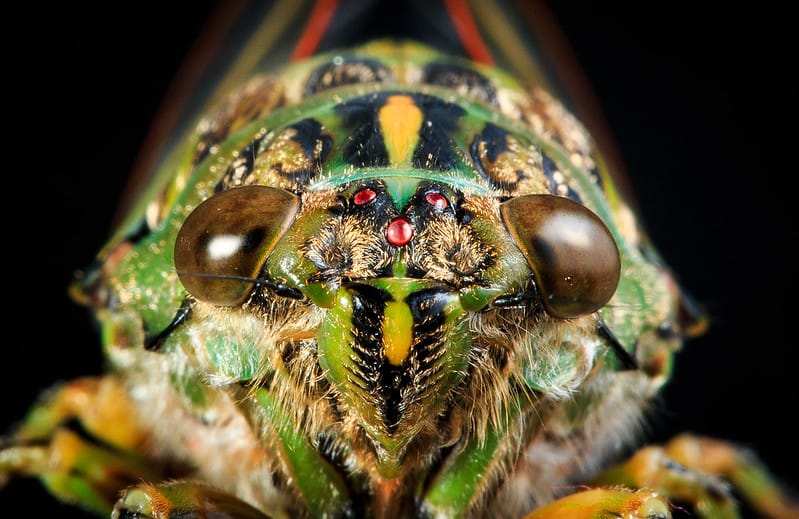
Hampshire | Conservationists have returned cicadas to the New Forest after they went extinct in the 1990s. The musical insects were once widespread across the national park, but they are believed to have disappeared due to changes in land management. Now, eleven cicadas captured in northern France have been released by the Species Recovery Trust into a specially created habitat at Paultons Park. The effort came after the team returned empty-handed from a collection trip to Slovenia last summer. The species’ young spend at least four years underground, meaning the team will not know if the reintroduction efforts have been successful until 2029 at the earliest. If it works, the team plans to release the adults at secret locations in the New Forest to re-establish a population. The BBC and Daily Echo covered the story.
Elsewhere:
- Natural Resources Wales has released 140 water voles on the River Thaw in South Wales after a first batch was successfully reintroduced last summer.
- A farm-turned-nature reserve near Stretham in Cambridgeshire has seen a ‘massive increase’ in breeding lapwings, reports the BBC.
- The Wild Landfill project has turned a disused landfill on Anglesey into a ‘flourishing haven’ for wildlife and education, including 50 acres of wildflower meadows.
- The Cambridgeshire draft Local Nature Recovery Strategy aims to protect habitats under ‘intense pressure’, including chalk streams and historic orchards, reports the BBC.
- Buglife has created five hectares of wildflower-rich habitat across Richmondshire as part of the Coast to Coast B-Line project, reports the Northern Echo.
- Volunteers for the Tees River Trust have planted hundreds of seagrass plants in the Tees Estuary after two failed attempts in recent years, reports the BBC.
- Dumfries and Galloway Council is set to approve plans to create a ‘haven’ for sandwich terns at Loch Ryan to mitigate the impact of two wind farms off the Norfolk coast, reports the BBC.
- Results from a project by Natural Resources Wales tracking salmon smolt in the River Usk have revealed that the fish struggle to overcome man-made barriers during drier years.
- A single whitebeam tree which survived a devastating wildfire on Arran will be the ‘first tree of hope’ as rangers look to rebuild the landscape, reports the Times.
- National Highways has begun work building Gloucestershire’s first green bridge, which will span eight lanes of traffic on the A417, reports the New Civil Engineer.
- Ecologists are celebrating the return of rare dormice to a nature reserve on the Isle of Wight after a six year absence.
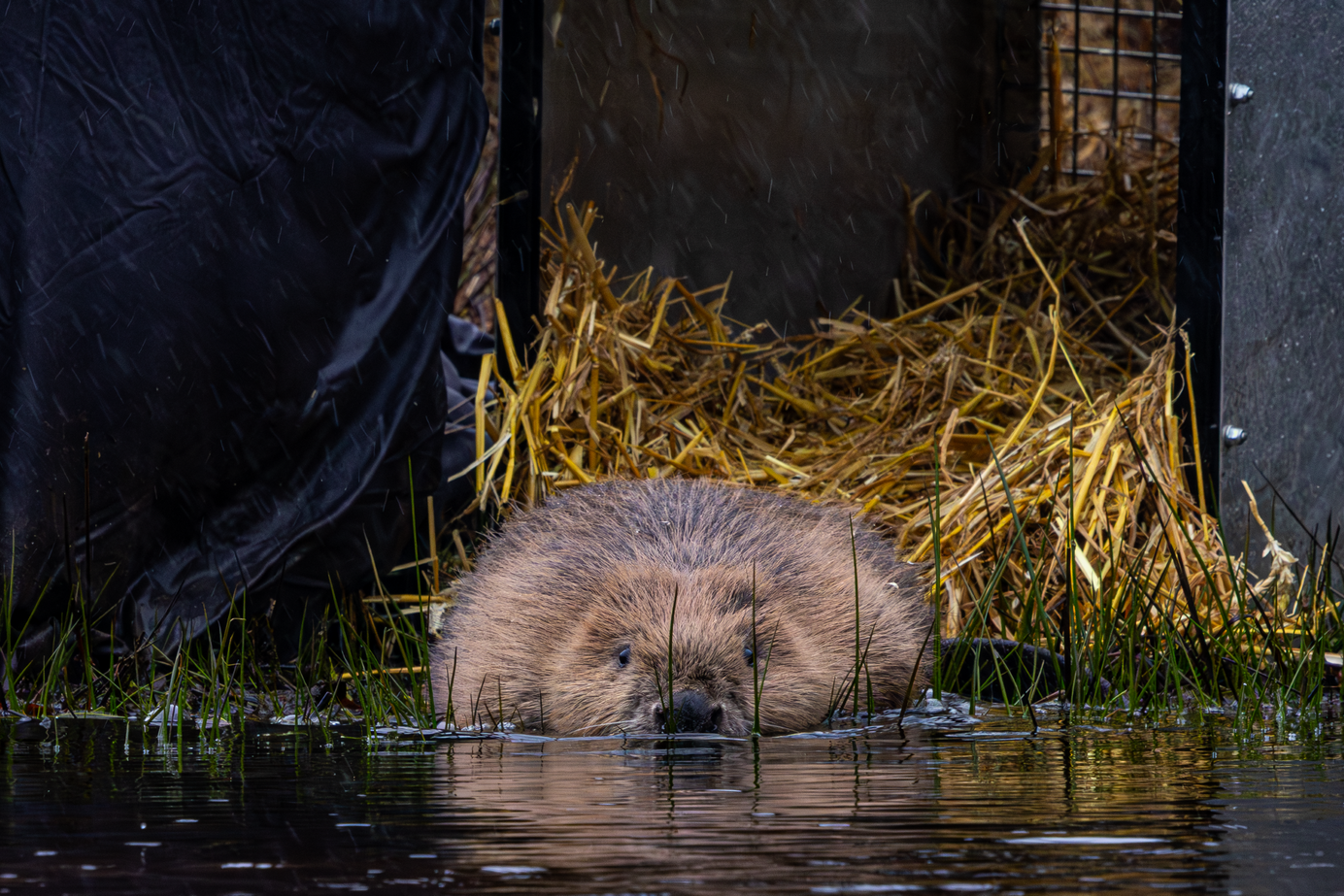
- Beavers released in the Cairngorms earlier this year have successfully given birth to two kits, making them the first wild-born beavers in the area in more than 400 years.
Reports
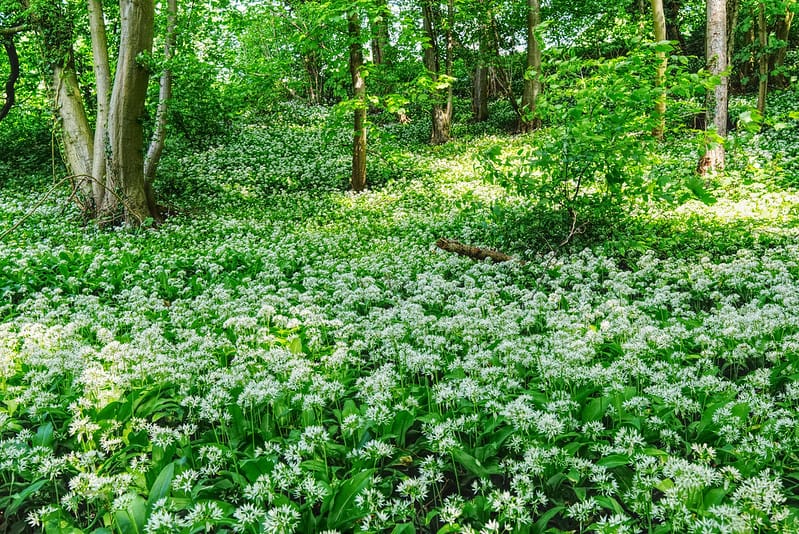
Harvesting | Can sustainable harvesting of wild plants and fungi help to restore landscapes? This is the topic of a report led by TRAFFIC, a Cambridge-based NGO focused on the legal trade of wild species. The report features a toolkit to help practitioners assess, plan, and implement sustainable harvesting methods to strengthen both nature and local economies. The report includes a range of international case studies, including East Lothian in Scotland. In this example, botanist Dr Sally Gouldstone planted a wildflower meadow on degraded land, and developed a company selling a variety of products from the harvested botanicals, including blackcurrant, bog myrtle and chamomile. The company’s sustainable practices include harvesting no more than 25% of any single species, and carrying out fauna and soil surveys to monitor the health of the meadow. Read more about the toolkit in the Applied Ecologist.
Dogs | A collaboration between the National Trust and the University of Exeter has created a guide to help manage the effects of dog walking on biodiversity. The UK’s growing population of pet dogs currently stands at around 13.5 million. Issues include disturbing or chasing wildlife, the spread of diseases, and water pollution from medical treatments. In the report, named ‘Paws for Thought’, researchers found that different organisations and landowners in the UK take vastly different approaches to managing dog walking, which can be confusing for owners. To address this, the authors suggest a standardised approach using a traffic-light zoning system: green zones would welcome dogs without restriction, while amber zones would require ‘paws on paths’ and red zones indicate sensitive sites in which dogs aren’t allowed. The Conversation summarised the research.
Seabirds | Fishing vessels in the North Sea discard large amounts of offal – fish waste – as common practice, with seabirds naturally making use of this as part of their diets. Now, a report by Natural England examines whether targeted offal provisioning could be used as a means of bolstering specific seabird populations. Using the Flamborough and Filey Coast SPA as a case study, they found that, from the species present, black-legged kittiwakes were most likely to benefit from targeted offal provisions. Energy models showed that, depending on the amount of offal gathered from fishing boats, between 1,000 and 6,000 birds could be supported during the breeding season. However, the report also identified a severe lack of research into the impact of an offal-rich diet on seabirds, and stated that it could have the potential for detrimental health effects and trophic cascades. Therefore, further research would be needed.
Science
Marine | Vulnerable species – including sharks, rays and oysters – could thrive as oceans warm across the northwest European shelf, according to a study in Marine Biology. Researchers from Cefas used ecological niche models to analyse how climate change could affect the distribution of 19 threatened marine creatures. They found that, overall, mobile species would be able to cope better, while static species could struggle. The creatures with the largest increases of suitable habitat included the spurdog shark, thornback and undulate rays, and – surprisingly, due to their recent declines – native oysters. Meanwhile, the ocean quahog – a clam that can live more than 500 years – was predicted to struggle. Projected changes for reef-forming species, such as the sea pen, could have knock-on impacts to ecosystems and food webs. Cefas said the analysis would help the government to ensure that MPAs continue to protect species even as their ranges shift. The BBC covered the research.
Rewilding | An international study has found that setting aside at least 20% of agricultural land for rewilding and adopting wildlife-friendly practices on remaining farmland could reverse biodiversity declines while maintaining food production. The paper sets out a blueprint for integrating nature recovery and farming that ‘moves beyond land sparing versus land sharing’, according to co-author James Bullock from the UK Centre for Ecology & Hydrology. The proposal involves setting aside ‘core conservation areas’ for habitat creation, tree planting and the introduction of key species. These rewilded areas would be connected by green corridors, while wildlife-friendly measures on small areas of farmland would contribute another 10% of land toward the goal of restoring 30%. The paper also outlines how farmers could compensate for the loss of production through increased quality of crop yields, cutting on-farm costs by reducing inputs, and taking advantage of government payments for supporting biodiversity. Phys.org covered the research.
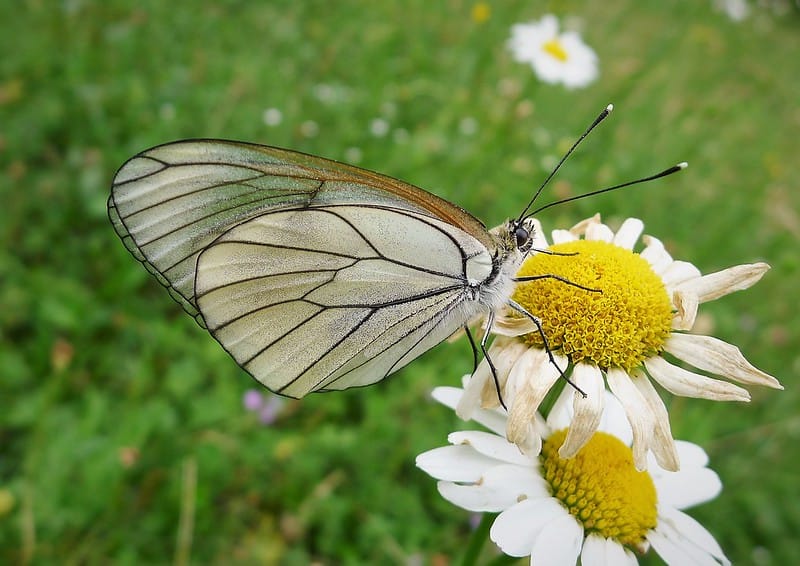
Butterflies | When it comes to species translocations, there are many questions that conservationists need to consider. A team of academics and conservationists – including from the Knepp Estate – have set out a framework to improve decision-making, particularly regarding insects. It asks why the species became extinct in the first place, whether it has any chance of recolonising naturally, and if the climate and habitat is suitable at the proposed site. The team then used this framework to assess the potential for reintroducing the black-veined white butterfly to England, a century after its extinction, and conclude that such a project would have every chance of success. ‘As a conspicuous species able to visit flowers in gardens, as well as in wilder habitats, we believe that this is likely to be widely supported by conservationists and by the public,’ they conclude. The paper was published in Insect Conservation and Diversity.
Driftwood
Culture | In Aeon, zooarchaeologist Sarah Newman challenges the idea of ‘human exceptionalism’. She argues that culture – long considered unique to our species – owes far more to animals than usually thought. Her essay looks at the role of other creatures in art, architecture and agriculture: how early human mark-making interacted with marks left by bears, how early settlements arose within landscapes shaped by beavers, and how the domestication of crops was inspired by the seeds spread by bison. These interactions happened when the line between humans and other species was ‘more porous, when humans were discovering how to be human,’ she writes: our culture evolved not through defining ourselves against nature, but through ‘interactions, observations, mimicry, creativity and experimentation.’
Food | The problem of stranded assets has long been considered in the context of the energy transition – the money lost when a coal plant shuts early, for instance – but rarely in food production. Yet, as diets become more plant-based, the demand for meat-based infrastructure like slaughterhouses will also diminish, argues Stephanie Walton, a researcher on food systems and sustainable finance, in the Conversation. Hundreds of billions have been invested in meatpacking plants alone, and, with the return on these at risk, food companies are lobbying governments hard. Walton considers various solutions, including paying food producers to phase out harmful assets themselves. That may sound controversial, but it is ‘how abolitionists contributed to ending slavery in the UK,’ Walton points out.
Geology | In Noema, geologist and author Marcia Bjornerud explores the multilayered world of geology through the lens of a garnet. During a trip to Suffolk, Bjornerud visits the ancient site of Sutton Hoo, and admires the ‘iconic’ helmet which is inlaid with ‘fiery crimson garnets’. She writes: ‘In this low-lying salt-marsh terrain, the presence of garnet — a metamorphic mineral forged in the interior of mountain belts — matched the improbability of finding a ship buried in a grassy plain.’ From here, the author tours the fascinating history of stone, from its critical role in Earth’s tectonic habit of subduction to its capacity as ‘a diarist and archivist bearing chronicles of bygone worlds and subterranean realms.’ You will also learn about its fruity etymology, and the origins of the popular myth that eating carrots will lead to sharper eyesight.
Further reading:
- In the Critic, Fred de Fossard argues that the Lake District should not be stripped of its Unesco status, as conservationists recently suggested.
- In an extract from her new book, published in Atmos, climate scientist Dr. Kate Marvel looks at possible scenarios for the future of the earth.
- The BBC looks at how one farming family in Berkshire is planting grapevines to adapt to climate change.
- Wicked Leeks asks what the Right to Roam could mean for farmers.
- An explainer in the Guardian addresses key questions for swift conservation.
- A feature in the Times looks at how efforts to protect the seabed off the Isle of Arran could inspire similar efforts around the world.
- In a world of stress and social media, the Guardian has a list of ten easy ways to pick up the hobby of bird-watching.
Happy days
Walking | 69-year-old Robert Marshall first walked the West Highland Way in 1993. He has now completed the challenging long-distance route 97 times, and plans to hit the milestone of 100 by the time he turns 70 in November. The West Highland Way is a 96-mile route between Milngavie near Glasgow and Fort William, taking in the shores of Loch Lomond and the wilderness of Rannoch Moor. Marshall says that, despite the repetition, he is ‘always learning things about the landscape’. When he is not walking the paths, he volunteers to help repair them. Read more in the BBC.
Subscribe to our newsletter
Members receive our premium weekly digest of nature news from across Britain.
Comments
Sign in or become a Inkcap Journal member to join the conversation.
Just enter your email below to get a log in link.