
Good morning. Today we are publishing a special feature on Britain's ancient trees. It seems an appropriate time to do so: as we were putting the final touches to this article yesterday, the news broke that Major Oak, one of the most revered ancient trees in Europe, had died, at least partly down to human factors.
All trees die eventually, of course, and Major Oak was perhaps one of the most cherished and protected trees in England. More widely, however, we are failing to protect our most venerable individuals: there is no legislation designed specifically to protect important trees.
Who can walk past the hollowed, gnarly trunk of an old oak and not feel the tug of history? We revere our built heritage, which is what makes it so extraordinary that our natural one is overlooked. But momentum is building. Today, Coreen Grant explores the movement to conserve a remarkable heritage.
Please share, leave a comment, or subscribe to support our work.
In 1920, in eastern Italy, the peasants of Capradosso gathered at the Sanctuary of the Madonna of Montemisio and threatened to behead the priest if he did not prevent the felling of an ancient oak.
The tree had once been part of a larger forest, but the priest had sold off the timber to make sleepers for the Adriatic Railway. By the time the foresters reached the final oak, the farmers had had enough. They warned the priest that his head would meet the same fate as the trunk unless he stopped the destruction.
The priest must have been sufficiently convinced that they meant what they said, because the oak remains standing today – albeit bearing the scars from the first blows of the axe.
Today, Italians no longer need to threaten local clergy in the name of arboreal protection: a nationwide list of Monumental Trees means that the most precious specimens are protected by law.
In Britain, there are no such protections. Across the island you will find yews older than Stonehenge, oaks that stood during the Wars of the Roses, beeches that were saplings when Jane Austen wrote her novels. Yet age confers no special treatment in law: our ancient trees are uniquely vulnerable to vandalism, mismanagement and neglect.
This is in stark contrast to buildings, monuments and archaeological sites. In 2020, a 250-year-old tree known as the Cubbington Pear was felled to make way for the HS2 railway – an act of legal destruction that went ahead with the explicit permission of the authorities, despite widespread outrage from locals and campaigners. Compare that with the £45,000 fine levied on a Shropshire farmer who demolished a listed 17th century dovecote on his land. Built heritage is consistently afforded a level of protection that nature is not.
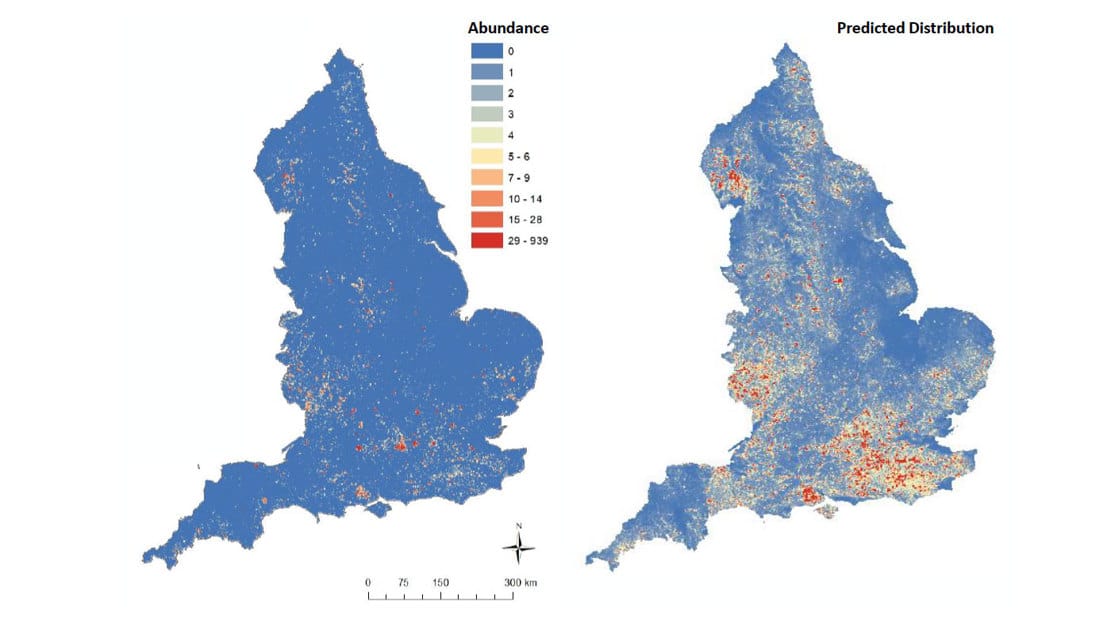
Despite this, Britain has the largest collection of ancient trees in northern Europe. No one knows quite how many. The Woodland Trust has mapped more than 233,200 on its Ancient Tree Inventory, though more remain undocumented on private land. A separate study, backed by the Woodland Trust, estimated that there could be as many as two million ancient and veteran trees in England alone.
This remarkable heritage is the product of historic land management. Many trees survived in royal hunting forests and medieval deer parks while European woodlands were cleared for farms, fuel and timber. Others were planted in hedgerows and remained standing even after the hedges themselves were ripped out. This accident of history left behind a precious resource: today, legislative oversight is putting it in peril.