Wildfire & Drought
The latest news on nature and conservation in Britain.
National news
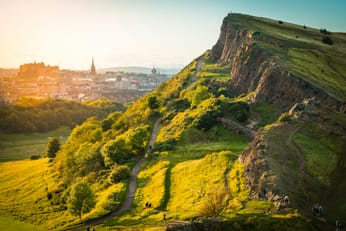
Fire | The UK is experiencing its fourth heatwave of the summer, with temperatures soaring to highs of 33C and triggering yellow health alerts from the Met Office. Serious wildfires broke out on Arthur's Seat in Edinburgh and on the North York Moors, with further warnings in the New Forest and across southwest England. The number of urban fires may be a sign of things to come, as scientists at Imperial College London warned of the growing threat of ‘firewaves’ – a term that describes multiple urban wildfires triggered by periods of hot, dry weather. Guillermo Rein, professor of fire science, believes that London may be at risk of one this weekend. Across the country, firefighters are already pushed to the limit, reports the Guardian. The year is on track to break 2022 records, with crews already tackling 856 wildfires. ‘This is against a backdrop of sustained cuts in funding and reducing firefighter numbers,’ said Phil Garrigan, chair of the National Fire Chiefs Council.
Water | The heatwave is also impacting water supplies. On Monday, the National Drought Group met to discuss Britain’s ongoing shortfall, which it described as a ‘nationally significant incident’. Following a meeting of the Welsh Government’s Drought Liaison Group on Thursday, southeast Wales was officially moved into drought status, reports WalesOnline: the region is experiencing the driest six-month period in nearly 50 years. Natural Resources Wales warned that the majority of river flows across the country are low or exceptionally low, as are groundwater levels. The Scottish Environment Protection Agency warned of critical water scarcity in rivers across the east, reported the BBC. To help the situation, the Environment Agency suggested deleting old emails and photos from the cloud to save water – advice which a veteran data centre analyst called ‘really, really silly’. The Times reported the comments.
Species | More than 150 threatened species have been bolstered, thanks to a multi-million pound grant scheme run by Natural England. Over the past two years, the agency distributed £13 million through the Species Recovery Programme’s capital grants scheme, supporting conservation actions including captive breeding, habitat creation and translocation. Among its successes include the reintroduction of breeding black grouse to the North York Moors and the first wild-hatched red-billed chough chick in Kent for more than 200 years, with further examples listed in the government announcement. There are now plans to extend the programme for another four years. That work will be supported by the newly published Threatened Species Recovery Action Guide, which includes information on more than 1,000 species. The Guardian covered the news, with local projects highlighted in the Daily Echo and the Dartmouth Chronicle.
In other news:
- The RSPB has described the Scottish Seabird Conservation Action Plan as ‘sticking plaster to a gaping wound’, reports the Herald.
- Moorland estates have been forced to scale back or cancel shoots after two poor breeding seasons for grouse, reports the Times.
Across the country
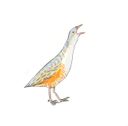
Yorkshire | The iconic call of the corncrake could soon be heard across Yorkshire once more, thanks to the efforts of the Friends of the Lower Derwent Valley Conservation Group. A brood of chicks arrived in May and are being reared for release in early September, reports the BBC. The conservation group is working with local landowners to restore the hay meadows and breeding habitats required to sustain the birds in the long-term. ‘It is not just about one bird, it’s about restoring an ecosystem that supports a wide array of species,’ said Mike Jackson, the chairman of the group. ‘This project is the result of years of collaborative work, local stewardship, and unwavering commitment to conservation.’ The York Press also covered the project.
Northumberland | Last week, we reported on a wide-ranging survey by the Missing Lynx project, revealing widespread support for the return of lynx to Northumberland. But the councillor for the Kielder area – where reintroduction has been proposed – is not convinced. John Riddle told the Chronicle that he and other farmers had not engaged with the survey and did not support the return of the predator, which would be a ‘retrograde step’. Lynx, he added, had been ‘done away with’ because they caused problems for livestock, and implied that disgruntled locals would do the same again, and ‘find ways and means of disposing of them.’ In response, Dr Deborah Brady of the Missing Lynx Project emphasised that the extended outreach carried out by the partnership, as well as the evidence from Europe that farmers and lynx can co-exist.
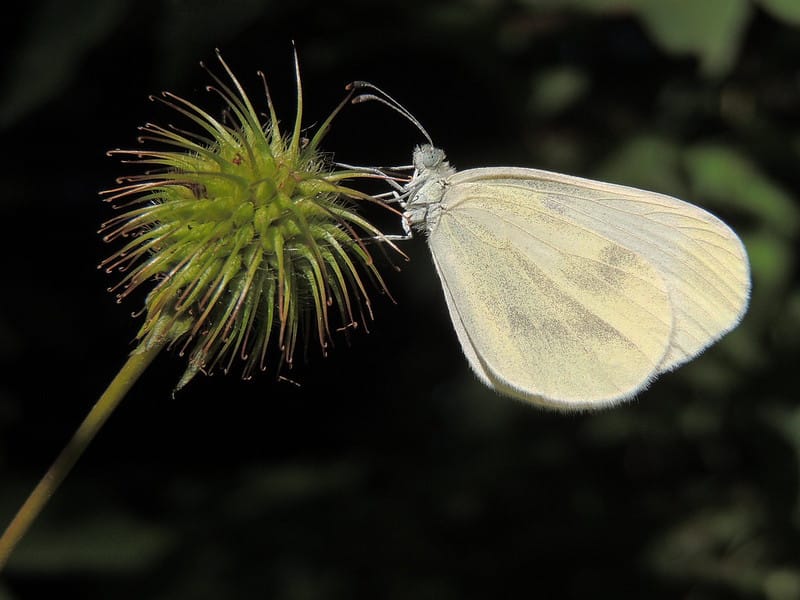
Powys | The rare Wood White butterfly has been rediscovered in Wales, several decades after the last colony died out in the southeast. Following a sighting in May at a site owned by Natural Resources Wales, butterfly experts went searching other forests, only to find populations in a further three locations, including a female laying eggs. It is probable that the butterfly arrived from across the border in Shropshire, where Butterfly Conservation has been working with Forestry England to help the Wood White expand. The news follows a summer of encouraging butterfly activity, which Patrick Barkham greets with exuberance in the Guardian. Though the resurgence is more down to the warm weather than to human intervention, he writes, it nonetheless provides a reason for hope: ‘Open the door a tiny crack to animals, plants and fungi and they will stampede through it.’
Elsewhere:
- More than 125,000 metres of fishing line have been recovered along the northeast coastline, reports the Northern Echo.
- The Farne Islands have now been in the care of the National Trust for a century, reports the BBC.
- Northumbrian Water will install 390 devices to track water quality in rivers between Northumberland and North Yorkshire over the next four years, reports the BBC.
- The North Wales Wildlife Trust is considering a Welsh language name change for one of its reserves, reports Nation.Cymru.
- Wormwood Scrubs, an area of common land in London, will get new ponds, meadows and grasslands, thanks to HS2 funding, reports the BBC.
- A rare grasshopper has returned to Norfolk after an 86-year absence, according to Natural England.
- The protest group Reclaim Our Moors has revealed plans to take Moscar Moor, near Sheffield, into community ownership, reports the BBC – despite the fact it's not for sale.
- A pod of 23 pilot whales, including a pregnant female, have died following a mass stranding in Orkney, reports the BBC.
- In other stranding news, a rare Sowerby’s beaked whale – a rare deep-sea species – washed up on a beach in Norfolk this week, reports BirdGuides.
- The creation of 50 private allotments in the South Downs has angered residents, who say it is ruining rewilding efforts, reports the BBC.
- A record three white-tailed eagle chicks have fledged from two wild nests, including the first in Dorset for over 200 years, reports the Times.
- Natural Resources Wales have increased the quota for cockle collection in the Dee Estuary due to unusually high numbers, reports Deeside.com.
- Drones are being used to scatter the seeds of native trees over wildfire-damaged land on the Glenuig Estate, reports the BBC.
- A grapefruit tree, brought to London from Granada in the 1980s by a resident, has been given protected status, reports the BBC.
- Natural England has announced the expansion of the Stiperstones nature reserve, encompassing over 1,000 acres of upland habitat.
Reports
Rainforest | Less than a third of people living on Scotland’s west coast are aware of the rainforest on their doorstep, according to a survey for the Alliance for Scotland’s Rainforest. Even within the rainforest zone itself, only 39% are aware the rainforest exists. However, once they learn of its existence, the majority are enthusiastic about protecting and expanding it, particularly through volunteering. Despite the rise in attention afforded to this habitat in the last few years, the survey shows how much work remains to be done, according to Diane Leishman of Our Rainforest Futures. ‘The people who live and work in the rainforest zone are essential to securing its future, so we need them to know it is there,’ she said.
Food | UK food security is under threat because of climate impacts not just at home but abroad. A report from the Energy & Climate Intelligence Unit (ECIU) explores the links between UK food imports and climate-induced migration. Analysis shows that, last year, the UK imported £3 billion-worth of food from the 20 countries with the highest numbers of internally displaced people. This means that, over time, there will be fewer people to grow the food that ends up in British kitchens. The price of Pakistani rice, for instance, rose by a third between 2022-23, following a season of disastrous flooding that displaced millions. ‘If we are to continue to import the foods from abroad we can’t grow here, the UK is increasingly going to have to support these farmers through climate finance,’ said Gareth Redmond-King of the ECIU.
Maerl | It’s not here yet, but the Société Jersiaise has promised that it will soon publish a report on Jersey’s maerl habitats, bringing together existing knowledge through a review of scientific literature, local research and expertise, and archival material. Maerl beds are a relatively unknown habitat, created by slow-growing red algae – or ‘shagpile carpet made up of purple twiglets’, as the Wildlife Trusts put it. The report will be designed to raise awareness and appreciation of maerl, and to guide future research and conservation. ChannelEye reported the news.
Science
Connection | Nature connectedness has declined by more than 60% over the last two centuries, according to a study published in Earth. The paper, authored by Miles Richardson of the University of Derby, tracked trends – including urbanisation, opportunities, orientation, and intergenerational transmission – using computer models. Disconnection from nature is a problem because it undermines both pro-environmental action and human wellbeing. Overcoming it, however, will prove difficult: even with transformative interventions, projections showed that disconnection is locked in through to 2050, ‘emphasising the need for urgent, sustained action’. Engaging children with nature will be key to reversing the trend. Read more in the Guardian.
Fungi | Ripartites metrodii is a species of fungi that, until recently, had only been found twice in Britain – on both occasions in England. In September last year, however, it was observed in the Highlands, growing in a mature coniferous plantation belonging to the Forestry Commission. This discovery has implications for the conservation of such sites, according to a paper in Field Mycology. Though plantations are typically seen as having low biodiversity value, they are often home to a rich array of fungi, which should be considered in their management. This is not easy, however, considering that plantations are grown for their timber, and a rare species is no guarantee of protection: recently, in Wales, a spruce forest was felled soon after the discovery of the extremely rare Chamonixia caespitosa fungi.
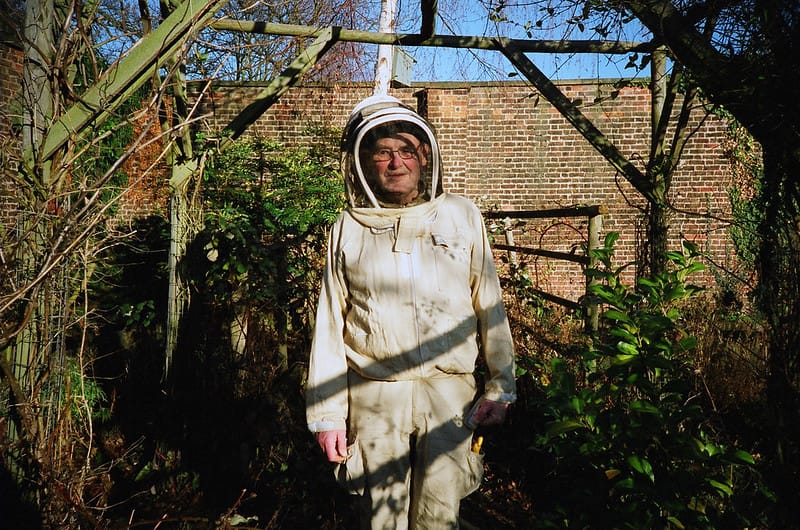
Bees | Urban beekeeping is booming, which has led to an increase in honeybees in cities. In a literature review, published in Ecology and Evolution, honeybees were the most abundant species of bee in around 70% of datasets studied, which included 15 cities across five continents. This pattern persisted across regions, regardless of whether honeybees were a native species. In some cases, honeybees comprised more than 50% of individuals. Although the impacts on wild bees and other pollinators are not yet fully understood, stressors may include competition, disease and parasites. Solutions, the authors conclude, include regulations and limitations on managed and feral honeybee populations, although interventions should be tailored to the city in question.
Driftwood
Grouse | A feature in the Times explores two approaches to land management, epitomised by neighbouring moorlands in the Peak District: the private Stalybridge estate, and the RSPB’s Dove Stone nature reserve. The debate centres on prescribed burns: should landowners set alight their heather? The question will come under the spotlight next month, with Defra expected to confirm new bans on peatland burns. Intentional burning reduces wildfire risk, argues Jono Simmonds, the gamekeeper at Stalybridge. But wildfire would be less likely in the first place if the peatland were returned to a more natural, wetter condition, argues the RSPB’s Tom Aspinall. At the centre of the controversy is grouse: burning also creates fresh heather shoots for the birds to eat, before hunters attempt to bag them come the arrival of the ‘Glorious Twelfth’.
Troy | The ancient Anatolian city of Troy was a place that ‘quietly cracked under the weight of its ambition’, according to archaeological research. In the Conversation, prehistorian Stephan Blum writes that the growing industries of Troy placed the environment under increasing strain: limestone was extracted from quarries, riverbanks dredged for clay, forests stripped bare for timber and firewood, agriculture intensified to feed a booming population. Society eventually collapsed – but then, it adapted and recovered, underpinned by a more resilient strategy. The story of the city is both a lesson and a message of hope, writes Blum. ‘It reminds us that sustainability is not a modern ideal – it is a timeless necessity.’
Rights | Much has been written about the rights of nature recently, but a column in Prospect Magazine makes for particularly interesting reading. Written by an anonymous lawyer, it examines the history of ‘incorporation’ – the ‘creation of a body out of thin air’ – in the context of everything from companies to ships. Why not nature, too? The column rejects the ‘knee-jerk argument’ that nature should not have rights because it lacks the capacity to make decisions, pointing out that other people can be appointed to act on behalf of humans and companies. ‘If a ship and the corporation that own her can both be legal persons, why not the river on which the ship is sailing and some of the protected species looking on?’ the column concludes. ‘None of these are natural persons, so why are only some and not others given a special status at law?’
Further reading:
- Scottish landowners need to prepare for increased wildfire risk, writes Jamie Williamson, manager of Alvie & Dalraddy Estates, in the Scotsman.
- The i paper looks at a growing trend among councils to rewild their lawns.
- In Byline Supplement, Adam Ramsay argues for the reintroduction of wolves to Scotland.
- For the Guardian, Patrick Barkham visits Canvey Wick – the abandoned Essex oil refinery that is now a haven for wildlife.
- Warming temperatures are bringing a remarkable array of new creatures to UK waters, reports the BBC.
- In the New Yorker, Elizabeth Kolbert writes about a new photography book, which focuses on recreations and simulacra of the natural world.
Happy days
Climbing | Adults need to let their children climb trees, and maybe get up there with them. For the Institute of Family Studies, the American historian Dixie Dillon Lane asks when, and why, she stopped clambering into the canopy. As adults, she writes, what counts as playing – scrolling, bingeing, exercising to excess – can leave us feeling dissatisfied or worse. We owe it to our children to let go of our inhibitions and model ‘true play’, even if it initially feels unsafe. ‘A child who does not run or jump or climb or get messy risks becoming an adult who is frightened of everything but the couch and the screen,’ she writes.
Subscribe to our newsletter
Members receive our premium weekly digest of nature news from across Britain.
Comments
Sign in or become a Inkcap Journal member to join the conversation.
Just enter your email below to get a log in link.