Wildlife Legislation & IPCC Report
The latest news on nature and conservation in Britain.
National news
Legislation | The Scottish government has introduced legislation to licence grouse moors and restrict burning on peatlands. Officially named the Wildlife Management and Muirburn Bill, it aims to tackle raptor persecution, as well as protecting other types of wildlife by banning glue traps. The news has been widely welcomed by environmental charities, including the RSPB and Wild Moors, who said the long-awaited legislation will make a big difference in a nation where 15% of land is used for grouse shooting. Meanwhile, the Scottish Countryside Alliance said it was “extremely concerned” that the bill would undermine effective wildlife management, and the British Association for Shooting and Conservation (BASC) argued it would “curtail the ability of land managers to effectively protect Scotland’s biodiversity and support rural livelihoods.” FarmingUK and the Herald reported the news.
People | A project by WWF, the RSPB and the National Trust has produced The People’s Plan for Nature, a world-first report created by the public. The plan has been produced in two stages: the first involved an open call to the public for examples of nature restoration, which fed into the second phase, the UK’s first nationwide citizen’s assembly on nature. The assembly was made up of 100 randomly selected individuals, representing a diverse group of British society brought together to find common ground. The resulting plan sets out recommendations for reversing nature’s decline, including increasing access to nature, urgently restoring rivers, and encouraging a national conversation around changing diets. In an article for the Guardian, one member of the citizen’s assembly wrote about the process, and how surprised she was that “far away from Westminster, a group of people with differing standpoints could reach consensus on divisive issues.” The Independent covered the news.
Footpaths | The government has U-turned on its promise to scrap the deadline for registering historical footpaths and rights of way before they are lost, reports the Guardian. There was previously a 2026 deadline for registering these timeworn routes, but it was abandoned when campaigners complained that it put too much pressure on local councils. However, it was revealed this week that a deadline of 2013 has been reinstated as part of the levelling up bill. The Ramblers believe that there is already a backlog of 4,000 applications, which face being lost due to the decision. Inkcap Journal covered the issue during the pandemic.
In other news:
- Ministers ignored recommendations by Natural England to boost biodiversity targets, according to documents obtained by Unearthed.
- MPs have voted in favour of a controversial ban on importing hunting trophies into the UK, reports the BBC and the Guardian.
- The government has backed plans for water regulator Ofwat to take action against water companies paying dividends without meeting performance standards.
- Buglife has raised concerns about declining populations of crab and lobster in UK seas. The Times reported the news.
- NatureScot has asked farmers and land managers to share any sightings of adders in a nationwide survey.
- Representatives from Scotland’s fishing industry have argued that plans to introduce Highly Protected Marine Areas need a “radical rethink”, report the Herald and the Scotsman.
Across the country
Kent | The bison of Wilder Blean in Kent have been joined by Exmoor ponies, Iron Age pigs and longhorn cattle, as part of a joint rewilding project run by Kent Wildlife Trust and the Woodland Trust. The grazers will mimic the impacts of the megaherbivores, like aurochs, that would have roamed such landscapes in the past, opening up the canopy, creating scrubby areas and disturbing the soil. “They were inextricably linked with their habitats and we want to mimic that using the animals available to us now,” said Alison Ruyter, lead on wilder grazing at Kent Wildlife Trust. The Guardian and the BBC covered the news.
Ecclesbourne | Derbyshire Wildlife Trust is working with partners to return Atlantic salmon to a stretch of the River Ecclesbourne, after an absence of more than a century. The project will involve improving water quality and re-wriggling a section of the river back to its original channel. The new channel will bypass a weir, re-creating a route for migrating fish to access an additional 28km of river. A habitat assessment by the Wild Trout Trust identified a large number of potential spawning areas for Atlantic salmon, which is a priority conservation species. Elsewhere, the Trent Rivers Trust has planted more than 2,000 trees along the River Dove in Staffordshire to protect the local salmon population, reports the BBC.
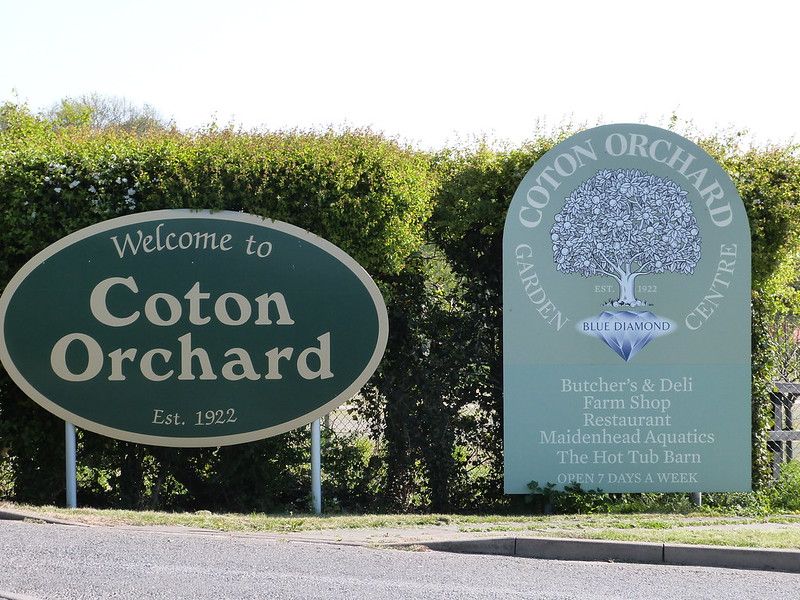
Cambridge | Hundreds of trees are set to be felled from an orchard dating back to 1922, after Cambridge County Council voted to approve a new public transport busway that would cut through the site. The route has been proposed as a way of cutting carbon emissions, and the council deputy leader has promised that biodiversity net-gain will be built into the plan. But Steve Oram, the orchard biodiversity manager at the People’s Trust for Endangered Species, said that the damage “cannot be compensated for”. Thousands of people have signed a petition calling for the trees to be saved. The Guardian, the BBC and the Daily Mail covered the news. Separately, Over half a million trees planted by National Highways along a 21-mile stretch of carriageway in Cambridgeshire have died, reports Sky News and the Times.
Elsewhere:
- Hawnby village in North York Moors National Park is shifting to dark skies-friendly lighting to cut light pollution, reports the BBC and the Northern Echo.
- A “tiny forest” of around 600 saplings and shrubs has been planted in the middle of a Newcastle housing estate, reports the BBC.
- The RSPB has confirmed the loss of a satellite-tagged hen harrier from a grouse moor in the Peak District after the tag was cut off, reports BirdGuides.
- A porpoise washed up on the coast of East Yorkshire is the UK’s first case of avian flu in a marine mammal, reports the Hull Daily Mail.
- A freedom of information request has revealed that Plymouth City Council has felled 1,327 trees since 2010, but planted 8,159, reports the Plymouth Herald.
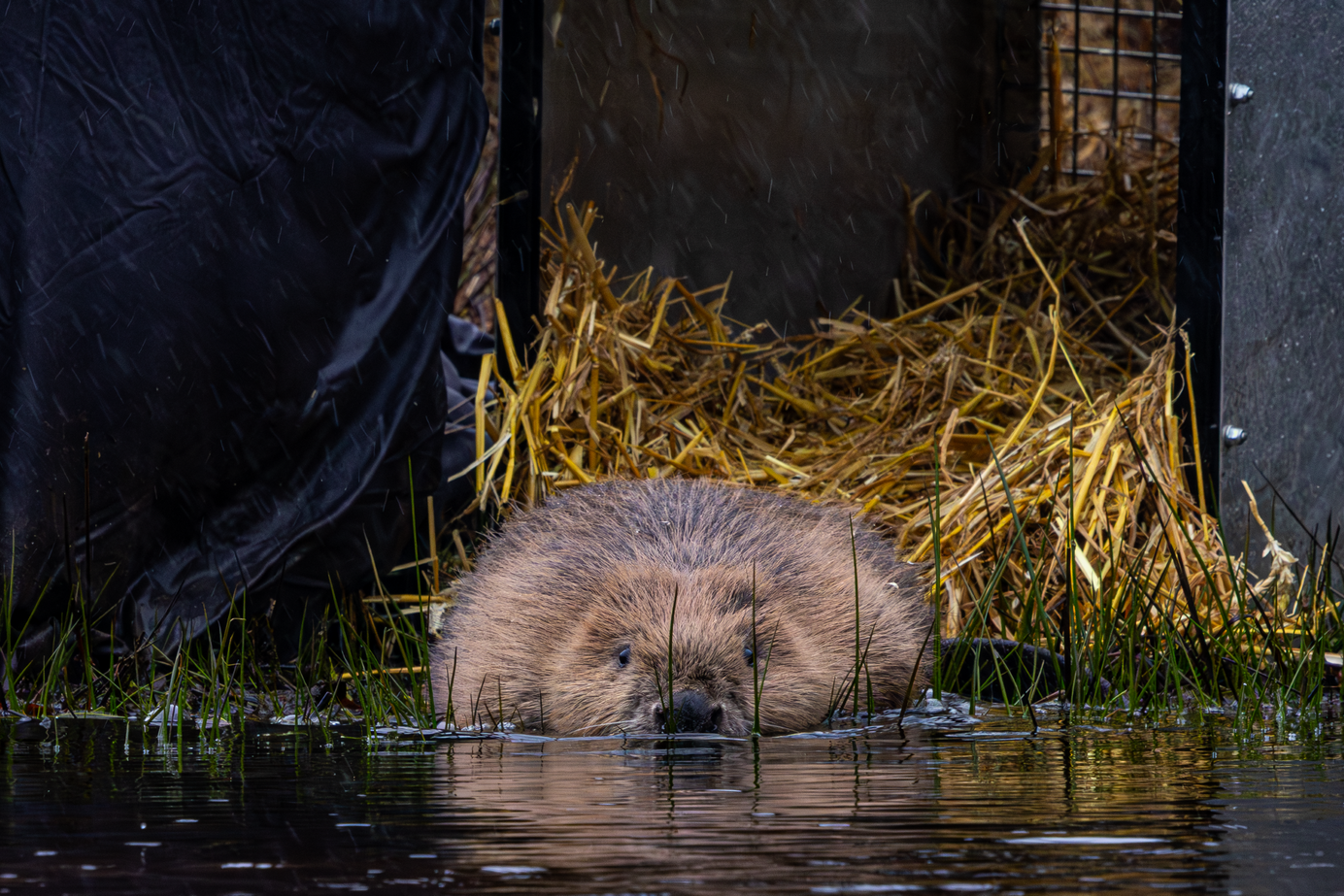
- The Lost Gardens of Heligan in Cornwall has rehomed a pair of beavers in a purpose-built enclosure, reports the Beaver Trust.
- Locals fear that pollution from a building site is endangering salmon in the River Dee, reports the Press and Journal.
- Funding from the Woodland Trust is being used to create 16 hectares of woodland in south Yorkshire, to become part of the Northern Forest.
- A man from Monmouthshire has been fined £1,760 for damaging three acres of dormice habitat, reports ENDS.
- The Shark Trust has issued a plea for the return of the head of a dead shark found on a Hampshire beach so it can be analysed, reports the BBC.
- Herts and Middlesex Wildlife Trust has purchased Astonbury Wood, an ancient woodland which will now become a nature reserve.
- Elton Reservoir, a popular birding spot in greater Manchester, is being threatened by plans to build 1,250 homes on greenbelt land, reports BirdGuides.
- Staffordshire Wildlife Trust is partnering with the Newt Conservation Partnership to offer fully funded wildlife ponds to farmers and landowners.
Reports
Climate | The IPCC has published a major report on climate change, summarising six key pieces of research over the last five years. Synthesis reports are published every six to seven years, and the last – in 2014 – provided the main scientific input to the Paris Agreement. This one sets out how rapid cuts to fossil fuels could avert the worst effects of a warming climate: the UN chief Antonio Guterres has called it a "survival guide for humanity". Alongside investing in renewable energy, the report highlights the crucial role of nature in affecting carbon levels. Healthy forests, peatlands, coastal wetlands and grasslands could reduce global emissions by roughly 7 gigatonnes of CO2 per year – but only if they are protected, restored, and supported to adapt to the changing climate. The report also emphasises that climate change is now a political question as much as a scientific one, and governments must transform rhetoric into action if they are to avoid disastrous tipping points. The BBC, the Scotsman and ENDS covered the story, while BBC Future takes a wider look at the state of the climate in 2023.
Greenwash | A report by the Changing Markets Foundation has revealed that greenwashing in the food industry is “rampant”. An investigation found that an array of unfounded environmental claims are being displayed on even the most carbon-intensive products, such as beef. Climate claims including ‘carbon neutral’, ‘climate positive’ and ‘net-zero’ were most prevalent, although other forms of more subtle greenwashing, such as images of grazing cows on dairy packaging, were also popular. A YouGov poll conducted by the foundation also found that almost half of customers in the UK are more likely to buy a product with a ‘carbon neutral’ label, while almost a third would be willing to pay more for those products. This demonstrates that greenwashing poses a significant business opportunity to capitalise on customers’ environmental concerns without taking any real action. BusinessGreen and Bloomberg UK covered the research.
Rewilding | The London Rewilding Taskforce, established by the Mayor of London, has released its final report on how to bring nature back into the city. The document sets out various principles for rewilding in the capital – recognising that rewilding is about reinstating natural processes but also taking into account the context of the urban environment – and maps various places where this could be introduced at both a large-scale, including Enfield Chase, the Thames Marshes and Bromley Downs. One of these areas will become the site of a large pilot rewilding scheme. Sadiq Khan also announced the 22 recipients of an £850,000 Rewild London Fund, including a project to bring beavers back to Ealing, which was widely covered by the press. The Natural History Museum has outlined some of the other projects that will now take place and the species that will benefit as a result.
Science
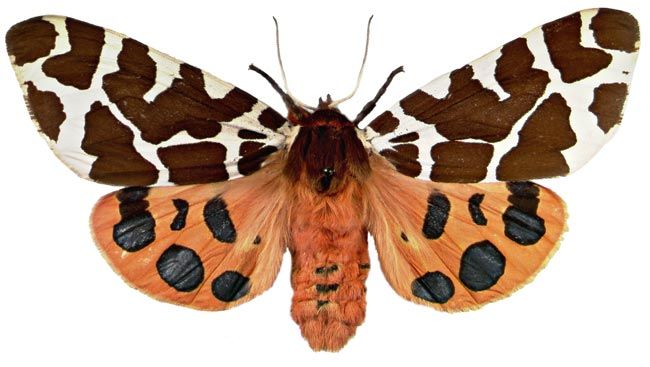
Moths | Species of moth adapted to cooler conditions are being lost from parts of Britain, according to research by Butterfly Conservation and Northumbria University. Researchers analysed 40 years’ worth of data tracking 76 cool-adapted moths in Britain, using citizen science records from the National Moth Recording Scheme. They found that most of these moth species have declined in numbers, and on the whole they have retreated northwest, where temperatures are lower and precipitation is higher. The population of the garden tiger moth, whose caterpillars are adapted to long, cold winters, decreased by 89% between 1968 and 2002. The authors of the paper suggest that conservation efforts should focus on maintaining and increasing water availability as the climate continues to heat up and droughts become more frequent. The Guardian covered the research.
Insects | The Royal Entomological Society has published a landmark paper setting out the priorities for insect science for the future. The findings are based upon a two-year consultation with almost 200 entomologists from across the globe. The paper highlights 61 challenges, spanning four key themes: engagement, curiosity, conservation and human-insect relationships. Dr Lynn Dicks, an insect scientist at the University of Cambridge, said that entomologists “must become much more vocal about the importance of insects, highlighting their vital importance to the lives of much better-known and documented (usually larger) animals and plants.” The study was published in Insect Conservation and Diversity.
Beavers | Beavers are making a comeback, but how will their arrival affect the humans that live alongside them? Beaver Management Groups have already been set up to aid peaceful coexistence, and a study published in Restoration Ecology looks at how these operate in practice. Management groups work best when they operate as an adaptive process rather than a fixed structure, the authors find. There should be scope for their remit to be scaled back or integrated into other structures as the presence of beavers becomes normalised. Such flexibility should also be applied in the case of other species reintroductions, the paper concludes.
Driftwood
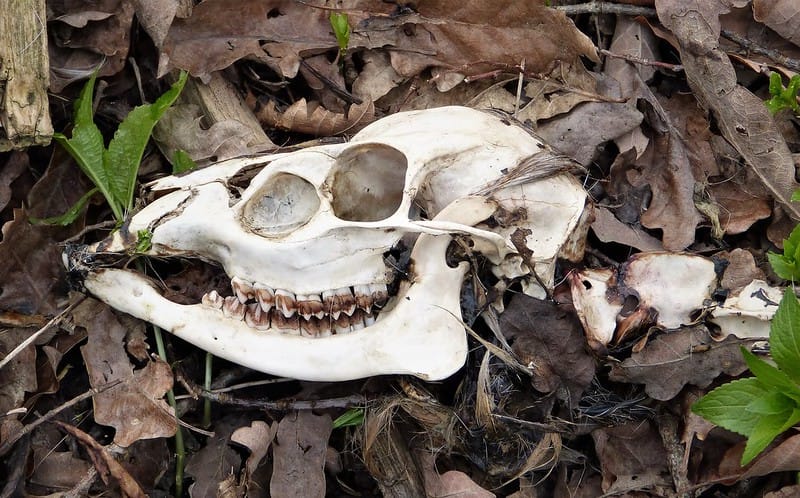
Deer | A feature in the BBC digs into why large numbers of red deer are being culled in Scotland. The article follows a vote by residents of South Uist, who opted against removing all the red deer – around 1,200 – from a community-owned estate. Despite some islanders raising concerns about Lyme disease and overgrazing, residents eventually voted by 379 to 140 against the extra measures, deciding that targeted culls would be sufficient. The Scottish Gamekeepers Association claimed that culling South Uist’s deer would represent a “symbolic blow” for some of the last remaining genetically pure red deer in Scotland. Around 100,000 wild deer are killed in Scotland every year, both by recreational hunts on sporting estates and through culls designed to stop high numbers of deer harming fragile habitat.
Anxiety | A survey by the Woodland Trust has found that seven out of ten young people in the UK are worried about climate change and its effects on the environment. The YouGov poll surveyed 16-24 year-olds, and revealed an “epidemic of climate anxiety”, according to the chief executive of the Trust, Dr. Darren Moorcroft. However, 86% of people surveyed also felt that being outdoors in nature had a positive effect on their mental health. In light of this knowledge, access to green space in the UK is simply “not good enough”, the charity said. The BBC, the Evening Standard and BusinessGreen reported the news.
Botany | Lady Emma Bennet, the fourth countess of Tankerville, was a talented botanist who never got the recognition she deserved – although a 75-year-old PhD student is now attempting to change that. The BBC has a feature on how June Watson’s research is throwing a light on the drawings of plants, and detailed annotations that accompanied them, made by the eighteenth century aristocrat. "On the face of it she is collecting flowers which was thought of as a respectable past-time, but she is also clearly interested in the science of them, such as where they are coming from and their anatomy,” says Lynn Parker, Kew’s curator of illustrations and artefacts. The drawings are currently on display in Morpeth as part of an exhibition.
In other news:
- It is time for (most of) the sheep to go, writes Ben Goldsmith in the Daily Mail.
- The RSPB and Scottish Wildlife Trust both have blogs on woodlands following the latest episode of David Attenborough’s Wild Isles.
- Farmers are facing an “uncertain” future as the new system of subsidies is rolled out, reports the BBC.
Happy days
Poetry | Poet laureate Simon Armitage has written a poem, called Plum Tree Among the Skyscrapers, in homage to spring. It is the first in a collection commissioned by the National Trust, marking the beginning of its annual blossom campaign. “For this first poem, I was particularly keen to examine how nature might flourish in our urban landscapes, and about the tenacity of trees to be able to adapt to the most unlikely places,” said Armitage. The poem has been published in the Guardian.
Subscribe to our newsletter
Members receive our premium weekly digest of nature news from across Britain.
Comments
Sign in or become a Inkcap Journal member to join the conversation.
Just enter your email below to get a log in link.