Woodland Cuts & Butterfly Spots
The latest news on nature and conservation in Britain.
National news
Woodland | Enormous cuts to Scotland’s woodland funding budget will ‘torpedo’ the country’s chances of meeting its climate and nature targets, according to the leading timber industry body and woodland conservation charity. Confor and Woodland Trust Scotland have teamed up to condemn the cuts, which would see Scottish Forestry’s grant scheme reduced by 41%, or around £32m. The reduction comes after last month’s budget announcement: the Scottish government said the UK budget had forced it to make the cuts. Rural affairs Secretary, Mairi Gougeon, admitted that Scotland would fail to meet next year’s target for woodland creation – after missing all but one of the last six annual targets – but said that Scotland would still be creating more woodland than the rest of the UK combined. However, director of Woodland Trust Scotland, Alastair Seaman, said that ‘warm words won’t stop climate change or restore nature’. He added that creating and protecting woodland is one of the most effective ways to tackle the crises, and it ‘makes no sense to pull the rug out from under the sector in this way’. The BBC, the Herald and the Scotsman covered the news.
Targets | The Office for Environmental Protection has published a damning report in its first major review of the government’s Environment Improvement Plan. The report, which covers from April 2022 to March 2023, found that out of 40 environmental targets set for England, the government is on track to achieve only four. It is partly on track to achieve a further 11, and largely off track to achieve ten. The OEP said that meeting the goal of halting nature decline by 2030 is unlikely to happen without a swift change in policies, and that it would keep the option of taking legal action against the government under ‘active consideration’ if the situation did not improve. Dame Glenys Stacey, chair of the OEP, also said she was ‘disappointed’ the government had taken a full year to respond to the OEP’s previous progress report, and that the response had lacked detail. Environmental organisations have urged the government to speed up and scale up delivery, with Richard Benwell of Wildlife and Countryside Link stating that the government must ‘double down on delivery’ or its promises will ‘remain daydreams’. The Guardian, Yahoo News and ENDS covered the news.
Resilience | A report by Natural Resources Wales has revealed that almost 300,000 properties in Wales will be at risk of flooding over the next century due to the impacts of climate change. The assessment found that keeping pace with the risk would require increased and sustained investment in flood defences, but not all locations would be economical to defend. Using projected impacts, it found that over the next 100 years, 24% more properties will be at risk of river flooding, 47% more from tidal flooding, and 34% more from surface water. Ramping up all flood defences to keep pace would cost an estimated 3.4 times the current budget, and the report highlights that Wales will need a combination of interventions to help communities become more resilient. The BBC covered the news. Elsewhere, a report by a climate research group has found that London is ‘underprepared’ for the impacts of climate change, including extreme heat and severe flooding, reports the BBC.
In other news:
- The government’s flagship biodiversity net gain regulations have been delayed again, reports the Times. Meanwhile, plans for the water industry to tackle sewage pollution have been delayed by four months, the Guardian revealed.
- The Scottish government has published a marine science and innovation strategy.
- Sir Keir Starmer and the shadow environment minister, Steve Reed, met with the leaders of the UK’s major environmental organisations to discuss the policy interventions required to halt the decline of nature by 2030, reports ENDS.
- The governments of the UK and the US have announced a biosecurity alliance to counter biological threats such as pandemics and bioterrorism, reports the Independent.
- Conservationists are calling on the government to end a polluting £1.8bn tax break for the UK’s fishing fleet, which is contributing to overfishing, reports the Guardian.
- The Environment Agency has announced £730,000 in funding to support sustainable and resilient local fisheries.
- The National Lottery Heritage Fund has announced £15.6m in funding for projects working to enable easier access to nature across the UK.
- Natural Resources Wales has established a team to inspect farms and reduce the impact of agricultural pollution.
- More than 300 companies and financial institutions in the UK plan to start reporting their climate impacts, reports Reuters.
- The government’s ‘emergency’ authorisation of use of a damaging neonicotinoid on sugar beet crop for the fourth year in a row is a ‘deathblow’ for wildlife, according to the Wildlife Trusts.
Across the country
East Anglia | The eradication of American mink from England is now a ‘realistic dream’, according to experts. The Waterlife Recovery Trust has conducted a world-first pilot test of ‘smart traps’, which use drops from the invasive predator’s distinctive scent gland to lure others in. The 441 traps focused on Norfolk and Suffolk, and the WRT confirmed that, after four years of trapping, there was no evidence of mink reproduction in the area during the 2023 breeding season. American mink first established in Britain after escaping from fur farms in the 1950s, and the invasive species has wrought devastation on native populations: a combination of predation and habitat loss has seen water voles decline by 96% since 1950. Professor Tony Martin, chair of the WRT, said it was now ‘a race against time to eradicate mink before they wipe out the last of our water voles and drive the final nail into the coffin of seabird colonies’. Following the successful trial, Natural England has granted the WRT £500,000 to expand its work, from the Thames to mid-Lincolnshire. The BBC and the Guardian covered the story, while Inkcap Journal featured the project previously.
Powys | Prestienge and Norton in Powys have become the first communities in Wales to be designated as an International Dark Sky Community. Residents of the area have been working towards the designation for six years, which involves tackling light pollution by turning off and dimming street lighting at night. Covering an area of 40 square kilometres, the project has reduced the area’s annual CO2 emissions by 4.5 tonnes, while keeping urban areas lit at night for safety by using intelligent LED lighting with cut-off beams. Councillor Jackie Charlton said the project had also worked closely with nature groups to ensure that lighting would not adversely affect local wildlife, particularly bat routes or otter feeding areas. The BBC and Shropshire Star covered the news, and you can see the stark difference in this BBC video.
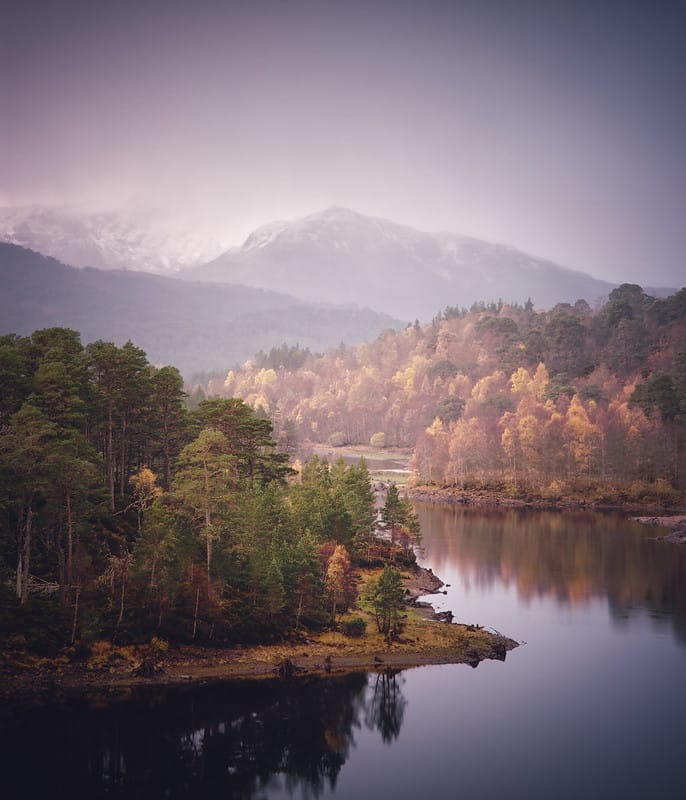
Affric | A community group has launched a bid to nominate Affric and Loch Ness as Scotland’s third national park. Strathglass Community Council, supported by a range of partners, is leading the nomination, which would include part of Loch Ness, the Trees for Life’s Dundreggan Rewilding Centre in Glenmoriston, and Glen Affric, a 30-mile nature reserve containing ancient Caledonian woodland. The partnership said that the designation would protect one of Scotland’s most beautiful areas, as well as open up economic opportunities including nature-based jobs, allowing people of all ages to continue living and working in the area. Meanwhile, Steve Micklewright, chief executive of Trees for Life, said a national park ‘could enable nature restoration on a major scale in this stunning landscape’. The Herald, Scottish Field and ENDS reported the news. Elsewhere, farmers in the Cairngorms have staged a protest on tractors over rewilding efforts, reports Farmers Weekly.
Elsewhere:
- The Ashdown Forest Trust, along with landowners and farmers in East Sussex, are applying for a £750k Landscape Recovery Grant to return species such as turtle doves, beavers and pine martens to the area, reports the BBC.
- The Freshwater Habitats Trust is leading a project to restore freshwater habitats along the River Irfon in mid-Wales, including the creation of floodplain mosaic habitats.
- A project by the Royal Agricultural University in Cirencester has been granted £110,000 to create a ‘zero dig’ market garden to teach climate friendly farming, reports the BBC.
- Charity River Action has accused the Environment Agency of ‘scandalous neglect’ after discovering contaminated waters from egg farms flowing directly into River Wye watercourses, reports the Guardian and the BBC. Defra responded here.
- Hauxley nature reserve in Northumberland has appointed its first ever poet in residence, reports Chronicle Live.
- The ‘Life on the Edge' project, run by a partnership including Buglife, has been awarded £2.24m to restore habitats for rare invertebrates along the south Devon coast.
- Community group Inner City Seeds has launched an urban project to create a wildlife corridor in Devon to help improve mental health, reports the BBC.
- Bradford Council has announced it will transform a moorland site previously used for illegal waste dumping into healthy wetland habitat, reports the Yorkshire Post.
- Locals have raised concerns over delays to the restoration of a south London nature reserve, which has led to the loss of key species, reports BirdGuides.
- A man who abseiled down a cliff in Derbyshire to steal peregrine falcon eggs has been jailed for 18 weeks, reports the BBC and the Guardian.
- Gloucester University is hosting an international hedgehog conference this week to discuss ways to reverse the small mammal’s decline, reports the BBC.
- More than 2,000 people have signed a petition calling for increased protections for the Gwent Levels amidst threats from solar farm plans, reports the BBC.
- Natural Resources Wales has fined a construction company more than £2,000 for demolishing a building in Newport where protected Pipistrelles bats were roosting.
- Milton Keynes City Council has planted 100 of Britain's most endangered native tree, the black poplar, to give the species a boost.
Reports
Diversity | A diverse and inclusive workforce is key for organisations working to tackle nature loss, according to a report by the Wildlife Trusts. The Trusts’ Diversity Report 2023 investigates the diversity of staff and trustees across its 46 charities. It found that, while representation of some minority groups had improved since 2019, others are underrepresented compared to the national average, and there is still vital work to do. Among the positive findings, the report found that trustees under 30 increased by 6%; LGBTQ+ staff increased by 6% to 15% (the national average is 3.3%); and a quarter of staff have at least one disability, 10% above the national average. However, 90% of staff and trustees are of white ethnicity, compared to 81.7% across the population. Mariam Bentley-Rose, strategic lead for EDI at the Trusts, said that, as well as being the right thing to do, ‘greater diversity means different ideas and perspectives, which are essential ingredients for accelerating nature’s recovery’.
Freshwater | The Chartered Institute of Water Engineers has produced an in-depth independent review of water sector performance and governance. ‘A Freshwater Future’ examines a broad range of water-related issues, from pollution and flooding to abstraction and supply issues, and finds that Britain’s freshwater systems are under ‘grave pressure’. Polling for the report found that 84% of the public believe water pollution to be an issue in the UK, with three-quarters of people of the opinion that water reform should be a priority for the next government. The report includes ten recommendations for government, including an independent review of regulators, a national monitoring strategy, improved support for nature- and water-friendly farming, and the adoption of a ‘sponge city’ approach to urban infrastructure. The Wild Trout Trust is encouraging the public to send the report to their local MP.
Peatland | A report published by experts from 15 organisations investigates the developing market of peatland investment. Shane McGuinness, coordinator of WaterLands, explained that the ‘scale of ambition for peatland restoration globally is clear, yet this is not yet matched by adequate sources of funding.’ The report predicts that the peatlands finance industry will mature between 2030 and 2050, after a pilot period to demonstrate proof of concept, and a scaling period to garner increased capital. The mature market should be characterised by established standards, according to the report, and blended finance mixing public and private capital to enable restoration at scale. As an example of adopting a ‘landscape approach’, the report details the Flow Country Green Finance Initiative in the north of Scotland: a multi-stakeholder partnership which has agreed a common vision combining ecological restoration and sustainable land use with a carbon investment model, support for circular business, and community development. Carbon Pulse covered the report.
Science
Spots | Warmer temperatures in Britain are making certain species of butterfly less spotty, according to research in Ecology and Evolution. Researchers from Exeter University studied meadow brown butterflies in a single field in Cornwall every day throughout flight season. They found that, while males showed little sign of change, female butterflies which developed at 11C had six spots on average, while those developing at 15C had only three. Co-author Professor Richard ffrench-Constant said the findings suggest that butterflies adapt their camouflage based on climatic conditions: ‘For example, with fewer spots they may be harder to spot on dry, brown grass that would be more common in hot weather.’ He added this was an ‘unexpected consequence’ of climate change, as we tend to think of species moving northward rather than changing their appearance. The BBC and the Guardian covered the research.
Bats | A paper published in the Bulletin of Mathematical Biology has described the nocturnal movement of bats returning to their roost as ‘leapfrogging’. The research was conducted by a team from Cardiff University and the University of Sussex, using radio transmitters attached to the backs of greater horseshoe bats in Devon. Collating data from 14 nights of observation, the team devised a mathematical model to pinpoint how the creatures travel in the dark. They discovered that, after dispersing from the roost, the bats would return in a ‘leapfrog’ pattern, with the individual furthest from the roost passing the next closest in a cascade motion. The authors suggest this is because the bat furthest from the roost is in the most vulnerable position to predators. Fiona Mathews of the University of Sussex said that being able to model nocturnal movements would help with the conservation of bats’ foraging grounds, and also to understand how they might recolonise areas from which they have been lost. The Guardian covered the research.
Weather | The effort of citizen scientists to revive data from the Met Office’s first ever weather forecasts is described in a paper in the Geoscience Data Journal. Forecasts in the UK first began when Vice-Admiral Robert FitzRoy, the founder of the Met Office, was inspired by a shipwreck in 1859 to use telegraphed weather observations to create storm warnings. Now, 3,500 volunteers have helped digitise around 570,000 daily weather observations recorded by the Met from 1861 to 1875, covering 70 locations across Western Europe. The data had previously been hidden in archives, but has now been made available on an online platform for use in modern studies. Professor Ed Hawkins of Reading University, who co-led the project, said that one of the reasons for retrieving the data was to ‘better reconstruct past extreme weather events’, which could help shed light on how weather and climate is changing in the present day. The Times covered the story.
Driftwood
Eagles | A feature in the Times explores the successful reintroduction of sea eagles to England after an absence of 240 years. To investigate, reporter Jack Clover visits Poole waterfront. Home to warehouses, Wetherspoons and a working port, it may seem an unlikely spot for the predators, which are more often associated with the windswept Hebridean islands. However, the man responsible for the reintroductions says that England may, in fact, provide a more hospitable environment. Roy Dennis – who first released sea eagles on Shetland in 1968, and more recently on the Isle of Wight in 2019 – said that the birds in the south of England have ‘far more food’ than many of their Scottish counterparts, with the shallow, sheltered estuaries offering large fish near the surface, and abundant migratory birds and rodents. Not everyone is a fan of the reintroductions, but Paul Morton, who founded Birds of Poole Harbour, said that taking local school children to see the eagles has been the pinnacle of his career. Separately, the Press and Journal has an overview of 83-year-old Dennis’ life work championing wildlife.
Exploration | In the Guardian and the Telegraph, British explorer and writer Alastair Humphreys describes his year-long journey to explore his local area using an Ordnance Survey map. Humphreys is well-seasoned in the ‘delights of travel’ – having walked through India and paddled the Yukon, to name a couple – but more recently he realised that, amidst his globe-trotting, he had neglected to explore his own neighbourhood, and its own unique brand of wilderness. To address this, he bought a 20km by 20km OS map, and committed to visiting a single 1km grid square each week for a year. ‘Your local map is a fractal of the world at large,’ he writes. ‘Embrace it, care for it, cherish it, and discover it. You might just find that a single map is enough exploration for an entire lifetime’. Humphreys’ book about his search, Local, is available here.
Restoration | A project restoring oyster habitats along the UK coastline has won the inaugural ‘Great British Wildlife Restoration’ award. Voted for by members of Parliament and the House of Lords, the award is organised by the British and Irish Association of Zoos and Aquariums, and aims to highlight the role of zoos in protecting and restoring UK wildlife through field work, habitat restoration and education. The winner, the Wild Oysters Project by the Zoological Society of London, is restoring native oyster populations by creating nurseries beneath marine pontoons or on newly created underwater reefs. Last October it released 10,000 oysters in northeast England, and has similar plans for a reef in north Wales this summer. You can read more about the award here, along with the other 21 shortlisted projects for native species.
Further reading:
- A feature in the BBC looks at major fossil discoveries in England, and what they tell scientists about the country’s distant past.
- Ever dreamed of living off-grid? This BBC article takes a look at a few English houses where you can.
- In this blog post, the Wildlife Trusts’ public affairs officer, David Allwright, asks what five political commitments could make the biggest difference for nature in 2024.
- A feature in the Guardian explains why author and climate reporter Akshat Rathi believes that capitalism is going green.
- In the Herald, a commentary asks whether the wolf culls taking place in Europe could savage any hopes for a return of the predator to Scotland.
- BBC Winterwatch is returning to screens this week, shot in the UK’s first ‘super’ national nature reserve, RSPB Arne in Dorset.
- In this Guardian column, naturalist Stephen Moss explains why cattle egrets are referred to as ‘climate refugees’.
- A feature on Cumbria News summarises the successes of a three-year project to reintroduce ten threatened plants and animals to Cumbria.
- The Guardian has a list of the best European travel destinations for ethical and greener travel in 2024.
Happy days
Off-grid | Have you ever dreamed of hiding away from society in the middle of nature? This BBC article takes a look at a few off-grid English houses where you could make this dream a reality. The houses featured include a renovated 18th century stone schoolhouse in a woodland on the outskirts of Bath; a more budget option of a mini eco-home in Herefordshire; a grade II listed late Devon longhouse in Dartmoor National Park; and a house halfway up one of the famous Three Peaks in North Yorkshire, accessible only by 4x4.
Subscribe to our newsletter
Members receive our premium weekly digest of nature news from across Britain.
Comments
Sign in or become a Inkcap Journal member to join the conversation.
Just enter your email below to get a log in link.