Last September, I found myself sitting next to Sir Charlie Burrell of the Knepp Estate, eating an awful lot of Knepp-branded steak, discussing the role of isotopes in unravelling the finer details of ancient bison habitat.
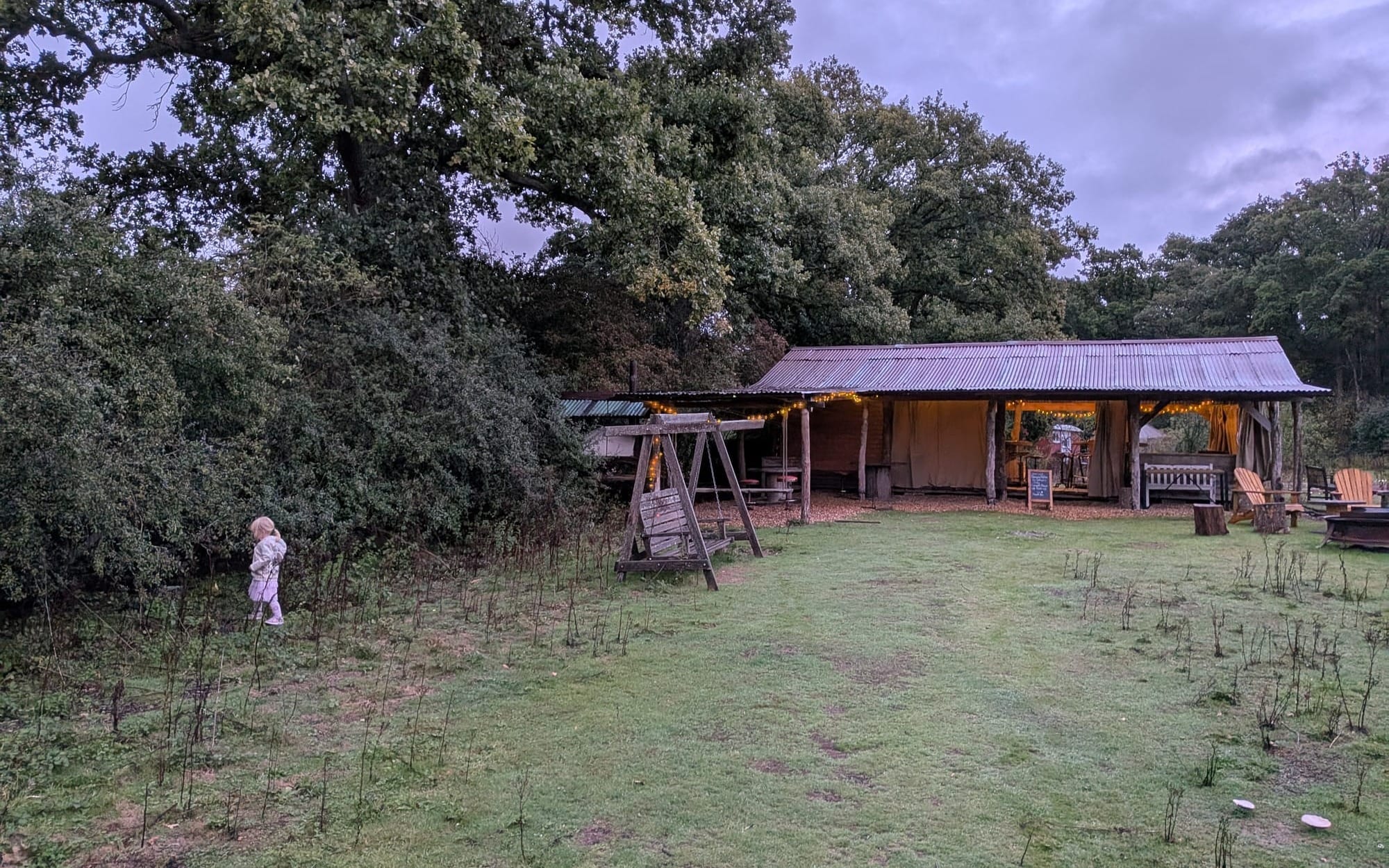
I had been invited to Knepp for a conference on archaeology and rewilding, run by the wonderful Dr Anwen Cooper of Oxford Archaeology. I wasn't particularly prepared for either the conference or the in-depth discussion of isotopes. I had just returned from maternity leave – in fact, my seven-month-old baby was waiting for me back at the yurt – and felt like I'd forgotten almost everything I once knew.
But I couldn't pass up such an opportunity. My book, Nature's Ghosts, is about the incredible role that archaeology can play in nature restoration. My message was that conservationists and archaeologists needed to unite – and here it was, happening at last! Anwen encouraged me to bring my family, so the kids spent two days foraging for blackberries and sheltering from the rain while I learned about ancient plants, wild horses, historic deer distribution and much more.
Those two days were energising, fascinating and galvanising. This week, I'm thrilled to cover the outcome: the Knepp Accord, to which I am a signatory. It is vital and unique, and I hope that conservationists everywhere read it and take note. And talk to your local archaeologist. They know amazing things.
This week, we also explore:
- Government's 'crushing' plans to meet 30x30 target
- A massive new rewilding project in Northumberland
- New policies on Dartmoor ponies
- A rethink for montane woodland restoration
- Wainwright Prize longlist announced for 2026
It takes just 10 minutes to stay informed on British nature.
Read by more than 7,000 subscribers, Ground Cover distils the week's news, reports, scientific papers and features into one concise briefing.
National news
30 by 30 | The government has published a plan to deliver its commitment to protect 30% of England’s land by 2030 – but environmental organisations have branded it ‘political hot air’ and a ‘crushing blow’ due to a lack of new legal protections. The plan identifies land covering 32% of England that is either already contributing, or has the potential to contribute, to the target, and provides guidance for private landowners for boosting voluntary restoration. It also commits £37m for National Parks and Landscapes. However, its own analysis shows that just 7% of land currently meets the 30x30 criteria.The OEP’s chief scientist, Professor Robbie McDonald, said that actions ‘do not amount to change at the scale and pace needed’, while Toby Perkins MP, chair of the Environmental Audit Committee, said that he was ‘yet to be convinced’ that aspiration would become reality. Campaigner Guy Shrubsole called for Andy Burnham to scrap the plan and commit to radical action. The same day, as if to prove the shortcomings of depending on voluntary action, the Church of England voted against plans to restore 30% of its land for nature. The Guardian covered the story.
Archaeology | Archaeologists, ecologists, farmers, artists and curators are among the signatories of the Knepp Accord – a new framework, backed by the Knepp Estate, National Trust and Oxford Archaeology, calling on archaeologists and conservationists to unite in tackling the nature and climate crises. The statement argues that archaeology can help us understand how people have shaped landscapes through time, provide practical insights into nature restoration and management, and reimagine the relationship between people and nature through stories of past connection. Dr Hannah Fluck, senior national archaeologist at the National Trust, said: ‘The decisions we make now will be visible for hundreds of years – and we owe it to past and future generations to ensure those decisions are informed by a deep understanding of people and place.’
Dotterel | The UK could lose its first species to anthropogenic climate change, according to the RSPB. The latest national dotterel survey revealed a ‘precipitous’ 89% decline since monitoring began in the 1980s. Dotterel are small wading birds that migrate from northern Africa to breed on rocky mountain plateaus across northern Europe, including the UK. The survey found breeding males at just 22 of the 217 sites surveyed, with most of the remaining population now restricted to the Scottish Highlands. RSPB scientist Leah Kelly said the species’ reliance on montane habitat makes it ‘particularly susceptible’ to climate-induced habitat loss. The charity added that managing alpine grazing levels and reducing disturbance from hillwalkers and dogs could improve the species’ resilience. Sky, ENDS and BirdGuides reported the findings.
In other news:
- Growers are pulling out of next year’s Chelsea Flower Show in protest over its ban on peat compost, reports the Times.
- Wildfire warnings are in place across much of the country, including southwest England and swathes of Scotland, while firefighters battle a blaze in north Wales.
- The UK has ratified the High Seas Treaty to help protect two-thirds of the world’s ocean.
- The government has quietly ‘gutted’ a £90m fund to save the world’s second-largest rainforest in Congo as a result of cuts to foreign aid spending, reports the Times.
- A letter signed by more than 100 conservationists and celebrities has urged Andy Burnham to halt the rollout of plans which would allow developers to sidestep environmental laws by paying into a national nature levy, reports the Guardian.
- A major digitisation project will begin this summer, aiming to create 700,000 digital records of specimens held in Scotland’s natural science collections, reports the Herald.
You're one-fifth of the way through this newsletter.
What's happening at the Embleton Estate? What have conservationists got wrong about downy willow restoration? Why is venison no longer considered peasant food? Join us to find out.