Welcome to Ground Cover, our roundup of news, science, reports and features.
One of my favourite things about this newsletter is that it is simultaneously zeitgeisty and extremely niche. This week, news and misinformation about a supposed Dartmoor Pony cull dominated the internet: here, we summarise the main lines of debate. Amid all the controversy, you probably missed the big news about stygofauna. In fact, you have probably gone your whole life without appreciating the wonders of stygofauna. This week, we also attempt to plug that gap.
Other highlights this week include:
- Death of the Major Oak
- Restoration of the Bog Bush Cricket
- Grouse shooting and curlew trends
- Fungi in topsoils
- Animal culture
Yesterday we published a feature on how Britain is failing its ancient trees. It is deeply reported and essential guide to a subject that seems like it should be simple, but is riven with legal, historical and semantic complexities. Beneath the technicalities, however, there is a clear message: our ancient trees are unnecessarily vulnerable and we need to protect them.
Please read and share it widely.
 Coreen Grant
To continue producing journalism like this, we need readers to support us. Today, because it's sunny, we're offering 25% off an annual membership.
National news
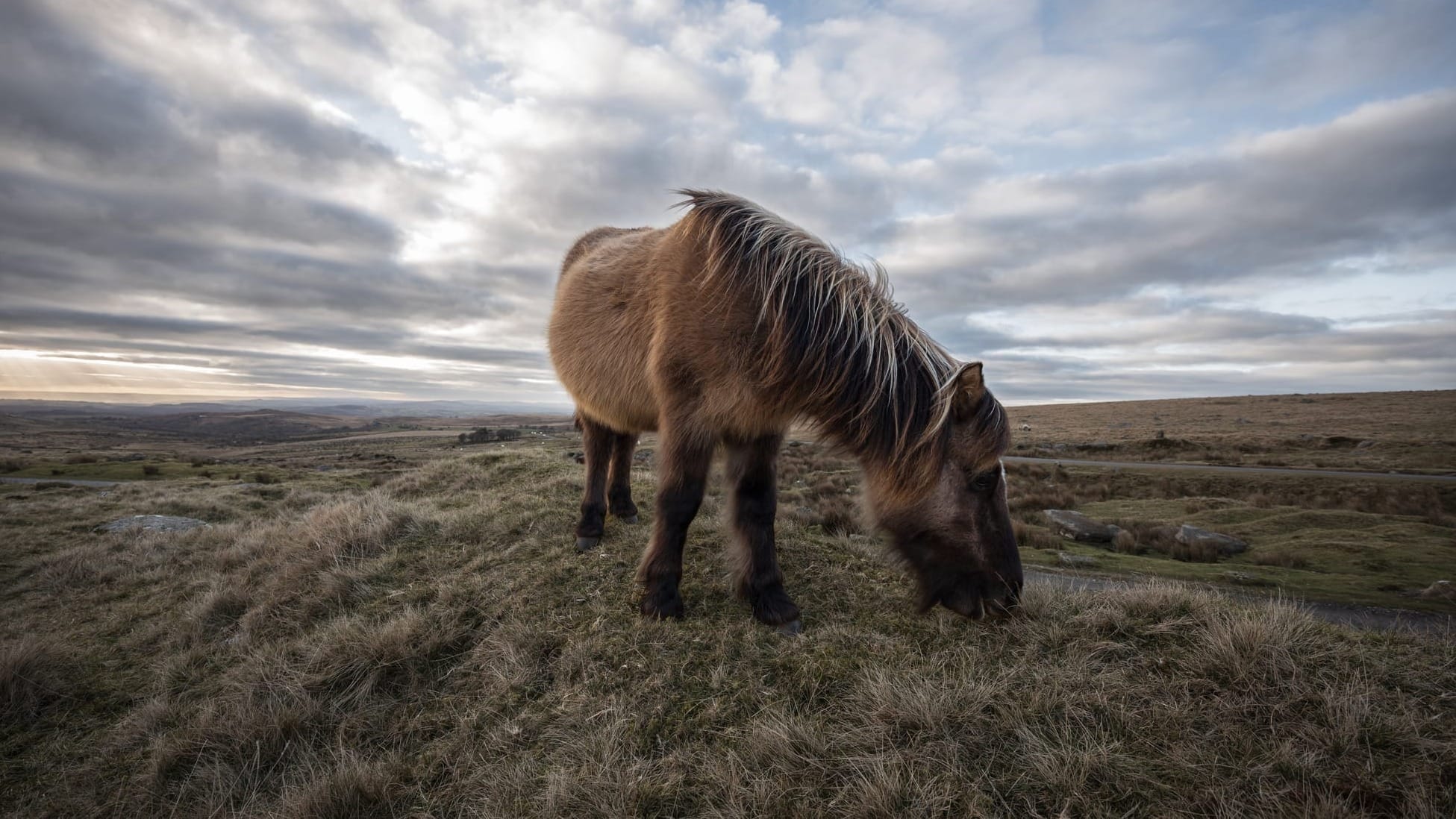
Ponies | A row is growing over reports that Dartmoor’s hill ponies are facing a cull. The Times broke the story on Monday, highlighting a Natural England ruling that livestock grazing levels on the moor should be reduced by around 75% to protect endangered habitats and species. The Dartmoor Hill Pony Association warned that, because the guidance does not distinguish ponies from cattle or sheep, livestock owners would be forced to cull the semi-wild ponies to prioritise their more commercially viable stock. The claims prompted widespread outrage: a petition by the Association has garnered more than 150,000 signatures, while the leaders of all four major parties spoke out against a cull. However, Natural England responded that the claims are ‘categorically not true’, and that the agency is ‘actively encouraging the continued presence of ponies’ in the landscape. Some environmentalists argued that the entire story was a conspiracy theory concocted on misinformation – see Driftwood for more commentary. The news was widely covered.
Technology | Kew Gardens has completed a four-year project to digitise all 7.4 million fungi and herbarium specimens in its collection, including samples collected by Darwin. The entire archive is now free-to-access online; Kew’s executive director of science, Alexandre Antonelli, said the £15m project will help to ‘democratise knowledge’. The news comes as Kew publishes its sixth report on the world’s plants and fungi. Subtitled ‘The Digital Biodiversity Revolution’, it argues that technology can be nature’s ally, with digital tools and AI exposing critical research gaps and highlighting where action is most urgently needed. The report is accompanied by a special collection of 52 open-access papers on harnessing the benefits of specimen digitisation. The news was widely covered in national outlets.
Salmon | A new scheme will see Scottish salmon farmers fund wild salmon conservation efforts following escape incidents. The agreement, between trade body Salmon Scotland and Fisheries Management Scotland, will be administered by an independent company, with directors drawn from both sectors. Payments will be made on a scaled basis linked to the size of the escape, with additional contributions in ‘significant’ incidents where escaped fish breed with wild populations. The Scottish government welcomed the agreement as an example of collaboration to support the endangered species. However, campaign group WildFish criticised the scheme heavily, saying that the ‘cosy deal bypasses statutory regulation and is an entirely inappropriate way to address environmental harms being caused by private companies’. Fishing Daily and SeafoodSource covered the news.
This newsletter is mostly behind a paywall, because it's the only way we can afford to produce it each week. Subscribe today to unlock the rest, including a roundup of pony outrage, Scotland's failure to tackle invasive species, curlew conservation in Upper Teesdale, and the recreation of an historical garden.