Farming Subsidies & Botanic Garden Controversy
The latest news on nature and conservation in Britain.
National news
Subsidies | Defra has published long-awaited details of the government’s post-Brexit farming subsidies, which will replace the EU’s common agricultural policy. The announcement has been largely welcomed by the farming community for providing clarity on the payment plans. The Environmental Land Management schemes (ELMs), which are worth £2.4bn per year, will reward farmers for 280 different actions that protect nature and improve the environment, such as conserving hedgerows, managing crop pests without chemicals and maintaining peatlands. Announcing the news, environment secretary Thérèse Coffey said that farmers are at the heart of the economy, as both food producers and custodians of the land. “These two roles go hand-in-hand and we are speeding up the roll out of our farming schemes so that everyone can be financially supported as they protect the planet while producing food more sustainably,” she said. Environmentalists have cautiously welcomed the news; the Guardian has provided an analysis of reactions. The news was more widely covered. including by the BBC, the Guardian, Farmers Weekly, Edie, the Financial Times and ENDS.
The UK's new farm subsidy systems are the one genuine benefit of Brexit - and, bizarrely, the one that no major Leave politician would discuss before the vote. If the UK gets this right, they could be used as a template for reform across the EU, whose system is a totaI disaster.
— George Monbiot (@GeorgeMonbiot) January 26, 2023
Pesticides | Defra has given emergency authorisation for the use of a banned pesticide for the third year running. The pesticide – a seed treatment called thiamethoxam – is banned from general use in the UK due to the damage it can cause to bees and other pollinators. However, the government has approved its temporary use on this year’s sugar beet crop to protect it from a virus spread by aphids. The decision goes against advice from the government’s own Expert Committee on Pesticides, and comes only days after the EU’s Court of Justice ruled that EU states could no longer offer exemptions to the ban. The Wildlife Trusts said the approval is completely at odds with the pesticide reduction targets for which the UK advocated at COP15, and “another example of the government failing to follow their warm words with meaningful action”. The Bumblebee Conservation Trust did, however, note that increased safeguards were being introduced this year, including a 32-month ban on growing flowering crops in treated fields, and an increased threshold for aphid occurrence before the use of treated seed is permitted. The BBC and ENDS reported the news.
Foxes | The Scottish government has passed a bill to tighten restrictions on hunting foxes with dogs, twenty years after the original ban. MSPs voted for legislation that aims to close loopholes in the original law, which permitted hunting with packs of dogs on the basis that foxes are shot after being flushed out, and provided the hunt is to protect livestock or ground-nesting birds, or to prevent the spread of disease. The new legislation limits hunts to no more than two dogs – unless under licence – and also bans trail hunting. However, some land managers, farmers and conservationists have argued the bill is impractical, as there are some terrains where it is impossible to hunt with only two dogs. Jake Swindells, from the Countryside Alliance, said hunting with multiple dogs was crucial, “for conservation reasons and for protection of livestock. A lot of people’s livelihoods depend on this.” The Scottish Conservatives warned the legislation could be “the final nail in the coffin for many of Scotland’s endangered species.” The BBC, STV News, the Telegraph, the Times and the Independent reported the news.
In other news:
- An area of peatland restored by NatureScot is nearly one-third lower than publicly claimed, according to the Ferret.
- The Scottish government has announced that over 600 rural businesses will receive a share of £14m in funding, through the Agri-Environment Climate Scheme.
- Environmental campaigners are threatening the government with legal action over their Joint Fisheries Statement, which lacks “meaningful policies”. ENDS reported the news.
- Five hundred museums across the UK are uniting to create an art collaboration aimed at transforming children’s understanding of biodiversity loss, reports the Independent.
- The Welsh government has set a target to meet 100% of its energy needs from renewables by 2035, reports the BBC.
Across the country
Somerset | Rewilding charity Heal has purchased 460 hectares of land in Somerset to create the first in a series of planned nature reserves in every English county. The plans for the site, which will be called “Heal Somerset”, include introducing small numbers of rare breed cattle, ponies and pigs to kickstart the restoration of natural processes, as well as food growing, wildflower meadow creation, nature education and spaces for community groups. The charity will soon be launching a crowdfunding effort to repay loans for the £5.25m site, most of which was provided by Triodos Bank UK in its first direct loan to a nature restoration project. The BBC and the Courier covered the story.
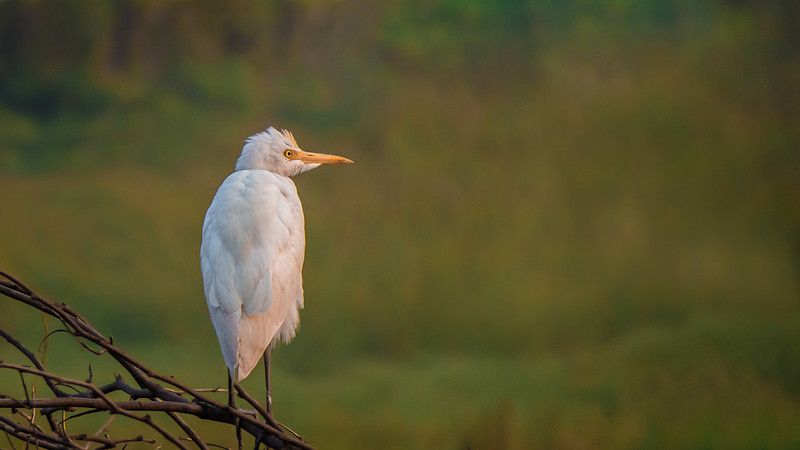
Dorset | The number of cattle egrets are booming in the west country thanks to regenerative farming, reports the Guardian. The distinctive white bird originates from the African savannah, where it evolved to feed alongside large animals, and first bred in Britain in 2008. By grazing cows on gentle rotation, a number of farmers in the southwest are improving soil health in their fields and increasing the number of invertebrates, which brings the egrets. However, author and naturalist Stephen Moss points out that the colonist species would not be able to survive year-round in Britain without climate change.
Argyll | The preferred bidder for a 3,500-acre estate in Argyll has insisted he is not a “green laird”. Jeremy Leggett is the founder of Highlands Rewilding, a company which is planning to buy and rewild the £10.4m Tayvallich estate. Leggett has been given until the end of February to raise the necessary funds, and he claims his ownership model is different from the wealthy individuals and companies who buy up land to profit from tree planting or carbon capture schemes. However, some locals are concerned that money will continue to leak out of the local economy under Leggett’s scheme. Ailsa Raeburn, chair of Community Land Scotland, said: "When you peel away the layers, control over what happens on the estate and who benefits from it will lie outwith the community.” The BBC covered the story.
Elsewhere:
- Thousands of people have protested in Dartmoor over the loss of wild camping rights, after more than 12,000 acres have been shut off. The BBC and Plymouth Herald reported the news. Meanwhile, the Guardian reported that the private landowner who brought the court case against camping may be putting a rare beetle at risk by releasing pheasants.
- Britain’s population of greater mouse-eared bats has doubled – from one to two. The Sussex Wildlife Trust and the Bat Conservation Trust wrote about the discovery.
- Bristol City Council is set to restore three ponds in Stoke Park to benefit great crested newts, dragonflies and other wildlife, reports BirdGuides.
- Sewage has been continuously pumped into the sea near Chichester since before Christmas, reports the BBC. Meanwhile, Thames Water’s real-time digital map is increasing public awareness of discharges in places like the Cotswolds, reports the Guardian.
- A £3m initiative is restoring historic farming practices to help manage the land in an environmentally friendly way, reports the Northern Echo.
- A BBC video explains how a 3km “superhighway” of hedgerows planted by volunteers at Y Foel, Yr Eryri, will benefit local wildlife and livestock.
- Lancashire and Cumbria Wildlife Trusts have welcomed the news that the Eden Project in Morecambe is receiving £50m in the Levelling Up fund.
- A scheme funded by Natural England is mapping the ancient holloways – or sunken paths – of Dorset, reports the BBC.
- Natural Resources Wales has begun construction on a new rearing facility for endangered freshwater pearl mussels near Brecon.
- The reward for information about five dead goshawks has surpassed £14,000, according to Wild Justice.
- Plans for a major wind farm near Moffat have been scaled back after concerns over its impact on golden eagles, cultural heritage and dark skies, reports the BBC.
- Cornwall Wildlife Trust has completed the first round in a trial to restore seagrass meadows in the River Fal, reports the BBC.
- Cheshire West and Chester Council has revealed plans for a new urban woodland in Northwich, reports Yahoo News.
- The Yorkshire Wildlife Trust is leading a project offering farmers and landowners free assessments of the condition of peaty soils on their land.
- Officials have installed temperature sensors on mountain crags in Eryri to protect rare plants from winter mountain climbers, reports the BBC.
Reports
Crustaceans | The phenomenon of mass crustacean mortality on the northeast coast of England in late 2021 could have been caused by a pathogen new to UK waters, according to a Defra-led report by an independent panel of scientific advisors. The report found that while it was not possible “to identify a clear and convincing single cause”, a new disease or parasite was “about as likely as not”. The panel concluded that it was “unlikely” the deaths were caused by an algal bloom – as judged by the initial Defra investigation – and it was “very unlikely” that pyridine or another chemical had caused the deaths. It likewise dismissed dredging off Teesside as a potential cause. The report has been met with criticism by academics from York, Newcastle and Durham universities, who said they were “disappointed” its conclusion lacked any direct evidence for an unknown pathogen. The BBC, the Guardian, ENDS and the Yorkshire Post reported the news.
Wildlife | Statistics released by NatureScot reveal that Scotland’s birds, mammals and insects are struggling to recover amid the twin crises of biodiversity loss and climate change. The figures show that the abundance and geographical spread of 2,803 marine and terrestrial species in Scotland have stabilised at similar levels to the 1990s – that is, well below historic populations. One positive statistic to emerge is that butterfly and moth numbers have largely been increasing since 2016, likely due to the warmer summers – though moth numbers are still 27% lower than in 1994. Scotland’s biodiversity minister, Lorna Slater, said the figures are a “stark reminder” of what is at risk if biodiversity is not properly protected. The Courier and ENDS covered the news.
Peatlands | The results of a ten-year study of moorland management have been published in a new report. Researchers from the University of York compared unmanaged heather to areas where heather was managed through either prescribed burning or mowing. They found that each provided different benefits. Burning and mowing both released carbon during the first years of management, but this was counteracted by increased absorption later on. On the whole, managed moorland resulted in increased biodiversity and maintained higher water tables. The authors emphasise that it is vital the study continues for the entirety of a complete management cycle of around 20 years to capture the whole picture.
Trees | A report by NatureScot outlines 98 potential new sites for the gene conservation of native trees in Scotland. Genetic conservation ensures trees have the ability to adapt as conditions change by maintaining their genetic diversity. This is highly threatened in Scotland’s native trees, making them vulnerable to climate change and diseases. Gene conservation units (GCUs) are mapped areas where trees are managed to encourage the production of seedlings and saplings to promote diversity. Scotland currently has four GCUs, covering Scots pine, silver birch, sessile oak and rowan. The 98 new locations would add alder, downy birch, hazel, ash, juniper, aspen and English oak to their number. Jeanette Hall, NatureScot woodlands specialist, said: “These potential new GCUs will be an important way for us to give biodiversity the resilience it needs to survive in a fast-changing world.”
Science
Stars | Artificial lighting is increasingly reducing the number of stars seen in the night sky, according to a study in Science. Researchers analysed more than 50,000 observations made through the Globe at Night project over a 12 year period, and found that “Skyglow” – light pollution caused by artificial lights – is increasing by around 10% every year. Light pollution can affect human health and disturb the behaviour of nocturnal animals. Describing satellite images of cities, the authors of the study explained that people tend to “not perceive that these are images of pollution. It is like admiring the beauty of the rainbow colours that gasoline produces in water”. The BBC and the Times covered the research.

Carnivores | Socioeconomic factors are more closely linked with the decline of large carnivores than climate change or habitat loss, according to a paper in Nature Communications. Researchers at the University of Reading analysed population changes in 50 species of large carnivores across the globe over the last half-century. They found that socioeconomic growth – improved quality of human life – far outstripped environmental changes as a leading driver of population declines. This is likely due to people becoming less tolerant, a rise in conflicts and increased incidents of poaching and persecution. Significantly, the research shows that once development slows, carnivore populations have the ability to recover – but that introduces a trade-off between improved living conditions and biodiversity health. Lead author of the study, Thomas Johnson, said: “We urgently need to develop strategies that can simultaneously protect biodiversity, and support the planet's most vulnerable people.”
Driftwood
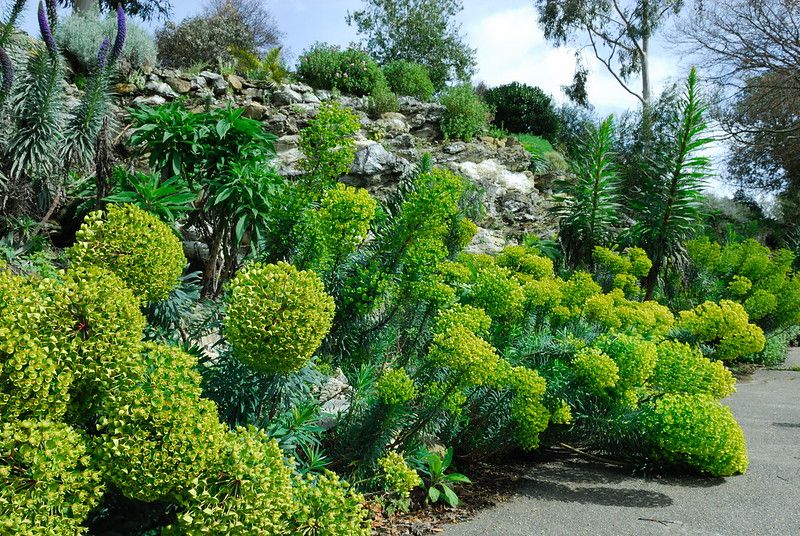
Botanics | What defines a botanic garden? A long read in the Guardian unfurls a controversy on the Isle of Wight centred on the Ventnor Botanic Garden. The management of the garden has been at the centre of a local debate since it was taken over by American businessman John Curtis. Curtis has employed what he calls the “Ventnor method”, which involves replacing the vigilant attention of most botanic gardeners with a more laid-back approach. Leaf litter and fallen branches are allowed to decompose on the ground, while plants reseed themselves “naturally”. The aim, according to Curtis, is to create “synthetic ecosystems”, operating more like a natural environment. His critics, however, accuse Curtis of neglect, allowing the garden to deteriorate into an unsightly mess – and claim it hardly qualifies as a botanic garden now at all.
Soil | In this essay for Verso, author and critic Richard Smyth writes about the political history of nature writing in Britain. Using soil as a central theme, Smyth questions the connections drawn by various authors between countryside and nationality, belonging, and indigeneity. He argues that although individuals are undoubtedly shaped by the landscapes in which they live – be they “green or grey, wide-open or built-up” – that does not make it a homogenous or even shared experience. He writes: “Our relations with our home stations in the landscape are not held in common, but are made new by each person and each place; there are as many ways of belonging as there are of loving, or of being loved – as many ways as there are people on the earth.” Smyth has previously written for Inkcap Journal on the language of ecofascism.
Crown | In the Guardian, professor of green economics and former Green MEP, Molly Scott Cato, argues that King Charles’ decision to return profits from a new Crown Estate offshore wind farm to the UK economy must prompt a wider questioning of the Estate’s ownership of the seabed. Cato suggests that, in the meantime, the spare billion from the wind farms could be invested back into the country’s natural resources through actions such as landmark rewilding projects and coastal regeneration. Ultimately, however, she is more interested in using the news as a springboard for action to make the ocean a public resource rather than a private one. She writes: “After all, if we actually owned our natural world as a commonwealth, wouldn’t we be more willing and able to protect it?”
Further reading:
- In a blog post, the chair of Natural England, Tony Juniper, reflects on the outcomes of COP15, and what is needed to restore Britain’s nature in 2023.
- A BBC feature explains how scientists are turning outbreaks of sea algae into ingredients for cosmetics and food products.
- A BBC video features Nick Acheson, a naturalist from Norfolk who cycled 1,000 miles to follow and study flocks of geese.
- In the Times, a feature explains how ‘temporary’ permits governing sewage outlets have allowed discharges into rivers since 1989.
- For Countryfile, author Nicola Chester writes about summoning the “spirit of resistance” while protesting rural evictions.
- The Financial Times has a list of notable new books on climate and the environment.
- An article in the Spectator considers the Wilder Blean project and whether Britain really needs bison.
- For the Conversation, professor of environmental geography, Ian Rotherham, writes about why finding Britain’s “shadow woods” could help reforest the country.
Happy days
Music | In Countryfile, presenter Ellie Harrison writes about how music and sound is an intrinsic part of both nature and the human experience. In ancient times, she explains, our ancestors would have imitated the sounds of nature to communicate about their environment. Harrison writes: “Our long evolutionary development accompanied by music has now encoded our need for it into our physical fabric. As long as the landscape is there, the artists will come and the beat, the tones, the melodies and the songs will play on.”
Subscribe to our newsletter
Members receive our premium weekly digest of nature news from across Britain.
Comments
Sign in or become a Inkcap Journal member to join the conversation.
Just enter your email below to get a log in link.