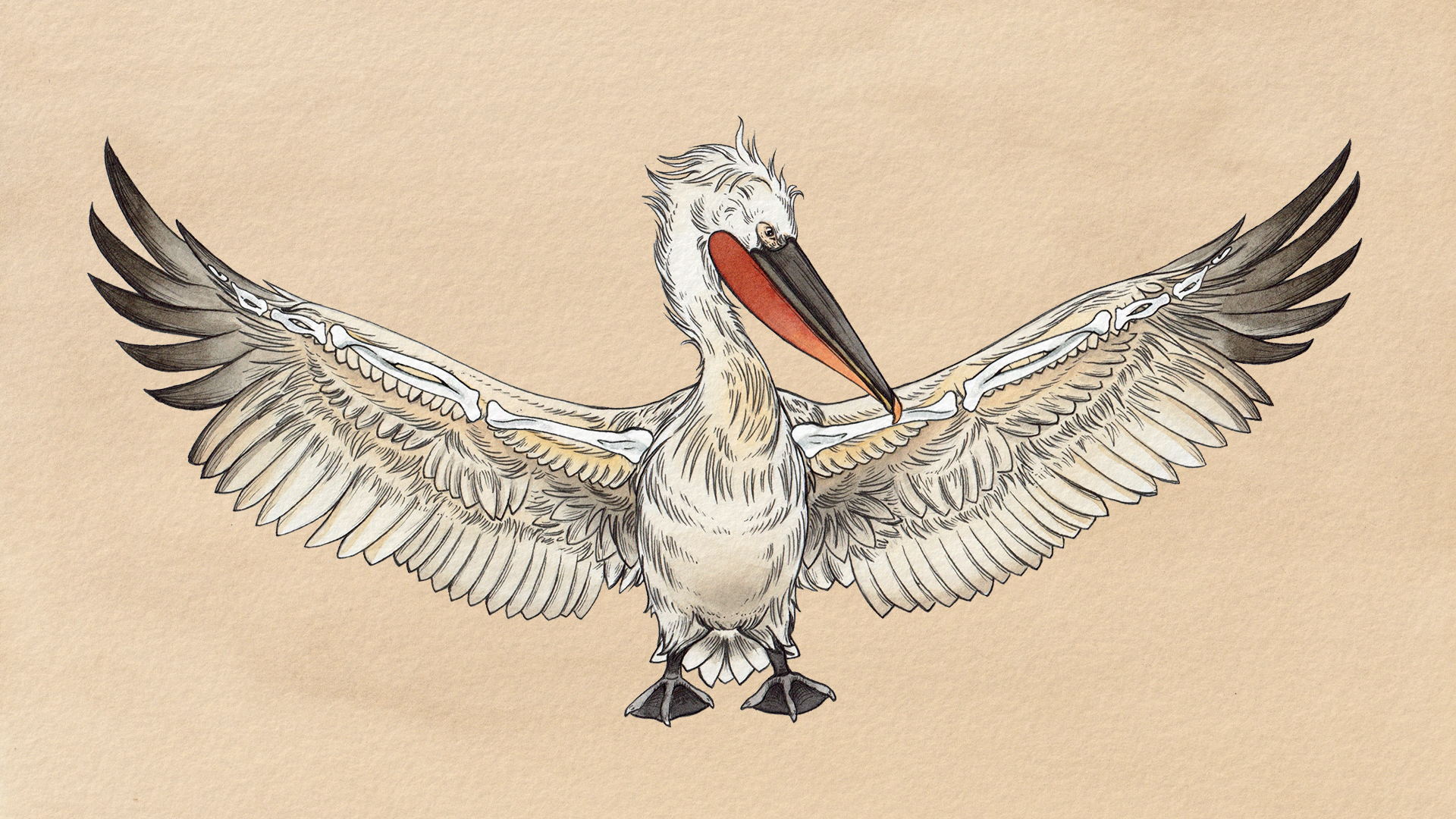

I saw pelican bones before I ever saw a real-live pelican.
I arrived in Cambridge by train on a warm June day last year, empty suitcase in my hand, and took a taxi to a former nuclear bunker.
Upon ringing the doorbell, I was greeted by a friendly curator, who seemed pleased to see another human – or the sun – for a moment. He led me down a long hallway into a small room, filled with boxes, boxes and more boxes.
‘Your pelicans should be in there,’ he said. Pause. ‘That’s a lot of boxes.’
He chuckled and left me to sort through them. I shivered in my summer clothes.
During the Cold War, this basement was designed as the emergency headquarters of the local council in the event of nuclear war. Today, it is where the Natural & Historic Environment department keeps its archives, including a smattering of bones from England’s greatest wetland bird.
The pelican gods must have been with me that day, because somehow I found all three pelican bones in the first eight boxes I searched.
Holding an ulna – the longest wingbone – in my hand, I was amazed by how light it was. I traced over a dozen bumps on one side and realised that’s where the feathers would have been attached. How the pelican would have taken flight when it was alive long ago.
But the sight of a soaring pelican is no longer possible in English skies. These bones dated from the Iron Age, more than two thousand years ago. Today, in Britain, the pelican is extinct.
But why did it disappear? And when? These are the questions that haunted me that day in that cold and windowless bunker. On the train back to Reading, with those bones hidden away in my slightly heavier suitcase, I smiled to myself. It was the beginning of my journey to unearth the truth about this lost bird.
Your attention please.
Features require time, money and expertise. Our subscribers directly support journalism on nature in Britain. Will you join them?
POPULATIONS of Dalmatian pelicans still survive across southeast Europe and Asia. But they are absent from much of their former range. Once, you would have found this enormous bird in places like Denmark, Germany, Sweden and the Netherlands. Not anymore.
Old bones, recovered from former wetlands in the East Anglian Fens and Somerset Levels, show that pelicans once lived in England, too. From the Bronze Age onwards, these birds would have been an undeniable presence among open pools of water, the air around them humming with insects and birdsong.
Now, pelicans are among the species that conservationists are considering returning to Britain. But, for reintroduction to succeed, there needs to be a proper assessment of the species’ ecological needs, including the conditions in which they formerly survived.
Yes, we can study surviving populations in places like Greece or Romania. But these birds occupy a very different climate and ecosystem to what we have in England; they conceivably have different tolerances and requirements. Nor can they tell us why pelicans went extinct here in the first place.
For this information, we must look backwards in time. Archaeologists can help.
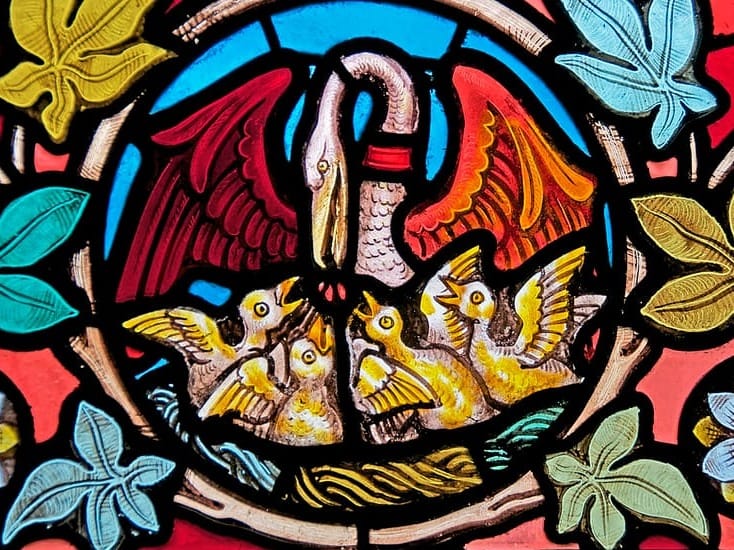
Pictures of pelicans show up everywhere in English churches, shining in stained glass windows. These images are often of an adult piercing her breast to draw blood and feed her chicks – a symbol of Christ.
But, although beautiful, their meaning does not go beyond the allegorical: they were never intended to reflect the actual presence of pelicans in the landscape.
As part of my PhD in conservation palaeobiology, I have spent the last two years tracking down bones, which offer more tangible proof of their past existence.
This has not always been easy. Pelican bones were first discovered during excavations of Glastonbury Lake Village around the turn of the 20th century. Others have shown up in the Cambridgeshire Fens. These bones have been stored in museums, bunkers and even a garden shed. One bone, a femur uncovered in Hull in 1928, was destroyed during an air raid in World War II.
Having gathered the physical evidence, I used radiocarbon dating to determine the age of the bones – and thus when pelicans disappeared. The results suggested that the species survived in England until around 600 AD. Then it vanished.
The question is why.
That is the mystery that I am now trying to solve.
One possibility is wetland drainage. The Romans regarded wetlands as marginal wastelands and began to attack the Fens as early as the second century AD. Later, local Fenland communities dug ditches to control water levels for their cattle, although the impact of this on the landscape and wildlife was on a much smaller scale.
Why does this matter? If we can establish that pelicans went extinct because of the loss of their wetland habitat, then dramatic wetland restoration would be required to support any future population. However, if they were more flexible in their ecology, then current environmental conditions might be able to support restored populations today.
So far, my findings suggest that extensive freshwater wetlands are essential for pelicans to survive in England.
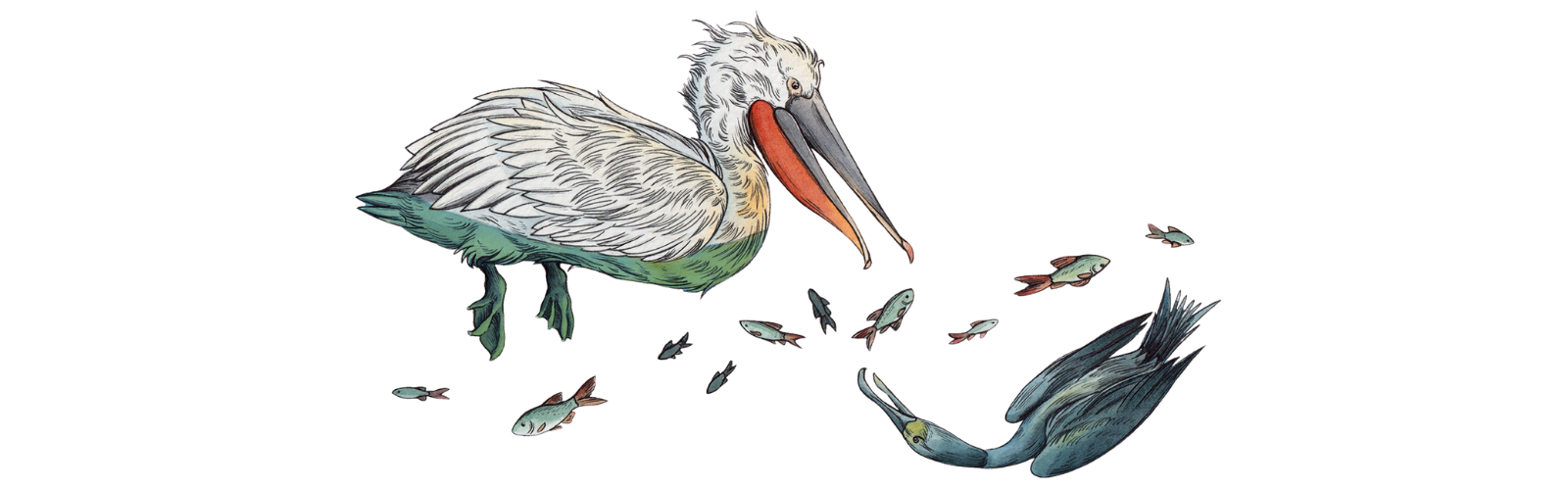
Bones retain the atomic signature of historic meals, showing how the birds interacted with their environment. Although there is some variation between pelicans, most were primarily feeding in freshwater wetlands, similar to otters and cranes. This aligns with what we know about living populations of pelicans in Greece, which also favour freshwater wetlands.
This has significant implications for reintroduction. Britain has lost 90% of its wetlands in the last 500 years. Projects like the Avalon Marshes in the Somerset Levels have sought to recreate this ancient habitat.
But will that be sufficient to support pelicans? If not, what should we do?
My feeling, based upon insights from the historical record, is that rewilders should focus on landscape restoration first. Rather than rushing to return the pelican to landscapes that may not be ready, could the species instead become a flagship for longer-term wetland restoration?

HUNTING is another possible factor in their decline. Although it is difficult to determine the scale, we know that people at Glastonbury Lake Village hunted and ate pelicans during the Iron Age.
How do we know this? When I found some of the bones, I noticed incisions on several, like someone had taken a blade to them.
These are butchery marks, just like you might leave on your Christmas turkey.
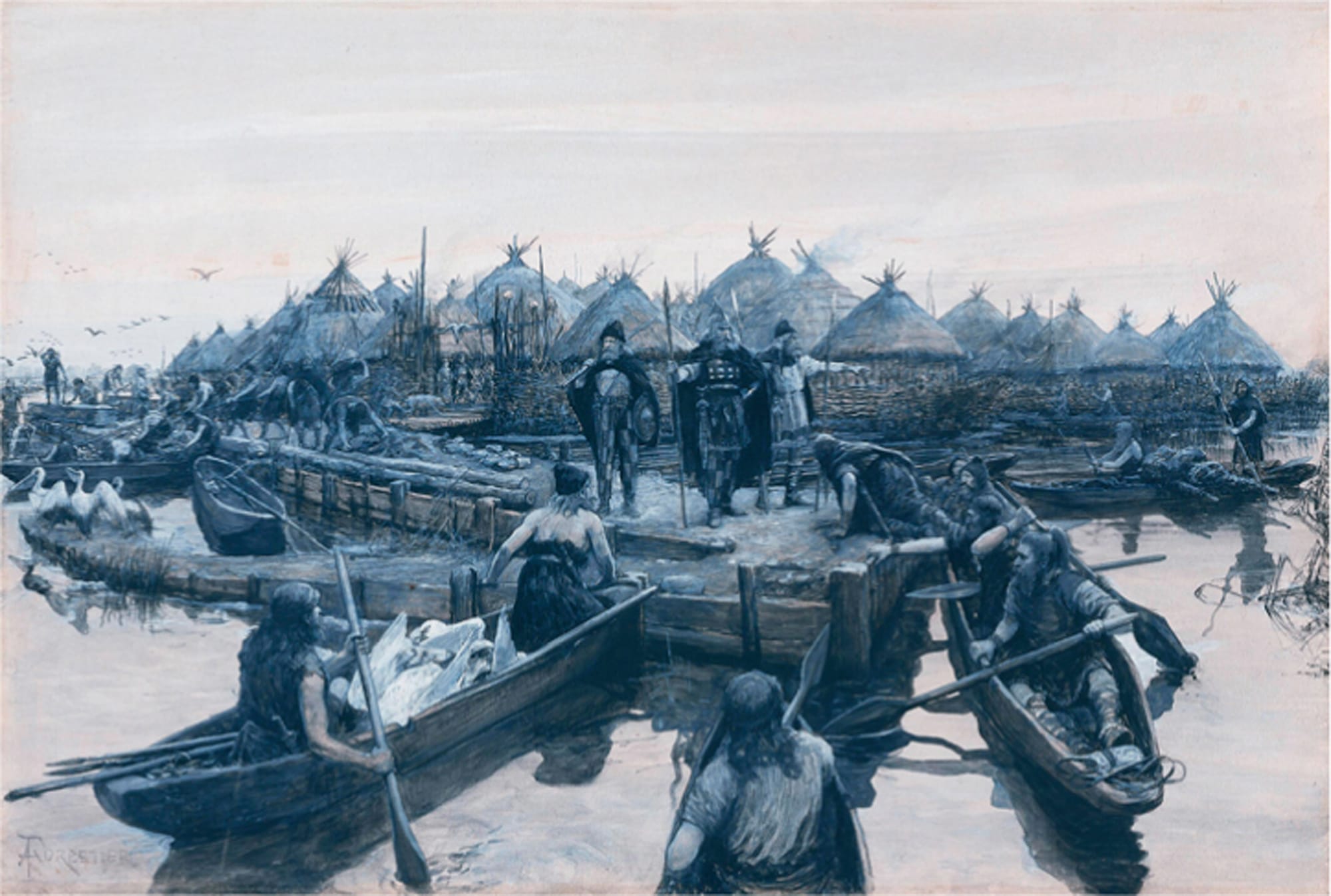
Just as people played a role in the loss of pelicans from the English landscape, people will be needed to bring them back. The landscapes that once supported pelicans have been entirely given over to humans, and any potential reintroduction will need careful engagement with anglers and local communities. Will there be coexistence, or will conflicts emerge between the pelicans and the people who now call these landscapes home?
Another question hangs over the role of climate change: both the natural fluctuations of the past and the anthropogenic changes that we are witnessing today.
Prehistoric sea level rise may have periodically inundated the low-lying wetlands where pelicans used to breed. Meanwhile, a drop in temperature during the Late Antique Little Ice Age (starting around 536 AD) may have made British landscapes slightly too cold for pelicans to survive.
These patterns are something I am still researching. Unpicking them is important: sea levels are rising again – this time thanks to humans – and the Somerset Levels and East Anglian Fens are changing. Flooding is increasing in intensity and frequency, impacting the communities who live there and destroying the nests of wading birds.
Studying the impacts of past climate change can help us to understand how suitable these landscapes are for pelicans today and, crucially, whether they will still be suitable in fifty, a hundred or even a thousand years’ time.
ENGLAND'S future pelicans will have to be sourced from populations elsewhere across Europe. Ultimately, we don’t know whether those birds will behave in the same way in today’s modified landscapes as Britain’s native population did thousands of years ago.
The full details of Britain's lost pelicans will always remain a mystery. However, by looking to the past, we can begin to understand their ecological needs, establishing a crucial baseline for their future restoration.
Looking to past ecosystems is not about returning to a past state, but rather about obtaining a longer-term perspective and an awareness of how the environment has changed.
This applies not only to pelicans, but to the myriad other species that are being considered for a comeback, across the UK and elsewhere. Every day, as I walk to work, I see Red Kites soaring overhead – the outcome of another successful species reintroduction. It gives me hope that pelicans, too, may one day grace our skies.
Meanwhile, one year on from my visit to that bunker, I have managed to put some flesh on the bones. I recently visited the Wildfowl and Wetland Trust site in Arundel where I saw my first real Dalmatian pelican. It sat on the surface of the lake, and its white reflection rippled like a ghost.
I would like to thank my PhD supervisors for their support: Prof Samuel Turvey at the Zoological Society of London, Dr William Mills and Dr Stuart Black at the University of Reading, and Prof Andrew Kitchener at National Museums Scotland.
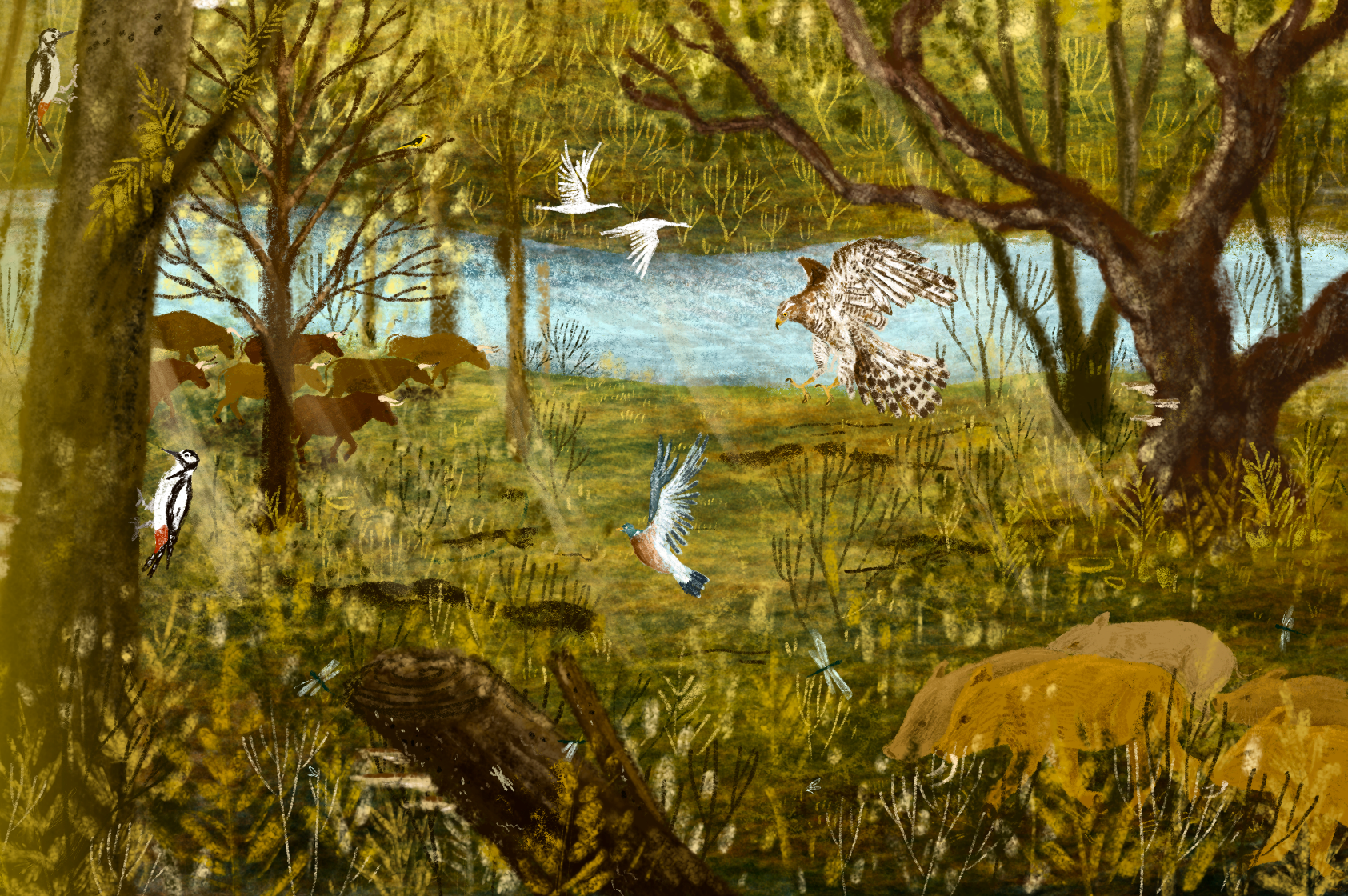
Original artwork (top) by Madison Wright.