
It was December 2025, and a harsh northerly wind was whipping through the hair of Dr. Giorgos Catsadorakis. He had arrived from Greece the day before. Today, he was crossing the Norfolk Broads in a small boat.
Catsadorakis is one of a handful of world experts in the ecology of the Dalmatian pelican. I had brought him here as part of a long-running investigation by my company, Restore, into the possibility of returning these once-native birds to Britain. Now, brushing past the reeds of Hickling Broad, he was discussing the habitat requirements of one of the largest flying birds on the planet: a species that has not lived wild in Britain since the early Middle Ages.
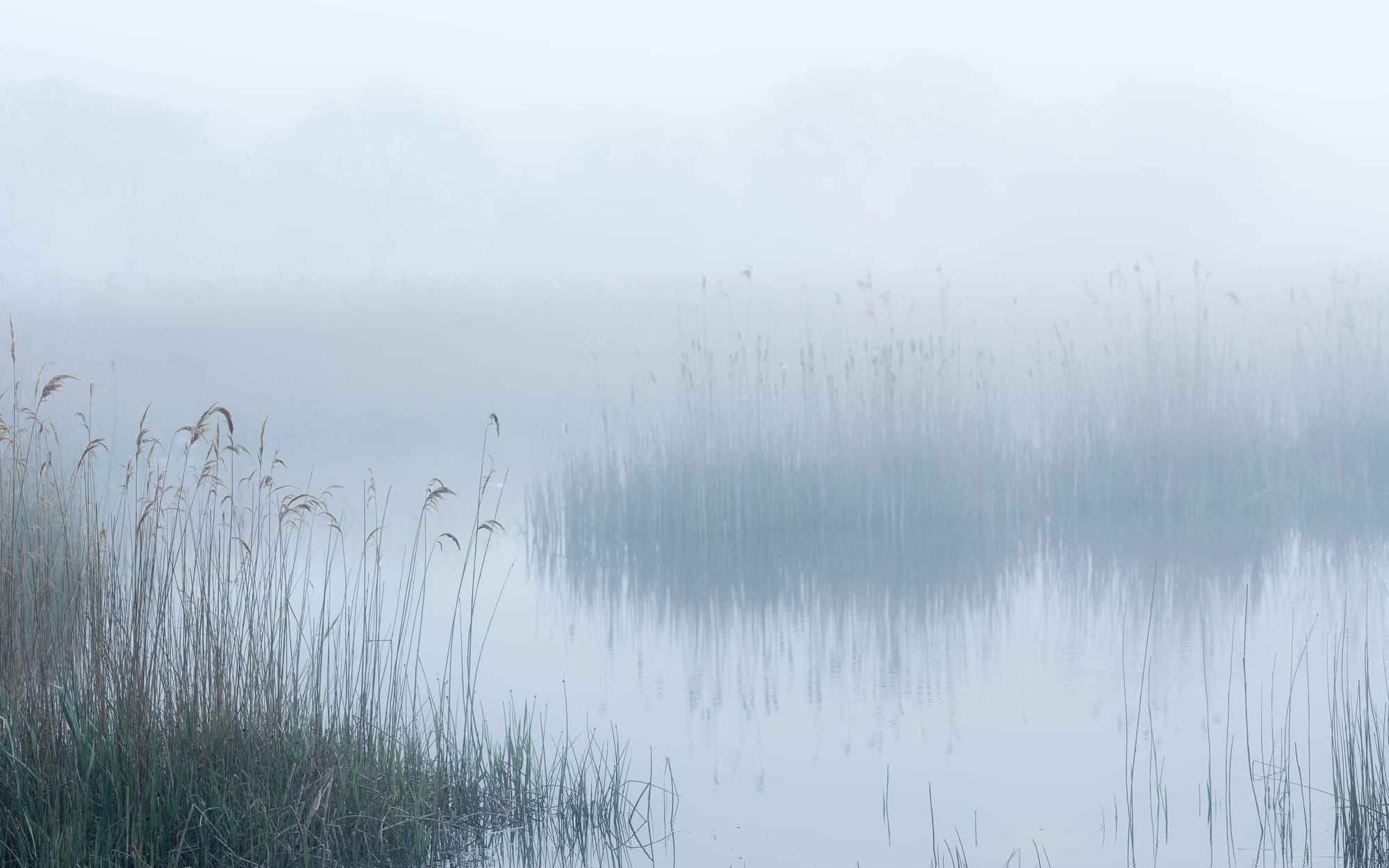
As we sailed out into the Broad, a marsh harrier floated across the reeds and a pair of mute swans lifted from the water. Less than two millennia ago – an ecological blink of an eye – these would have sailed, and flown, beside Dalmatian pelicans.
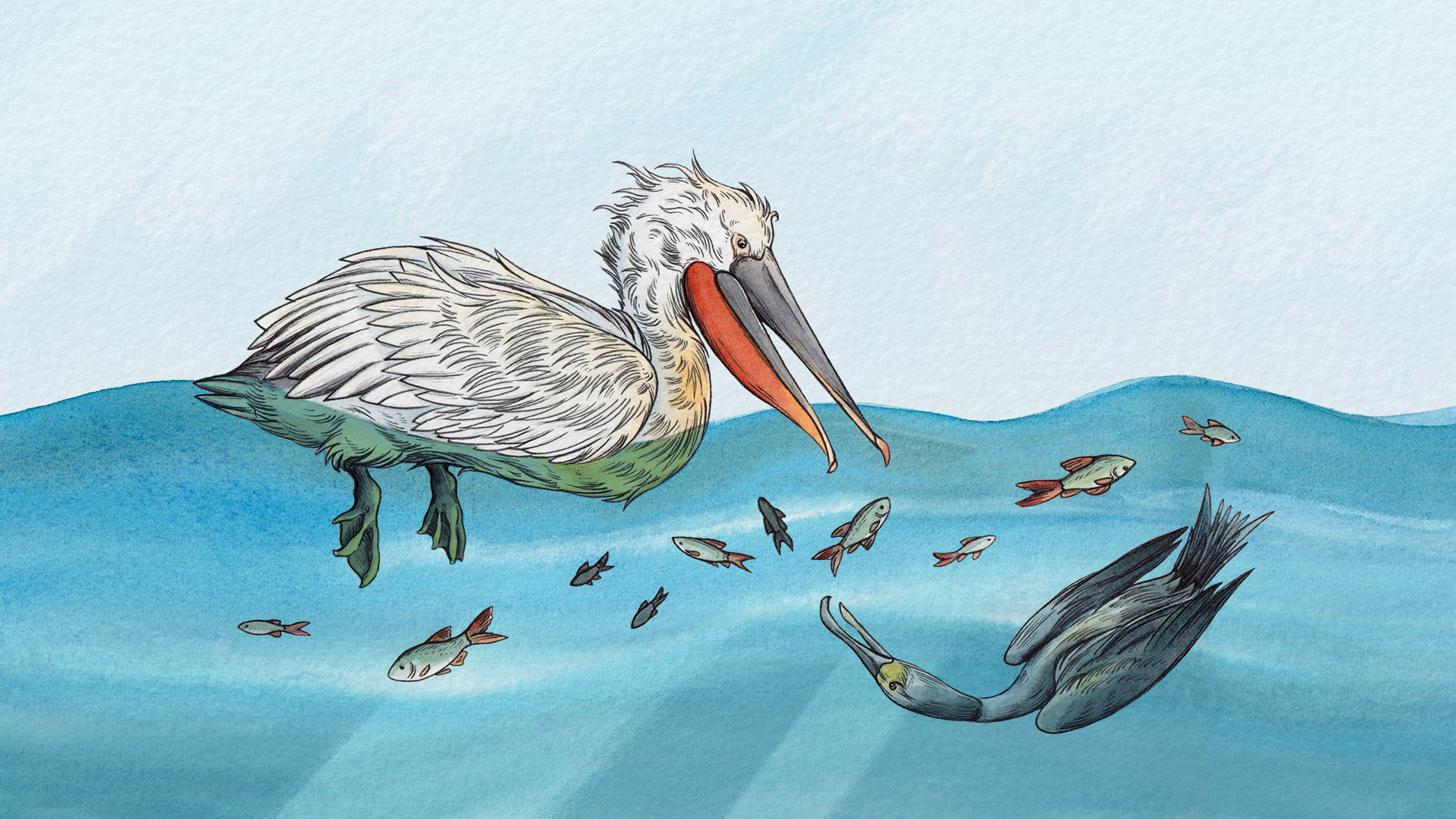
'If we want to return the Dalmatian pelican to Britain, one of the most important clues we have is the presence of the cormorant,' Giorgos said, with typical intensity. The two species, he explained, hunt side by side: deep-diving cormorants flush fish up towards the pelicans, which scoop them from the surface in their enormous beaks.
'Large populations of cormorant, like those we have seen here and at Abberton Reservoir, indicate enough feeding opportunities for a smaller number of pelicans, as we see across their European range.'
Giorgos is as synonymous in European ornithology with the Dalmatian pelican as he is with the Prespa lake system the birds frequent. He spent 21 years at WWF Greece as a senior scientific adviser, and has been scientific adviser to the Society for the Protection of Prespa since 1991. In 2001 he shared the Goldman Environmental Prize with biologist Myrsini Malakou for creating the first trans-boundary protected area in the Balkans.
Alongside him was Sebastian Bugariu. From the Danube Delta region, he is one of the most respected ornithologists in Romania, another world expert in the Dalmatian pelican and, like Giorgos, a man with a deep understanding of Europe's larger wetlands. I was conscious that for Sebastian, the bar for wetland appreciation had been set very high indeed – and I wondered what he would make of the Norfolk Broads.
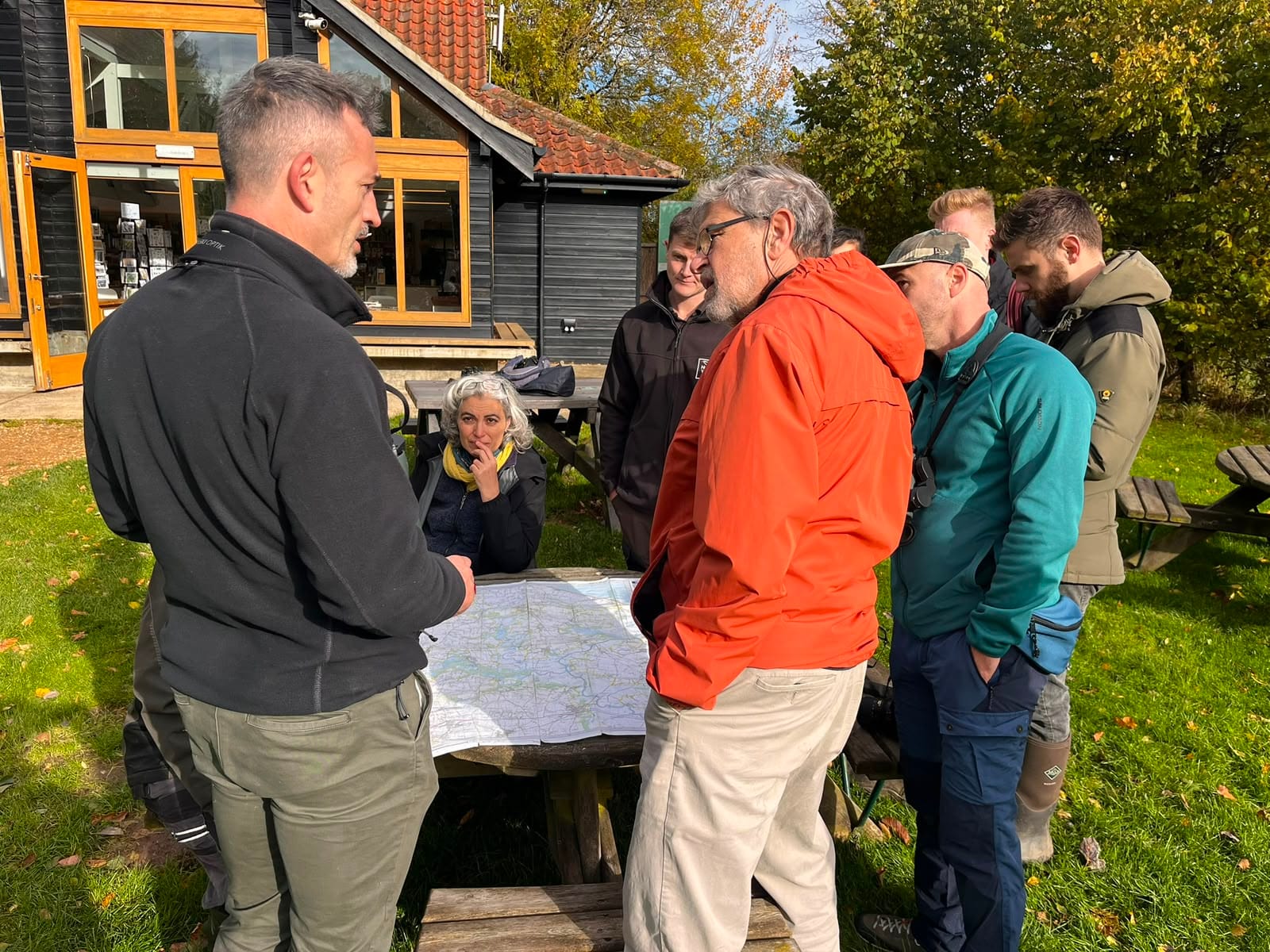
Crammed alongside us in that boat were some of the most influential figures in British avian conservation, from the head of species at the RSPB to state regulators at Natural England, and wardens and representatives from the Wildlife Trusts.
It was interesting to watch two conservation worlds collide. Most of the people in that boat had never imagined that the nature reserves they had created and protected could one day host Dalmatian pelicans. Giorgos and Sebastian had grown up with giant pelicans as their neighbours. When I first raised the idea of pelican reintroduction, the interest was a combination of mild curiosity and courtesy. Now, with two world experts appraising Britain's pelican potential for the first time, curiosity had turned to attention.
Everyone strained forward to hear what Giorgos had to say.

Sorry to interrupt just as the road trip is getting underway. Sophie here, editor of Inkcap. Benedict, Lucia and I have been working for months to bring our pelican series to life. Commissioning, writing, editing – it all takes time.
Can you think of any other publications that would devote 4,000 words to pelican reintroduction? No one else covers British nature with the depth we do.
We have no external funding. By subscribing, you help us to continue publishing stories that get into the weeds of conservation. You'll also gain access to Ground Cover, our weekly digest of British nature news.
It’s £5 a month, or £0.96 a week if you sign up for a year.
I HAD been exploring the concept of returning the Dalmatian pelican to Britain for some years. In my book Rebirding, I wrote about how wonderful it would be to see them soaring beside marsh harriers and mute swans, as I have in the marshes of the Caspian. When the time came to choose the cover, it was a Dalmatian pelican – gazing out across the marshes of Somerset – that made it onto the front.
I have always believed, however, that the science should come first. Restoring birds should not be a vanity exercise, but the final ecological piece in the puzzle of restoring fully functional ecosystems. Would the science bear out my field naturalist's instinct that Dalmatian pelicans could indeed become a viable part, once more, of the British wetland scene?
Through Restore, the nature restoration venture I founded in 2023, I began work on the next logical steps. In 2024, we assembled the UK pelican panel. Its purpose was to discuss every facet of a potential restoration: establishing beyond doubt the bird's status as a native species through the archaeological record, exploring reintroduction methods and social attitudes and, above all, asking whether the species would find enough suitable habitat, food and connected wetland landscape to survive here in Britain.
It is a sign of our ecologically more ambitious times in British conservation that all of the major players turned up. The panel included senior figures from Natural England, the RSPB and the Wildlife Trusts, alongside representatives from the Durrell Wildlife Conservation Trust, Rewilding Britain and the Wildfowl and Wetlands Trust.
In the first year, the Restore team painstakingly mapped out where British pelicans could actually go. By adding together all areas of freshwater marsh and estuary in Britain, we revealed that this country has far more fish-rich wetland habitat than many conservationists had realised. In fact, we have a larger wetland area than Montenegro or Albania – countries that already support colonies of Dalmatian pelicans. We do not have a single enormous delta left, as you would find in Russia or Romania, but we do have wetland landscapes that, in aggregate and as the pelican flies, are very much connected, functioning ecosystems, from the Avalon Marshes to the Norfolk Broads.
A range of experts responded to Restore's provisional findings on habitat suitability, each bringing their own insight. Historical investigation by Lucia Snyderman of ZSL has guided our plans. Nigel Jarrett of the Wildfowl and Wetlands Trust had some very good ideas on how to breed the birds. He would know: his team helped return cranes to England, raising their chicks using crane puppets to prevent the young birds imprinting on humans, then allowing them to fly free into the marshes of Somerset.
Captive rearing with a view to wild release could be possible, Nigel reflected during one panel, but it would be challenging. ‘The pelicans we currently have here at WWT can be quite feisty: they're extremely intelligent, and they tend to take offence. There was one person on the team who forgot to feed them one evening, and they never went near him again – they just sulked.’
Others on the panel focused on the social implications.
'Even if pelicans are quite selective in the fish they eat,' said Mike Shurmer, head of species for the RSPB, at a second panel focused on food availability across the UK, 'pelicans will initially be perceived as giant fish hoovers. People, including our fellow ornithologists, will need to understand that pelicans are only able to survive, like cormorants, in systems with enough fish to sustain those populations.'
As the panels progressed across 2024 and the first half of 2025, it was clear to Restore's team that there was sufficient, serious scientific engagement to justify the next step. We had provisionally mapped the pelican's potential range and habitat, and explored its historical ecology. But the fact remained that nobody in Britain is an expert in wild Dalmatian pelicans. Most conservationists have never even seen one. It was time to call in those who knew them best.
The verdict that mattered would not be Restore's, or my own instinct, or even that of British ornithologists. It would come from the international experts who know every feather of pelican ecology.
THE pelican road trip was a busy one. Alongside Sebastian and Giorgos – and with senior figures from the RSPB, Natural England and Rewilding Britain along for the ride – we explored the Norfolk Broads, the marshes of Minsmere in Suffolk, and the reservoirs and estuaries of Essex. Restore's team did not seek to interfere in the findings, the exploration or the outcomes. We simply listened, as the two world experts began to share their views.
The trip began at Abberton Reservoir, an entirely man-made site, very different from anything Britain's original pelicans would have used.
But as we soon learned from Sebastian, pelicans in Europe today often live not in pristine landscapes but beside people – on man-made lakes, fish farms and adapted wetlands. 'It is really about fish, about wetland availability, about a lack of persecution,’ he reflected.
The sight of hundreds of roosting cormorants at Abberton had both men making cautiously excited noises. Giorgos was fascinated by the number of cormorants a British open water body could sustain.
'The cormorants here are telling us much of what we need to know about fish availability,' he said. 'These numbers would be high even in the Greek lakes that are home to pelican colonies.'
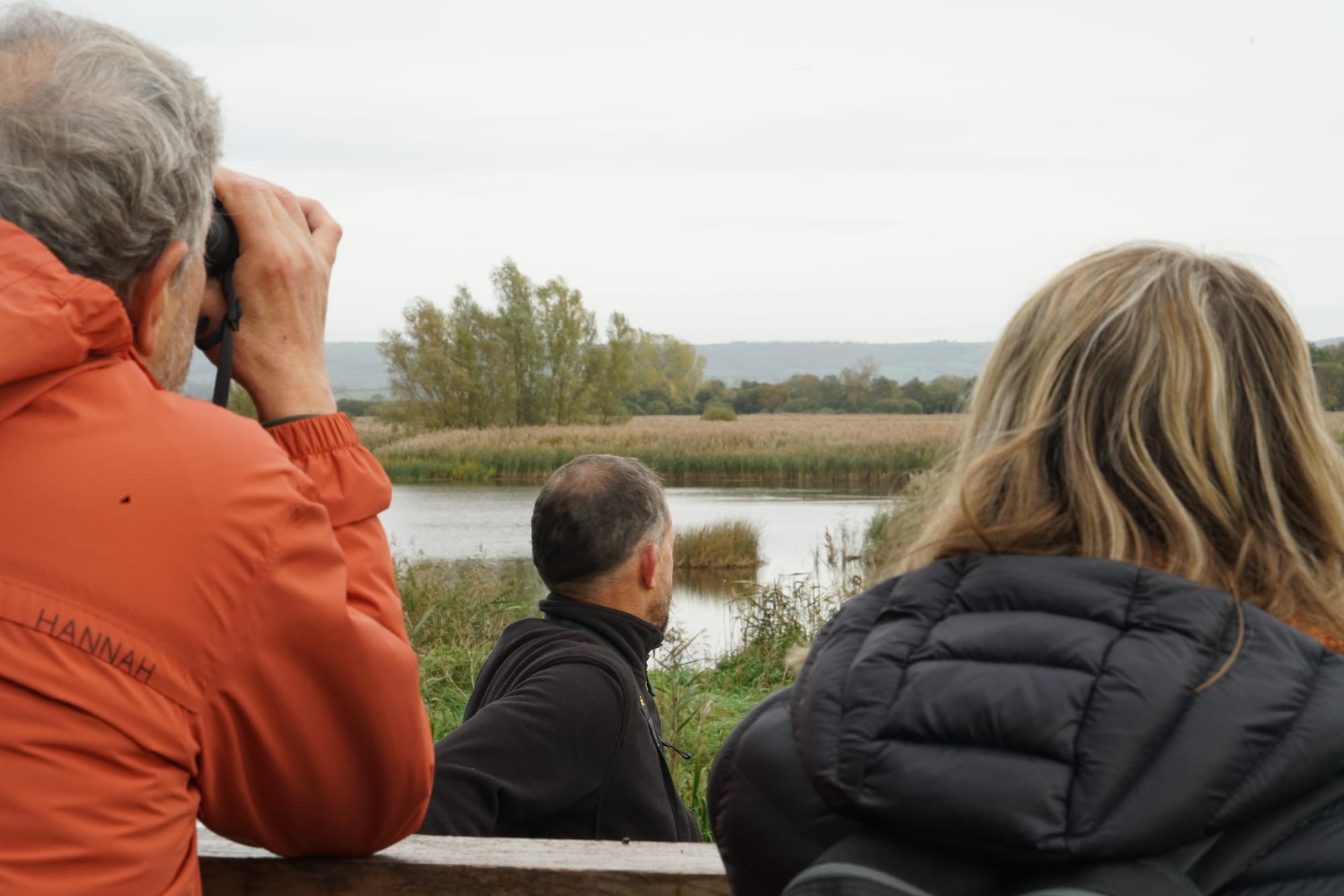
During our time in eastern England, we shifted northeast to the famous birding marshes of Minsmere on the Suffolk coast, and then to what Restore had considered the among most promising pelican habitat in England: the marshes of Hickling, Ranworth and Horsey in the Norfolk Broads. As we swept out across Hickling, Giorgos became increasingly alert.
'The wetlands in the Norfolk Broads, it seems, are very rich in fish,' he said. 'We have seen many cormorants, many herons, and this is a good sign. The marshes here are different, of course, from Romania, but there are many smaller wetlands, which add up to one much larger landscape. In my view, Dalmatian pelicans could easily thrive here, using all of these wetlands for their needs. It is surprising. We often hear that Britain is a nature-depleted country, yes. But your wetlands – these are real jewels, I think.'
John Blackburn, the humble but brilliant site manager who has run Hickling Broad for many years, looked quietly pleased, and a little amazed, that his reserve might be pelican-friendly.
'I had not really thought that you had so much rich wetland habitat in Britain,' said Sebastian. 'And your wetlands are very well protected. Nobody here, I think, would shoot pelicans within these wetlands, as sadly they still do in Romania.'
Richard Saunders, a carefully impartial senior ornithologist at Natural England, wondered aloud which wetlands hosted the most fish, and whether they had the capacity to host pelicans all year round.
'This is important,' Giorgos countered, 'but the pelican is a landscape species. It will not remain in one lake, or even one system. Birds can travel several, even many miles between wetland areas.'
The next day, we crossed from the Norfolk Broads to Somerset. It was at this point that I began to feel an enormous sense of suspense. I had always just felt, as much as analysed, that the Avalon Marshes would be the perfect future home for a colony of British pelicans, as they had been in the past. Now, not unlike the judges on an ornithological reality TV show, Giorgos and Sebastian would give us a cautious, early verdict.
As we drove west, Sebastian asked why I had become so fascinated by returning a bird that had not been seen in Britain for more than a thousand years; a bird that no one else was asking to be put back.
I explained how I had watched my first pelican soar past me in the marshes of Hungary, and been struck by its size and elegance. How I had watched them over the Caspian marshes, beside all of the wetland birds that we normalise back home. How I did not believe that extinction should be a one-way route, and that we had an entire heritage in Britain that was ours: stolen, and due to be restored. How many species have a far greater plasticity than we credit them for – I had once watched a colony of pelicans in Albania happily nesting on a lake beside a small supermarket car park.
'There is also something different, something ancient about Dalmatian pelicans,' I said. 'They have this presence, especially in the gaze. It isn't just the size. I can't quite explain it.'
'You are right,' Sebastian said. 'The pelican is not a normal bird. It is more like an ancient being. The eye, the intelligence, it is different. Once, in the Danube, we tried for days to catch a pair of Dalmatian pelicans in a ringing net, so we could fit a transmitter and track their movements. After some days, they came back – but they deliberately knocked over the poles that supported the net.'
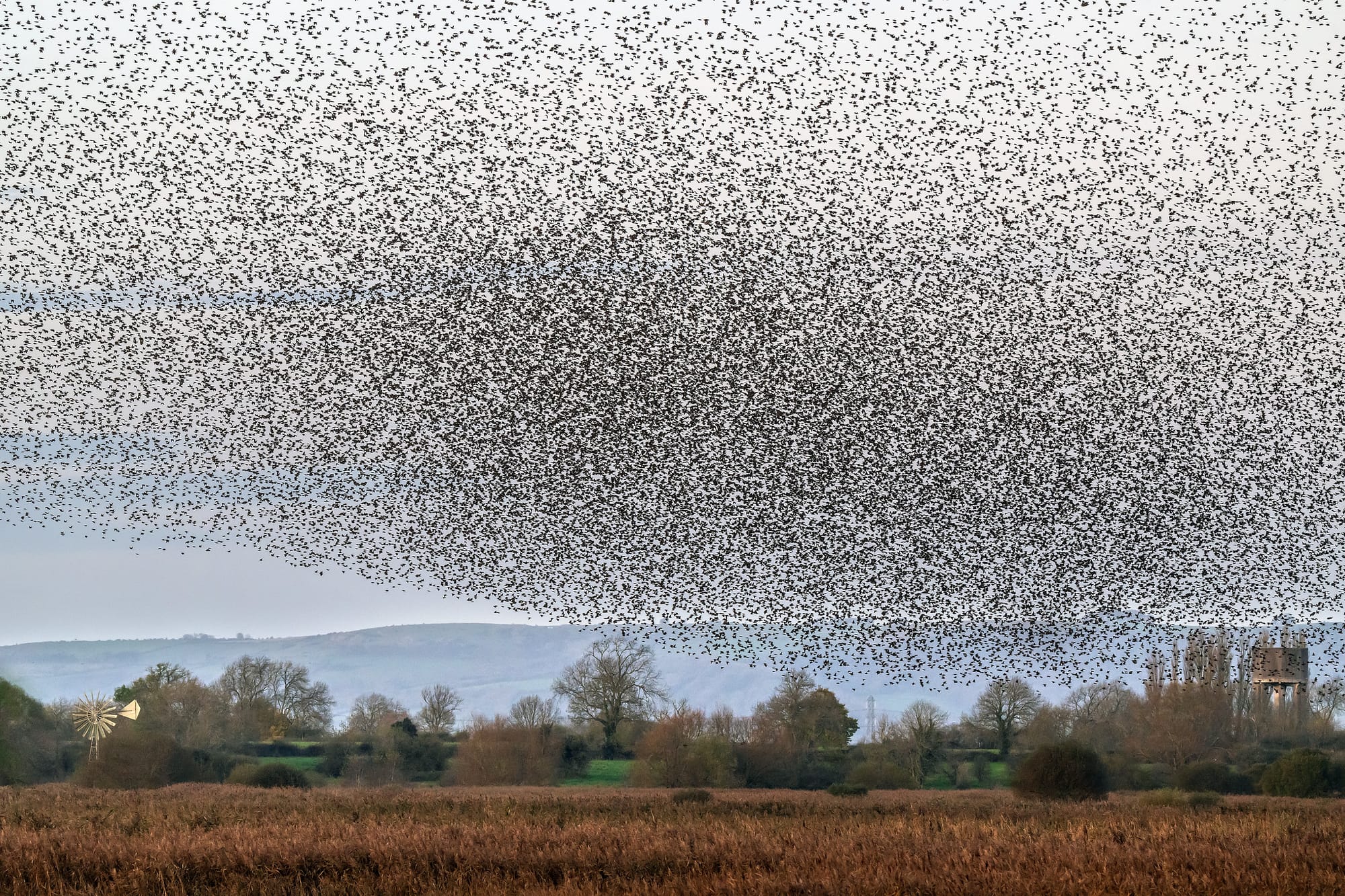
We struck out into the Avalon Marshes. They are familiar to us now, but still a remarkable feat of nature restoration: deliberately flooded former peat works, now home to bitterns, cranes, marsh harriers and, most recently, beavers.
As we crossed the heart of the complex, I could observe the excitement building in the scientists too. Finally, we gazed out across Noah's Lake, the greatest open expanse of water in the marshes. I dared not confess to the panel how many times I had sat in this hide, watching the mute swans, the egrets and the bitterns, believing that one day I could be watching a Dalmatian pelican landing on the lake in front of me.
Giorgos did a little series of bounces, which was always a good sign.
'This lake is very, very good for Dalmatian pelican,' he said, as my heart quietly skipped a few beats. 'It looks very much like lakes we have in eastern Europe and also, I think, in the Danube.'
Sebastian agreed. 'I see no reason – seeing this landscape, seeing all of the wetlands here in Somerset, and the enormous Severn estuary, to which a pelican can easily commute – why the Dalmatian pelican could not fly here, and nest and feed between these many wetlands. We must, of course, research much further, but this has surprised us. And I think, from all we have seen on this trip, that Britain could be good, very good, for the reintroduction of the Dalmatian pelican.'
That evening, Giorgos, Sebastian and the team from Restore pored over an aerial map of the British Isles. The two experts began spotting whole new areas where we had never even thought these great birds could survive: Poole Harbour, the estuaries of southern Wales, and the many large creeks and inlets that we are blessed with across our coastline.
'You are limiting yourself, I think,' said Giorgos, 'by focusing only on the inland wetlands. In my experience, pelicans thrive best where wetlands join the sea, and your many harbours and large river mouths would be wonderful habitats for the Dalmatian.'
THE next day, the pelican scientists flew home. But with international consensus slowly building, and the realisation that returning Dalmatian pelicans to Britain is, ecologically, more likely to be feasible than not, Restore's pelican panel now has its work cut out. There are many elements that stand between an early idea and an actual wild, living population of birds. In many ways, the journey has just begun.
The next step is a formal early-stage feasibility study for Natural England. This may take a year for Restore to produce, but is intended to examine every element – and every potential drawback or challenge – of reintroducing Dalmatian pelicans to Britain.
In-person stakeholder engagement sessions, with a range of angling groups and other interests who may feel apprehensive about pelican reintroduction, will form a critical part of the process.
Early-stage conversations with our investors and funders will be critical too, as projects like this so often founder on the limited capital available to our NGOs.
And our international engagement will continue, not only with Giorgos and Sebastian but with our scientific colleagues in the Netherlands and Germany, who are also beginning to explore pelican reintroduction within the bird’s former European range.
What that pelican road trip reminded us, though, is that ambition is, should be and must be the absolute driver of conservation. Only with maximal ambition can we hope to restore what has been lost. Only then can the next generation, for the first time in human history, be filled with wonder at a natural world richer, not poorer, than the last.
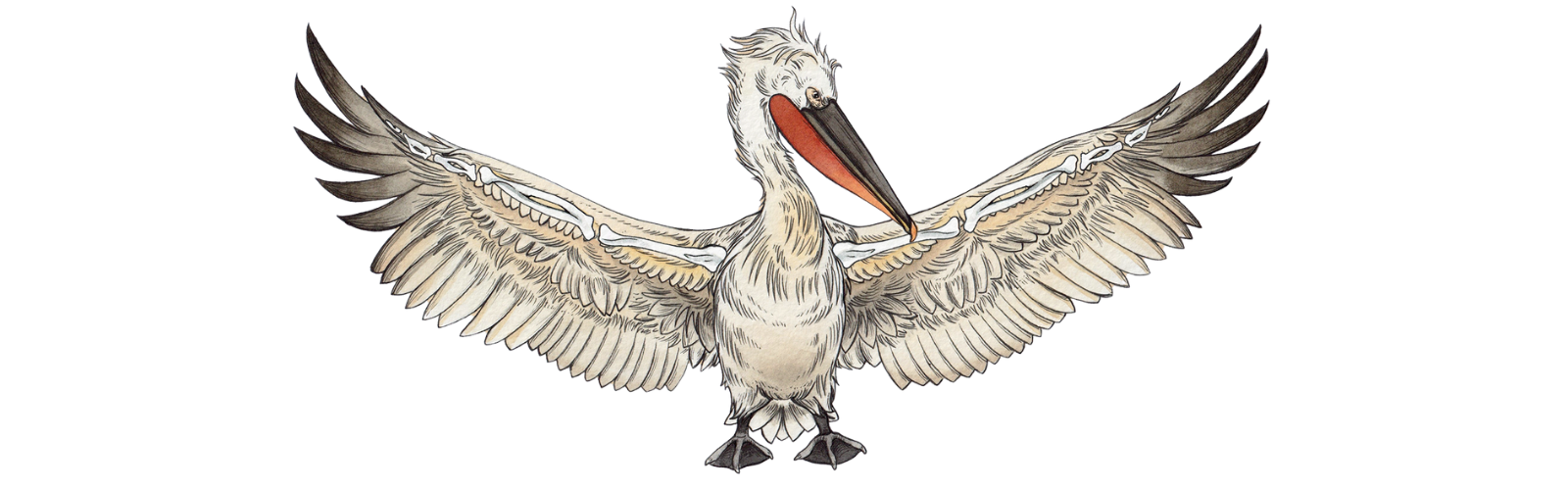
Original artwork (top) by Madison Wright.