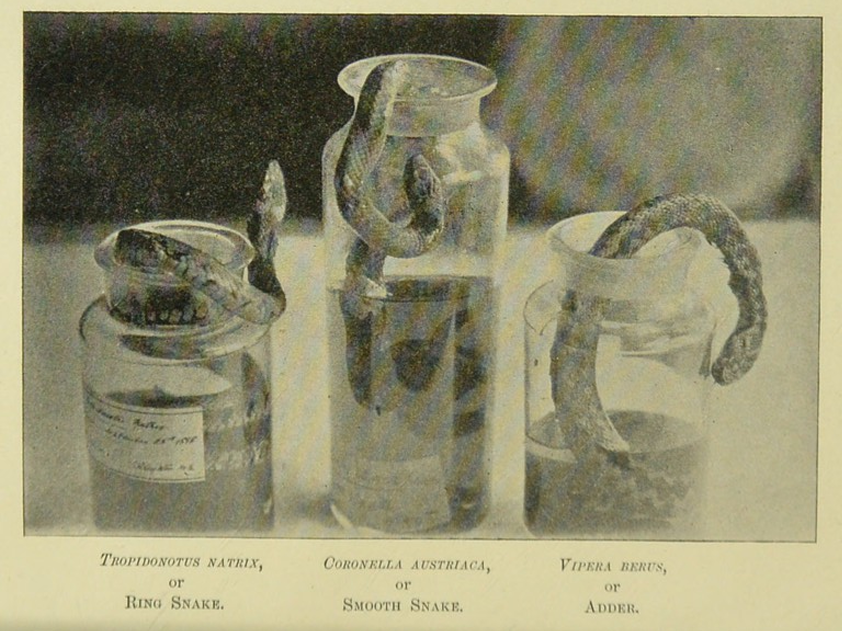
When the Edwardian naturalist, Gerald Leighton, first arrived in the Monnow Valley in the winter of 1895, he was nonplussed by the accounts of the locals.
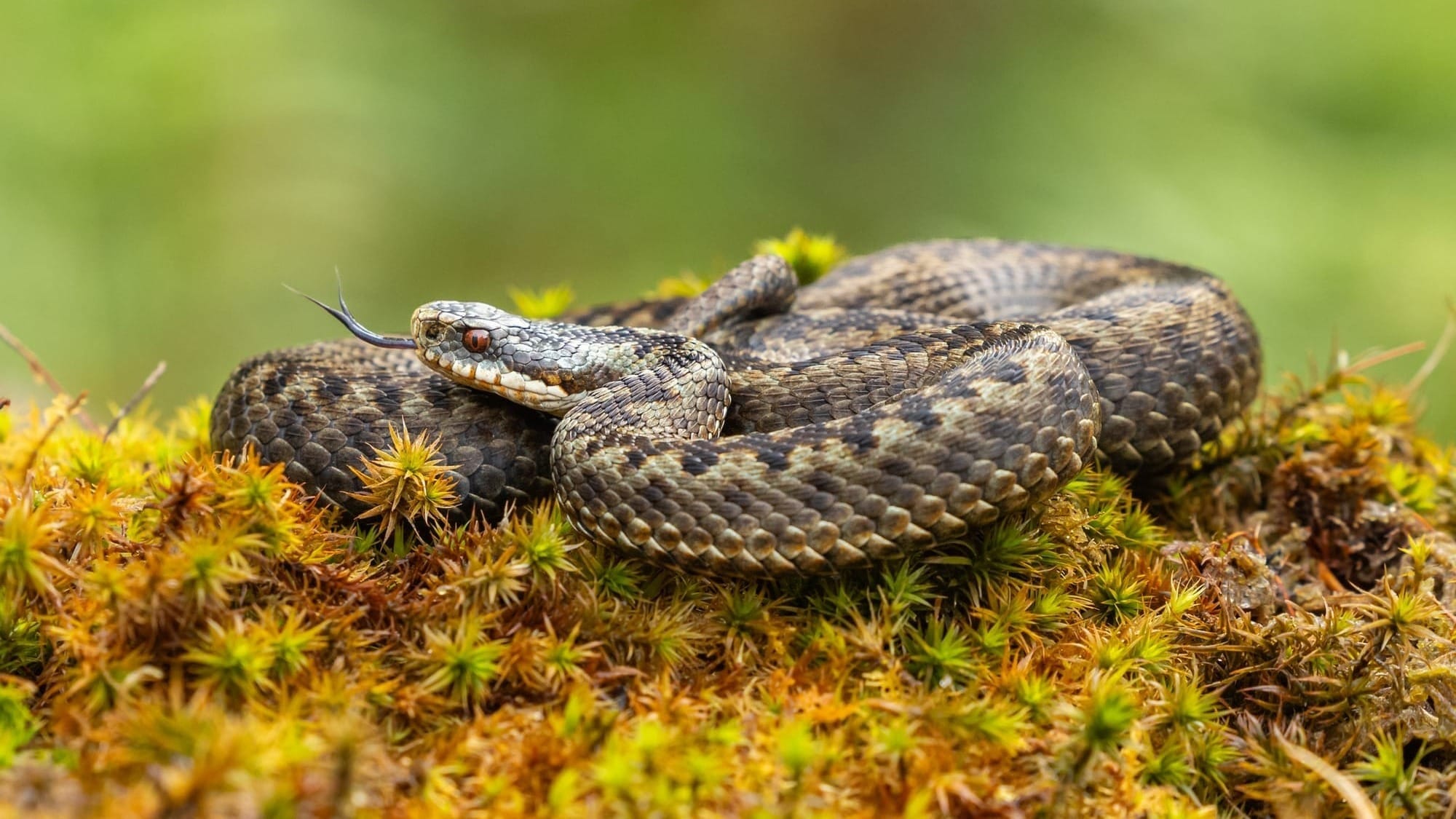
‘Landlords and tenants, farmers and gamekeepers, labourers and poachers, all said the same thing in almost the same words,’ he wrote in his 1901 thesis, The Life-History of British Serpents. ‘The universal statement was: “There's no snakes here, Sir, only adders.”’
Just as perplexing were reports of their size. Gamekeepers described kills of more than two feet, ‘as long as my arm and as thick as my wrist’.
Leighton couldn't help but wonder if these rustics were exaggerating or getting their natural history wrong. After all, adders of such a length were unheard of. He would have to wait until summer, for the snakes to emerge from hibernation, to learn the truth. ‘I was hardly prepared for what I found.’
The locals had been right. The valley was rich with adders, which averaged at over two feet, just as reported. Despite the habits of the keepers, who ‘kill a considerable number every spring’, Leighton noted that the adder population in this part of Wales was nevertheless ‘very secure’.
Skip forward a century and sighting an adder around Leighton’s old haunts is a vanishingly rare experience, such that I can only find two records in recent history and have never seen any here myself.
Good riddance, the snake haters will say. Except in ecological terms, an adder in the gorse is a canary in the mine. It is telling us something about the wider health of our ecosystems; their absence is a siren alerting us that something is going badly wrong.
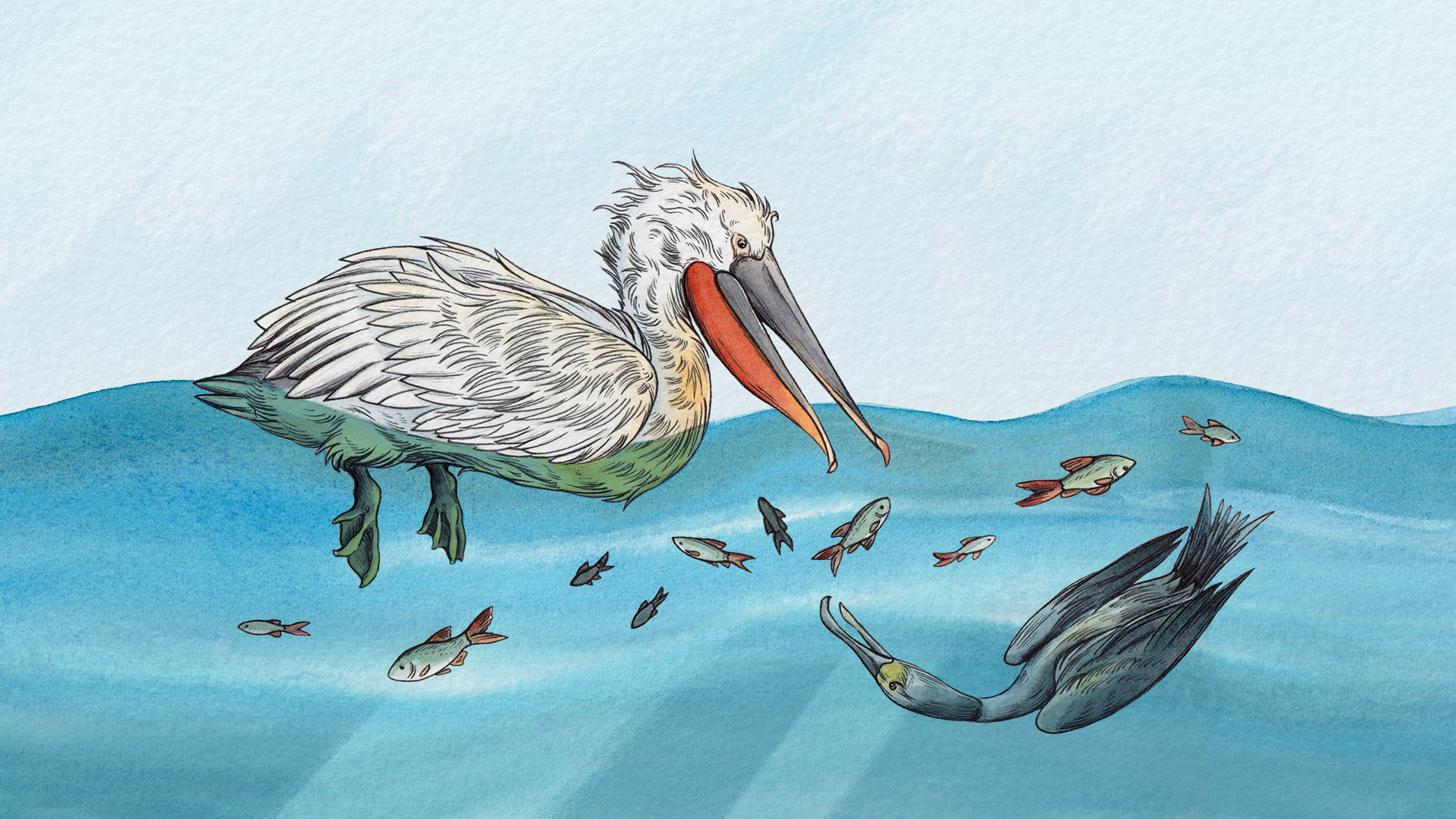
It’s not just on the land that it's happening. Flick through out-of-print books in the National Library and you can find a lost world of extraordinary marine abundance. A million herring caught in a single night near Aberystwyth in the mid-18th century. Angelsharks, once ‘plenty’ in Cardigan bay, now almost vanished. Quarrymen from Llandudno recounting the happy day, in 1919, when the mackerel came so thick to the coast they ‘caught hundreds by merely wading in for a few yards and throwing them ashore with their hands.’
Even a single generation has seen dramatic changes. When my father grew up in Chepstow in the 1960s, the salmon runs up the Wye were so bountiful he grew sick of eating the fresh fish for dinner. At that time, there were 8,000 thousand recorded catches every year. Last year there were 64.
These are the stories behind the statistics to which we in Wales have become numbly accustomed. Three hundred species lost since 1800. A 20% decline in overall abundance in the past 30 years alone. Meanwhile, creatures which once filled the stanzas of our song and poetry – wildcat, nightingale, corncrake, eagle – now commemorated on national registers of extinction.
As the depletion stacks, the sense of hopelessness grows. The temptation is to succumb to inertia and fatalism. What has been the trend will continue to be the trend. It’s all we have known.

Well, some of us aren’t giving up just yet. Last month, a handful of organisations launched the Welsh Rewilding Alliance – bringing together access groups like Right to Roam and the British Mountaineering Council, active rewilding initiatives like Tir Natur and the Grange, and supporters like Wye Valley Wilding, Green Valleys and Rewilding Britain, alongside Black Mountains College, which is pioneering the educational work underpinning the new green economy.
We came together over a common realisation: nature in Wales is struggling, and efforts to address it lag well behind those of other nations. But when extractive practices stop and nature is allowed to lead, the recovery can be astonishing – both for nature and for people.
The evidence is everywhere. A recent survey of rewilded land in Scotland found that suitable bird habitat had expanded more than fivefold, while numbers of bumblebees and butterflies rose tenfold. At the Knepp Estate, in West Sussex, breeding birds have risen by 900%, while species such as the Turtle Dove and Purple Emperor butterfly have returned. Rewilding at sea shows similar success. The Community of Arran Seabed Trust recorded lobster and scallop numbers quadrupling in no-take zones, while the Cuckoo Ray has reappeared after a thirty year absence; meanwhile, the biodiversity-rich waters are drawing ecotourism and strengthening local fisheries.
So what is stopping us replicating these successes?
Rewilding had a faltering start in Wales, after a plan launched in 2018 to restore ecosystems across Mid-Wales and Cardigan Bay foundered, following growing opposition from local farmers and claims of eco-colonialism.
Such fears were perhaps amplified by a toxic legacy of land use changes in Wales. Over the past few centuries, swathes of the landscape were mined, drained, modified and quarried. Native woodland was felled and conifers planted in their place. Many of these initiatives were imposed from outside, sometimes to intense local misgiving. Often, the profit vanished while communities were left to reckon with the consequences.
In this context, rewilding became associated with outside control and conflated with land abandonment, carrying with it painful associations of depopulation and post-industrial decline. The result: while enthusiasm for rewilding took off in England and Scotland, in Wales it became verboten.
A decade on, the controversy has softened. There is greater sensitivity to the need for rooting projects in local communities, with better understanding – and clearer explanation – that rewilding still means the employment of local people, even as natural processes lead. Grazing continues, albeit at lower densities and with different species: specialist cattle and pigs rather than sheep. In other words, the partial revival of a husbandry that my Welsh ancestors would have recognised, just a few hundred years ago.
Some still caution against using the term ‘rewilding’ when working in Wales. Can't you call it something else? is a common refrain.
But we think they’re wrong. First, it’s patronising: if you are rewilding, be honest about it. Second, the term has a specific ecological meaning. Unlike traditional conservation, rewilding prioritises dynamic natural processes, often through the reintroduction of the lost species, or their proxies, that help them unfold. We shouldn’t fit concepts around culture wars. Instead, we should defend ideas we believe have merit. Otherwise we’ll end up replacing one short word with twenty bits of jargon.
This needs to be an exploratory conversation, not a heated argument. We should be cautious about boosterism. Rather than hard-selling a bright new horizon, we need to talk honestly about the existing evidence, be optimistic where it shows promise, make space for trialling different approaches, and be open about what has and hasn’t worked.
In that vein, here is our opening gambit.
Rewilding boosts employment. Rewilding Britain has witnessed a 120% increase in full-time jobs across its Rewilding Network in its first ten years. On Scottish sites, employment quintupled and diversified, with traditional roles in animal husbandry and land management supplemented by work in film and photography, education, eco-tourism, green energy, weddings and conferences, and more.
Many of these new jobs are in the sectors most prized by rural Welsh youth. A 2022 study by Aberystwyth University ranked creative industries as the most desirable career path, with conservation and environmental management in third place, and tourism and green energy in fourth and fifth place respectively. It found that the majority of young people, especially Welsh speakers, would stay or return to rural Wales if such jobs were available and other rural problems, like the lack of affordable housing, were addressed.
Rewilding, then, can mean repopulation – and it may prove essential for future-proofing rural life. Traditional agricultural employment in Wales is declining. Some 8,000 agricultural jobs were lost between 2015 and 2021. Most Welsh hill farmers earn less than the minimum wage, and the average age is over 60. Young people still want a future in farming, but as part of a wider rural youth economy – not the only show in town.
Meanwhile, claims that rewilding threatens our food security – already a spurious assertion in England – hold even less water in Wales. Our farms mostly produce lamb and beef, the overwhelming majority of which is exported. Just 5% is consumed within Wales itself.
To kickstart rewilding across Wales, the government could take several steps. It could lead by example, empowering Natural Resources Wales to manage the public estate for large-scale restoration, beginning with upland reserves and uneconomic forests. It could create a reintroduction strategy for keystone species, starting with high consensus creatures like beaver, oyster and white-tailed eagle. It could implement Community Right to Buy legislation, as in Scotland, giving communities first refusal on the purchase of land for natural regeneration. Finally, it could subsidise rewilding activities, like natural grazing, through its new environmental payment schemes for farmers.
Some efforts will need to be in the landscape of the imagination. Welsh folklore is rich with concepts like Annwn: otherworlds which shadow our own, filled with abundance, enchantment, and new possibility. We should draw on our language, our history, and our strong cultural traditions to rediscover these territories of the mind; to visualise a future which is already beside us yet just out of reach.
These traditions remind us that the wild in Wales has always been a peopled place. Our vision is inspired by projects like Moor Barton in Dartmoor, whose approach is simultaneously social and ecological. Conducted for community benefit, powered by community action, and clear in its recognition of the ecological role played by that most significant keystone species – people.
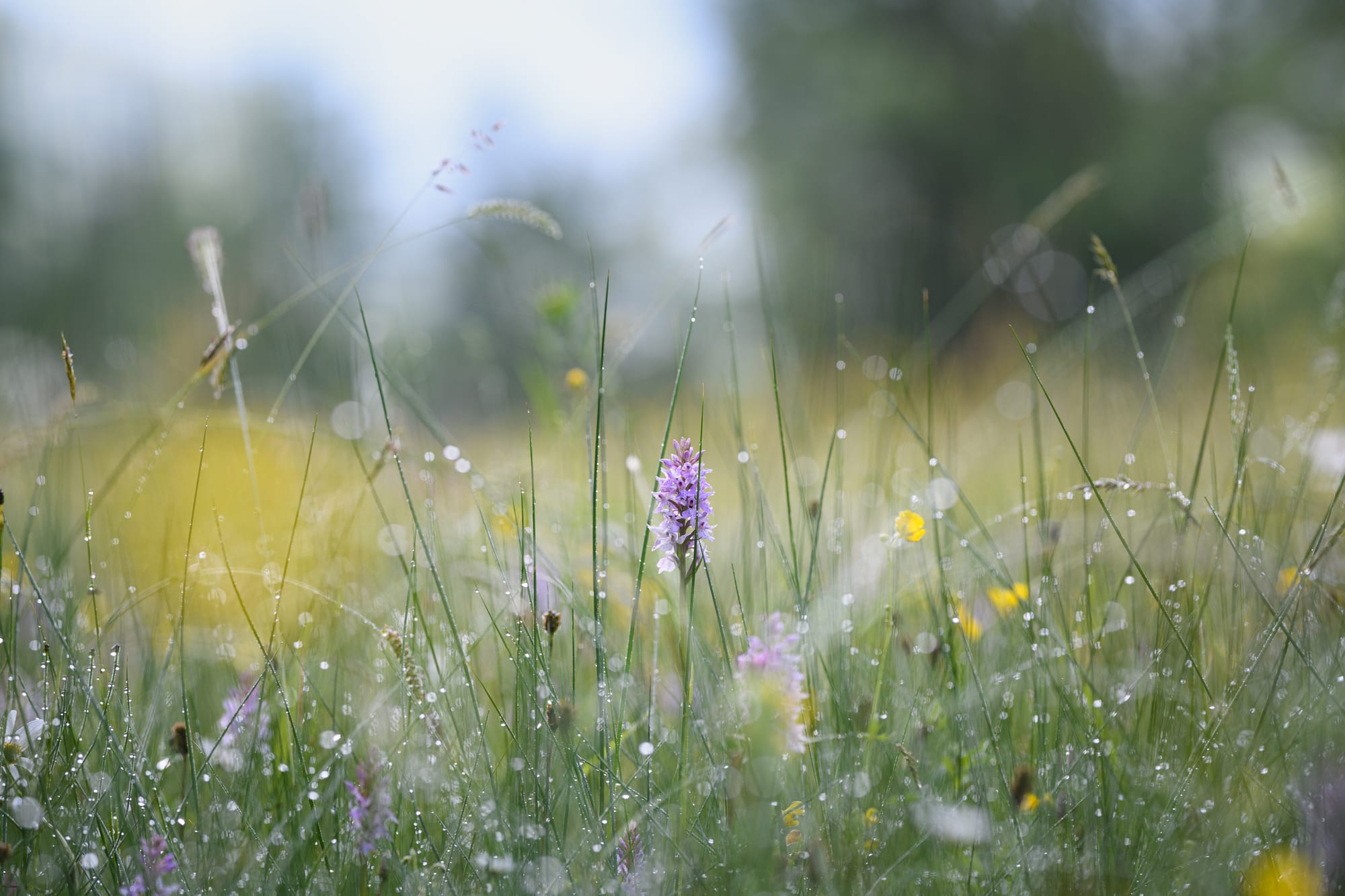
So it is that I imagine strolling to my own community project in Wales on a Sunday with friends and family, just as we once took to chapel. Mornings spent restoring bogs, afternoons veteranising trees. Evenings around a fire, where we gather to eat. Outside that ring of light: beaver, barbastelle, flycatcher, green-winged orchid. Somewhere, coiled amid the roots and burrows, Leighton’s adders sleep.
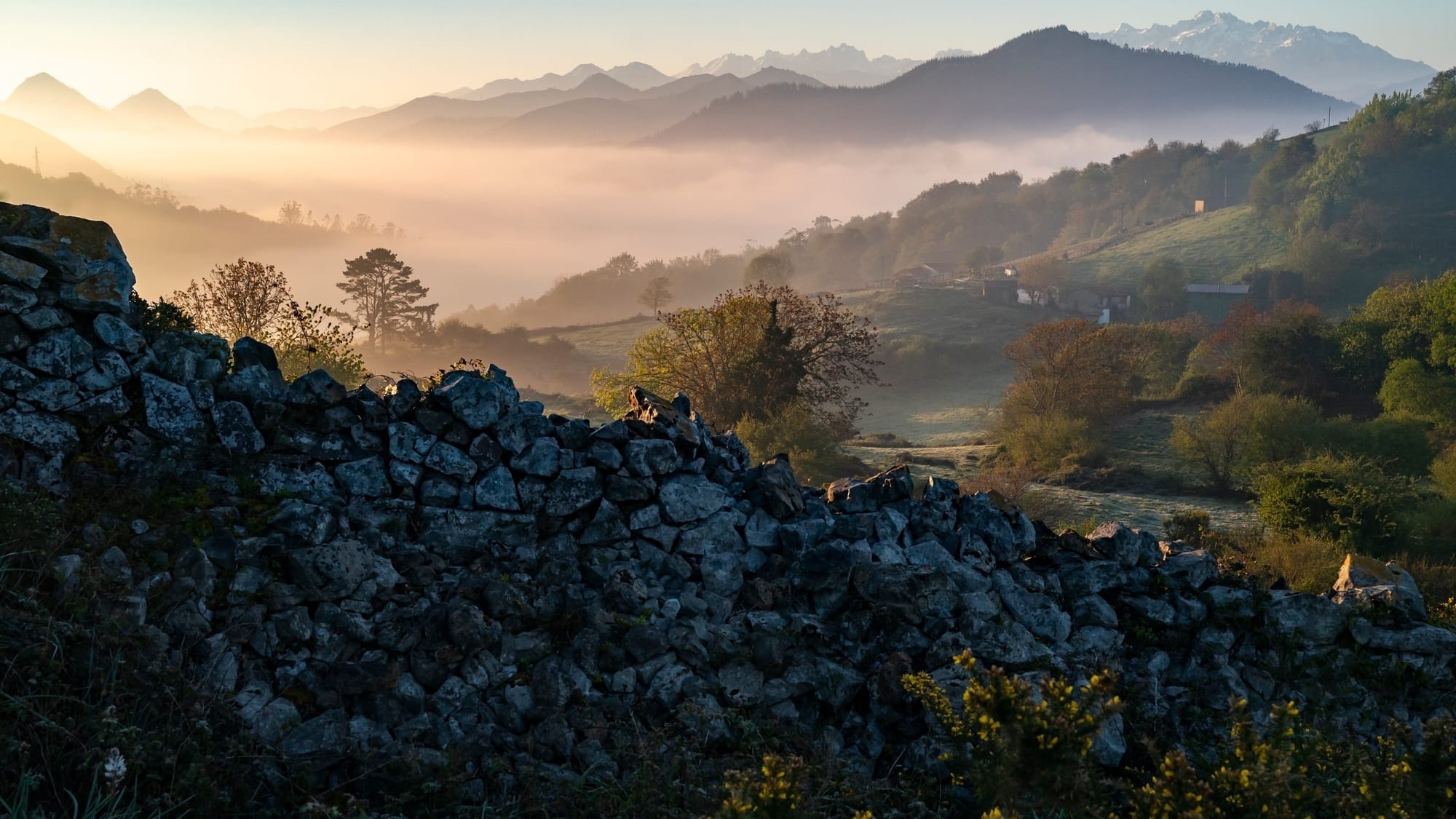
Photograph by David O'Brien.
Our journalism is the product of time, attention and expertise. Help us continue to publish in-depth writing on nature in Britain through a one-off donation.