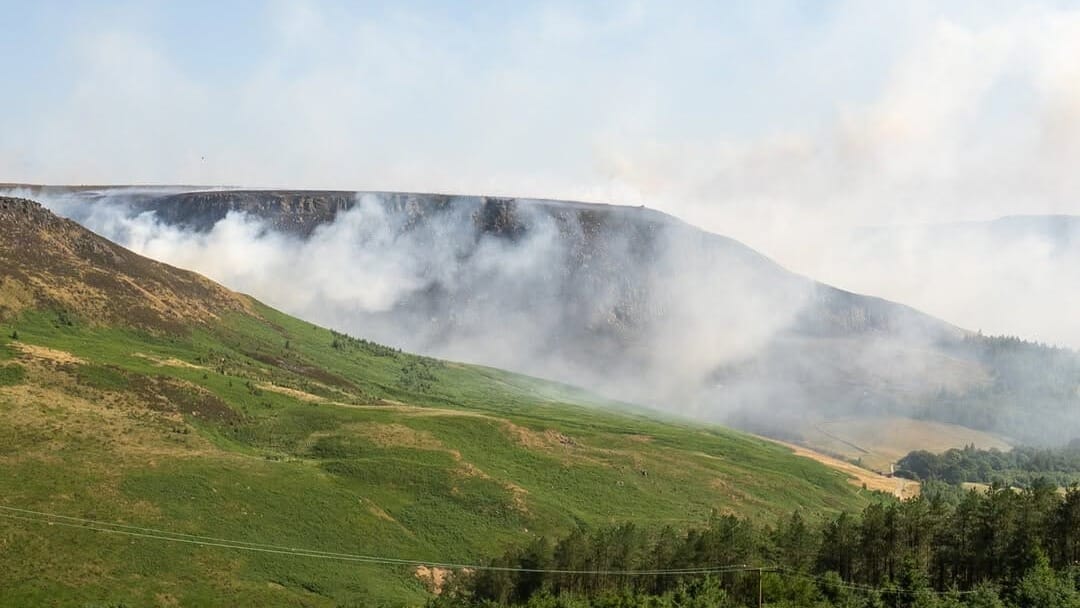
It's not often I find myself personally witnessing a story that makes it into this newsletter. This week is different. I was on my way to watch some Appalachian clog dancing among the apple trees of Old Durham Gardens. As we approached, we saw smoke. The neighbouring fields were on fire.
It used to feel like global warming was something that affected coastal communities, Arctic villages and coral reefs. Now it's on my doorstep, polluting the air my children breathe and threatening local displays of clog dancing (which still went ahead, thankfully). News of a Britain-wide firewave this week means there's a good chance it has arrived on your doorstep too.
This is no longer about hot summers days that the newspapers can illustrate with photographs of beaches and ice-cream. There can be no sugarcoating of a wildfire: this is disaster-level stuff. Climate change is personal to everyone now.
But this week's newsletter isn't all doom and gloom. We also cover:
- Dorset's first baby puffin in three decades
- The rewilding of Strawberry Hill
- The experience of being a grass snake
- How to get Londoners to rewild their gardens
Welcome, too, to the 100+ new people who joined us this week. Given the sudden surge in interest, we're offering 50% off all new subscriptions till 9PM today. Members receive this newsletter every Friday – click here to sneak past the paywall on last week's edition to see what you're missing.
National news
Fire | The UK is in the midst of a ‘firewave’, with more than 250 wildfires over the past two weeks due to tinderbox conditions. Homes in the Cairngorms were evacuated. Communities across Greater Manchester have been blanketed in smoke. Ancient woodland was destroyed in East Sussex and disposable BBQs found at the site of a blaze in the New Forest. Farmers called for more resources and government action as fires raged across North Wales. In Dorset and Durham, fields caught flame. A common in Surrey was left ‘crispy’. The number of blazes left authorities struggling to share limited helicopters. The Times spoke to fire experts and people affected by the blazes. The heatwave is also taking a wider environmental toll, with only 13% of English rivers at normal levels for this time of year, and wildlife such as bumblebees struggling to survive. The National Drought Group is ramping up efforts to protect water sources, and Natural Resources Wales has officially declared drought in North Wales and the Upper Severn. The Independent published before-and-after images showing the visual impacts of heat on the landscape.
Government | On Monday Andy Burnham officially became UK Prime Minister. He remained relatively tight-lipped on the environment and climate change during his leadership campaign – although CarbonBrief has unearthed 28 relatively promising quotes from the archive – so little is known about how he intends to reshape environmental policy. Media reports have suggested the new administration could allow more drilling in the North Sea, despite Burnham’s previous support for net zero. The charity Cool Earth also pointed out that Burnham’s introduction of a £2 bus-fare cap comes at the cost of international climate finance tackling issues such as deforestation. During his cabinet reshuffle, Burnham replaced environment secretary Emma Reynolds with Angela Eagle, who served as farming minister until last month. Eagle has pledged to focus on fixing the water system, backing Britain’s farmers and restoring nature. The changes come amid growing dissatisfaction, with recent WWF polling revealing that 57% of the public think Starmer’s government performed badly on nature. Read more reaction in Driftwood.
Shooting | Natural England has lost a High Court battle over the release of pheasants in protected areas. The British Association for Shooting and Conservation argued that the regulator had overstepped by preventing shooting estates from keeping gamebirds in pens in Special Protected Areas ahead of their release – a condition that was imposed to prevent the spread of bird flu. BASC said that this did not amount to a ‘release into the wild’ and that Natural England therefore had no authority to prevent it, and Mr Justice Ritchie agreed. Natural England plans to appeal the ruling, arguing that it imposed the conditions ‘for the purpose Parliament intended: protecting vulnerable species and ensuring compliance with wildlife conservation law.’ The Telegraph covered the story.
In other news:
- A new cross-party parliamentary group, with 13 MPs alongside Peers, has begun work on protecting England’s chalk streams.
- The ex-chief executive of Southern Water has been charged with fraud over plans to manipulate water quality tests, reports the BBC.
- NatureScot is aiming to publish a map of ancient woodlands and their conditions for the first time, with the final product going live in 2027, reports the Scotsman.
- The Welsh government has promised a new National Food Strategy, covering the ‘entire food system from farm to fork’. It also launched a consultation on a White Paper covering rural communities, climate change and environmental protections.
- Shark scientists have been granted nearly £1m by Natural England to study three endangered species, reports the BBC.
- The government has rejected the OEP’s call for an urban heat strategy on the grounds that it would duplicate existing measures, reports ENDS. The majority of its other recommendations were accepted.
- Natural Resources Wales has released its annual report, highlighting recovery to peatlands and certain species, as well as ongoing challenges and declines.
Across the country
Western Scotland | A two-year project led by NatureScot will track dozens of sea eagles in the Highlands, Western Isles and Argyll to assess the extent of their predation on lambs and sheep – a question that has caused intense conflict between crofters and conservationists. The research involves fitting up to 35 satellite tags to chicks around eight weeks old. Another five tags are intended for adult eagles, which are more difficult to trap. Researchers will analyse GPS data to understand the raptors’ movements, interactions with livestock, and habitat use. NFU Scotland said the research must ‘lead to practical, targeted management solutions’. The Herald and Telegraph covered the news.
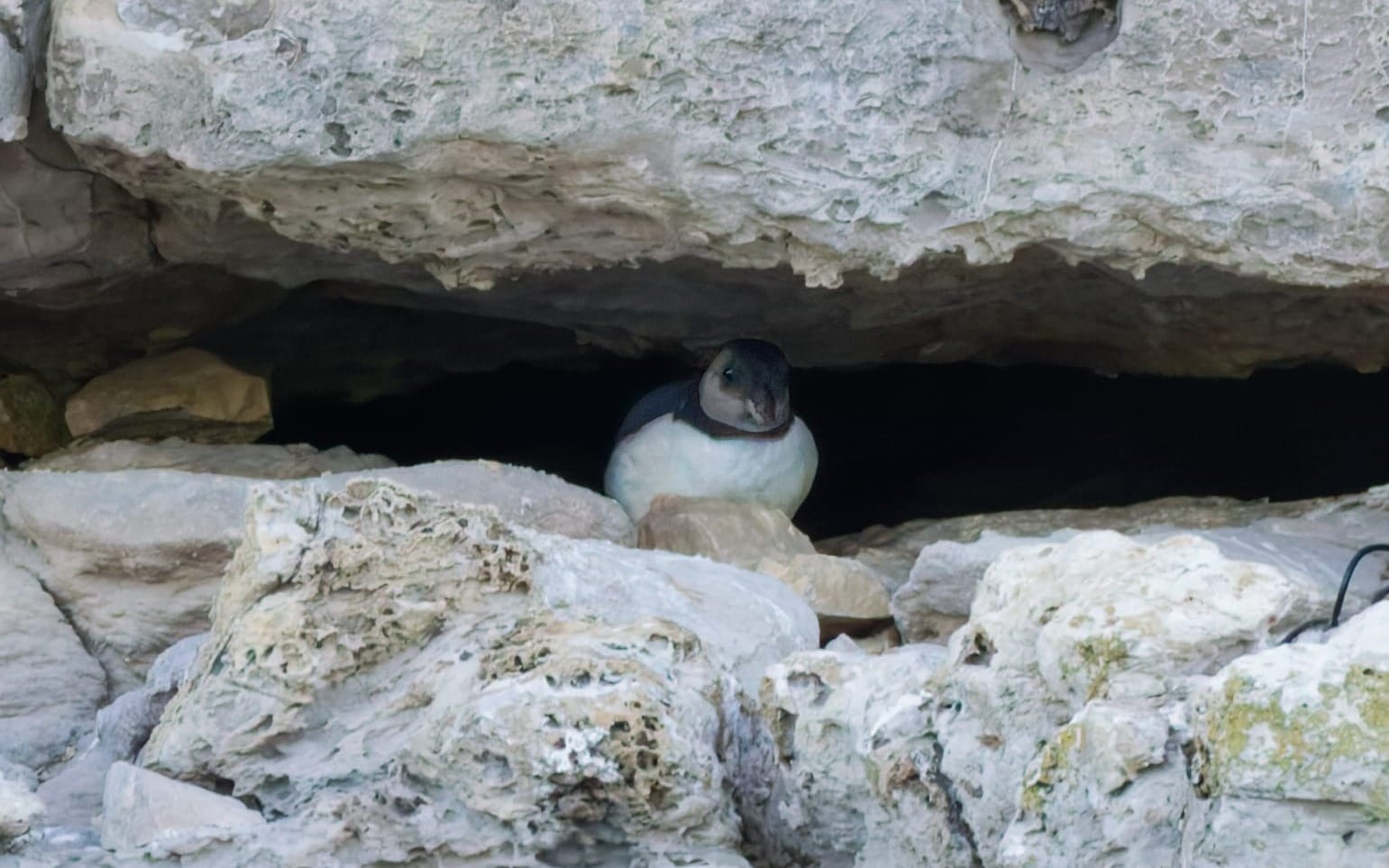
Dorset | Volunteers monitoring the last puffin colony on mainland England’s south coast have spotted the first puffling in three decades. Eighty years ago, the Dorset colony was home to around 40 pairs, but in recent years this has dwindled to just three pairs. Volunteers spent 150 hours observing the adults courting, mating, carrying nesting material and delivering fish to hidden nests – and the birds’ efforts have paid off. The puffling confirms that the puffins can still lay fertile eggs and, at least in some years, find enough food to rear a chick. Lead researcher Richard Caldow said: ‘One puffling alone won't save this colony, but one is a whole lot better news than none.’ The news was covered widely by national and local outlets.
Kent | Residents are dismayed by Kent County Council's decision to submit the Kent Mineral Sites Plan to the government's Planning Inspectorate for independent examination. The main point of contention is the inclusion of Oaken Wood, an ancient woodland that Gallagher Aggregates Ltd hopes to turn into a ragstone quarry. The company has pledged to protect the site's ecology by storing the topsoil and returning it once the work is complete. Locals, however, remain unconvinced and raised concerns about the impact on wildlife if mining goes ahead. The council stressed that planning permission has not been granted, and that the proposal would still need to go through a separate planning application and public consultation before any development could be approved. The BBC and KentOnline covered the story.
Elsewhere:
- Plastic nurdles are washing up on northeast beaches following a ship collision in the River Tyne, reports the Chronicle.
- Conservative councillors have blocked a bid by Reform UK to repeal a climate emergency declaration in Warwickshire, reports CoventryLive.
- Archaeologists are investigating the remains of a 200-year-old canal in Somerset to examine changes to the landscape, reports the BBC and Somerset County Gazette.
- The Tees River Trust has introduced an oyster nursery into the river, where the species has been absent for more than 100 years, reports the Northern Echo and BBC.
- West Cumbria Rivers Trust is dismantling a redundant weir on Glinger Burn to allow endangered eels to migrate more easily, reports the BBC.
- The RSPB has recorded the first confirmed breeding bittern in Dorset since 1883, reports the BBC. Meanwhile, a rare black-crowned night heron has been spotted at the Holnicote Estate in Somerset, reports the Guardian.
- The University of Sheffield has opened a farm inside a working mine 1.1km underground. They hope to demonstrate the potential for disused mines as sustainable food hubs. The BBC and the Telegraph covered the news.
- Perranzabuloe Parish Council has launched an investigation after reports of a tractor mowing a field protected for endangered ground-nesting birds, reports Cornwall Live.
- Curlew Country has released 48 curlew chicks back into their natural habitat in Shropshire in an effort to ‘headstart’ them, reports the BBC.
- The government has fined Southern Water £7.1m for repeated illegal sewage pollution, including in a sensitive Hampshire chalk stream, reports the BBC and ENDS. Elsewhere, Cornwall Council has passed a vote of no confidence in South West Water.
- Two Mangalitsa-cross pigs have been introduced to Brownsea Island in Dorset to help restore its heathland habitat, reports the BBC.
- The Royal Agricultural University herbarium in Cirencester is digitally cataloging more than 10,000 dried specimens to make them more accessible, reports the BBC.
- Herefordshire Wildlife Trust has introduced the ancient and rare breed of white park cattle to graze Barntonsham Meadows, reports the BBC.
- A project led by the Lancashire Wildlife Trust has been awarded £2.4m to build one of the world’s largest demonstrations of bulrush paludiculture on rewetted peatland.
Reports
Forests | A report by Smart Forests, a project based at the University of Cambridge, examines how ‘smart’ technologies are being used by and against local communities to manage and monitor forest environments. These include camera traps, eco-acoustics, GPS and remote sensors. These new approaches are contributing to uneven resource distribution and shifting power dynamics, increasing reliance on technology owned and operated by private corporations. Simultaneously, tech also helps to connect geographically dispersed communities and facilitate knowledge sharing. The report concludes with recommendations and case studies, including a focus on the community-led restoration of a temperate rainforest on Scotland’s west coast using heatmaps, GPS cattle collars and drone seeding.
Hen Harriers | After months of delay, Natural England has published its formal review of the hen harrier brood management trial, which ran from 2018 to 2024. Brood management – known as ‘meddling’ by critics – involves removing hen harrier eggs or chicks from grouse moors to be reared in captivity before being released once they can fly and disperse, thereby reducing predation of grouse. The trial found the method ‘substantially increased’ harrier numbers, although it was unclear to what extent this was influenced by satellite tagging and monitoring. A separate report outlines the opinions of participating estates on the trial. In a blog accompanying the findings, Natural England acknowledged that the method is ‘controversial’ but said that ‘current evidence supports use of brood management under licence’. The Moorland Association is now calling for a ‘practical, multi-year licence’.
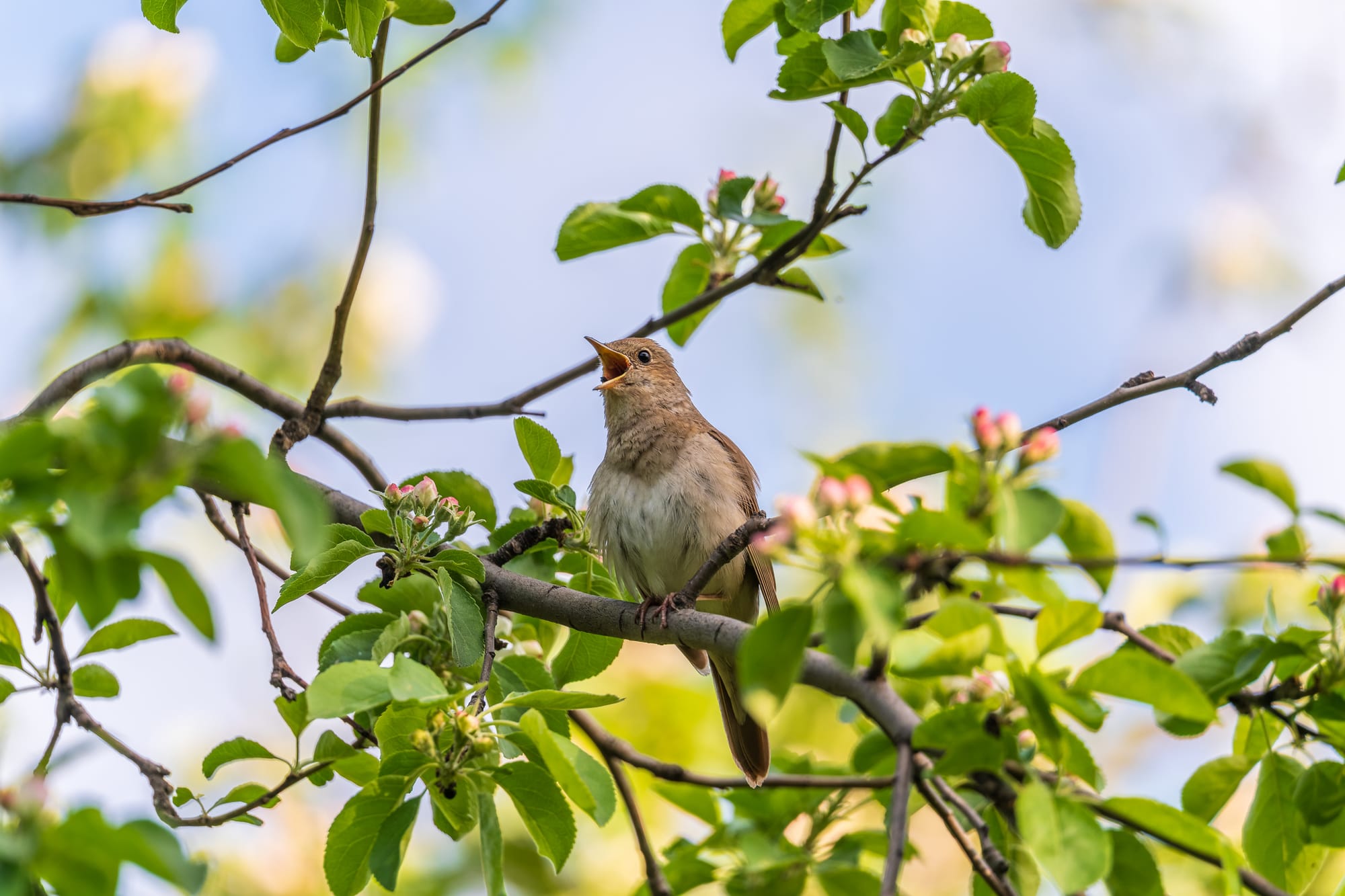
Rewilding | In 2024, the Wildlife Trust for Beds, Cambs & Northants purchased Strawberry Hill, a unique 150-hectare area of former farmland that had been quietly returning to nature for three decades. In the 18 months since the acquisition, experts and volunteers have assessed the land and started making plans for its future. A report outlines efforts so far, including the creation of six new ponds. Monitoring efforts have uncovered the presence of 50 bird species, more than 30 pairs of nightingales, 11 bat species, 30 species of moss and 50 species of lichen, as well as almost a thousand invertebrate species. Future plans include the creation of limited visitor facilities and the introduction of grazing cattle to maintain an optimum level of scrub, while five new academic projects will deepen understanding of the reserve’s scrub, hedgerows and soils.
Science
Rewilding | Rewilding London’s private gardens could significantly benefit biodiversity in the city. But what determines whether residents will make the effort? According to a study in Cities & Health, it comes down to capability, opportunity and motivation. Interviews with Londoners revealed a strong desire to create nature ‘havens’ within their gardens – unsurprising given the long working hours in the capital, the authors note – yet would-be rewilders were held back by limited time, space and budgets, by a lack of knowledge, and a lack of support from local authorities. The study concludes with a series of recommendations for a wide range of actors, including policymakers, councils, conservation organisations, designers and schools.
Chemicals | Fish caught in UK waters contain high levels of pharmaceutical pollutants and PFAS 'forever’ chemicals, according to a study in Science of the Total Environment. Researchers examined concentrations of these substances in fish from two industrialised sites (the Mersey and Humber estuaries) and two non-industrialised sites (northwest Scotland and Cornwall). They found that PFAS concentrations were high across the board, with perfluorodecanoic acid detected in every sample, exceeding the US Environmental Protection Agency's recommended limit by up to 500-fold. The anti-inflammatory drug diclofenac was also found in every fish sampled, while antidepressants including venlafaxine were widely detected. The authors say these pollutants raise concerns for animal, human and ecosystem health, and argue for 'more extensive and systematic' monitoring across the food chain.
Markets | Everyone loves browsing a farmers' market – but do you actually buy anything? A study in Discover Sustainability examined customers' willingness to pay a premium for apples at markets in Hungary, Italy and the UK. Researchers found that UK consumers were the most willing to splash out, with the appeal strongest among younger, more educated and urban shoppers. Across all three countries, the visual quality and local origin of the apples increased willingness to pay, as did perceptions of fairness towards farmers. The authors suggest that digital marketing and social media may be particularly effective at attracting UK customers, alongside messaging that emphasises where the apples come from and how they are produced.
Driftwood
Politics | Environmental organisations are urging Andy Burnham to put nature at the heart of government following his appointment as PM. The Wildlife Trusts argued that nature holds the solution to national challenges including rising food prices, while leaders from the Muslim, Jewish, Catholic and Anglican faiths called on him to prioritise environmental action. CPRE urged him to ensure devolution ‘works for the countryside’, while Dr Michael Burgass, director of consultancy Biodiversify, argues in Environment Journal that Burnham’s brand of devolved politics is ‘precisely the model nature needs, because nature is always local before it is national.’ A feature in Prospect looks at how Burnham can build more homes without compromising on nature. Meanwhile, farmers have broadly welcomed Angela Eagle’s return to Defra, citing her familiarity with the brief. Read more in the Water Magazine, FarmingUK and ENDS.
Gardens | In the Financial Times, Sarah Langford profiles Sheila Das, the new head of gardens and parks at the National Trust. Das faces the challenge of adapting the Trust's beloved gardens to a changing climate. She is keen to rethink how water, plastics and other resources are managed – disagreeing, for example, with watering lawns during times of scarcity – while also challenging perceptions of what is beautiful, including through language: borders are no longer 'untidy' but 'abundant'. A key part of this approach is explaining to visitors why these changes are necessary. ‘We are just going to have to be OK with grass being yellow,’ she says. Separately, at the Chatsworth Estate, the heatwave-induced yellowing of the south lawn has revealed a surprising slice of history: a lost 17th-century garden beneath the grass.
Snakes | Science writer Tom Whipple spends a day pretending to be a grass snake on the banks of the River Tone in Somerset for the Times. He is joined by his nephew Huw, on work experience, who is assigned the role of an otter. Together, they slither and swim along in an attempt to understand the world from a non-human perspective. The role-playing is part of a project run with the University of the West of England to improve understanding of the risks animals face. For Whipple, those risks are humans, dogs, water pollution – and Otter Huw. He wonders whether this exposes a flaw in the experiment. ‘Would grass snake Tom actually want to save this river’s habitat?’ he wonders: ‘Or would I want it purged of otters then turned into an unholy battery farm for frogs?’
Further reading:
- In the Spectator, Matt Ridley argues that reintroduction is different to rewilding – and that conservationists should stop ‘being obsessed with large and predatory animals’.
- The BBC’s Jon Cuthill joins volunteers near Southampton to gather seagrass seeds, ready for planting in Spring.
- Country Life reviews 24 Acres, a rewilding retreat in Somerset offering local food, wild swimming and many other lovely, expensive-sounding things.
- The Woodland Trust has announced its candidates from this year’s Tree of the Year. Vote here.
A high note
Medlar | Horticulturalists in Middlesbrough have discovered three rare, long-forgotten fruit trees which were popular in medieval times. Medlar trees were highly prized in the 1600s because they fruited late in the autumn, providing fresh produce later in the year. The strange-looking fruit has to rot before it can be eaten – a process known as ‘bletting’ – and features in both The Canterbury Tales and Romeo and Juliet. However, it largely vanished from public consciousness in the 1950s. After discovering the trees on an overgrown nature reserve in Acklam, Matt Wilson said he hopes to take cuttings and spread awareness of the hardy and historical species. Read more in the Teesside Gazette.