Welcome to Ground Cover, our roundup of news, science reports and features. Here’s what you’ll find in this week’s edition:
- National: Golden eagles, biodiversity net gain, manifestos.
- Local: Reservoir drained, peatland restoration, habitat bank.
- Reports: Red squirrels, upland communities, butterflies.
- Science: Bumblebees, historic pollution, satellite data.
- Driftwood: Urban wildflowers, interspecies council, awe.
National news
Golden eagles | Golden eagles could return to England after a feasibility study by Forestry England confirmed that areas of the country are suitable for their release. The raptor largely disappeared from England in the 19th century due to persecution and habitat loss; the last individual died in the Lake District around 2015. The study, commissioned by Defra, identified eight areas, mostly in the north, with the capacity to support new eagle populations. The government has put £1m towards exploring the possibility, with juveniles scheduled for release as early as summer 2027. The charity Restoring Upland Nature, which led reintroduction work in southern Scotland, will lead the programme. CEO Cat Barlow emphasised the need for support from the local community. Nature organisations have welcomed the news, while the NFU and National Sheep Association both warned that the raptor’s return could harm livestock populations, and the Moorland Association said the northern uplands are ‘not an empty stage for new policy ideas’. The news was widely covered by national outlets, with additional pieces in Positive News and Cultured Northeast.
Net gain | The government has announced a raft of changes to biodiversity net gain (BNG), following two consultations aimed at tweaking the design of the new rules. BNG demands that developers leave nature better off by 10% compared to when they started work. The headline is that proposed exemptions for sites smaller than 0.2 hectares will go ahead, which the government believes will reduce the burden on small developers and reduce demand for offsite biodiversity credits by 10%. It also confirms that BNG will apply to all applications for nationally significant infrastructure projects made on or after 2 November 2026, and that the 10% rule remains in place, despite campaigns to increase it. There is also a new exemption for schemes specifically aiming at restoring nature and for improvements to parks, playing fields and public gardens. The government’s response also promises a review of how brownfield sites are reviewed and measured, also a consultation on a targeted exemption for this type of land is ongoing. Separately, a review commissioned by Historic England explores the impact of habitat creation mandated by BNG on the historic environment.
Election | Last week, we looked at manifestoes from the Welsh Green Party, Plaid Cymru and the Scottish Conservatives. The week before that, we had Welsh Labour. This week brings us the manifesto of the Scottish Green Party, which – unusually – leads on the topics of climate change and nature restoration. The party pledges to ‘reforest Scotland’s hills and glens’ with 9,000 hectares of new native woodland each year, speed up beaver reintroductions, increase the Nature Restoration Fund to £200 million, and restore peatlands by at least 45,000 hectares each year – among many other commitments. There are separate sections on water, food and farming, and land reform. Questions were raised, however, about how such a large programme of change would be funded. Meanwhile, the SNP’s new manifesto had less to say on nature, although its central pledge – to fund 18,000 hectares of new native woodland each year till 2029 – outpaces the Greens. The Welsh Liberal Democrats also released their manifesto this week. From a nature perspective, it largely focused on tackling sewage pollution and supporting nature-friendly farming. Separately, BASC looks at what the Welsh manifestoes say about shooting.
In other news:
- National soil data has been made public for the first time, reports ENDS.
- A migrating cuckoo took one look at the UK and fled back to France, reports the BBC.
- A government crackdown on water pollution has generated £8.5m for restoration projects.
- The RSPB is urging people to take down their birdfeeders to cut the spread of disease. The Guardian covered the news.
- The Centre for Environment, Fisheries and Aquaculture Science has released an analysis of the sustainability of the UK’s 2026 catch limits.
- The glutinous snail is among the creatures to benefit from new government funding for species recovery.
- One quarter of local nature recovery strategies have yet to be published, reports ENDS.
- A £100m funding deal with private investors for nature restoration has fallen through, and MSPs weren’t informed, reports the Guardian.
Across the country
Denbighshire | Wildlife enthusiasts have condemned Hafren Dyfrdwy for draining the Nant-y-Ffrith reservoir, in north Wales, during the spring breeding season. The water company is renewing infrastructure at the 12-acre lake after engineers identified a critical risk of failure, but environmentalists have questioned why the work needed to take place during the height of breeding activity for amphibians and waterfowl. This year, the Wrexham Toad Patrol has already helped more than 1,500 toads across local roads to reach breeding grounds. The reservoir is also home to frogs, newts and birds including the great crested grebe and coot. Teri Davies of the patrol team said the drainage amounted to ‘the removal of an entire ecosystem’. The Daily Post reported the story.
Loch Ness | A partnership led by Rewilding Affric Highlands has begun restoring more than 1,000 hectares of blanket bog near Loch Ness. One of the largest projects of its kind in Scotland, it spans three distinct landholdings: the charity Trees for Life’s Dundreggan estate, privately owned land at Guisachan, and the upland Corrimony Farm. The scheme involves blocking drains, building dams and planting sphagnum moss to raise the water table and re-vegetate bare peat. This will benefit peatland plants including sundews and alpine bearberry, while restoring breeding pools will boost threatened species of dragonflies such as the azure hawker and northern emerald. David Girvan, who runs Corrimony Farm, said the project would also show that ‘farming can work well with peatland restoration’. The BBC and Herald covered the story.
Yorkshire | A 75-acre patch of farmland in Coverdale is due to become the first biodiversity net gain ‘habitat bank’ in the Yorkshire Dales National Park, generating credits to offset development on other sites. The grassland was previously grazed intensively by sheep, but over the last 18 months the landowner has introduced cattle to encourage species diversity, and plans to rewet areas to support breeding waders. Andrew Murday of the National Park Authority said it was ‘significant’ that the Park’s first habitat bank does not remove farmland from production, because nature-friendly farming will be critical to its nature recovery aims. The Northern Echo covered the story. Elsewhere in Yorkshire, Castle Howard Estate has planted more than 60,000 trees during the winter period as part of a five-year project to plant 100 hectares of new woodland, reports the York Press.
Elsewhere:
- Adam Carruthers, who felled the Sycamore Gap tree, has been released from prison after serving just ten months of a four year sentence, reveals ITV.
- National Highways will trial new methods for planting trees along roadsides after thousands of saplings died along the A14 in Cambridgeshire, reports the BBC.
- Northumberland Wildlife Trust is running a week-long campaign to secure a crucial stronghold for cuckoos via the purchase of Rothbury Estate, reports the Northern Echo.
- Dorset Wildlife Trust has submitted a proposal to release wild beavers into the Hooke and Frome rivers, reports the BBC.
- Housing plans for Brislington Meadows in Bristol have been paused after the developers’ biodiversity net gain claims were disputed, reports the Bristol Post.
- A project led by the University of Portsmouth is deploying floating rafts in coastal waters to recreate lost habitats, reports the BBC.
- Swift campaigners are outraged after a £7.5m refurbishment of a Derbyshire railway viaduct blocked ancestral nesting holes, reports the Guardian.
- The Oxfordshire-based campaigners behind the recent docudrama Dirty Business have launched a petition calling for public ownership of water companies, reports the BBC.
- A project led by Portsmouth’s Gunwharf Quays has introduced more than 2,000 native flat oysters to the Solent, reports the Daily Echo.
- Developers behind controversial plans to build one of the country’s largest windfarms on Yorkshire moorland have started a public consultation, reports the Yorkshire Post.
- Gwent Wildlife Trust is calling for increased protections for the Gwent Levels in response to a Welsh government consultation.
- Officials have warned that chemical dumping is driving Hampshire’s chalk stream salmon and trout to extinction, reports the Telegraph.
- Upper Broughton Farm on the Welsh border has submitted plans to turn a field into a natural burial ground with space for 500 plots, reports Wales Online.
- A new partnership has been launched to project and restore Mawddach’s oakwoods, reports Cambrian News.
- A coalition of farmers, landowners and conservationists aims to reverse the decline of owls and kestrels across 2,000 acres of working farmland across Somerset, reports South West Farmer.
Want Ground Cover in your inbox every Friday?
Reports
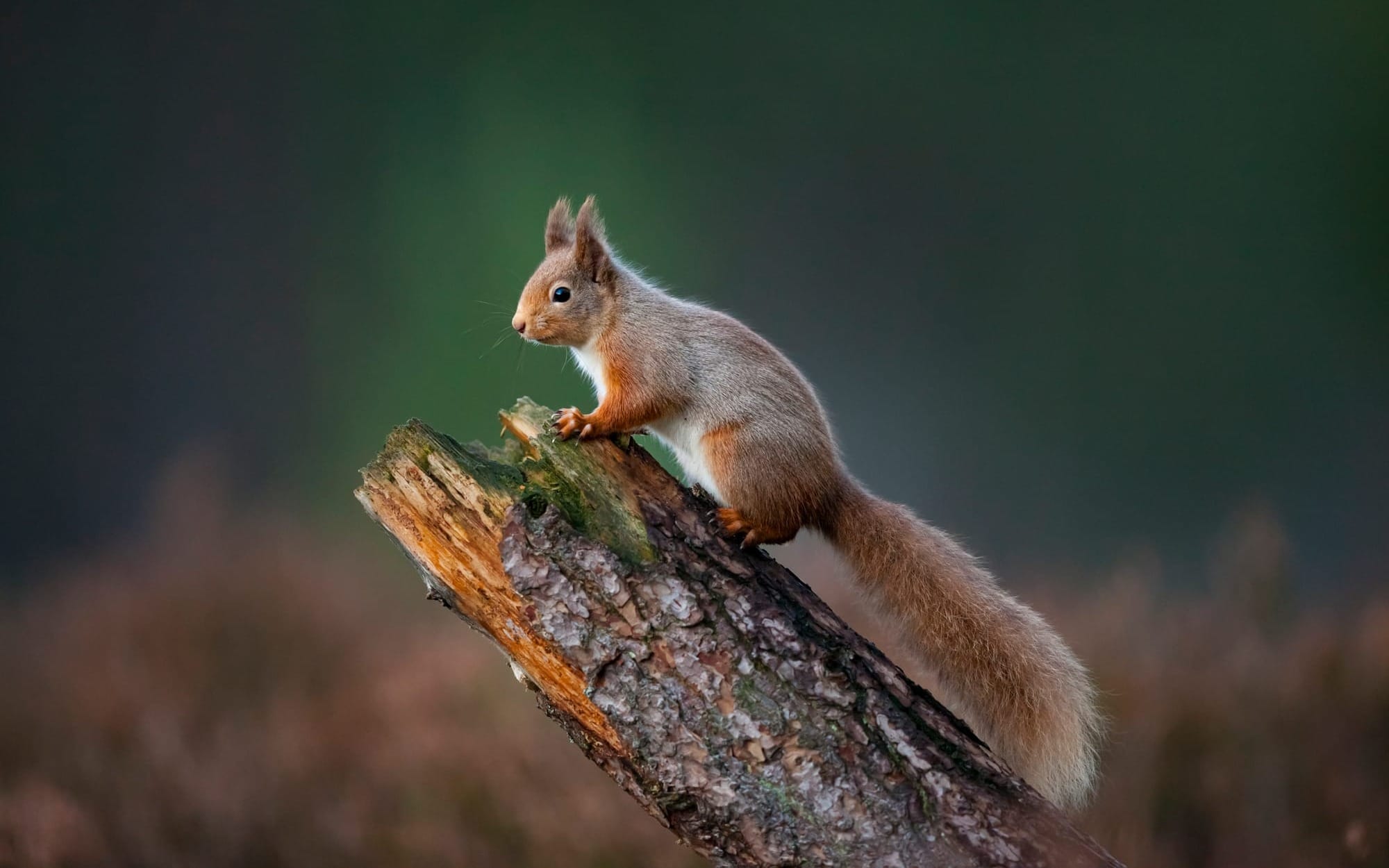
Red squirrels | Red squirrels could disappear from mainland England in the next 25 years without urgent conservation action. This is the stark warning from a Natural England report, conducted by the Zoological Society of London. The analysis found that large-scale suppression of greys across England offers the greatest potential for red squirrel recovery, but comes with high costs and welfare concerns. Meanwhile, emerging tools such as fertility control were deemed insufficient on their own. The authors conclude that the most feasible approach would involve targeted regional action, combining localised population control of greys with the translocation of reds. The report will inform the development of a national strategy. Separately, a landowner in Yorkshire is selling Mirk Pot Woods, where his parents accidentally created a red squirrel haven in the 1960s, reports the BBC.
Uplands | Defra has published an independent report on what it would take for upland communities in England to flourish. The review was led by social entrepreneur and designer Dr. Hilary Cottam, who visited six upland areas – including Dartmoor, the Pennines and the Lake District – and spoke with farmers, environmentalists and members of the wider community. Rather than seeking ‘statistical validation’, Cottam aimed to ‘observe, to listen deeply to a range of voices’, including those rarely heard. From those conversations, she developed 19 insights into the challenges facing the uplands. These include an imbalance of power between farmers and policymakers, and a ‘civil war’ between farmers and environmentalists. Defra has launched a seven-year project to act on the findings, beginning with two years of funded work in Dartmoor and Cumbria. The NFU welcomed the report. FarmingUK and Farmers Guardian covered the research.
Butterflies | More than half of the UK’s butterfly species are in decline, according to the world’s largest insect monitoring scheme. The UK Butterfly Monitoring Scheme has compiled more than 44 million records collected since 1976. These reveal that, of 58 native species recorded, 33 have declined while 25 have increased in number. Warmer temperatures have enabled some species, including the Red Admiral and Comma, to spread northwards and survive year-round in Britain. However, species reliant on specific habitats, such as woodland or flower-rich grasslands, have declined significantly due to habitat loss, pollution and climate change. Richard Fox, head of science at Butterfly Conservation, said that the data reveals the large-scale erosion of butterfly diversity and need for more habitat restoration. The Guardian and BBC covered the news, with an additional BBC feature on five species becoming more abundant.
Science
Bumblebees | Europe was once dominated by a mosaic of open and closed woodland, an environment that shaped the evolution of modern bumblebees. Researchers sampled activity across 12 sites in Norfolk, including shaded understories, field margins and woodland canopies. Habitat use varied by species, with shade-tolerant bees showing the strongest woodland associations, and by caste, with differences between reproductive and worker bees. During heatwave conditions, reproductive castes across all species increased their use of the understorey. These varied preferences may explain how multiple species coexist in agricultural landscapes today. Woodland and agroforestry ‘could be key to sustaining bumblebee abundance and diversity in farmed landscapes,’ the researchers conclude. The study was published in Ecology and Evolution.
Pollution | Loe Pool, the largest freshwater lake in Cornwall, has a long history of human interference. Research in Journal of Paleolimnology traces these impacts from the early Industrial Revolution using chironomid (non-biting midge) and diatom remains preserved in lake sediments. The lake’s biodiversity has undergone various shifts in the last two centuries, with communities responding first to mining, then to canalisation of a nearby river, and later to agriculture. Despite efforts to reduce the amount of nutrients entering the lake, the chironomid and diatom assemblages remain ‘notably dissimilar’ from their historical baseline. The research highlights the value of palaeoecological methods, which can provide ‘a more accurate baseline to which lake conditions can be targeted’.
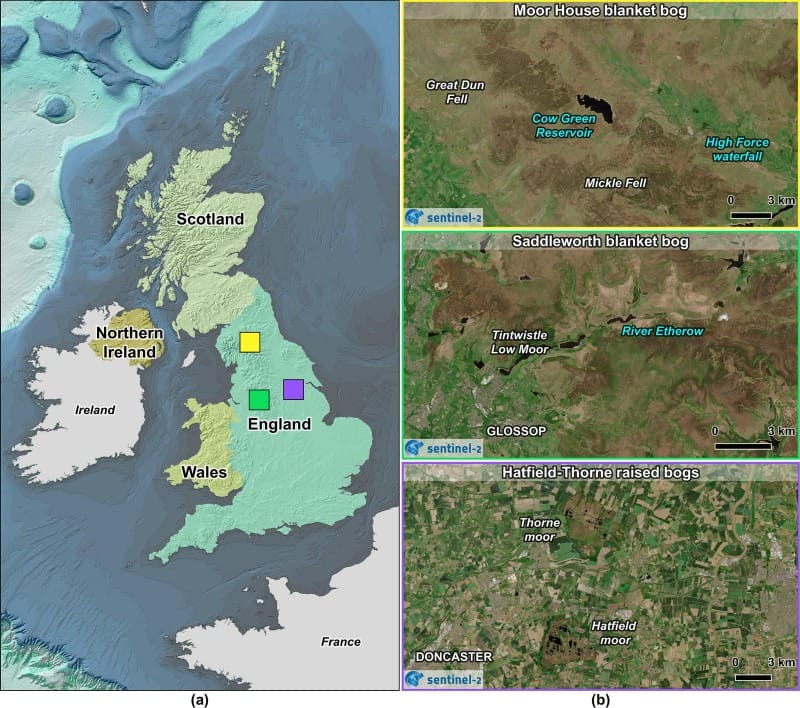
Peat | Scientists in Italy have used satellite data to assess the condition of England’s peatlands – and the results are alarming. Data collected by Sentinel-1 reveals that peatland at Moor House, Saddleworth Moor and Hatfield-Thorne is almost universally subsiding. At the former two moors, which are blanket bogs, the cause appears to be fire, both wild and controlled. At the latter, a raised bog, subsidence is linked to changes in the water table and may be connected to climate change. There was one small sign of hope: on parts of Saddleworth Moor where long-term restoration has taken place, including the re-establishment of cotton grass, cloudberry and sphagnum moss, ground levels are rising, suggesting that peat can recover when vegetation is restored. The study was published in Remote Sensing of Environment.
Driftwood
Wildflowers | Semi-natural grasslands have declined sharply in Britain over the past century, but wildflowers have found an unexpected refuge in urban environments, according to BBC Future. Wildflowers thrive in stressful and unstable environments, where competition is low. Cities also provide numerous habitats and microclimates, such as pavements, parks and brownfield sites, allowing species to find their niche. For example, Sheep’s Fescue and Spring Sandwort – once used by miners to identify veins of lead – flourish in formerly industrial areas polluted with heavy metals. ‘Species have evolved to use what's around; heavy metals are naturally occurring, we just move them and concentrate them,’ explains Heather Rumble, senior lecturer in healthy urban environments at the University of West England.
Council | In a conference centre in northern Norway, 38 species gather to discuss what they need from humans. The rockfoil flower wishes for more space to grow, while the River Driva laments that it is seen as a resource. Also present are reindeer, wolf lichen, birch and bog – or rather, their human representatives. This is an interspecies council, where people are tasked with embodying a specific species in debate. The practice dates back to the 1980s, and today it is part of a growing international movement for Rights of Nature. In the UK, interspecies councils have already been used to reimagine stewardship of the River Roding in London, and respond to a government consultation on land use. The Guardian covers the story.
Bodies | Marvelling at nature can help change negative perceptions of our bodies, according to associate professor of philosophy Céline Leboeuf. For Psyche, Leboeuf recounts how media pressure to look a certain way led her to develop an eating disorder in her 30s. The one thing that reliably helped was going for a beachside walk. ‘Whenever I contemplate the bay,’ she writes, ‘I have no thoughts about my thigh gap, the number on the scale, or the amount of food I have eaten. I am entirely absorbed in its splendour.’ There is a psychological rationale behind this effect, too: the feeling of awe has been shown to enhance altruistic behaviour and reduce self-absorption. According to Leboeuf, appreciation for the natural world helps shift negative focus away from the body, and ‘connect us with something outside of ourselves.’
Further reading:
- The BBC looks at the reintroduction of eels to British waterways.
- The Guardian has a review of Alarm Notes, a film about pioneering German sound recordist and naturalist Ludwig Koch, made by his granddaughter.
- A feature in the Times asks whether the UK’s food supply could actually collapse by 2030.
- Of the tiny number of British bison farmers, three are hereditary peers – a strange coincidence explored in this Country Life article.
- An opinion piece in the Guardian argues in favour of a messy garden.
- The BBC spotlights the efforts of doomsday seed collectors aiming to safeguard Wales’ native species, including 60 plants not found anywhere else.
- An feature in Nature explains how scientists are using airborne DNA to analyse ecosystem health and detect invasive species.
- A Natural England blog looks at the landscape-scale nature recovery taking place at Abbotts Hall, a farm on the Essex coast.
- The Critic examines how a planned development in rural Oxfordshire will change the ecology of the surrounding countryside.
- The charity Rewilding Britain has created Britain’s first framework for monitoring rewilding progress.
- In Nature by botanist Chris Bivins argues that AI needs solid botanical data – yet human taxonomic expertise is under threat.
- Natural England has published data on wildlife licenses issued in 2025, and an accompanying blog exploring key facts and figures.
- Conservation is becoming more evidence-based, but it still has a long way to go, writes Alex Christie of Imperial College London in the Applied Ecologist.
A high note
Trees | On the tiny Hebridean island of Eigg, residents have been collecting seeds to grow their own trees, with more than 50,000 planted so far. The trees are intended to support natural habitats and create a sustainable supply of wood for fuel – the island has no mains power and many still rely on stoves to heat their homes. Tasha Fyffe, who manages the tree nursery, stressed the importance of using seeds with local provenance. ‘Different species grow in different parts of the island, and they have adapted to the climate – it can often be very windy here,’ she said. ‘That genetic memory is passed through to the seeds.’ The BBC covered the story.
New on Inkcap
 Jon Moses
Inkcap publishes in-depth journalism on nature in Britain.
We depend entirely on the financial backing of our readers. Show your support for independent environmental journalism – subscribe today for as little as £3 per month.