This is Ground Cover – your weekly guide to British nature conservation. Read on for the latest news, science, reports and features. Not a member? Subscribe today.
First thing to note: there will be no Ground Cover next Friday. I am taking a week off to visit family.
Use the spare time to explore our series on pelicans, published this week. Pelican reintroduction is an intriguing and wonderful idea. These features don't align on every point, which only makes the topic more fascinating. There's clearly plenty of debate to be had, and I'm here for it. The features are a joy to read: grab a coffee and dive in.

Normally, at some point in this newsletter, I attempt to coax a subscription from you. Not today. Instead I urge you to throw any spare cash towards the Wildlife Trusts, who are nearing the deadline to buy the Rothbury Estate. Why do I care? I live in the North East. I know this landscape and I treasure it. But also, it's an absolutely massive area that could make a difference to nature and climate at large. It must land in the hands of people who will do right by it.
There is a mere £4m left to raise. Let's help get it over the line.
As a result, this edition of Ground Cover is totally free to read.
It also covers:
- Apple trees in trouble
- Metal mining's toxic legacy
- Pheasants in protected areas
- Buried underpants
National news
Carbon | A county in Wales had one of the world’s highest carbon emissions per square kilometre during July due to wildfires, according to Save the Children. The charity analysed data published by Copernicus, the EU’s earth observation programme, which showed Torfaen at fourth in the world behind areas of Angola, Spain and Algeria. The largest wildfire took place on peat hillsides above Blaenavon and burned for over a month, spreading across more than 4,000 hectares and requiring military support. Torfaen council said it was unaware of the EU data, but added that its own air quality monitoring showed ‘elevated particulate concentrations’. Save the Children said it was concerned about consequences for children, who are particularly vulnerable to air pollution. The BBC, Wales Online and Nation Cymru reported the news.
Fruit | This year’s apple harvest is set to be one of the worst in history. Last year saw a bountiful apple crop thanks to record-breaking sunshine, but too much heat ‘can be fatal’, according to Country Life. Some orchards produced no fruit at all this year, while others began dropping their apples in July before they had ripened, as trees redirected water reserves to survive. Cider producers are bracing for the loss next year, when yields will translate to sales. The BBC, Telegraph and Fruit Today reported the news. Other crops are faring better in the heat, however: the Guardian reports that British farmers are experiencing a bumper berry harvest, in part thanks to years of investment in climate-resilient irrigation. Meanwhile, the heatwaves have made growing grapes ‘really easy’, according to two vineyards.
Birds | The UK’s rarest bird of prey has successfully nested in England for the second year running. The Montagu’s Harrier was Red Listed in 2021: numbers of the migratory raptor declined from a high of nine successful nests in 2011, to no confirmed breeding between 2020 and 2024. Now, six chicks have been reared by two females nesting a short distance apart at a secret location. The chicks, however, were fathered by the same bird. Known as ‘AU’, the male is ‘single-handedly propping up’ the British population, in the words of the RSPB. The charity tagged chicks with satellite trackers for the first time, allowing it to build a complete picture of the birds’ lives, from fledging to adulthood. The BBC, Times and Telegraph reported the news.
In other news:
- Rewilding Britain has written a letter to Andy Burnham, demanding the government take rewilding seriously as part of efforts to adapt to extreme weather. Sign it here.
- That message appears to have successfully reached Angela Eagle, the new environment secretary, at least. In the Guardian, she writes that the government will manage landscapes so they are 'resilient enough to withstand [extreme weather] and recover.'
- Meanwhile, argues the Wildlife Trusts’ Matt Browne in a blog, placing local nature recovery at the core of English devolution can drive long-term regional prosperity, health, and climate resilience.
- The Ordnance Survey is providing mapping data that could help predict the risk of future wildfires, reports the BBC.
- Scotland’s licensing system regulating the cull of wild birds is ‘not fit for purpose,’ according to RSPB Scotland.
Across the country
Northumberland | If you have any money – £4 million, perhaps? – burning a hole in your pocket, now’s the time to spend it. The Wildlife Trusts are nearing the 30 September deadline to purchase the 9,500-acre Rothbury Estate in Northumberland, where they plan to ‘restore nature in abundance’. An additional £5.5m in donations this week has brought the total to over £26m, putting the charity in ‘touching distance’ of the £30m required to acquire the land. Craig Bennett, CEO of the Trusts, will take part in the Great North Run on 13 September to raise additional funds. Contribute before the end of September and your donation will be doubled.
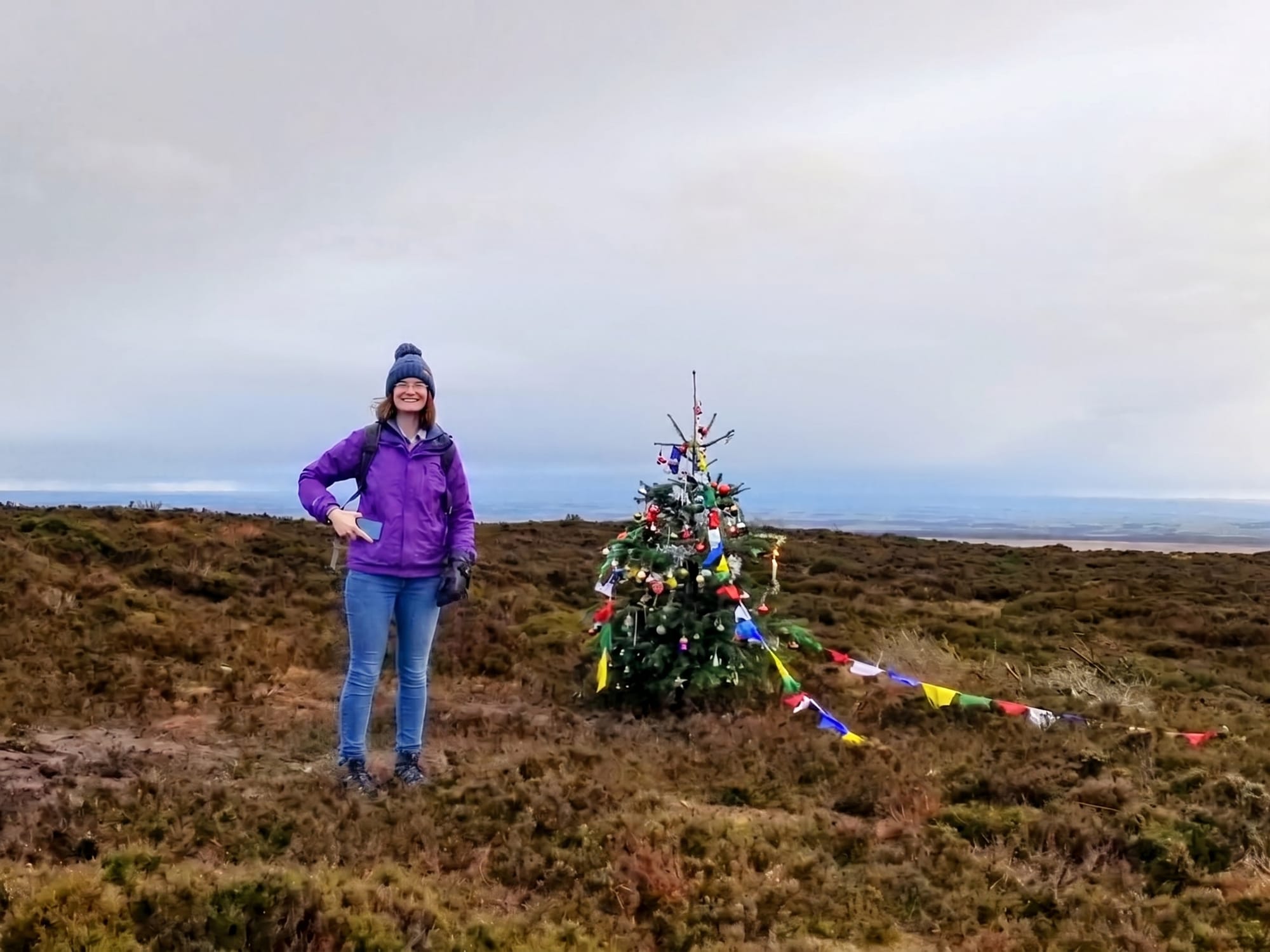
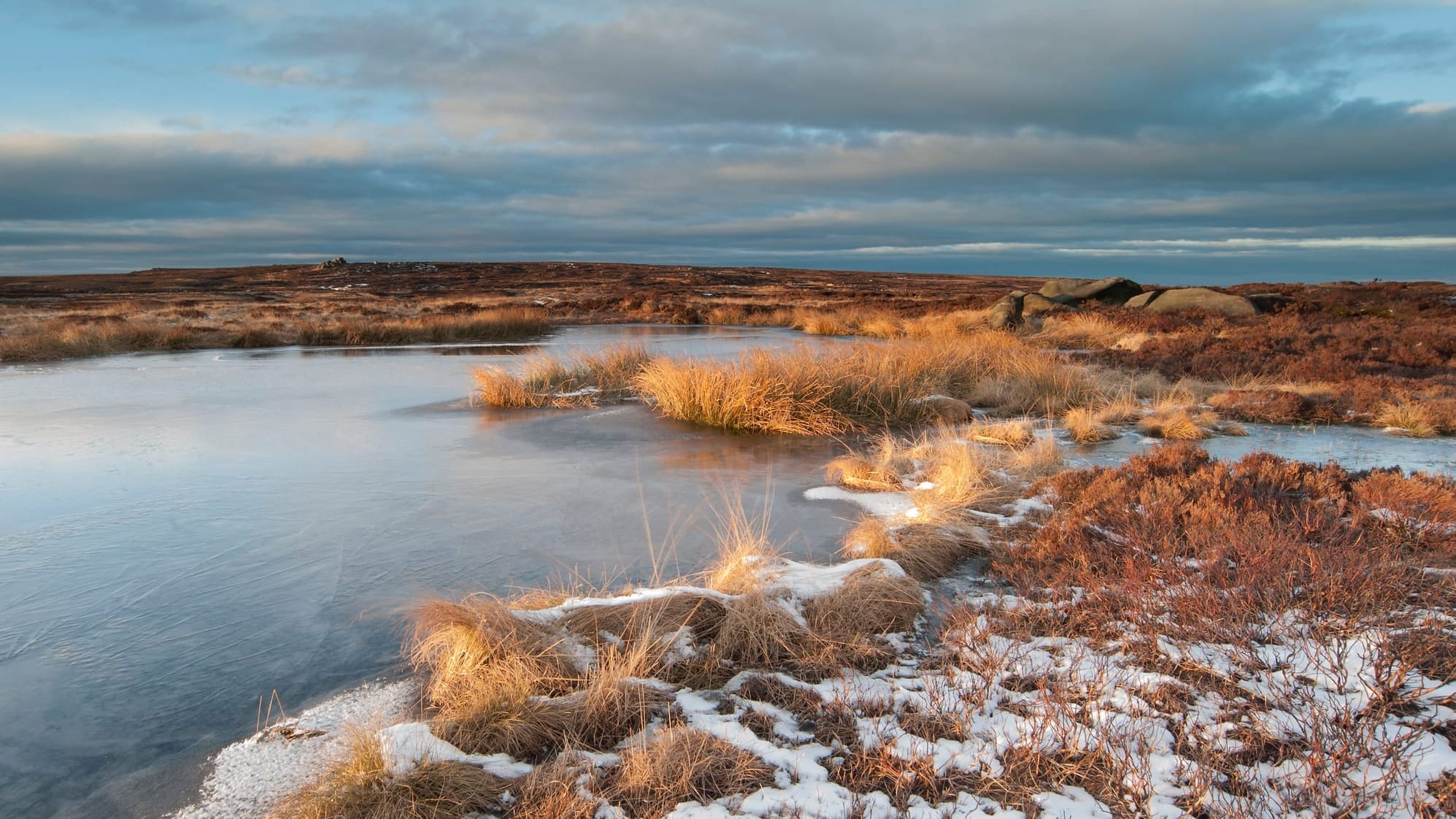
This is normally where I'd put the paywall. Today, the newsletter is free. Instead, I ask you to donate any spare cash to the Wildlife Trusts, as they approach the deadline to buy the Rothbury Estate. I tried to find a picture demonstrating my love for this place, but this was the best I could do. Happy Christmas?
Somerset | Aerial footage of the National Trust’s Holnicote Estate has revealed the benefits of rewilding in the face of extreme weather. The images show swathes of river corridor and wetlands that have remained green and lush while the surrounding land is parched and brown from consecutive heatwaves. The Trust said that the measures it has introduced over the past decade – including wetland creation, re-wiggled rivers and the reintroduction of beavers – have simultaneously tackled drought, flooding and biodiversity loss. This has eased pressures on local farmers and provided ‘a model for how the UK can respond to the twin climate and nature crises’. The Guardian and ENDS reported the news.
Lancashire | Efforts to restore Lancashire’s rivers are paying dividends for Atlantic salmon, according to research by the River Ribble Trust. Every year the Trust surveys more than 300 sites across the catchment, where it has spent 25 years working to improve river quality through large-scale habitat restoration, barrier removal and woodland creation. At one site, more than 100 juvenile salmon were recorded in a few minutes, while another location had its first salmon sightings this year, after being absent for more than a decade. Chief executive officer Jack Spees said: ‘While there is still a huge amount of work to do, these early results suggest that targeted, science-led river restoration is paying off.’ The Lancashire Post and Wharfedale Observer covered the story.
Elsewhere:
- Ancient trees, rare heathland and even wetlands were destroyed by a wildfire in the New Forest, according to a survey by Forestry England. The BBC reported the news.
- Buglife has launched a three-year project to protect two of England’s rarest ant species on heathland in Devon. Another partnership aims to protect rare fenland insects around Oxfordshire.
- Horses have been removed from Rhossilli Common following a row over grazing rights, reports the BBC.
- Warwickshire Wildlife Trust has confirmed that adders are extinct in the county, with no confirmed sightings since the 1990s, reports the Coventry Telegraph.
- Rich butterfly habitat at Longcliffe Quarry in the Peak District has been destroyed after the quarry company buried it beneath soil, reports the Derby Telegraph.
- Wildlife habitat at Chester Zoo is under threat from plans to build a carbon capture pipeline across the northwest, reports the Telegraph.
- The Barbican Conservatory in London is giving away some 2,000 free plant cuttings ahead of its planned closure for restoration in January, reports the BBC.
- Ten European Praying Mantis nymphs were spotted at Truro School in Cornwall: possibly the first recorded evidence of the species breeding on the UK mainland.
- The Royal Entomological Society is updating conservation guidance for grassland sites in the southwest to help six species adapt to heatwaves, reports the BBC.
- Essex Wildlife Trust has re-discovered the Fen Mason Wasp at a reserve in St Osyth: the first time it has been recorded in Essex in 17 years.
- Sussex Wildlife Trust has warned that avian botulism outbreaks will become more common due to climate change after more than a hundred birds died on a reserve, reports the BBC.
- A total of 21 White Storks have been released into the wild near Wadebridge by the Cornwall Stork Project, reports the BBC. Separately, Cotswold Wildlife Park has had its most successful White Stork breeding season ever, hatching and rearing 49 chicks, reports the Swindon Link.
- The RSPB has counted a record-breaking 161 choughs in Cornwall, proving the species is in ‘robust health’, reports the BBC.
- North East Lincolnshire Council has installed temporary plastic flowers on a Grimsby flyover to cope with drought and budget cuts, report the BBC and the Telegraph.
Reports
Protection | A report by the Wildlife Trusts urges Andy Burnham to drop the ‘nature-bashing’ agenda he has inherited from successive governments. The report examines how the Habitat Regulations – key legislation designed to protect nature – have come under ‘sustained assault’ since Brexit from both Conservative and Labour governments. The timeline stretches from Boris Johnson bemoaning ‘newt-counting delays’ in 2020 to proposed exemptions for nuclear projects accepted by Keir Starmer. The Trusts warn that further weakening the Regulations would undermine nature’s ability to protect against climate impacts, leaving Britain more vulnerable to extreme weather and wildfires.
Mining | A Defra-commissioned report has gathered 150 years of evidence on historical metal mining impacts in the UK. Researchers from Nottingham University examined 255 documents published between 1874 to 2025, finding widespread contamination across former mining regions, particularly in Wales and western England. Elevated environmental concentrations occur in soils, rivers and groundwater – often kilometres beyond former industrial sites – and are consistently reflected in increased metal levels in local wildlife, livestock and human populations. These chronic exposures have been linked to adverse health effects, including in invertebrates, fish and rodents, but few studies directly assess the health risks. The authors call for urgent further study, particularly as climate change may mobilise mine waste and further spread contamination. Wales Online covered the report.
Bills | Amid the cost of living crisis, well-designed climate and nature policies can cut household bills and deliver economic benefits for households and farmers, according to a report by WWF UK. It argues that farmers should be treated as ‘foundational partners in the transition’, with policies designed to strengthen farm resilience, unlock private investment, and remove barriers to sustainable infrastructure. Recommendations include establishing Farm Resilience Partnerships to blend public environmental payments with supply chain investment; targeted incentives to reduce resilience on fossil fuel-based fertilisers; and fast-tracking rural planning for nature-based solutions such as ponds, wetlands and horticulture sites. Inside Ecology covered the findings.
Science
Fire | With so much land having been decimated by wildfires lately, it seems strange to think of purposely setting a forest alight. Yet that is what happened at the RSPB’s Abernethy nature reserve in the Cairngorms – albeit more than 20 years ago – and scientists have been monitoring the impacts ever since. In a natural ecosystem, burning happens sporadically and many species benefit from the disturbance. The latest study from the experiment, published in Insect Conservation and Diversity, looks at the impacts of both burning and mowing on spiders and beetles. The outcomes, it found, were roughly the same – which is useful, given that mowing is cheaper and more practical for many land managers to carry out.
Health | Access to woodland measurably improves mental health, according to a study in The Lancet Planetary Health. Researchers tracked thousands of people in deprived urban areas across Scotland to see whether living near woodland reduced their reliance on medication. The woodlands had all been improved by Scottish Forestry, with footpaths and signage added to make them more accessible to local people. Comparing NHS prescription records with census data, the researchers found that people living close to these woods were 10% and 6% less likely to be prescribed antidepressants and anti-anxiety medication, respectively. The benefits also followed people when they changed address: the need for medication diminished when they relocated closer to woodland. Jim Fairlie, minister for agriculture, called the study ‘groundbreaking’. The Herald and Yale e360 covered the news.
Pheasants | Tens of millions of pheasants are released into the UK countryside every year, posing risks to native species and sensitive habitats. The threat is particularly elevated if the birds preferentially disperse into protected areas – a real possibility, given that these sites provide refuges from shooting and disturbance, alongside suitable wintering and breeding habitats. However, research suggests this isn't happening. Analysing pheasant data from Berkshire, Cornwall, Devon, and Hertfordshire, researchers found no evidence that pheasants favour protected areas over surrounding land. This does not mean that the pheasants are absent from these sites: the study points out that even equal numbers of pheasants can cause heightened damage in protected areas due to the sensitive nature of these landscapes. The study was published in Ecology and Evolution.
Driftwood
Ancient | Heatwaves are killing off Britain’s ancient oak trees, according to an article in the New York Times. Ed Pyne, a conservation advisor at the Woodland Trust, tells the newspaper that the loss of trees like the Major Oak in Nottinghamshire is ‘something that’s just going to increase and increase as we go on.’ The article profiles some of the trees for whom the end seems nigh, including the Crow Leasow Oak near Ludlow, the Old Knobbley Oak in Essex, and the Tea Party Oak in Suffolk. Separately, a limb has fallen off the Major Oak, two months after the announcement of its death. A spokesperson for the RSPB said that the 1,200-year-old oak ‘remains one of Britain’s most important trees’. The BBC covered the story.
 Coreen Grant
Trees | It’s not only ancient trees that are suffering. An investigation by HortWeek reveals that almost 16% of trees planted by councils in 2024/25 died. An interactive map shows which councils planted the most trees and which had the highest mortality rates. Tewkesbury came out worst, with a mortality rate of 84.8%, equating to the loss of 1,177 trees. The mortality rate depended on the type of tree planted, with whips and saplings proving particularly vulnerable. Drought and heat were the most commonly cited causes of death. Separately, in a column in the Times, Alice Thomson argues that new planting is inadequate and badly managed, despite the desperate need for more trees to keep temperatures down during heatwaves.
Wildflowers | Old Sayer’s Meadow once grew nothing but oilseed rape. But yields were always hit and miss, and so, 21 years ago, farmer Derek Sayer decided to let it go wild. Today, the four-acre field contains more than 150 plant species, including orchids and yellow rattle, despite the fact that Sayer has never sown a commercial wildflower mix or undertaken any intervention beyond an annual cut for hay. Derek’s son, Carl Sayer, has been studying the field and recently published his results in Restoration Ecology (covered in Inkcap here). The findings show that nature can recover with time, says Carl: ‘Everyone is planting and seeding wildflowers, but sometimes we’re not patient enough.’ The Guardian covered the story.
Further reading:
- A feature in the Guardian explores an initiative to stop algal blooms from destroying a Cornish River.
- The Times visits the Warwickshire vegetable seed bank that could preserve British food security as climate impacts accelerate.
- England is getting better at planting trees, but foresters need to improve management of existing forests, argues a feature in the Economist.
- In the Guardian, farmer Henry Astor discusses his transition to growing heritage wheat, which arose from efforts to boost biodiversity on his land.
- As we (hopefully) leave the summer of wildfire behind, attention is turning to recovery and prevention. One thing is certainly raging on, however, and that’s the discussion of rewilding: read more in Positive News, Discover Wildlife and by Tim Bonner of the Countryside Alliance.
- The Leaf Sheep has been crowned Invertebrate of the Year by the Guardian. Chris Packham has penned a column celebrating bugs.
- The New York Times explores the rise of ‘aesthetic seed packets’, many offering a social justice element to their products.
- British beans are having a moment. A feature in WickedLeeks asks whether nuts might be next.
- Grow-your-own mushroom kits may have released an invasive species across Europe that could ‘radically reshape forest ecosystems’, reports New Scientist.
- An anthology of nature poetry by black and Asian writers is boosting interest in the genre, according to a Guardian feature.
- Horticulturalists are racing against time to save Kew’s Victorian-era greenhouse – but some trees will have to be culled to save others. The Guardian covers the story.
A high point
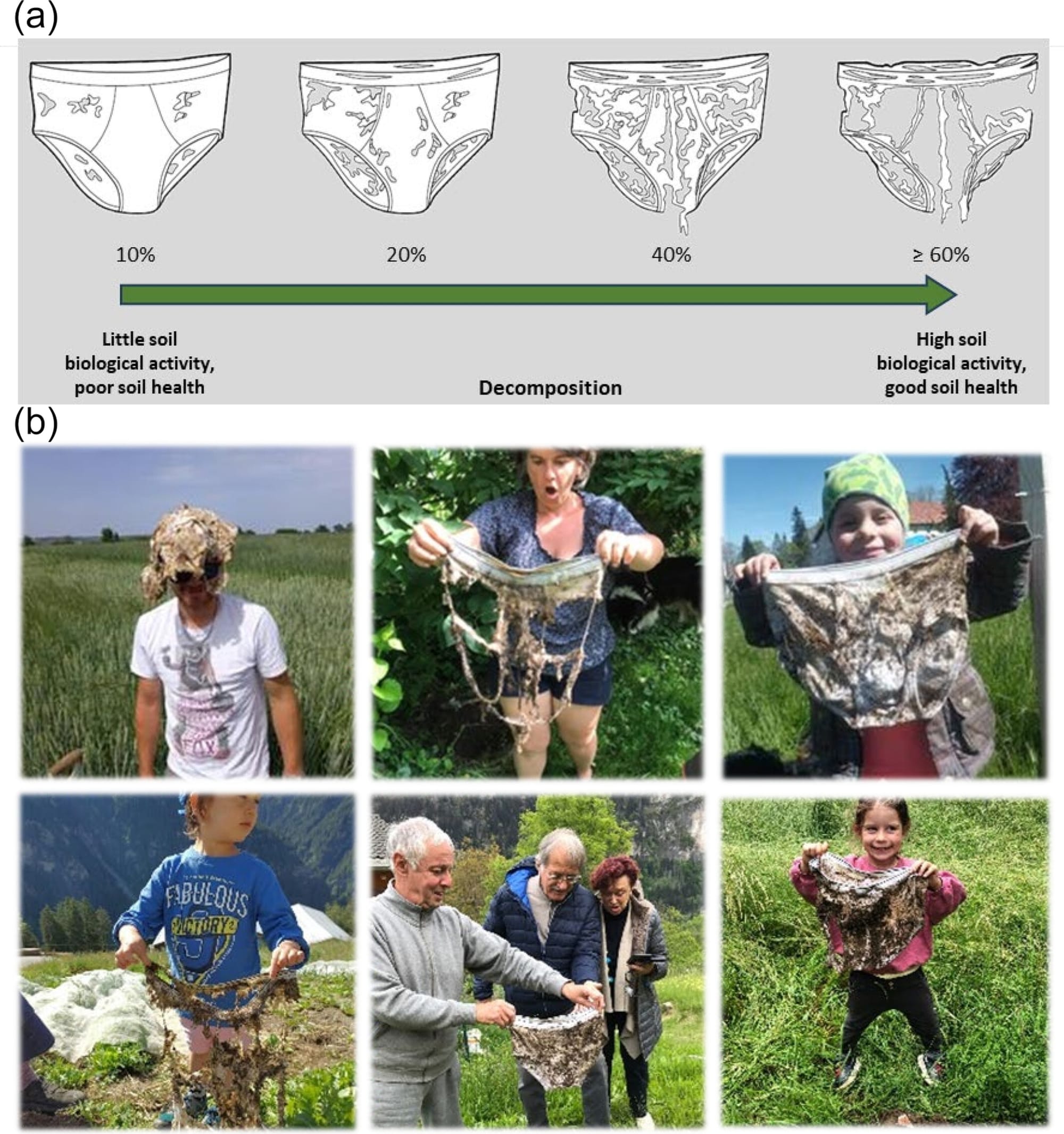
Pants | A unique experiment has seen citizens burying cotton underpants across Switzerland. It is an attempt to highlight the ecological importance of soil health: basically, the more decomposed the underpants, the better the soil. The scientists behind the research concluded that pants are ‘perfectly suited’ to raising the profile of soil health and proposed the creation of an ‘Underpants Index’. Popular Science covered the study, which was published in Plants, People, Planet. The paper includes surely the greatest scientific graphic of 2026 – and possibly the decade.